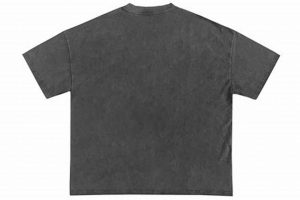
Apparel featuring designs associated with the band Tool, produced during earlier periods, typically prior to the mid-2000s, constitutes a distinct category within music-related memorabilia. These items are characterized by stylistic elements reflecting the era of their manufacture, often exhibiting design motifs and printing techniques common to vintage garments. For example, a concert tee from the early 1990s featuring the band’s “Opiate” album artwork, displaying noticeable wear and a single-stitch construction, would exemplify this type of merchandise.
The significance of such items lies in their representation of a specific period in the band’s history and the broader cultural context of the time. They serve as tangible connections to past concerts, album releases, and the evolution of the band’s image. Furthermore, the limited availability and unique characteristics of these garments contribute to their desirability among collectors and fans, often resulting in higher market values based on condition, rarity, and design. These artifacts provide insight into the evolution of music merchandise and the band’s lasting impact.
The following sections will delve into the specific aspects that determine the value, authenticity, and collectibility of these artifacts, providing a guide for identifying genuine pieces and understanding the factors that contribute to their significance. This includes examining printing techniques, fabric characteristics, and the evolution of designs throughout the band’s career.
Guidance for Identifying Authentic Artifacts
The acquisition of authentic band-related apparel from past eras requires careful evaluation and a nuanced understanding of manufacturing techniques, design evolution, and potential indicators of reproduction.
Tip 1: Examine Printing Techniques: Early screen-printing methods often resulted in thicker ink application and less precise detail compared to modern digital printing. Inspect for slight imperfections or variations in the print quality, which can indicate vintage production.
Tip 2: Analyze Fabric Composition and Stitching: Vintage garments typically utilized different fabric blends and construction methods. Single-stitch construction on hems and sleeves is a common indicator of older manufacturing. Assess the fabric’s weight, feel, and potential wear patterns consistent with age.
Tip 3: Research Trademark and Copyright Information: Scrutinize the presence and accuracy of copyright or trademark symbols on the garment. Inconsistencies or omissions compared to established records can raise concerns about authenticity.
Tip 4: Evaluate Design Accuracy and Consistency: Compare the artwork and design elements to known imagery from album covers, promotional materials, or tour programs of the relevant era. Discrepancies in color palettes, font styles, or graphic details may suggest a reproduction.
Tip 5: Assess Garment Condition and Wear Patterns: Natural aging processes result in unique wear patterns and fading. Examine the garment for signs of authentic wear, such as subtle discoloration, cracking in the print, or minor fabric imperfections. Avoid items that appear excessively new or pristine for their alleged age.
Tip 6: Consult Reputable Sources and Experts: Seek guidance from established collectors, vintage clothing dealers, or online communities specializing in band memorabilia. Their expertise can provide valuable insights and authentication support.
Adhering to these guidelines will significantly enhance the probability of acquiring authentic band-related apparel, ensuring a worthwhile investment and a genuine connection to the band’s history.
The subsequent sections will focus on determining the item’s value and maintaining its condition for preservation.
1. Fabric Composition

The fabric composition of a Tool shirt produced in a prior era is a fundamental determinant of its authenticity and collectibility. Different eras utilized distinct textile blends and manufacturing processes. For instance, shirts manufactured in the early 1990s often featured 100% cotton fabrics, whereas later periods might incorporate polyester blends to enhance durability or reduce production costs. This compositional difference offers a tangible means of differentiating between genuine vintage pieces and contemporary reproductions. Therefore, a careful evaluation of the fabrics content and texture is essential in ascertaining the item’s provenance. Consider an early pressing of a “Tool” shirt which are generally 100% cotton, a material that exhibits a unique aging and fading pattern over time that is difficult to replicate convincingly.
Further analysis of the fabric involves scrutinizing the weave and weight of the material. Vintage shirts typically exhibit a looser weave and a lighter weight compared to modern counterparts, reflecting the production standards of the time. The presence of imperfections or variations in the fabric’s texture can also serve as indicators of age and authenticity. By understanding the typical fabric compositions used during different periods of the band’s history, one can effectively narrow down the potential age range and legitimacy of a purported vintage garment. This knowledge is practically applied in assessing the rarity and value of such items within the collector’s market, ensuring informed purchase decisions.
In conclusion, the fabric composition is a critical diagnostic element in the evaluation of “Tool” shirts. The identification of specific textile characteristics corresponding to particular production eras provides a reliable method for verifying authenticity and assessing historical value. This approach, while not foolproof on its own, forms a crucial component of a comprehensive evaluation strategy, enabling discerning collectors and enthusiasts to acquire genuine pieces and preserve the legacy of the band’s early merchandise. Any challenges in identifying fabric composition often arise from wear and tear, where expert insight should be sought.
2. Printing Quality and Vintage Band Merchandise

The printing quality observed on band merchandise, specifically garments, serves as a critical indicator of its age and authenticity. The methods employed for applying designs to fabric have evolved substantially, resulting in discernible differences between vintage and contemporary prints.
- Ink Type and Application
Vintage shirts typically feature plastisol inks, characterized by their thick, durable texture and tendency to crack or fade over time. Modern printing often utilizes softer, more pliable inks that are less prone to these specific aging effects. The feel and visual appearance of the ink itself are key indicators.
- Screen Mesh Resolution
The mesh resolution used in screen printing directly affects the detail and clarity of the design. Older printing methods often utilized coarser mesh counts, resulting in less intricate designs with visible dot patterns. Modern techniques allow for finer details and smoother gradients.
- Number of Colors and Registration
Printing multiple colors was more labor-intensive and less precise in earlier eras. Misregistration, where colors are slightly misaligned, is a common characteristic of vintage prints. A limited color palette was also more typical due to cost and complexity considerations.
- Print Durability and Wear Patterns
Over time, vintage prints exhibit distinctive wear patterns, including fading, cracking, and softening of the ink. These effects are often difficult to replicate convincingly in reproductions. The specific way in which the print ages and interacts with the fabric provides valuable clues.
These multifaceted printing characteristics collectively contribute to the overall assessment of a “Tool shirt vintage”. The observable nuances in ink type, mesh resolution, color registration, and wear patterns allow for a more accurate determination of the garment’s age and legitimacy. By understanding these printing-related facets, collectors and enthusiasts are better equipped to differentiate between genuine vintage items and modern reproductions.
3. Copyright dates
Copyright dates present on a band’s apparel serve as a critical authentication element, directly indicating the earliest possible manufacturing year. These dates establish a definitive temporal boundary; a garment cannot predate the copyright of the artwork or associated intellectual property it displays. This aspect is particularly relevant for “tool shirt vintage” items, where accurate dating is essential for determining authenticity and market value.
- Copyright Ownership Attribution
The presence of a copyright notice, typically denoted by the symbol “” followed by a year and the name of the copyright holder (e.g., the band, their management company, or a related entity), establishes legal ownership of the design. Examination of this attribution is crucial; discrepancies or omissions can indicate unauthorized reproductions. For example, a shirt featuring an album cover released in 1996 should display a copyright date no earlier than 1996, attributed to the legitimate rights holder. Omission or inaccurate attribution strongly suggests inauthenticity.
- Multiple Copyright Notices
Some designs incorporate multiple copyrighted elements, such as album artwork, logos, or individual graphics. Each element should bear its respective copyright notice. The absence of a copyright notice for any individual element may indicate a discrepancy or an unauthorized usage. A comprehensive design evaluation should confirm each element is appropriately credited. The consistency across all elements strengthens the claim of the garment being a genuine release.
- Dating of Design vs. Garment
The copyright date indicates the year the design was created, not necessarily the year the shirt was manufactured. However, in most circumstances, the production year closely follows the copyright year, especially for promotional merchandise directly tied to album releases or tours. A substantial disparity between the copyright date and the apparent age of the shirt should prompt further investigation. A very old appearing shirt with a relatively new copyright date should be further investigated.
- Variations and Updates
Subsequent versions of the same design may feature updated copyright dates. For example, a shirt initially released in 1996 might be reissued with a new copyright date in a later year. Identifying these variations is vital for accurately dating the garment and assessing its rarity. Older versions with earlier copyright dates often command a premium in the collector’s market. Slight variations in design or logo, along with updated copyright dates, should be noted.
Analyzing copyright dates in conjunction with other factors, such as fabric composition, printing techniques, and seam construction, provides a more comprehensive assessment of a “tool shirt vintage” item’s authenticity. Copyright dates provide the earliest date a shirt could be, and help when determining age and legitimacy of merchandise.
4. Seam construction

Seam construction techniques are pivotal in ascertaining the age and authenticity of garments, specifically those classified as “tool shirt vintage”. The methods employed in joining fabric pieces have evolved over time, leaving distinct characteristics that serve as verifiable markers. These markers aid in differentiating genuine vintage items from more recent reproductions.
- Single-Stitch Construction
A primary indicator of vintage garment construction is the presence of single-stitch seams. This method involves a single line of stitching to join fabric edges, and it was commonly used in shirt manufacturing prior to the widespread adoption of double-needle or overlock stitching. A single-stitch hem or sleeve is often a strong indication that the garment was produced before the mid-1990s. Examining these seams provides a readily identifiable clue to a garment’s age. The presence of single-stitch seams strongly suggests a vintage piece, while its absence is indicative of a modern construction.
- Chain Stitching on Hems
Chain stitching, characterized by its looped, chain-like appearance, was frequently used to finish the hems of older shirts. This method created a durable and visually distinctive edge. The presence of chain stitching on the lower hem of a “tool shirt vintage” supports its authenticity. An absence of chain stitching might suggest it is a more recently manufactured shirt.
- Serged Seams
Serged seams, also known as overlock seams, involve a series of threads interlocked to prevent fraying and create a clean edge. While serging is now commonplace, its prevalence in garment manufacturing increased significantly in the later part of the 20th century. The presence of heavily serged seams throughout a garment suggests a more recent production date. “tool shirt vintage” are less likely to show this technique.
- Reinforcement Stitching
Areas subject to stress, such as shoulder seams or necklines, often feature reinforcement stitching for added durability. The type and placement of this reinforcement can vary based on the manufacturing era. Older shirts may feature simple bar tacks or additional rows of straight stitching in these areas. Newer shirts might use more complex reinforcement patterns. Older reinforcement patterns may mean its “tool shirt vintage” shirt and reinforces the age of the piece.
The evaluation of seam construction, therefore, is an indispensable component of authenticating vintage band merchandise. The presence or absence of specific stitching types, along with the quality and placement of seams, provides critical information for distinguishing genuine artifacts from modern reproductions. Recognizing these constructional elements allows informed collectors and enthusiasts to ensure the value and historical accuracy of their acquisitions, securing their connection to the legacy of “tool shirt vintage”.
5. Design accuracy

Design accuracy serves as a cornerstone in authenticating vintage apparel associated with the band Tool. Discrepancies in design elements compared to established benchmarks can immediately cast doubt on the item’s legitimacy. A rigorous examination of graphic details, typography, and overall composition is thus essential.
- Font Styles and Typography
Exact replication of font styles is critical. Minor deviations in font weight, letter spacing, or overall typeface can indicate a reproduction. Authentic “tool shirt vintage” garments feature fonts consistent with those used in album artwork, promotional materials, and official band releases of the corresponding era. For example, the distinct font used on the “nima” album cover must be precisely replicated on any purportedly vintage shirt featuring that artwork. Any variation may signify a counterfeit.
- Color Palettes and Reproduction
Accurate color representation is paramount. Vintage printing techniques often yielded specific color saturations and tonal qualities. Modern reproductions may exhibit color imbalances or variations in hue that differ from original designs. The color palette used on a “tool shirt vintage” item should precisely match the color scheme of the source material, whether an album cover, a tour poster, or another official design. Inconsistencies in color can indicate a modern reproduction utilizing different inks or printing processes.
- Proportional Accuracy and Image Placement
The precise placement and proportions of design elements on the garment are critical. Distortions, stretching, or misalignments of graphics can indicate a lack of attention to detail typical of counterfeit merchandise. The layout of images and text on a “tool shirt vintage” item must correspond exactly to the original design specifications. Any deviation in image size, placement, or overall proportions signals a potential issue with authenticity.
- Licensing and Copyright Marks
Authenticity can be further verified by examining licensing and copyright marks. Official merchandise typically displays accurate copyright symbols, licensing information, and trademark details. Omissions, misspellings, or inconsistencies in these marks can raise concerns about legitimacy. Authentic “tool shirt vintage” shirts often feature these marks placed inconspicuously, yet accurately, on the garment. Absence or alteration of these details could point to unauthorized production.
The congruence between these design elements and established historical benchmarks is indispensable for authenticating “tool shirt vintage” items. Discrepancies in font styles, color palettes, image placement, and licensing marks significantly detract from the item’s value and may indicate fraudulent intent. Therefore, potential buyers and collectors should meticulously scrutinize these design attributes to ensure the integrity of their acquisitions.
6. Wear patterns
Wear patterns, as they manifest on a “tool shirt vintage,” offer a tangible chronicle of the garment’s history and usage. These patterns are not merely random imperfections but rather the result of prolonged interaction with the environment and the human body. The specific ways in which the fabric fades, the print cracks, and the seams distress are influenced by factors such as exposure to sunlight, washing frequency, and the individual wearing habits. The nature and location of wear patterns can suggest the garment’s authenticity. For example, consistent fading across the shoulders and upper back may indicate regular outdoor exposure, while cracking in the print near the chest suggests frequent wear. These patterns act as a form of authentication, providing evidence of genuine aging that is difficult to replicate convincingly.
The assessment of wear patterns also contributes to determining the value of a “tool shirt vintage.” While pristine condition often commands a premium, some collectors appreciate the character and historical narrative conveyed by visible wear. The key lies in distinguishing between natural wear and intentional distress. Intentional distressing, often employed on reproduction garments, typically lacks the subtle nuances and consistency observed in authentic wear patterns. Examining the specific characteristics of wear, such as the type of fading, the texture of the cracking in the print, and the condition of the seams, allows for a more informed judgment. The existence of wear marks is almost always present on “tool shirt vintage”.
In conclusion, wear patterns constitute a significant aspect of evaluating vintage band merchandise. They provide crucial evidence of age and authenticity, inform assessments of value, and contribute to the garment’s overall historical narrative. Discerning the subtle differences between natural and artificial wear requires experience and attention to detail. However, the insights gained from this analysis are invaluable in identifying genuine “tool shirt vintage” pieces and preserving the cultural significance they represent.
7. Rarity
The scarcity of specific “tool shirt vintage” pieces is a primary driver of their collectibility and market value. Rarity arises from several factors, including limited initial production runs, exclusive distribution channels (such as concert-only sales), and the natural attrition of garments over time due to wear, damage, or disposal. For example, a shirt produced solely for crew members during the nima tour possesses inherent rarity due to its limited distribution and likely low initial quantity. The effect of this scarcity is a disproportionately high demand among collectors, leading to elevated prices and increased desirability.
Understanding the causes of rarity in “tool shirt vintage” is crucial for both buyers and sellers. Identifying factors such as limited edition designs, tour-specific releases, or shirts featuring artwork that was later retracted or altered enables a more accurate assessment of an item’s potential value. A practical application of this knowledge lies in recognizing the significance of seemingly minor details. A misprinted design, a production error, or a unique variation, while initially perceived as flaws, can significantly increase an item’s rarity and, consequently, its market worth. Evaluating for rarity can also provide a means to ensure authenticity.
In summary, rarity constitutes a defining characteristic of sought-after “tool shirt vintage” items. The interplay between limited availability, historical significance, and collector demand dictates the value and desirability of these garments. While assessing rarity can be challenging, given the often incomplete records of production and distribution, a thorough understanding of these factors provides a crucial advantage in navigating the market for vintage band merchandise and recognizing its true worth.
Frequently Asked Questions
The following section addresses common inquiries regarding vintage apparel associated with the band Tool, providing clarity on aspects of authenticity, value, and preservation.
Question 1: What constitutes a “tool shirt vintage”?
The term refers to apparel featuring designs related to the band Tool, produced during earlier periods, generally prior to the mid-2000s. Such garments exhibit stylistic elements and manufacturing techniques characteristic of their respective eras.
Question 2: How is the authenticity of a “tool shirt vintage” verified?
Authentication involves evaluating fabric composition, printing quality, seam construction, copyright dates, and design accuracy. Discrepancies in these elements compared to established benchmarks may indicate reproductions.
Question 3: What factors influence the market value of a “tool shirt vintage”?
Value is determined by rarity, condition, design, and historical significance. Limited edition releases, tour-specific designs, and well-preserved garments typically command higher prices.
Question 4: How should “tool shirt vintage” items be properly stored and preserved?
Preservation requires careful handling, storage in a cool, dry environment, and protection from direct sunlight. Acid-free storage materials are recommended to prevent deterioration.
Question 5: What printing characteristics distinguish vintage prints from modern reproductions?
Vintage prints often exhibit thicker ink application, less precise detail, and a tendency to crack or fade over time. Modern prints typically utilize softer inks and finer resolutions.
Question 6: Is the presence of wear and tear always detrimental to the value of a “tool shirt vintage”?
Not necessarily. While pristine condition is often preferred, some collectors appreciate the character and historical narrative conveyed by natural wear patterns, provided they are not excessive or indicative of improper care.
In summary, acquiring and preserving “tool shirt vintage” requires careful evaluation and informed decision-making. Attention to the details outlined above will contribute to a more rewarding and historically accurate collecting experience.
The subsequent sections will provide insights into cleaning and restoration techniques appropriate for these garments.
Conclusion
The examination of apparel associated with the band Tool from prior eras, commonly designated as “tool shirt vintage,” reveals a complex interplay of manufacturing techniques, design elements, and market forces. The authentication process requires meticulous attention to detail, encompassing fabric composition, printing methods, seam construction, and copyright verification. The value of these garments is contingent upon rarity, condition, and historical significance, factors that contribute to their collectibility within a niche market. Proper storage and preservation techniques are essential to maintain their integrity over time.
The acquisition of authentic “tool shirt vintage” pieces represents a commitment to preserving a tangible connection to the band’s history and cultural impact. Continued research and diligent evaluation will ensure that future collectors can accurately assess the value and historical significance of these garments, contributing to the longevity of this unique form of memorabilia.