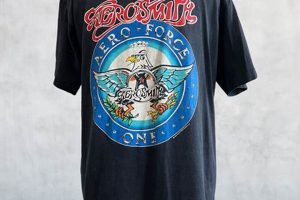
Apparel featuring the iconic rock band KISS, originating from their active period, often commands significant interest among collectors. These garments, typically t-shirts, are sought after for their rarity, designs reflective of specific tours or albums, and historical connection to the band’s performance history. An example includes a tour shirt from the “Destroyer” era, showcasing the album artwork and tour dates.
The desirability of these items stems from their tangible link to a pivotal era in rock music and pop culture. They represent a form of memorabilia that transcends mere clothing, embodying a specific time and the band’s cultural impact. Furthermore, condition, print quality, and provenance contribute to the assessed value, impacting collectibility and appeal to enthusiasts.
Subsequent sections will delve into specific identification markers, variations in design, factors influencing valuation, and strategies for responsible acquisition and preservation of these historically significant pieces of rock and roll history.
Tips for Identifying Authentic Vintage KISS Shirts
The following guidelines provide a framework for distinguishing genuine vintage rock band apparel from modern reproductions. Diligence in observation is crucial when evaluating these items.
Tip 1: Examine the Fabric. Original garments typically utilized single-stitch construction, particularly on the sleeves and hem. The presence of double-stitched seams is generally indicative of a newer manufactured item.
Tip 2: Assess the Graphic Quality. Screen printing technology differed significantly in the past. Observe the print texture; vintage prints often exhibit a softer, more faded quality due to age and washing.
Tip 3: Analyze the Tag. Research the manufacturer’s labels that were prevalent during the band’s peak popularity (1970s-1980s). Certain tag styles and brand names are synonymous with that era. Absence or discrepancies may indicate a replica.
Tip 4: Investigate the Copyright Information. Authentic shirts often include copyright dates linked to specific albums, tours, or the band’s licensing agreements. Verify that these dates align with the shirt’s claimed vintage.
Tip 5: Scrutinize the Overall Condition. While some wear and tear is expected in vintage items, excessive damage or alterations may diminish value. Be wary of “artificially distressed” garments, a common tactic in reproductions.
Tip 6: Compare to Known Originals. Consult reputable vintage clothing resources, online archives, and collector communities to compare the shirt in question to documented examples. Variations can be telling.
Adhering to these verification methods enables more informed purchasing decisions and reduces the risk of acquiring counterfeit or misrepresented goods. Authentication enhances the value and historical relevance of the item.
The succeeding sections will explore strategies for caring for and preserving these historically significant artifacts.
1. Rarity

The principle of rarity exerts a profound influence on the valuation and desirability of apparel featuring the band KISS. Limited production runs, designs exclusive to specific concert venues or promotional events, and survivorship rates significantly affect the availability of specific shirt models. As the quantity of extant shirts decreases due to factors such as wear, loss, or destruction, the remaining examples increase in value, particularly among dedicated collectors. Tour shirts from less successful or shorter tours tend to be rarer than those from major, extended tours. For example, a shirt from an obscure, promotional appearance or a tour supporting a less-known album might command a premium over a shirt widely available during a commercially successful period.
Understanding the factors that contribute to scarcity is crucial for accurate appraisal and informed acquisition. Recognizing limited-edition designs, variations in print runs, and the historical context surrounding a specific shirt allows collectors to differentiate between commonplace items and those of significant worth. The presence of unique features, such as misprints or production errors, can paradoxically enhance rarity and collector appeal. Further, regional differences in distribution and promotional activity can result in some designs being far more prevalent in certain geographical areas than others. This geographical variation creates further complexity in assessing relative scarcity.
In summation, rarity serves as a fundamental determinant of value within the market for vintage KISS apparel. Accurate assessment requires meticulous research, familiarity with production history, and the ability to discern subtle differences between various shirt models. While condition, design, and historical context also contribute to valuation, the scarcity of a particular shirt remains a primary driver of its desirability and financial worth within the collecting community.
2. Graphics

The graphics adorning vintage KISS apparel constitute a primary driver of collectibility and historical significance. These visuals are not merely decorative elements; they serve as encapsulations of the bands evolving identity, artistic expression, and marketing strategies across different eras. Album artwork, tour logos, and promotional imageryrendered through the screen printing techniques prevalent at the timeoffer a direct link to specific periods in the band’s career. For instance, the intricately detailed imagery from the “Destroyer” album era, characterized by fantasy and dramatic themes, contrasts sharply with the more streamlined and graphically bold designs associated with the “Dynasty” period. This visual evolution chronicles the band’s adaptation to changing musical trends and aesthetic sensibilities.
Furthermore, the quality and execution of these graphics directly influence a item’s value. Original screen prints, characterized by specific ink formulations and application methods, often possess a distinct texture and vibrancy that are difficult to replicate. Collectors scrutinize these details, seeking shirts where the graphics retain a high degree of fidelity to the original design. Fading, cracking, and other forms of wear are expected, but excessive degradation can diminish a item’s appeal. The presence of licensed copyrights, trademarks, and other identifying marks within the graphic design also provides evidence of authenticity and historical provenance. Shirts lacking these identifiers are often viewed with suspicion.
In essence, the graphics on vintage KISS apparel function as visual records of the band’s history. Understanding the stylistic nuances, printing techniques, and copyright conventions associated with different eras allows collectors to more accurately assess authenticity, determine relative rarity, and appreciate the cultural significance of these artifacts. The graphics are therefore a crucial component in both the identification and valuation processes, and their preservation is essential to maintaining the historical integrity of these items.
3. Fabric

The textile composition and construction of vintage KISS apparel provide critical insights into authenticity, manufacturing era, and overall condition. Fabric analysis serves as a valuable tool for discerning genuine vintage items from contemporary reproductions.
- Fiber Composition
Early apparel typically utilized 100% cotton. Polyester blends became more prevalent in later decades. Identifying the fiber content through visual inspection and, if possible, microscopic analysis helps to establish a garment’s likely age. The presence of synthetic fibers atypical for the purported era of manufacture raises questions about authenticity.
- Weave Type
Common weave types include jersey knit and interlock knit. The tightness and texture of the weave contribute to the fabric’s durability and drape. Examining the weave under magnification can reveal variations characteristic of different manufacturing periods. Looser weaves and visible knit structures are common in older garments.
- Stitch Construction
Single-stitch construction on hems and sleeves is a hallmark of many vintage t-shirts, including those featuring the band KISS. The presence of double-stitching often indicates a more recent manufacture, as this technique became widespread in the late 1980s and 1990s. Examining the stitch type is a crucial step in the authentication process.
- Fabric Weight and Hand
The weight and feel (hand) of the fabric offer further clues. Older cotton fabrics often have a softer, more worn feel due to repeated washing and wear. Newer reproductions may employ heavier or lighter fabrics with a different hand feel. Assessing the fabric weight and hand provides additional data points for evaluating authenticity.
These characteristics, when considered collectively, offer valuable information regarding the provenance and authenticity of apparel featuring the band KISS. By analyzing the fiber composition, weave type, stitch construction, and fabric weight, collectors and enthusiasts can make more informed assessments of these items.
4. Tags
Manufacturer’s tags within apparel serve as vital authentication and dating markers, particularly within the realm of vintage collectibles. For apparel featuring KISS, these labels offer critical information pertaining to the garment’s production era, licensing agreements, and original retail source. The tag’s presence, design, and textual content correlate directly with its authenticity and value. Example: A shirt purporting to originate from the 1977 “Love Gun” tour should bear a tag consistent with manufacturers prevalent during that specific period, such as “Spring Ford” or “Screen Stars.” Deviations from established tag characteristics raise concerns regarding the item’s genuineness, potentially indicating reproduction or alteration.
Analysis of tag design includes consideration of font styles, logos, and manufacturing details. Copyright information, if present, should align with known licensing agreements and album release dates. Furthermore, the material composition of the tag itself provides clues. For example, early tags were often constructed from woven fabric or heavier paper stock, while later tags frequently incorporated synthetic materials. Absence of a tag, while not definitively disqualifying an item, necessitates increased scrutiny of other authentication markers, such as stitch patterns, fabric texture, and print quality. The impact of accurate tag identification facilitates informed purchasing decisions, mitigating the risk of acquiring misrepresented merchandise.
In essence, the manufacturer’s tag constitutes a crucial piece of evidence within the authentication process for vintage KISS apparel. Thorough examination and comparison against established databases of vintage clothing manufacturers provides crucial insight. Proper tag identification augments valuation accuracy and strengthens the assurance of historical provenance.
5. Condition
The state of preservation, or condition, significantly influences the valuation and desirability of vintage apparel featuring the band KISS. Unlike modern garments, signs of wear are often expected in older items; however, the extent and nature of any damage directly impact the item’s appeal to collectors. Assessment requires careful consideration of multiple factors.
- Print Quality and Integrity
The vibrancy and completeness of the graphic print are primary indicators. Fading, cracking, or significant areas of missing ink diminish value. Minor imperfections, if consistent with age, may be acceptable, while extensive damage detracts substantially. Shirts with pristine, unfaded prints command a premium among collectors.
- Fabric Integrity and Damage
Tears, holes, and excessive staining degrade the garment’s structural integrity and aesthetic appeal. Small pinholes or minor discoloration may be tolerated, but significant damage lowers value considerably. The presence of repairs, while potentially preserving the garment, can also negatively impact its collectibility unless professionally executed and minimally invasive.
- Tag and Label Presence and Legibility
The presence of the original manufacturer’s tag enhances value, provided the tag is legible and intact. Missing or damaged tags reduce provenance and complicate authentication. A clear, undamaged tag provides valuable information regarding the shirt’s origin and manufacturing period.
- Overall Cleanliness and Odor
The cleanliness of the garment and the absence of unpleasant odors (e.g., mustiness, smoke) contribute to its desirability. Stains, even if subtle, detract from value, as do lingering odors. Proper cleaning and storage practices help maintain a garment’s condition and preserve its collectibility.
The overall condition assessment requires a holistic approach, weighing the various factors to determine the garment’s collectibility and market value. Shirts in excellent condition, with minimal wear and intact graphics, tags, and fabric, command the highest prices. However, even shirts with noticeable wear can hold value if they possess other desirable attributes, such as rarity or significant historical provenance. The nuanced evaluation of condition remains a critical aspect of collecting vintage apparel.
6. Provenance
The documented history of ownership and origin, termed provenance, exerts a significant influence on the value and authenticity assessment of apparel featuring the band KISS. A clear and verifiable provenance provides assurance to collectors, substantiating the garment’s historical legitimacy. This traceability acts as a safeguard against counterfeit items and misrepresentations, enhancing confidence in the garment’s claimed origins. For example, a shirt accompanied by a letter from a former crew member attesting to its use during a specific tour carries increased weight. Similarly, documentation linking a shirt to a particular concert venue or promotional event strengthens its provenance.
The absence of verifiable provenance creates inherent challenges in authentication and valuation. Without documented origins, the garment’s authenticity becomes reliant solely on observable characteristics such as fabric, print quality, and tag details, increasing the risk of inaccurate assessment. Furthermore, provenance affects market value. Shirts with documented histories of ownership by notable individuals, such as band members or renowned collectors, command premium prices due to their enhanced historical significance. Conversely, shirts lacking any discernible history are typically valued lower due to the increased uncertainty surrounding their origins. The availability of purchase receipts, concert tickets, or photographic evidence featuring the shirt in use bolsters provenance significantly.
In conclusion, establishing a clear and verifiable provenance is crucial for optimizing both the authentication and valuation of apparel related to the band KISS. Documentation regarding ownership, usage, and historical context substantially enhances the item’s legitimacy and desirability among collectors. While physical characteristics remain important, provenance offers an invaluable layer of assurance that directly impacts the garment’s perceived value and its place within the broader context of rock and roll memorabilia.
Frequently Asked Questions
The following addresses commonly encountered inquiries regarding identification, valuation, and care of vintage apparel featuring the band KISS.
Question 1: How can authenticity of vintage apparel be verified?
Authenticity verification entails careful examination of multiple factors including fabric composition, stitch construction, tag details, print quality, and provenance documentation. Discrepancies in any of these areas necessitate further scrutiny.
Question 2: What factors influence the valuation of a vintage KISS shirt?
Valuation is determined by a combination of factors: rarity (based on tour or design), condition (print quality, fabric integrity), tag presence, and documented provenance. Shirts with unique characteristics command higher premiums.
Question 3: What are common indicators of counterfeit or reproduction shirts?
Indicators include double-stitched seams (vs. single-stitched), inaccurate tag styles for the purported era, poor print quality, and the absence of copyright markings. Artificial distressing should also raise suspicion.
Question 4: How should vintage apparel be properly stored to prevent damage?
Proper storage involves protecting garments from direct sunlight, humidity, and pests. Acid-free tissue paper within a breathable container is recommended for long-term preservation.
Question 5: Does professional cleaning affect the value of a vintage shirt?
Professional cleaning, if performed by a specialist in vintage textiles, may enhance value. However, improper cleaning methods can cause irreversible damage, lowering value.
Question 6: How does documentation contribute to a vintage shirt’s value?
Documentation, such as concert tickets, photographs, or letters of provenance, significantly increases the shirt’s historical significance and market value. It provides verifiable evidence of authenticity and ownership.
These questions and answers provide a foundation for understanding the complexities of collecting vintage apparel. Knowledgeable assessment and care contribute to the preservation and appreciation of these artifacts.
The subsequent section addresses specific preservation strategies and best practices for maintaining the integrity of vintage items.
Conclusion
The preceding analysis has explored the multifaceted characteristics of apparel from the band KISS. Factors influencing value, authentication markers, and preservation techniques have been detailed to provide a comprehensive understanding of the subject matter. Garments represent tangible artifacts that embody an era and a cultural phenomenon. These pieces should be approached with informed scrutiny and appreciation of the historical context they represent. Collecting these items requires a dedication to research, careful observation, and a commitment to ethical acquisition practices.
Continued engagement with the historical background and ongoing research within the collecting community ensures the accurate valuation and responsible preservation of genuine examples. Maintaining these artifacts offers a tangible connection to a pivotal period in rock music and pop culture history. Through informed practices, enthusiasts and collectors can continue to appreciate and preserve these historically significant objects.