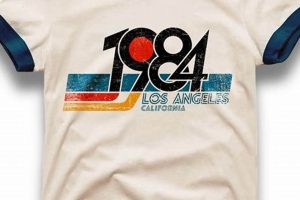
Apparel featuring designs from past eras of popular music represents a distinct category within the clothing industry. These items, often made from cotton or cotton blends, display imagery related to musical artists, bands, or specific genres. Examples include garments adorned with concert tour dates, album covers, or iconic photographs of performers from previous decades.
The enduring appeal of these garments stems from several factors. They function as tangible connections to cherished musical memories and personal histories. Moreover, they serve as visual markers of individual identity and affiliation with particular musical communities. Their historical significance lies in their ability to reflect evolving cultural trends and the enduring impact of rock music on society.
Further exploration of this subject reveals diverse aspects, including the evolution of screen-printing techniques used in their production, the market dynamics affecting their value as collectibles, and the ethical considerations surrounding their sourcing and manufacturing.
Acquiring and Preserving Rock-Related Garments of a Bygone Era
The following guidance offers practical considerations for individuals interested in obtaining and maintaining apparel that commemorates historic periods in rock music.
Tip 1: Authentication is Paramount: Prior to purchase, scrutinize the garment for indicators of authenticity. Examine the manufacturer’s label, stitching quality, and printing techniques. Cross-reference details with established resources to ascertain its origin and approximate age.
Tip 2: Condition Assessment: Thoroughly evaluate the item’s physical state. Note any tears, stains, fading, or other imperfections. These factors significantly influence the garment’s value and longevity. Consider the cost and feasibility of potential restoration efforts.
Tip 3: Storage Protocols: Implement proper storage methods to mitigate deterioration. Avoid direct sunlight and excessive humidity. Employ acid-free tissue paper for padding and support when folding. Consider archival-quality garment bags for added protection.
Tip 4: Washing Precautions: Exercise caution when cleaning. Hand-washing in cold water with a mild detergent is often the safest approach. Avoid harsh chemicals and abrasive cleaning agents. If machine washing is necessary, use a delicate cycle and place the garment inside a protective mesh bag.
Tip 5: Display Considerations: If exhibiting the item, utilize archival-quality display materials. Ensure adequate support to prevent stretching or distortion. Monitor environmental conditions to minimize the risk of damage from light exposure or temperature fluctuations.
Tip 6: Research Provenance: Investigate the garment’s history. Understanding its origin and previous ownership can enhance its intrinsic value and provide valuable context.
Careful adherence to these guidelines can aid in both securing authentic memorabilia and ensuring its long-term preservation. These efforts contribute to safeguarding tangible artifacts of rock music’s cultural heritage.
The subsequent sections will address the garment’s impact on style and fashion.
1. Authenticity Verification

Verifying the authenticity of apparel associated with bygone eras of rock music represents a critical aspect of ownership and collection. Establishing genuineness mitigates the risk of acquiring reproductions and ensures the garment accurately reflects its historical origins.
- Manufacturer Identification
Examining the manufacturer’s label provides essential clues. The presence of a recognizable vintage label, consistent with the purported era, lends credibility. Conversely, the absence of a label or the presence of a modern label on a purportedly vintage item raises concerns regarding authenticity.
- Stitching and Construction Analysis
The stitching techniques and construction methods employed in the garment’s creation offer insights into its age and origin. Vintage garments typically exhibit single-stitch construction, whereas modern reproductions often utilize double-needle stitching. The type of thread and seam finishing can also provide clues.
- Fabric Composition Assessment
Analyzing the fabric composition can aid in authentication. Prior to the widespread use of synthetic blends, garments were primarily constructed from 100% cotton. Examining the fabric weave and texture can further corroborate its purported age.
- Graphic Printing Evaluation
The printing technique employed in applying the graphic design is crucial. Vintage screen-printing methods often resulted in a characteristic texture and slight imperfections. Modern printing techniques, such as direct-to-garment printing, produce a smoother, more uniform finish. Close examination of the ink type and application can reveal inconsistencies.
The comprehensive assessment of these elements enables informed purchasing decisions and ensures that the acquired items accurately represent authentic memorabilia from pivotal periods in rock music history. These assessments impact the garment’s collectable value, and serve as tangible links to the genre’s legacy.
2. Graphic Design

Visual elements constitute a defining characteristic of apparel referencing historic rock music. The aesthetic choices made in these designs directly impact the garment’s appeal, historical accuracy, and market value. Therefore, graphic design is intrinsically linked to the significance and desirability of such items.
- Band Logos and Trademarks
The prominent display of band logos and trademarks represents a core component. The faithful reproduction of iconic emblems fosters immediate recognition and association with a specific musical entity. Variations in logo design across different eras can also aid in dating the garment. For example, the evolution of the Rolling Stones’ tongue logo serves as a visual timeline, and its accurate representation on a garment contributes to its authenticity.
- Album Artwork Replication
Replicating album artwork forms another prevalent design strategy. Album covers, often meticulously crafted visual statements, provide a readily identifiable and aesthetically compelling image for use on apparel. The transfer of iconic images such as Pink Floyd’s “Dark Side of the Moon” prism or the Beatles’ “Sgt. Pepper’s Lonely Hearts Club Band” cover imbues the garment with cultural weight and historical resonance.
- Concert Tour Imagery
The inclusion of concert tour imagery offers a tangible connection to specific performances and eras. Tour dates, venue listings, and promotional graphics associated with particular tours provide a unique historical record. These designs serve as mementos of specific events, appealing to individuals who attended the concerts or possess a strong affinity for that period in the band’s history.
- Typography and Lettering Styles
The selection of typography and lettering styles contributes significantly to the overall aesthetic and historical accuracy. Specific fonts and lettering trends were prevalent during different periods in rock music history. The accurate replication of these styles reinforces the garment’s authenticity and visual connection to a particular era. The use of a psychedelic font associated with the late 1960s, for instance, immediately evokes a specific cultural and musical context.
These design elements coalesce to create garments that function as both articles of clothing and visual representations of rock music’s enduring legacy. The careful consideration and faithful reproduction of these graphic components are essential for preserving their historical significance and cultural value.
3. Fabric Quality

The enduring value and collectibility of apparel associated with historical periods in rock music are significantly influenced by the characteristics of the textiles employed in their creation. Fabric quality directly impacts the garment’s durability, comfort, and overall aesthetic appeal, ultimately contributing to its historical significance and market worth.
- Fiber Composition and Durability
The type of fibers used in the fabric construction determines its resilience and resistance to wear and tear. Vintage garments predominantly utilized 100% cotton, with variations in weave impacting strength and longevity. Higher-quality cotton fibers, such as long-staple varieties, offer increased durability and a softer feel. The presence of damage, such as tears, holes, or excessive thinning, directly diminishes the garment’s value and collectibility. A tee shirt constructed from tightly woven, high-quality cotton will withstand the passage of time more effectively than one made from inferior materials.
- Weave and Construction Techniques
The method by which the fibers are interlaced impacts the fabric’s structural integrity and drape. Common weave types include plain weave, twill weave, and knit constructions. Tightly woven fabrics offer greater resistance to stretching and distortion. The presence of flaws in the weave, such as snags, runs, or uneven tension, detracts from the garment’s overall quality. The “single stitch” construction common in earlier garments influences seam strength and aesthetic. This factor can influence the item’s survival over time.
- Dyeing and Printing Processes
The techniques employed in dyeing and printing the fabric influence its colorfastness and resistance to fading. Garments produced with high-quality dyes and printing methods will retain their vibrancy and clarity over extended periods. Conversely, fabrics dyed with inferior materials are prone to fading, bleeding, and discoloration. Faded or cracked prints detract from the garment’s visual appeal and diminish its value as a collectible item.
- Fabric Weight and Hand Feel
The fabric’s weight and texture contribute to its comfort and overall aesthetic appeal. Heavier-weight fabrics offer greater durability and a more substantial feel, while lighter-weight fabrics provide enhanced breathability and drape. The fabric’s “hand feel,” or tactile quality, also influences its perceived value. Soft, smooth fabrics are generally considered more desirable than rough or coarse materials.
These interwoven factors of fabric composition, construction, dyeing, and feel converge to determine the long-term viability and desirability of music-related apparel from earlier eras. Appreciating these elements provides a basis for informed assessments of authenticity, and the overall cultural importance of garments that represent a tangible piece of rock music heritage.
4. Era Representation

Apparel designed with references to distinct epochs in rock music history functions as a tangible representation of past cultural moments. Garments from this genre visually communicate specific periods, styles, and attitudes associated with rock music’s evolution, thereby serving as artifacts of popular culture.
- Musical Genre Depiction
Specific graphic elements commonly signify particular musical genres prevalent during certain periods. Psychedelic imagery, for example, typically evokes the late 1960s and early 1970s rock scene, while designs featuring heavy metal iconography signify the 1980s. Apparel displaying punk rock aesthetics, characterized by distressed graphics and anti-establishment themes, represent the mid-to-late 1970s. The accurate depiction of these genre-specific elements enables the garment to effectively communicate its intended historical context.
- Band-Specific Epochs
The career trajectories of prominent rock bands often encompass distinct phases, each characterized by unique musical styles, visual aesthetics, and cultural associations. Garments depicting a band’s early, raw sound may contrast sharply with those representing their later, more polished phase. Designs referencing specific album releases or concert tours further delineate these band-specific epochs. A tee shirt displaying the artwork from a band’s debut album reflects a markedly different era than one featuring imagery from their commercially successful period.
- Fashion and Style Trends
Rock music has exerted a significant influence on fashion trends across different decades. Apparel reflecting the sartorial styles associated with particular eras enhances the garment’s ability to convey its intended historical context. For instance, bell-bottom jeans and tie-dye patterns are intrinsically linked to the 1970s, while leather jackets and ripped jeans are emblematic of the 1980s. Accurately reflecting these fashion trends reinforces the garment’s visual connection to a specific time.
- Cultural and Social Context
Rock music has consistently served as a vehicle for expressing social and political commentary. Apparel reflecting the cultural and social milieu of specific eras can enhance the garment’s historical resonance. Designs incorporating protest slogans, political imagery, or references to significant social events evoke the specific concerns and attitudes prevalent during that time. A tee shirt featuring a peace symbol, for example, immediately conveys the countercultural sentiments of the late 1960s and early 1970s.
These factors converge to create apparel that goes beyond mere clothing; garments become symbolic representations of the complex interplay between music, fashion, and cultural history. The thoughtful incorporation of these elements ensures that the garment effectively conveys its intended historical context and resonates with individuals seeking to connect with specific periods in rock music’s evolution. A vintage concert tee shirt, therefore, encapsulates much more than a band’s name; it represents an entire era’s ethos.
5. Cultural Significance
The cultural impact of apparel referencing bygone eras of rock music extends beyond mere fashion; it serves as a tangible link to distinct periods, ideologies, and artistic expressions. These garments embody a complex tapestry of social, political, and musical influences, reflecting the genre’s profound effect on society.
- Symbolic Representation of Musical Movements
Apparel functions as a visual shorthand for identifying with specific musical movements. A garment adorned with a punk rock band’s logo, for example, signifies an association with the anti-establishment ethos and DIY aesthetic of the 1970s punk scene. A tee shirt displaying the artwork of a psychedelic rock album embodies the countercultural exploration and experimental sounds of the late 1960s. These garments act as emblems of affiliation and understanding within subcultural groups, thereby solidifying their significance.
- Reflection of Sociopolitical Commentary
Rock music often serves as a vehicle for social and political commentary, and apparel reflecting these themes provides a means of expressing solidarity with particular causes or ideologies. A tee shirt featuring a protest slogan or an image associated with a social movement reflects the wearer’s engagement with relevant issues. Garments from benefit concerts or activist campaigns further amplify this connection, transforming the clothing into a wearable declaration of personal beliefs.
- Commemoration of Historical Events
Certain concerts and musical festivals have attained iconic status in cultural history. Apparel commemorating these events functions as a tangible reminder of their significance. A tee shirt from Woodstock, for example, evokes the spirit of the 1960s counterculture and the ideals of peace and communal living. These garments transform into historical artifacts, carrying the weight of collective memory and offering a connection to a pivotal moment in time.
- Expression of Individual Identity and Nostalgia
Apparel referencing past eras of rock music provides individuals with a means of expressing their personal identity and connecting with their formative experiences. A garment associated with a beloved band or album can evoke strong feelings of nostalgia and serve as a reminder of significant personal milestones. These items function as tangible representations of individual tastes, values, and personal histories, ultimately contributing to a sense of self and belonging.
The multifaceted nature of this influence firmly establishes these types of apparel as more than mere commodities. These garments are potent artifacts that embody the profound impact of rock music on individuals, communities, and the broader cultural landscape. The very act of wearing or collecting these garments reflects a conscious engagement with the ongoing dialogue between music, history, and personal identity. These apparel items symbolize larger, often unspoken cultural values.
6. Collectibility Factor
The collectibility of apparel referencing rock music’s history directly influences its perceived value and desirability. This factor encompasses several interrelated components, including rarity, condition, historical significance, and aesthetic appeal. Elevated demand for particular items, often driven by scarcity or association with iconic events and artists, amplifies their worth within collector communities. The interplay between these elements creates a dynamic market where certain garments command substantial prices, representing both a tangible investment and a cultural artifact.
Rarity represents a primary driver of collectibility. Garments produced in limited quantities, such as those distributed exclusively at specific concert venues or promotional events, typically command higher prices due to their scarcity. Condition profoundly impacts perceived value. Pristine examples, free from damage, stains, or alterations, are generally more desirable than those exhibiting significant wear. Historical significance also plays a crucial role, particularly for garments linked to landmark concerts, pivotal album releases, or culturally significant moments in rock history. A tee shirt originating from the 1969 Woodstock festival, for example, possesses inherent historical value due to its association with this iconic event. Similarly, a garment displaying a band logo from their early, formative years may be more valuable than one representing their later, more commercially successful period. This stems from its representation of a crucial point in their evolution, and its relative scarcity compared to mass-produced merchandise. The aesthetic design also contributes to the “Collectibility Factor”.
Understanding the multifaceted nature of collectibility enables informed purchasing decisions and fosters a greater appreciation for the cultural heritage embodied within rock music memorabilia. The convergence of rarity, condition, historical significance, and aesthetic appeal shapes the landscape of this collecting arena. Potential collectors will benefit from in-depth research, careful authentication, and a thorough assessment of the item’s provenance to accurately gauge its potential value and cultural resonance.
Frequently Asked Questions
The following addresses common inquiries regarding the acquisition, authentication, and preservation of vintage apparel associated with rock music.
Question 1: How can authenticity be definitively established for a garment described as “tee shirt vintage rock?”
Authenticity verification requires a multi-faceted approach. Examining the manufacturer’s label, stitching techniques, fabric composition, and printing methods provides crucial evidence. Cross-referencing these details with established historical resources is essential.
Question 2: What factors most significantly influence the market value of a “tee shirt vintage rock?”
Rarity, condition, historical significance, and aesthetic appeal are primary determinants. Garments produced in limited quantities, those in pristine condition, and those associated with landmark events or iconic artists command higher prices.
Question 3: What are the recommended storage protocols for preserving a “tee shirt vintage rock?”
Avoid direct sunlight and excessive humidity. Employ acid-free tissue paper for padding and support. Consider archival-quality garment bags for long-term protection.
Question 4: What cleaning methods are safest for a delicate “tee shirt vintage rock?”
Hand-washing in cold water with a mild detergent is generally recommended. Avoid harsh chemicals and abrasive cleaning agents. If machine washing is necessary, use a delicate cycle and place the garment inside a protective mesh bag.
Question 5: How does fabric composition impact the long-term durability of a “tee shirt vintage rock?”
Vintage garments predominantly utilized 100% cotton. Higher-quality cotton fibers offer increased durability. The fabric weave also influences strength and longevity.
Question 6: What resources are available for researching the history and provenance of a “tee shirt vintage rock?”
Online databases, auction catalogs, and collector communities provide valuable information. Consulting with experts in vintage clothing and rock music memorabilia can also offer valuable insights.
In summary, acquiring, authenticating, and preserving apparel from bygone eras of rock necessitates careful attention to detail and a comprehensive understanding of the factors influencing their value and significance.
The subsequent section will explore the role of these garments in contemporary fashion and style.
Concluding Observations on Apparel Commemorating Rock Music History
This discourse has explored the multifaceted nature of apparel referencing past eras of rock music, examining aspects ranging from authentication and preservation to cultural significance and collectibility. Key considerations include verifying provenance, assessing condition, implementing proper storage protocols, and understanding the dynamic market forces that influence value.
The continued appreciation for garments memorializing historic periods in rock music underscores their enduring relevance as tangible representations of cultural memory and personal identity. Further research and responsible stewardship are essential for safeguarding these artifacts for future generations, preserving their historical context, and contributing to an ongoing understanding of rock music’s lasting impact on society.