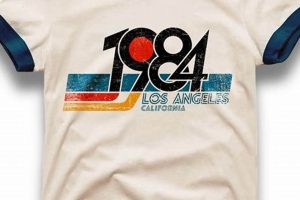
Apparel from a prior era featuring the logo or branding of STP, an automotive performance products company, is a specific type of collectible garment. These garments often display characteristics indicative of their age, such as specific fabric types, printing techniques, and design aesthetics common to the period in which they were produced. As an example, a t-shirt displaying a screen-printed STP logo from the 1970s would fall under this classification.
The value of these shirts arises from several factors, including their rarity, condition, and the historical significance of the STP brand within motorsports and automotive culture. These items represent a tangible link to a specific era, often associated with iconic racing events and personalities. Possession of these items allows enthusiasts to connect with and celebrate this legacy.
The subsequent sections will delve into the identification, valuation, care, and collecting strategies associated with this particular category of vintage apparel. Further exploration will highlight key design elements and historical periods that define these sought-after garments.
Essential Considerations for Acquiring Vintage STP Apparel
The acquisition of garments bearing the STP branding requires careful evaluation to ensure authenticity and preserve value. Several key factors should be considered prior to purchase.
Tip 1: Authenticate the Garment. Examine the fabric composition, stitching, and printing techniques. Compare these elements to known characteristics of garments produced during the purported era of manufacture. Research readily available online resources and collector communities to identify potential inconsistencies.
Tip 2: Assess Condition Rigorously. Evaluate the garment for signs of wear, damage, or alteration. Stains, tears, fading, and repairs can significantly impact value. Request high-resolution images and detailed descriptions from the seller prior to committing to a purchase. Consider professional restoration only when damage threatens the garment’s structural integrity.
Tip 3: Scrutinize Branding and Logos. Verify the accuracy of the STP logo and branding elements. Logos evolved over time; discrepancies can indicate a reproduction or counterfeit item. Consult historical examples and official STP branding guidelines to confirm authenticity.
Tip 4: Investigate Provenance. Whenever possible, ascertain the garment’s history and chain of ownership. Documented provenance can significantly increase value and establish authenticity, especially for items associated with notable racing events or personalities.
Tip 5: Compare Prices and Market Values. Research recent sales of comparable garments to determine a fair market price. Monitor online auction sites, vintage clothing marketplaces, and collector forums to track trends and identify potential overpricing.
Tip 6: Consider Storage and Preservation. Upon acquisition, implement appropriate storage and preservation techniques to prevent deterioration. Store garments in acid-free containers away from direct sunlight and extreme temperatures. Consider professional cleaning only when necessary, using methods appropriate for delicate fabrics.
Careful adherence to these guidelines mitigates risks associated with acquiring this specialized form of vintage apparel, ensuring a more informed and potentially rewarding collecting experience.
The following section will explore the broader market dynamics and investment potential within the realm of vintage motorsports memorabilia.
1. Authenticity verification

The verification of authenticity is paramount when assessing vintage STP shirts, as it directly influences both the value and the historical significance of the item. Counterfeit garments, while visually similar, lack the inherent provenance and materials characteristic of genuine articles. Without rigorous authentication, the buyer risks acquiring a reproduction that holds minimal collectable value and misrepresents the garment’s historical connection to the STP brand and its associated motorsports heritage. For example, a shirt claimed to be from the 1970s but printed on a modern polyester blend would be a clear indicator of inauthenticity.
Authenticity verification involves a multifaceted approach. Examining the fabric composition, stitching techniques, and the specific STP logo design used during the period of supposed manufacture are crucial steps. The presence of a union label, the type of ink used in the printing process, and the overall cut of the garment should align with known characteristics of vintage apparel. Discrepancies in these details are red flags that require further investigation. Consulting reputable vintage clothing experts and collector communities can provide valuable insights and assist in identifying inconsistencies that might otherwise be overlooked.
In conclusion, the meticulous authentication of vintage STP shirts is indispensable for protecting both the integrity of the collecting hobby and the financial interests of the buyer. Through careful examination of materials, construction, and branding, potential buyers can distinguish genuine artifacts from reproductions, ensuring that their acquisitions represent authentic pieces of motorsports history. Neglecting this verification process significantly increases the risk of acquiring a valueless imitation.
2. Condition Assessment
The condition assessment of apparel from a prior era, especially those bearing the STP brand, is a critical determinant of value and desirability within the collector’s market. Degradation, damage, or alterations significantly impact the item’s worth and historical representation. Accurate assessment requires a thorough evaluation of various facets, each contributing to the overall condition grade.
- Fabric Integrity
The physical state of the textile material is fundamental. This involves examining for tears, holes, fraying, weakening, or significant staining. For instance, a vintage shirt constructed from cotton may exhibit dry rot or fiber breakdown over time, especially if stored improperly. The presence of these flaws directly diminishes its collectable value. A shirt with minimal fabric degradation is highly sought after.
- Print Quality and Condition
Printed graphics, such as the STP logo or racing-related imagery, are often key features. Assessment focuses on the vibrancy of the colors, the integrity of the print itself (cracking, peeling, fading), and any signs of wear or damage to the printed area. A design with significant cracking and fading reduces value, while a well-preserved print greatly enhances it. Some fading may be acceptable in the vintage market.
- Stitching and Construction
The integrity of the seams, hems, and other constructed elements is essential. Broken or missing stitches, unraveling seams, and evidence of repairs or alterations affect the garment’s structural integrity and authenticity. Original stitching patterns and techniques contribute to the shirt’s historical accuracy. Poor stitching indicates neglect or damage and lowers its marketability.
- Overall Cleanliness and Odor
The presence of stains, discoloration, or unpleasant odors impacts the overall appeal. While minor stains may be acceptable, significant or persistent staining drastically reduces value. Musty or smoky odors, often associated with improper storage, similarly detract from the garment’s desirability. Professional cleaning may improve appearance, but should be approached cautiously to avoid damaging delicate fabrics or prints.
In conclusion, a comprehensive condition assessment, incorporating fabric integrity, print quality, construction, and cleanliness, is indispensable for accurately valuing vintage STP apparel. This evaluation determines both its historical representation and its desirability within the collectors’ market. A shirt exhibiting minimal flaws commands a premium, representing a tangible piece of motorsports history preserved in excellent condition.
3. Logo evolution

The history of a corporation’s branding is intrinsic to defining items from that period, especially in the realm of vintage apparel. In the context of vintage STP shirts, the evolution of the STP logo serves as a critical marker for determining the garment’s era of production and authenticity. Changes in the logo design, typography, color schemes, and incorporated slogans over time provide valuable clues for identifying the age and origin of the shirt. For example, an STP shirt bearing a specific logo iteration known to be used exclusively between 1972 and 1978 immediately establishes a date range for the garment’s manufacture. Without understanding this logo progression, accurately dating and authenticating vintage STP shirts becomes significantly more challenging.
Practical application of logo evolution knowledge extends to valuing these garments. A shirt featuring a rarer or more historically significant logo variant may command a higher price within the collector’s market. For instance, shirts displaying the original “Scientifically Treated Petroleum” abbreviation logo, used in the company’s early years, are often more sought after than shirts featuring later, more common logo designs. Moreover, variations in the logo’s placement on the shirt, its size, and the printing technique employed further contribute to its valuation. Examining advertisements, product packaging, and official STP documentation from different eras provides crucial reference points for identifying these logo variations and understanding their historical context.
In summary, the logo’s progression is indispensable for authenticating, dating, and valuing vintage STP shirts. Recognizing and interpreting logo variations requires diligent research and a comprehensive understanding of the brand’s historical timeline. Challenges remain in accurately dating shirts with faded or incomplete logos, necessitating reliance on other identifying characteristics such as fabric type and manufacturing techniques. Recognizing the evolution of a logo serves as a crucial element in collecting and authenticating a “vintage stp shirt”.
4. Fabric composition
The textile composition of a “vintage stp shirt” serves as a critical indicator of its age and potential authenticity. Materials employed in garment construction have evolved considerably over time; consequently, the presence of specific fibers or blends can either corroborate or contradict claims regarding the shirt’s era of manufacture. For instance, the widespread use of polyester blends in the 1970s and 1980s means that a shirt claiming to be from this period, but constructed entirely of cotton, would warrant heightened scrutiny. Conversely, a pre-1960s shirt utilizing synthetic fibers like polyester would be inherently suspect. This connection between material and time period allows collectors and authenticators to establish a baseline for evaluation. The practical significance lies in preventing the misrepresentation of a modern reproduction as a genuine vintage item.
Further, the type of weave and the weight of the fabric are also relevant considerations. Heavier cotton fabrics were more common in earlier decades, while lighter-weight, more breathable materials gained popularity later on. Examining the fabric’s texture, drape, and overall feel can provide additional clues about its composition and age. For example, a single-stitch construction is frequently seen in older shirts because it was used commonly and more efficiently. These details help distinguish and confirm the historical authenticity. A real-life example is that a vintage shirt feels very different than a newly made shirt that are designed to have similar looking to vintage ones. The weight and weave of the real vintage is different.
In summary, the fabric composition is an essential element to determining the authenticity and value of a “vintage stp shirt.” By understanding the textile trends of different eras and meticulously examining the shirt’s material, collectors and enthusiasts can make more informed decisions and avoid costly missteps. While fabric analysis alone cannot guarantee authenticity, it provides a crucial piece of the puzzle and highlights the importance of considering all available evidence when assessing a vintage garment.
5. Historical significance
The inherent value of a “vintage stp shirt” is inextricably linked to the historical significance of the STP brand itself. As a prominent player in motorsports and automotive performance, STP’s legacy permeates specific eras and events, creating tangible connections between the garment and moments of historical importance. A shirt worn by a pit crew member during a significant race, for example, carries far more value than a mass-produced retail item from the same period. The historical narrative surrounding the brand imbues these items with a value beyond mere material worth. Events, sponsorships, and even marketing campaigns from STP’s past become interwoven with the garment, transforming it into a physical artifact representing a specific time and place. Conversely, shirts lacking a demonstrable historical connection to the brand are less desirable to collectors, as their intrinsic value is diminished.
The practical application of understanding this historical connection lies in the realm of authentication and valuation. Determining the circumstances surrounding a “vintage stp shirt” can significantly impact its perceived worth. Researching the specific racing season, driver, or team associated with the shirt allows collectors to assess its rarity and potential demand. Furthermore, knowledge of historical marketing campaigns or significant company milestones can provide context for understanding the design and branding elements present on the garment. For instance, a shirt commemorating a specific STP-sponsored car’s victory at a major race is more valuable than a generic shirt bearing the standard STP logo. Provenance documentation, such as photographs or race programs, further enhances the garment’s historical significance and, consequently, its value. Without this historical awareness, collectors risk overpaying for common items or overlooking the potential value of genuinely rare and historically significant pieces.
In summary, the historical significance of the STP brand is a crucial element in understanding the value and collectibility of a “vintage stp shirt”. The association with pivotal moments in motorsports history transforms these garments from mere clothing items into tangible artifacts representing a rich and vibrant past. Thorough research and a deep appreciation for the brand’s historical narrative are essential for both authenticating these items and assessing their true value within the collector’s market. While dating items based on fabric and manufacturing is a valid approach, it’s the connection to specific historical events that elevates a vintage STP shirt from a simple piece of clothing to a valuable and sought-after collectible.
6. Market valuation

The market valuation of a “vintage stp shirt” is a complex interplay of factors that dictate its monetary worth within the collector’s market. Rarity, condition, historical significance, and current demand collectively determine the perceived value of these garments. A limited-edition shirt from a specific racing event, meticulously preserved and possessing documented provenance, will command a significantly higher price than a mass-produced retail item in poor condition. This correlation between tangible attributes and market perception underscores the importance of meticulous assessment when evaluating these collectibles. Failure to accurately assess these elements often results in mispricing, either overpaying for a common item or undervaluing a truly rare specimen. Recent auctions of similar motorsports memorabilia provide a concrete example; shirts associated with iconic drivers or pivotal races have consistently realized substantial sums, while those lacking such connections achieve considerably lower prices. For example, a shirt worn at Indianapolis, USA, in the 1970s commands a premium price compared to a shirt sold at local store. The proper comprehension of the market valuation is a cornerstone for smart acquisitions and to enhance profits.
Furthermore, market valuation is subject to fluctuations influenced by prevailing trends, media attention, and the overall health of the vintage clothing market. A renewed interest in a particular era of motorsports, spurred by a documentary or film release, can drive up demand and consequently inflate prices for associated memorabilia. Similarly, economic downturns may lead to a contraction in the market, resulting in decreased valuations for even the most desirable items. Practical application of this knowledge requires staying abreast of current market trends, monitoring auction results, and engaging with collector communities to gauge prevailing sentiment. This proactive approach enables informed decision-making, allowing collectors to capitalize on favorable market conditions and avoid potential pitfalls. Furthermore, the perception of value, while based on tangible attributes, can be significantly influenced by marketing and promotion. Provenance and celebrity associations are the key.
In summary, the market valuation of a “vintage stp shirt” is a dynamic process driven by a confluence of factors. Accurate assessment requires a comprehensive understanding of rarity, condition, historical significance, and prevailing market trends. Challenges remain in predicting market fluctuations and discerning genuine value from artificially inflated prices. However, through diligent research, engagement with collector communities, and a critical eye for detail, enthusiasts can navigate the complexities of the vintage clothing market and make informed decisions, both as collectors and as potential investors. This understanding protects the collectors’ funds.
Frequently Asked Questions
The following questions address common inquiries and misconceptions regarding vintage apparel featuring the STP brand, providing concise and factual information.
Question 1: What factors most significantly influence the value of a vintage STP shirt?
The condition of the shirt, the rarity of the specific design, its historical significance (e.g., association with a particular racing event or driver), and overall market demand are all key determinants of value.
Question 2: How can a potential buyer verify the authenticity of a vintage STP shirt?
Examining the fabric composition, stitching techniques, printing methods, and the specific STP logo design used during the purported era of manufacture are essential steps in authentication.
Question 3: What are the most common signs of wear and tear to look for when assessing the condition of a vintage STP shirt?
Tears, holes, stains, fading, cracking in the printed design, and weakened seams are all common indicators of wear that can negatively impact the garment’s value.
Question 4: How does the evolution of the STP logo impact the valuation of vintage shirts?
Shirts featuring rarer or more historically significant logo variants from specific periods often command a higher price within the collector’s market.
Question 5: What are the best practices for storing and preserving vintage STP shirts to prevent deterioration?
Storing shirts in acid-free containers away from direct sunlight and extreme temperatures, and avoiding harsh cleaning chemicals, are crucial for long-term preservation.
Question 6: Where can a potential buyer find reputable sources for purchasing authentic vintage STP shirts?
Established vintage clothing stores, reputable online auction sites specializing in vintage memorabilia, and collector communities are potential sources for finding authentic garments.
Understanding these factors and following best practices will assist in making informed decisions when acquiring or evaluating vintage STP shirts.
The subsequent section will explore the ongoing trends and future outlook for the vintage motorsports apparel market.
In Conclusion
The preceding analysis has explored the multi-faceted aspects of “vintage stp shirt”, ranging from authentication and condition assessment to logo evolution, fabric composition, historical significance, and market valuation. This examination underscores the importance of comprehensive knowledge when engaging with this specific segment of vintage apparel. The value transcends mere monetary worth, encompassing a tangible connection to motorsports history and the legacy of the STP brand.
As the market for vintage memorabilia continues to evolve, careful consideration of these factors remains paramount for both collectors and investors. Continued research, diligent authentication practices, and a keen awareness of market trends are essential for navigating the complexities and realizing the potential of “vintage stp shirt” as a collectible asset. The enduring appeal of these garments ensures their continued presence in the landscape of motorsports history, making them worthy of preservation and study. As a tangible piece of history, it holds value to true fans.