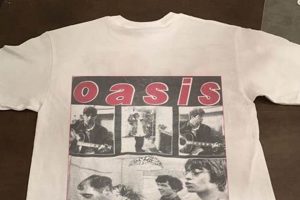
These garments represent a specific category of apparel: band-related merchandise from prior eras. They typically feature imagery associated with the iconic rock band and their historical performances, capturing a tangible connection to a particular period in the band’s extensive history. An example would be a screen-printed item displaying tour dates from the 1981 US tour.
Such items hold significance for collectors and fans, often embodying nostalgia and serving as a testament to the band’s enduring influence on music and culture. Their value can be influenced by factors such as rarity, condition, and the specific tour or event depicted, reflecting both the band’s popularity and the item’s historical context. The appeal stems from both musical appreciation and an investment in a piece of music history.
This type of apparel serves as a focal point for understanding related themes such as the market for band merchandise, the evolution of printing techniques in garment production, and the cultural impact of popular music on fashion trends across different decades. The following sections will explore these themes in greater detail.
Acquiring Authentic Rolling Stones Vintage T Shirts
The acquisition of authentic band-related apparel from past decades requires careful consideration and due diligence. This section outlines critical factors to evaluate when assessing the legitimacy and value of such items.
Tip 1: Examine the Fabric and Construction. Original shirts from the 1970s and 1980s typically utilized single-stitch construction, visible at the hem and sleeves. Mass-produced reproductions often employ a double-stitch. The type of cotton and its weight can also indicate authenticity. Lightweight, thin cotton blends are more common in contemporary reproductions.
Tip 2: Analyze the Graphics and Print Quality. Vintage screen prints often exhibit slight imperfections and fading due to age and wear. Modern printing techniques produce cleaner, more vibrant designs. Inspect the ink for cracking or wear patterns consistent with age.
Tip 3: Scrutinize the Tag and Label. The presence and style of the tag are crucial indicators. Research common tag brands used during the period corresponding to the shirt’s design. Note any manufacturer marks, sizing information, and country of origin. Reproductions often feature inaccurate or missing tag details.
Tip 4: Assess the Shirt’s Overall Condition. Minor imperfections such as small holes or stains may be acceptable, even desirable, depending on the rarity and age of the item. However, excessive damage or alterations can significantly reduce the value. Consider the shirt’s wear patterns in relation to its age.
Tip 5: Verify Tour Dates and Event Information. Cross-reference the dates and locations printed on the shirt with historical tour schedules and concert archives. Inaccuracies or inconsistencies suggest a potential reproduction or unofficial merchandise.
Tip 6: Consult with Experienced Collectors and Appraisers. Seeking the opinion of experts in vintage band apparel can provide valuable insights and authentication support. Their knowledge of specific eras, printing techniques, and tag variations can help identify genuine articles.
Tip 7: Research the Seller’s Reputation and Return Policy. When purchasing online or from unfamiliar vendors, prioritize sellers with established reputations and transparent return policies. Obtain detailed photographs and descriptions before committing to a purchase. Request additional information and documentation if necessary.
Careful evaluation of these factors enhances the likelihood of acquiring genuine vintage apparel and avoiding costly misinterpretations. This approach protects against fraudulent merchandise and preserves the integrity of the collecting process.
The following sections will explore the historical context and cultural significance of such items within the broader landscape of music memorabilia and fashion trends.
1. Rarity and scarcity

The value of apparel related to the band from prior decades is intrinsically linked to its rarity and scarcity. These factors directly influence collectibility and market value. Limited print runs, designs specific to particular concert venues or promotional events, and the survival rate of these items over time all contribute to scarcity. The more limited the original production and the fewer surviving examples, the higher the potential value. For example, a shirt distributed exclusively to crew members on a specific tour will inevitably command a premium compared to a design widely available to the public.
The interplay between rarity and demand further amplifies this effect. High demand for apparel associated with a legendary band, combined with limited availability, creates a competitive market. The condition of a rare item also plays a significant role; a pristine example will naturally be more desirable than a damaged one, even if both originate from the same limited production run. Authentication becomes particularly critical when dealing with ostensibly rare items, as reproductions and forgeries can significantly dilute the market value of genuine artifacts. Shirts commemorating historically significant concerts or milestones in the band’s career are also notably sought after.
Understanding the principles of rarity and scarcity is paramount for collectors and investors in vintage music memorabilia. This knowledge informs purchasing decisions, risk assessment, and long-term valuation strategies. Ignoring these factors can lead to overpayment for common items or the acquisition of inauthentic merchandise. The value in such case will be zero since it is not rolling stones vintage t shirt.
2. Fabric and construction
The fabric and construction of vintage band-related apparel are integral factors in determining its authenticity, age, and overall value. These elements reflect the prevailing manufacturing techniques and materials available during the garment’s original production period. Variations in fabric type, stitching methods, and garment assembly serve as indicators of the item’s age and potential legitimacy. For instance, shirts produced in the 1970s and 1980s commonly feature single-stitch construction on the sleeves and hem, a characteristic less prevalent in modern reproductions. The type of cotton used, often a lighter weight, also distinguishes older shirts from contemporary counterparts.
The construction quality directly affects the durability and longevity of the garment. Higher-quality materials and meticulous assembly contribute to the shirt’s ability to withstand wear and tear over time. Conversely, inferior fabric or poorly executed stitching can accelerate deterioration, reducing the item’s collectibility and value. Evaluating the seam integrity, fabric density, and overall structural integrity is essential in assessing the shirt’s condition. Observing the collar construction, shoulder seams, and side seams provides further insights into the garment’s manufacturing standards. The presence of chain stitching or other era-specific techniques can further authenticate the shirt’s vintage status.
Understanding fabric and construction provides a practical framework for evaluating the authenticity and condition of vintage band merchandise. This knowledge aids in differentiating between genuine artifacts and reproductions. Challenges in authentication arise from the increasing sophistication of counterfeit garments and the degradation of materials over time. Careful examination, comparison against known examples, and consultation with experts mitigate these risks. The fabric and construction details are crucial elements in the overall assessment of band related vintage apparel, informing decisions about purchase, preservation, and valuation.
3. Print quality assessment

The evaluation of print quality is a critical aspect of authenticating and valuing vintage band-related shirts. The printing techniques, ink composition, and graphic design used in these shirts offer insights into their age, origin, and potential rarity. A comprehensive assessment of these elements is essential for distinguishing genuine vintage items from modern reproductions.
- Screen Printing Characteristics
Screen printing was the predominant method for applying graphics to apparel during the vintage era. Authentic screen prints exhibit certain characteristics, including slight imperfections, subtle color variations, and a palpable texture. The ink may display minor cracking or fading due to age and wear. Replicas often feature smoother, more uniform prints with vibrant colors that lack the nuanced imperfections of vintage screen printing. For example, close examination of a print from the 1970s might reveal slight misalignments in the registration of different colors, a common occurrence in older printing processes. This misalignment is less likely to be present in modern, digitally printed reproductions.
- Ink Composition and Durability
The type of ink used in vintage prints differs from contemporary inks in terms of composition and durability. Older inks tend to be thicker and less flexible, leading to a characteristic cracking pattern when the fabric is stretched. Modern inks are generally more pliable and resistant to cracking. Examining the ink’s texture and response to stretching can provide clues about its age and authenticity. Additionally, the ink’s adherence to the fabric is a relevant factor; vintage prints may exhibit some degree of ink loss or fading due to washing and wear, whereas modern prints are typically more resistant to these effects. An original print may exhibit a softer hand feel, while a reproduction might feel stiffer due to the ink’s properties.
- Graphic Design and Accuracy
The accuracy of the graphic design is another important consideration. Vintage shirts often feature designs that are specific to particular tours, events, or promotional campaigns. Replicas may exhibit inaccuracies in the design, such as misspellings, incorrect dates, or variations in the artwork. Comparing the design to documented tour schedules and promotional materials can help verify its authenticity. Furthermore, the complexity and detail of the design can provide insights into the printing capabilities of the era. Intricate designs with fine lines and multiple colors were more challenging to reproduce accurately using vintage printing techniques, making them potentially more valuable and harder to replicate convincingly.
- Print Placement and Alignment
The placement and alignment of the print on the shirt can also offer clues about its authenticity. Vintage prints may exhibit slight variations in placement due to manual printing processes. Consistent and perfectly aligned prints are more indicative of modern, automated printing techniques. Evaluating the symmetry, positioning, and overall balance of the print in relation to the shirt’s construction can help assess its vintage status. For example, a vintage shirt might display a slightly off-center print, a characteristic less common in contemporary reproductions that benefit from precise alignment controls.
These aspects of print quality assessment collectively contribute to a comprehensive understanding of the historical context and potential value of vintage band-related shirts. A meticulous examination of these elements, combined with research into the band’s history and vintage apparel market, allows for a more informed evaluation and helps to distinguish genuine articles from reproductions. The degree of fading, cracking, and even the specific colors used can all contribute to authenticating the shirt and understanding its place in music history.
4. Tag identification specifics

The garment tag serves as a primary indicator of origin, era, and authenticity. For items related to the band from prior decades, the tag’s design, material, and manufacturer markings provide critical clues about the item’s provenance. Different manufacturers held licensing agreements with the band at various points, resulting in a range of tag styles specific to certain periods. Therefore, knowing the identifying details of various tags is of utmost importance in assessing if this is rolling stones vintage t shirt. Incorrect tag styles relative to the purported era of the garment strongly suggest inauthenticity or a later reproduction. As a cause, manufacturing time could be directly linked to tag, and the effect is easy to verify the manufacturing timeline. An example would be a shirt with a tag style not introduced until the 1990s claiming to be from the 1978 tour. The presence and condition of the tag also affect the garment’s value; an intact and legible tag generally enhances its collectibility.
Tag identification extends beyond recognizing specific brands. The materials used in the tag’s construction, such as woven fabric or printed paper, and the font styles employed in the printed text offer further verification points. Certain tag brands are associated with specific printing techniques common during certain years. For example, Champion used a distinct font and design on their tags in the 1970s and 1980s, different from that used in later decades. Examining the tag’s stitching and attachment method to the shirt also provides insights into its originality, such as if the stitching uses similar material and color to all the rest of the shirt. Damage to the tag, such as fading or fraying, must be assessed in context; excessive wear may detract from value, while a degree of age-related wear can be expected and even add character to the garment. Knowledge of regional variations in tag styles, due to licensing agreements with different manufacturers in different geographic markets, is also important.
In summary, tag identification represents a fundamental step in validating apparel. Accurate tag analysis requires detailed knowledge of manufacturer history, printing techniques, and design variations specific to the band and the garment industry during the relevant period. Although tag analysis can not guarantee 100% rolling stones vintage t shirt, an incorrect or inconsistent tag raises significant concerns about the item’s authenticity, emphasizing the tag’s importance as a cornerstone of evaluation.
5. Historical tour context
The historical tour context is fundamentally intertwined with the value, authenticity, and collectibility of band-related apparel from prior decades. Each tour represents a specific period in the band’s history, with corresponding designs and merchandise reflecting the era’s aesthetic and cultural significance. Understanding this context is crucial for assessing the legitimacy and historical relevance of such garments.
- Tour-Specific Designs and Imagery
Each tour often featured unique artwork, logos, and slogans that were incorporated into the merchandise. These designs served as visual identifiers for the specific tour, allowing fans to commemorate their attendance or connection to that particular moment in the band’s history. For example, apparel from the “Steel Wheels” tour typically incorporates imagery related to the tour’s industrial theme, distinguishing it from merchandise associated with other tours. The presence of tour-specific designs on a item is important because it could be rolling stones vintage t shirt.
- Limited Edition Merchandise and Venue Exclusives
Certain tours included limited-edition merchandise or items exclusive to specific venues. These items were produced in smaller quantities, making them inherently rarer and more valuable to collectors. Examples include shirts with venue-specific dates and locations printed on them or designs that were only available at a particular concert. Such exclusivity greatly enhances the garment’s historical significance and market value. Checking online to see these events did happen in the time, is a smart way to confirm rolling stones vintage t shirt legitimacy.
- Correlation with Album Releases and Band Lineups
The tour context is often linked to album releases and changes in the band’s lineup. Apparel associated with a tour that coincided with a significant album release or marked the debut of a new band member holds added historical weight. These shirts serve as tangible reminders of those pivotal moments in the band’s career. Example is a shirt showing the new lineup after a member change, which is historically very important.
- Influence of Cultural and Political Events
The historical context also encompasses the broader cultural and political events that occurred during the tour. Apparel from tours that took place during times of social unrest, political upheaval, or significant cultural shifts may reflect those events in their designs or messaging. This connection to the broader historical context enhances the garment’s significance as a cultural artifact. Apparel could be related to a specific moment in cultural or political events and will be very meaningful.
By understanding the historical tour context, collectors and enthusiasts can gain a deeper appreciation for the band’s legacy and the stories behind each garment. The ability to connect a shirt to a specific tour, album release, or cultural moment enhances its value and transforms it from a mere piece of clothing into a tangible piece of music history, especially to rolling stones vintage t shirt market.
Frequently Asked Questions
This section addresses common inquiries regarding the identification, valuation, and preservation of apparel associated with the band from earlier eras. The information provided aims to clarify misconceptions and offer guidance to collectors and enthusiasts.
Question 1: How can a determination be made about the approximate age of apparel related to the band from the past?
Analysis of the tag, fabric construction, and printing techniques employed offer insights. Single-stitch construction typically indicates older manufacturing. Specific tag styles correlate with particular periods.
Question 2: What factors contribute to the value of apparel associated with the band from past eras?
Rarity, condition, tour association, and design significance influence the value. Limited edition items and shirts from landmark tours command higher prices.
Question 3: What steps should be taken to preserve the condition of band apparel from decades past?
Gentle hand washing with mild detergents is recommended. Avoid direct sunlight and store the shirts flat or folded in acid-free tissue paper.
Question 4: How is authenticity verified for these vintage garments?
Compare the garment to known examples. Analyze the tag, printing quality, and construction details. Consult with experienced collectors or appraisers.
Question 5: Where are these vintage band shirts typically found?
Auctions, vintage clothing stores, online marketplaces, and private collections are common sources. Exercise caution and verify the seller’s reputation.
Question 6: How does condition affect the value?
Condition is a key determinant of value. Shirts in excellent condition command significantly higher prices compared to those with damage or excessive wear. However, minor imperfections may be acceptable, depending on the item’s rarity.
Understanding these key aspects empowers collectors to make informed decisions and preserve the historical integrity of these items.
The subsequent sections will delve into specific strategies for cleaning and repairing damage to these vintage garments.
Conclusion
This exploration has elucidated critical factors in understanding apparel associated with the band from earlier eras. Considerations of rarity, construction, print quality, tag identification, and historical tour context are essential in the assessment of these items. The goal is to equip collectors and enthusiasts with the knowledge necessary to evaluate authenticity, determine value, and preserve these pieces of music history.
Continued research, meticulous evaluation, and adherence to established best practices in preservation are vital to safeguarding the legacy of these artifacts. These steps will ensure their appreciation by future generations and maintain the integrity of the collecting community. It is very valuable if all factors mentioned above are present for rolling stones vintage t shirt.