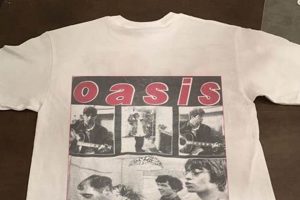
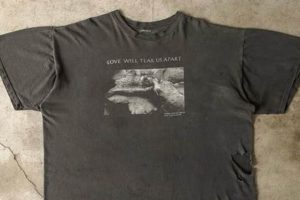
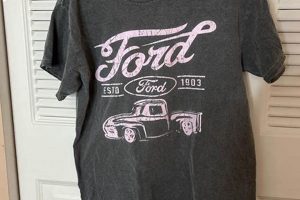
The item under consideration is a pre-owned garment featuring imagery and branding associated with the American punk rock band, the Ramones. These shirts often originate from the band’s active touring years or initial merchandising efforts, making them distinct from contemporary reproductions. An example would be a well-worn black tee displaying the band’s iconic presidential seal logo, potentially bearing a concert date from the late 1970s.
Such apparel holds significance due to its connection to a seminal musical group and a counter-cultural movement. The value of these items stems from their scarcity, historical relevance, and the inherent appeal to collectors and enthusiasts. They represent a tangible link to a specific era of music history and cultural expression, often carrying a patina of authenticity not found in newer products.
The following sections will delve into aspects such as identifying genuine articles, assessing their condition and value, and exploring the cultural impact that contributes to their continued desirability. The discussion aims to provide a detailed understanding of factors influencing the acquisition and appreciation of these collectible pieces.
Acquiring Authentic Memorabilia
The purchase of apparel associated with the Ramones requires careful consideration to ensure authenticity and value. The following points are designed to assist in making informed acquisitions.
Tip 1: Verify Origin and Era: Examine the garment’s construction and materials. Older shirts typically feature single-stitch construction on the sleeves and hem, a characteristic rarely found in modern reproductions. Research the band’s tour dates and associated merchandise to establish a plausible timeframe for the item’s origin.
Tip 2: Assess Print Quality and Detail: Authentic prints from the period exhibit a certain level of wear and may show subtle imperfections. Modern reproductions often have overly sharp and pristine graphics. Compare the print to known authentic examples to identify discrepancies in color, font, and image clarity.
Tip 3: Scrutinize the Label: The label provides valuable information regarding the manufacturer and materials used. Research vintage t-shirt labels to familiarize oneself with brands and styles common during the Ramones’ active years. Inconsistencies between the label and the shirt’s purported age are a significant red flag.
Tip 4: Evaluate Condition Carefully: While some wear and tear is expected, excessive damage can significantly diminish value. Examine the shirt for holes, stains, and fading. Consider the impact of any repairs on the item’s overall collectibility.
Tip 5: Investigate the Seller’s Reputation: Purchase from reputable dealers specializing in vintage clothing or music memorabilia. Examine seller feedback and seek references to verify their authenticity and reliability.
Tip 6: Seek Expert Opinion: Consult with collectors or experts knowledgeable in vintage music merchandise. Their insights can prove invaluable in confirming the authenticity and provenance of a particular item.
Careful application of these guidelines significantly reduces the risk of acquiring inauthentic or misrepresented merchandise. Diligence and research are essential for successful collecting.
The subsequent sections will elaborate on the appreciation and proper care of vintage garments, further enhancing the collector’s experience.
1. Authenticity Markers

Authenticity markers are critical for determining the genuine nature of a vintage Ramones t-shirt. These markers serve as evidence connecting the garment to a specific historical period and the band’s activities. For example, the presence of a single-stitch construction, a manufacturing technique prevalent in the 1970s and 1980s, is a strong indicator of age. The absence of this feature on a supposedly vintage shirt suggests a later reproduction. Similarly, the type of fabric used, often a thinner, softer cotton blend in older shirts compared to the thicker, more durable cotton used today, provides another clue. These factors, in combination, help distinguish an original from a contemporary imitation. Without these markers, establishing an item’s true provenance becomes significantly more difficult.
Furthermore, print quality and the specific label used offer further means of authentication. Screen printing techniques employed in the past often resulted in prints that, while vibrant initially, exhibited natural wear and slight imperfections over time. These imperfections, such as minor cracking or fading, can be indicative of age and use. The brand and style of the label stitched into the collar or side seam can also be researched. Certain manufacturers were more common during the band’s active touring years. Matching the label to known examples from that period strengthens the case for authenticity. An example of a sought-after label is the “Spring Ford” brand, frequently found in garments from the 1970s and early 1980s.
In summary, authenticating a vintage Ramones t-shirt requires meticulous examination of its construction, materials, print, and labeling. Each marker contributes to a holistic assessment, and inconsistencies across these elements raise serious concerns about the item’s true age and origin. A thorough understanding of these authenticity markers is therefore essential for both collectors and enthusiasts seeking to acquire genuine pieces of music history.
2. Print Imperfections
Print imperfections, far from detracting from the value of a vintage Ramones t-shirt, often serve as a critical indicator of authenticity and age. These imperfections arise from the printing techniques employed during the band’s active years and the natural degradation of materials over time. Factors such as screen-printing limitations, ink quality, and washing cycles contribute to fading, cracking, and slight misalignments in the graphic. A pristine, flawless print on a shirt purported to be from the 1970s or 1980s is, therefore, immediately suspect, as it defies the expected wear and tear associated with genuine vintage items. For example, a cracking presidential seal on a black tee, or slight blurring of the lettering on a Rocket to Russia tour shirt, suggests legitimate aging rather than a modern reproduction. These subtle flaws authenticate the item, offering a tangible link to its historical context.
Furthermore, specific types of print imperfections can correlate with particular printing methods and eras. Certain screen-printing techniques from the 1970s, for instance, were prone to specific types of cracking patterns or ink bleeding. Identifying these era-specific imperfections requires familiarity with vintage apparel and printing history. Knowledge of these details allows collectors to differentiate between genuine aging and artificial distressing applied to counterfeit items. Consider, for example, a vintage shirt featuring a particular style of distressed lettering characteristic of a certain printing house; this can be a powerful indication of authenticity. Understanding the nuance of print imperfections can therefore be a critical skill for collectors and vendors.
In conclusion, print imperfections are an integral component of assessing the authenticity and value of vintage Ramones shirts. They provide verifiable evidence of age and offer clues about the garment’s provenance. While some may perceive these imperfections as damage, experienced collectors recognize them as valuable markers that separate genuine artifacts from contemporary replicas. Therefore, when evaluating a potential acquisition, attention to the type, location, and extent of print imperfections is paramount, serving as a reliable indicator of authenticity and contributing significantly to the overall desirability of the item.
3. Fabric Composition

Fabric composition serves as a significant determinant in authenticating and evaluating apparel associated with the Ramones. The materials used in manufacturing these garments reflect the textile industry standards and available resources of the time, providing crucial clues regarding age and origin.
- Cotton Quality and Weave
Vintage t-shirts typically feature a softer, thinner cotton than modern counterparts. The weave tends to be looser, resulting in a more flexible and breathable fabric. This contrasts sharply with the heavier, more tightly woven cotton used in contemporary mass-produced apparel. A 1970s era shirt might exhibit a distinct slub texture and a more delicate hand feel compared to a modern reproduction, offering tangible evidence of its age.
- Fiber Blends and Synthetics
The presence and type of synthetic fibers in a garment can indicate its era of production. While 100% cotton was common, some vintage t-shirts incorporated blends with polyester or rayon to enhance durability or drape. The specific ratio and type of these blends can be cross-referenced with textile production records to corroborate the shirt’s purported age. For instance, a specific polyester blend, phased out by the mid-1980s, strongly suggests a manufacturing date prior to that period.
- Dye Absorption and Fading Characteristics
The fabric’s composition directly influences how dyes interact with the material and how it fades over time. Vintage cotton often exhibits a specific type of fading, characterized by a gradual lightening of color and subtle variations in tone. Modern dyes and fabrics may produce a different fading pattern, often appearing more uniform or artificial. Examining the fading characteristics of a print, particularly its interaction with the fabrics fiber structure, provides a valuable authenticity indicator.
- Construction Techniques and Stitching
Fabric impacts the methods used to construct the garment. Older shirts frequently use single-stitch construction, a less durable but historically accurate method where the hem and sleeves are sewn with a single line of stitching. This contrasts with the double-stitched seams of modern shirts, offering superior durability but lacking historical accuracy. Fabric weight and weave determined whether single or double stitching was viable.
These facets of fabric composition collectively contribute to a comprehensive understanding of a vintage Ramones shirt’s authenticity and value. Analyzing the cotton quality, fiber blends, dye absorption, and construction techniques provides essential clues about its origin, offering insights that authenticate the shirts place in music history.
4. Label Specifics
The labels affixed to apparel linked to the Ramones are critical pieces of evidence when assessing authenticity and establishing the era of manufacture. Label characteristics such as branding, font style, content, and construction provide valuable information for collectors and enthusiasts. Examination of these elements can help determine if a garment is a genuine vintage item or a modern reproduction.
- Brand Identification
Certain clothing manufacturers were prevalent during the Ramones’ active years and were frequently used for band merchandise. Identifying these brands, such as “Spring Ford,” “Screen Stars,” “Hanes,” or “Sportswear,” can corroborate a shirt’s purported age. Familiarity with these brands and their associated logos or trademark styles helps distinguish authentic items from counterfeits. For example, the presence of a specific “Screen Stars” label style, common in the early 1980s, strengthens the claim of a garment originating from that period.
- Content and Format
The information printed on labels varies based on the brand and era. Typical details include the garment size, fabric composition (e.g., 100% cotton), and country of origin (e.g., Made in USA). The format and wording used can be revealing. For example, older labels may use abbreviations or phrasing styles that are no longer common. Inconsistencies between the label content and the known standards of the purported era raise significant doubts regarding authenticity. A label lacking a country of origin on a shirt claimed to be from the 1970s, for example, warrants closer scrutiny.
- Construction and Attachment
The method by which the label is attached to the garmentwhether sewn in, screen-printed directly onto the fabric, or heat-transferredoffers further insight. Vintage labels are typically sewn in using specific stitch patterns and thread types common to the era. The quality of the stitching and the material used for the label itself should align with known manufacturing practices. Loose or poorly executed stitching, or the use of modern synthetic materials for the label, may indicate a reproduction.
- Trademark and Copyright Information
Details regarding trademarks or copyright symbols present on the label can be valuable. Older labels may lack specific trademark notices or utilize outdated copyright symbols compared to contemporary versions. These nuances, while subtle, can aid in determining the approximate year of manufacture. An absence of a trademark symbol on a label where it would be expected, based on the brand’s history, can suggest an earlier, pre-trademark version or a counterfeit.
In summary, label specifics provide essential clues for authenticating apparel associated with the Ramones. A detailed examination of the brand, content, construction, and trademark information can assist collectors in making informed purchasing decisions and appreciating the historical context of these vintage items. Careful consideration of these label specifics offers verifiable evidence when assessing a vintage Ramones tee’s authenticity and solidifies its collectibility.
5. Rarity Factors
Rarity factors significantly influence the desirability and valuation of apparel associated with the Ramones. These factors encompass a variety of elements that contribute to the scarcity of specific designs, sizes, and manufacturing details, thereby elevating their collectibility.
- Limited Edition Prints
Certain designs were produced in limited quantities for specific events, tours, or promotional campaigns. These prints, often featuring unique artwork or tour dates, become highly sought after due to their limited availability. For example, shirts produced exclusively for a single concert venue or a short run of tour dates command higher prices due to their documented scarcity. The presence of specific copyright dates or event details can verify the limited nature of such items.
- Size Availability
Sizes outside the standard range (e.g., extra small or extra large) are frequently rarer than more common sizes (medium and large). This is because production runs for less typical sizes were often smaller. Consequently, a well-preserved extra-small or extra-large garment depicting a coveted Ramones design may command a premium due to its relative scarcity. This factor particularly applies to shirts from earlier decades, where size standardization was less prevalent.
- Manufacturing Variations
Subtle variations in the manufacturing process, such as differences in fabric color, print placement, or label design, can contribute to rarity. These variations, often unintentional, may result from changes in production runs or factory-specific details. A shirt with a misaligned print or a unique label style not typically associated with a particular brand can become a sought-after collector’s item. These variances, while seemingly minor, provide a unique identifier for collectors.
- Geographic Exclusivity
Merchandise produced for specific geographic regions or countries is often more difficult to acquire outside of its original distribution area. Shirts manufactured exclusively for the Japanese or European market, for instance, may feature unique designs or branding not found in the United States. The inherent difficulty in obtaining these geographically restricted items elevates their desirability and value among international collectors.
These aspects of rarity converge to create a complex system of value within the realm of vintage apparel from the Ramones. Understanding these factors allows collectors and enthusiasts to discern truly exceptional items from more common examples, guiding their acquisitions and enhancing their appreciation for these artifacts of music history.
Frequently Asked Questions Regarding Vintage Ramones T Shirts
The following questions address common inquiries and concerns surrounding the identification, valuation, and preservation of vintage apparel associated with the Ramones.
Question 1: What criteria differentiate a vintage Ramones t shirt from a contemporary reproduction?
Key differentiators include fabric composition, single-stitch construction, printing techniques, label characteristics, and the presence of wear consistent with age. Vintage examples typically exhibit a softer cotton fabric, single-stitch construction on the sleeves and hem, and print imperfections resulting from older screen-printing methods.
Question 2: How can the authenticity of a vintage Ramones t shirt be verified?
Authenticity verification involves examining several factors. The garment’s construction, label, and print style should align with known characteristics of vintage apparel from the band’s active era. Consulting with experts and comparing the item to documented examples strengthens the assessment.
Question 3: What factors influence the monetary value of a vintage Ramones t shirt?
Monetary value is determined by a combination of factors, including the shirt’s rarity, condition, design, size, and historical significance. Limited edition prints, uncommon sizes, and designs associated with specific tours or events command higher prices.
Question 4: How should a vintage Ramones t shirt be properly stored to prevent damage?
Proper storage involves protecting the garment from light, moisture, and pests. Ideal storage methods include folding the shirt inside acid-free paper within a sealed archival box or hanging it on a padded hanger in a dark, climate-controlled environment.
Question 5: What are the implications of washing a vintage Ramones t shirt?
Washing can cause fading, shrinking, and damage to the print and fabric. It is generally recommended to avoid washing vintage t-shirts. If washing is necessary, hand-washing in cold water with a gentle detergent is preferable, followed by air-drying away from direct sunlight.
Question 6: Are specific brands of t shirts more valuable than others when considering vintage Ramones merchandise?
Yes, certain brands that were commonly used for band merchandise during the Ramones’ active period, such as Spring Ford, Screen Stars, and Hanes, often hold more value due to their association with the era and their scarcity today.
Thorough understanding of the variables in authentication, preservation, and valuing these items allows for responsible collecting.
Subsequent sections will present case studies, offering a more comprehensive exploration.
Conclusion
The examination of the “vintage ramones t shirt” reveals its significance as more than mere apparel. It stands as a tangible artifact representing a pivotal era in music history and counter-cultural expression. Through careful authentication, understanding rarity factors, and appreciating print and fabric characteristics, collectors and enthusiasts can navigate the nuances of this market with informed discernment.
Continued interest in these items underscores the enduring legacy of the band and the broader cultural impact of punk rock. Further research and diligent preservation efforts are essential to ensure that these relics remain accessible for future generations, maintaining a vital connection to the Ramones’ influence on music and style.