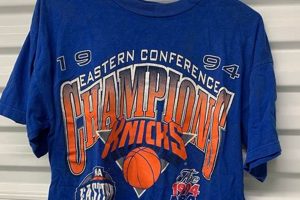
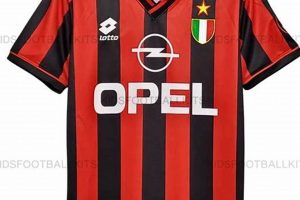
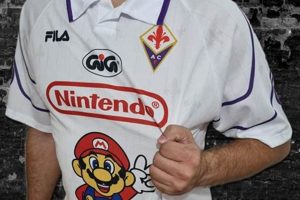
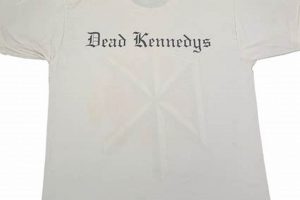
Apparel from a bygone era featuring the likeness, name, or imagery associated with the musician Ozzy Osbourne represents a specific segment of collectible merchandise. These items, often dating back to Osbourne’s time with Black Sabbath or his early solo career, are characterized by their age, design, and rarity. An example would be a concert tee from the “Blizzard of Ozz” tour in the early 1980s.
Such garments hold significance as artifacts of music history, reflecting the cultural impact of a prominent artist and genre. Their value stems from factors like print quality, condition, and the obscurity of the design. Moreover, they offer a tangible connection to a specific period in music and fashion, appealing to collectors, fans, and those interested in vintage clothing.
This segment of rock and roll memorabilia yields insights into shifts in music promotion, design aesthetics, and fan culture across decades. The following analysis delves into factors influencing value, authentication processes, and notable examples of these highly sought-after pieces.
Tips for Acquiring Vintage Ozzy Osbourne Shirts
The acquisition of these garments requires careful consideration to ensure authenticity and value. Due diligence is paramount when entering the market for such collectibles.
Tip 1: Scrutinize the Garment’s Construction. Examine the seams, fabric weight, and overall construction quality. Authentic vintage shirts typically exhibit single-stitch construction, a characteristic common in older manufacturing processes. Modern reproductions often utilize double-stitching.
Tip 2: Assess the Graphic Quality. Analyze the printing technique. Vintage graphics are often screen-printed, resulting in a thicker, more textured feel compared to modern digital prints. Look for signs of cracking or fading consistent with age.
Tip 3: Investigate the Label. Research the manufacturer’s label present on the garment. Different labels correspond to specific eras. Cross-reference the label with online resources to verify its authenticity and period.
Tip 4: Examine the Condition. While pristine condition is desirable, some wear and tear is expected in vintage items. However, excessive damage, such as large holes or significant staining, can diminish the value. Evaluate the condition relative to the garment’s age and rarity.
Tip 5: Consult with Experts. Seek the opinion of knowledgeable collectors or vintage clothing dealers. Their expertise can provide valuable insights into authentication and fair market value.
Tip 6: Document Provenance. Whenever possible, obtain documentation that supports the shirt’s history, such as concert tickets, photographs, or letters of authenticity. Provenance significantly enhances the value and collectibility.
Tip 7: Compare Against Known Authentic Examples. Before making a purchase, compare the item in question to photographs and descriptions of verified authentic shirts from reputable sources. Pay close attention to details such as graphic placement, font styles, and color palettes.
Adhering to these guidelines can significantly reduce the risk of acquiring counterfeit or misrepresented merchandise, protecting the investment and ensuring the authenticity of the acquired piece.
The subsequent sections will explore specific examples of valuable and sought-after designs, providing a deeper understanding of this unique collecting niche.
1. Era Identification
Determining the era of origin for a garment associated with Ozzy Osbourne is crucial for assessing its value and authenticity. Distinct periods in Osbourne’s career, from his tenure with Black Sabbath to his solo endeavors, correspond to specific design aesthetics, printing techniques, and garment construction methods.
- Black Sabbath Period (1970s)
Apparel originating from this period often features darker, more occult-themed imagery reflecting the band’s lyrical content. Construction techniques typically involve simpler single-stitch methods. Labels from defunct or lesser-known clothing manufacturers are common. These shirts are particularly rare and command high prices due to their age and historical significance.
- Early Solo Career (1980s: Blizzard of Ozz, Diary of a Madman)
This era saw the introduction of more vibrant colors and elaborate graphics, coinciding with the rise of heavy metal’s popularity. Tour shirts from this period are highly sought after, especially those featuring iconic album artwork. Fabric blends may shift to include more synthetics, reflecting advancements in textile manufacturing.
- Mid-Solo Career (Late 1980s – 1990s: No More Tears, Ozzmosis)
Designs from this period often incorporate elements of glam metal and hard rock, with larger, bolder fonts and more stylized depictions of Osbourne. The use of licensed merchandise becomes more prevalent, resulting in a wider availability of shirts, though specific designs or tour variants remain collectible.
- Later Career (2000s – Present)
While newer apparel featuring Osbourne is readily available, items from earlier periods retain higher collector value. Examining the copyright dates on the garment’s label or graphic can provide valuable clues to its era. Modern reprints of vintage designs can sometimes be difficult to distinguish without careful scrutiny of construction and printing techniques.
The accurate assessment of a garment’s era necessitates meticulous examination of design elements, manufacturing characteristics, and historical context. This process enables collectors and enthusiasts to differentiate between authentic vintage pieces and more recent reproductions, ultimately impacting the item’s perceived value and desirability.
2. Graphic Integrity

The condition of the printed design on a “vintage ozzy osbourne shirt” significantly influences its value and desirability. Graphic integrity encompasses several factors, each contributing to the assessment of authenticity and collectibility.
- Print Quality and Technique
Vintage shirts often feature screen-printed designs, characterized by a thick, textured feel and vibrant colors. The presence of cracking, fading, or imperfections is common due to age and wear but can be acceptable if consistent with the garment’s overall condition. Modern digital prints, in contrast, typically exhibit a smoother, less textured surface. Examining the printing technique is a crucial step in determining a shirt’s age and authenticity. For instance, a shirt advertised as being from the 1980s featuring a digital print would raise immediate concerns regarding its validity.
- Design Accuracy and Copyright
The accuracy of the design is paramount. Authentic vintage shirts typically feature designs consistent with the era in which they were produced. Discrepancies in font styles, color palettes, or the inclusion of unauthorized imagery can indicate a reproduction or counterfeit item. The presence of a valid copyright notice, if applicable, can also support authenticity, though its absence does not necessarily invalidate a garment. Careful comparison with known authentic examples is essential to verifying design accuracy.
- Image Placement and Proportions
The placement and proportions of the graphic on the shirt are important indicators of authenticity. Inconsistencies in image placement, such as a design positioned too high or too low on the garment, can suggest a reproduction. Similarly, distortions in the graphic’s proportions can be indicative of a counterfeit item. Examining the relative size and positioning of the design elements compared to known authentic examples can help identify potential discrepancies.
- Color Fastness and Fading Patterns
The degree of color fastness and the pattern of fading exhibited by the graphic can provide clues to its age and authenticity. Vintage shirts often exhibit a characteristic fading pattern due to repeated washing and exposure to sunlight. Uniform fading across the entire design is generally more desirable than uneven or patchy fading, which can indicate improper storage or handling. The type of dye used in the printing process can also affect the color fastness and fading patterns. Investigating these aspects can provide valuable insights into a shirt’s history and authenticity.
Therefore, the “Graphic Integrity” represents a confluence of factors that contribute to the overall valuation. The details associated with printing are essential for confirming validity and influencing its market worth.
3. Fabric Composition

The textile makeup of a garment significantly influences its perceived value, durability, and overall authenticity. Analyzing the fabric composition of an item can provide valuable insight into its age and manufacturing origin, aiding in the identification of genuine articles.
- Fiber Type
The type of fibers used in the construction of a shirt can indicate its era. Early vintage shirts from the 1970s and early 1980s were commonly made from 100% cotton. As synthetic fibers became more prevalent, blends of cotton and polyester gained popularity. Identifying the fiber content through visual inspection and, if possible, a burn test can help determine the shirt’s age. For example, a shirt advertised as being from the 1970s but composed of a high percentage of polyester would raise concerns about its authenticity.
- Weave and Knit Structure
The weave or knit structure of the fabric can also provide clues. Single-knit jersey was a common construction method for vintage t-shirts, resulting in a softer, more pliable fabric. The presence of a more complex knit structure or a distinct weave pattern may indicate a later production date or a reproduction. Examining the texture and drape of the fabric can reveal details about its construction and age.
- Fabric Weight and Thickness
The weight and thickness of the fabric can impact the shirt’s durability and overall feel. Vintage shirts often feature a lighter-weight fabric compared to modern reproductions. Measuring the fabric weight in grams per square meter (GSM) can provide a quantitative assessment of its thickness and quality. A shirt with a significantly heavier fabric weight than typical vintage examples may be a reproduction.
- Dyeing and Printing Compatibility
The fabric composition affects how well the garment accepts dyes and printing inks. Vintage shirts often exhibit a unique color palette and fading pattern due to the types of dyes and printing techniques used at the time. Examining the color saturation and the level of dye penetration can offer insights into the printing process and the shirt’s age. Inconsistencies in color fastness or the presence of modern printing techniques on a vintage fabric can suggest a reproduction.
In summary, fabric composition provides essential insights. Analyzing fiber content, knit structure, fabric weight, and compatibility with dyes, collectors and enthusiasts can better assess the authenticity and value. These textile characteristics are vital to determining the legitimacy and historical importance within the specific sphere of collectible garments.
4. Label Authenticity
The manufacturer’s label affixed to a garment represents a critical element in establishing its provenance and authenticity, particularly within the context of collectible apparel associated with Ozzy Osbourne. Scrutinizing the label’s design, construction, and information provides invaluable clues regarding the shirt’s era of production and legitimacy.
- Manufacturer Identification
The label typically identifies the garment’s manufacturer. Researching these manufacturers and their historical production periods can help verify if the label corresponds to the purported era of the shirt. Certain labels were prevalent during specific decades; thus, anachronistic labeling can be indicative of a reproduction. For instance, a shirt claiming to be from the 1970s featuring a label from a company founded in the 1990s would raise significant concerns. Common vintage label examples include those from Screen Stars, Hanes, and Brockum, among others.
- Copyright and Trademark Information
Many labels include copyright or trademark symbols and dates. These markings provide insight into the intellectual property rights associated with the design and the timeframe in which it was legally protected. Discrepancies between the copyright date and the purported production date of the shirt can indicate a potential issue. A label lacking proper copyright or trademark information, especially on designs that were likely subject to intellectual property protection, may also raise suspicion.
- Fabric Content and Care Instructions
The label typically specifies the fabric content and care instructions for the garment. Analyzing this information can help determine if the fabric composition aligns with the manufacturing practices of the purported era. For example, care instructions printed in a font style or language that was not common during the shirt’s supposed period of origin would suggest a reproduction. Additionally, the specified fabric content should be consistent with the materials commonly used in vintage shirts from that era.
- Construction and Stitching Details
The method by which the label is affixed to the garment can provide clues. Vintage labels are often sewn in with a single stitch, while modern labels may be attached with a double stitch or heat-sealed. Examining the stitching pattern, thread type, and overall construction of the label can help determine if it is consistent with vintage manufacturing techniques. Furthermore, the presence of irregularities or inconsistencies in the stitching can indicate a counterfeit label or a replaced label.
Thus, meticulous evaluation of the label serves as a key step in the authentication process. By examining manufacturer identification, copyright details, material information, and construction, collectors can better assess the genuineness. Label assessment, along with era identification, graphic integrity, fabric composition, forms a comprehensive approach, to reduce the risk of acquiring misrepresented items.
5. Rarity Assessment

The assessment of scarcity directly affects the valuation of apparel related to the artist Ozzy Osbourne. Limited production runs, promotional items distributed exclusively at specific events, and shirts featuring designs never widely released inherently possess greater collectibility. A direct correlation exists between the difficulty in acquiring a particular shirt and its market value. For instance, a concert tee produced solely for a single show during a tour, featuring a unique design not replicated on subsequent merchandise, will generally command a higher price than a readily available design sold at multiple venues.
The condition of an individual piece further exacerbates or mitigates the effect of the rarity factor. A highly sought-after shirt, rare due to limited production, will exhibit significantly decreased value if marred by substantial damage or degradation. Conversely, a rarer shirt, in excellent condition, becomes a prime target for collectors, potentially realizing a disproportionately high sale price. The convergence of low availability and high-quality preservation creates a premium within the market. As an example, consider an original “Blizzard of Ozz” tour shirt, featuring the iconic album artwork, in mint condition. If verifiable records demonstrate that only a limited number of these shirts were produced for the initial leg of the tour, its value would far exceed that of a common bootleg reproduction.
Ultimately, proper evaluation necessitates a thorough understanding of production history, design variations, and known distribution channels. Accurately assessing scarcity requires dedicated research and familiarity with the specific nuances of related memorabilia. Successful collectors prioritize verifying claims of limited availability through multiple sources, including period documentation, collector forums, and expert opinions. The synthesis of these data points allows for a more accurate determination of a garment’s intrinsic and market value, thus emphasizing the paramount importance of a proper scarcity assessment within the market for this niche collectible.
6. Condition Evaluation

The assessment of physical state holds paramount importance in determining the value and desirability of garments featuring the likeness or branding of Ozzy Osbourne. The garment’s integrity directly influences its collectibility and market value. A comprehensive condition assessment involves careful scrutiny of various factors that reflect the item’s history and preservation.
- Fabric Integrity
The soundness of the textile material is a primary consideration. Tears, holes, fraying, and significant weakening of the fabric diminish the garment’s value. Examination should include stress points such as seams, collar, and armholes. For example, a shirt from the 1980s with extensive moth damage or dry rot would be considered to be in poor condition, significantly reducing its worth. Patches or amateur repairs detract from the garment’s originality and appeal.
- Graphic Preservation
The state of the printed design is crucial. Cracking, fading, peeling, and ink loss negatively impact visual appeal and authenticity. Excessive wear to the graphic reduces its clarity and detail, thereby lowering the shirt’s market value. A design that is significantly faded or obscured is less desirable than one with vibrant, well-preserved colors. Subtle, age-related cracking may be acceptable to some collectors, but extensive damage is generally detrimental.
- Staining and Discoloration
The presence of stains, discoloration, or yellowing significantly reduces the value. Sweat stains, discoloration from improper storage, and staining from spills detract from the overall appearance and collectibility. Attempting to remove stains can further damage the fabric or graphic, potentially exacerbating the problem. Uniform, age-related yellowing may be considered acceptable in some cases, but localized staining is generally undesirable.
- Alterations and Modifications
Any alterations or modifications from the original design negatively affect the value. Cut-off sleeves, removed labels, or significant resizing diminish the garment’s historical authenticity and collectibility. Original, unaltered items are generally more sought after. Even seemingly minor modifications, such as the addition of patches or embroidery, can detract from the shirt’s value.
In conclusion, a detailed condition evaluation is a prerequisite for determining the worth. Each element contributes to the overarching assessment of genuineness. The physical state, along with fabric integrity, graphic preservation, staining, and original construction each combine to form an overall assessment, and influence desirability among collectors and enthusiasts.
Frequently Asked Questions Regarding Vintage Ozzy Osbourne Shirts
This section addresses common inquiries and misconceptions concerning collectible apparel featuring Ozzy Osbourne, providing clarification on authentication, valuation, and related topics.
Question 1: How can the authenticity of apparel claiming to be a vintage Ozzy Osbourne shirt be verified?
Authenticity verification involves scrutinizing several factors. The manufacturing label, fabric composition, printing technique, and design accuracy all contribute to determining legitimacy. Comparing the garment to known authentic examples and consulting with experienced collectors is recommended.
Question 2: What factors primarily influence the value of such a garment?
Key determinants of value include the shirt’s era of origin, the condition of the graphic and fabric, the rarity of the design, and the presence of verifiable provenance. Garments from early periods of Osbourne’s career, in excellent condition, and with limited production runs typically command higher prices.
Question 3: Are shirts featuring designs not officially licensed by Ozzy Osbourne considered collectible?
While officially licensed merchandise generally holds greater value, unlicensed “bootleg” shirts from the vintage era can possess collectibility, particularly if they feature unique or rare designs not found on official merchandise. The quality of the design and the historical context contribute to their appeal.
Question 4: How does the presence of damage or wear affect the value?
The presence of significant damage, such as large holes, extensive staining, or severe graphic degradation, negatively impacts the value. Minor wear consistent with age may be acceptable to some collectors, but pristine condition is generally preferred. The degree to which damage affects value depends on the rarity and desirability of the specific design.
Question 5: Where are these garments typically found for purchase?
These garments can be found at vintage clothing stores, online auction sites, collector’s markets, and through specialized vintage clothing dealers. Due diligence is essential when purchasing from unfamiliar sources to ensure authenticity and avoid misrepresented items.
Question 6: Is professional appraisal recommended before purchasing or selling such a shirt?
Engaging a professional appraiser experienced in vintage clothing and music memorabilia is advisable, especially for high-value items. An appraisal provides an objective assessment of authenticity, condition, and fair market value, protecting both buyers and sellers.
The information outlined above aims to equip potential buyers and sellers with a foundational understanding of key considerations within this market.
The subsequent section will address strategies for preserving and storing vintage apparel to maintain its value and integrity over time.
Preserving the Legacy of the Vintage Ozzy Osbourne Shirt
The preceding exploration of the “vintage ozzy osbourne shirt” market underscores the complexities inherent in collecting and valuing these artifacts of musical and cultural history. Critical factors encompass era identification, graphic integrity, fabric composition, label authenticity, rarity assessment, and condition evaluation. The synthesis of these elements dictates a garment’s desirability and market value, differentiating genuine articles from reproductions.
Continued vigilance and informed decision-making are essential for both seasoned collectors and newcomers to this niche market. Thorough research, expert consultation, and a commitment to ethical acquisition practices will ensure the preservation of these items for future generations, safeguarding their historical significance and tangible connection to a pivotal era in music.