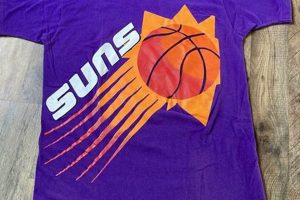
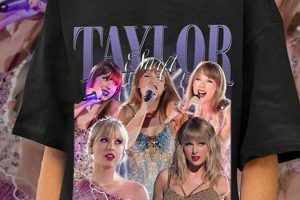
This category of apparel represents a fusion of music subculture and fashion history. These garments, typically cotton-based and featuring printed graphics of musical groups from past decades, serve as tangible artifacts of specific eras and musical movements. An example would be a well-worn garment displaying the name and likeness of a popular rock band from the 1970s.
The significance of these items lies in their representation of cultural identity and nostalgic appeal. They offer a connection to past musical experiences and often hold intrinsic value due to their rarity and historical context. Beyond mere clothing, they function as collectible items, reflecting the enduring influence of music on society and providing insights into the evolution of graphic design and printing techniques.
The following discussion will delve into various aspects related to these collectible music-related items, exploring their identification, valuation, preservation, and role within contemporary fashion trends. Understanding these factors is essential for both collectors and those interested in the cultural impact of music-related merchandise.
Acquiring Authentic Garments
The following recommendations offer practical advice for identifying and procuring genuine music-related apparel from prior decades, mitigating the risk of acquiring reproductions.
Tip 1: Scrutinize the Fabric and Construction: Original garments often exhibit unique characteristics in their fabric weight, stitching patterns, and overall construction. Examine the collar, seams, and hem for irregularities consistent with older manufacturing techniques.
Tip 2: Evaluate the Graphic Printing Quality: Authentic examples typically feature screen-printed graphics with a distinct texture and slight imperfections indicative of manual printing processes. Be wary of graphics that appear overly smooth or digitally printed, as these are common indicators of modern reproductions.
Tip 3: Inspect the Tag and Label Information: Investigate the presence and style of any manufacturer’s tags or labels. Research vintage clothing label guides to verify the tag’s authenticity and compatibility with the purported era of the garment.
Tip 4: Assess the Garment’s Condition and Wear: While excessive damage diminishes value, subtle signs of wear, such as fading, cracking in the graphic, and minor staining, can lend credibility to the garment’s age and authenticity. Heavily distressed items should be carefully scrutinized for potential alterations or artificial aging.
Tip 5: Consult Reputable Dealers and Experts: When acquiring high-value items, seek the expertise of established vintage clothing dealers or collectors specializing in music memorabilia. Their knowledge and authentication services can provide valuable assurance.
Tip 6: Compare with Verified Examples: Compare the item in question with known authentic examples found in online archives, museum collections, or published guides. Pay close attention to details such as graphic design, color palettes, and garment style.
Tip 7: Request Documentation and Provenance: If possible, inquire about the garment’s history and provenance. Any supporting documentation, such as original purchase receipts or photographs, can significantly enhance its value and authenticity.
Adhering to these guidelines increases the likelihood of securing legitimate vintage music-related apparel, ensuring both the preservation of historical artifacts and the avoidance of financial loss.
The subsequent sections will address the proper care and maintenance of these valuable items, preserving their condition for future generations.
1. Authenticity Verification

The process of confirming the genuineness of apparel from past musical eras is paramount in the realm of collecting and valuing vintage band tees. Rigorous authentication methods are necessary to distinguish original articles from contemporary reproductions, impacting both the item’s monetary worth and its historical significance.
- Fabric Analysis
The composition and texture of the material provide crucial clues regarding the garment’s era of production. Older fabrics often exhibit unique characteristics, such as specific blends or weaves, that are not replicated in modern textiles. Examining thread count, fiber content, and overall fabric weight allows for comparison with known authentic examples from the period.
- Print Quality Assessment
Vintage screen printing techniques employed to create graphics on these garments differ significantly from modern digital printing methods. Authentic prints exhibit a distinct texture, often with slight imperfections or inconsistencies, indicative of manual application processes. Analyzing the ink type, color vibrancy, and degree of cracking or fading provides further evidence of age and authenticity.
- Label Examination
Manufacturer labels and tags affixed to these apparel items contain valuable information about the garment’s origin and production date. Researching vintage label guides and brand histories enables cross-referencing the tag’s style, font, and information content with known authentic examples from the purported era. Discrepancies or inconsistencies in the label details may indicate a reproduction.
- Construction Scrutiny
The sewing techniques and construction methods used to assemble the garment can reveal details about its manufacturing period. Vintage garments often exhibit unique stitching patterns, seam finishes, and overall construction styles that differ from modern production standards. Analyzing the type of stitching, the placement of seams, and the quality of the construction provides additional evidence of authenticity.
Successful authentication relies on a holistic approach, combining expertise in textile analysis, printing techniques, label history, and garment construction. By carefully evaluating these factors, collectors and enthusiasts can discern genuine vintage band tees from inauthentic items, preserving the integrity of these cultural artifacts and ensuring their accurate valuation.
2. Rarity and Valuation

The interplay between scarcity and assigned worth is particularly pronounced within the market for garments representing musical groups from past eras. Several factors contribute to the rarity of a given item, consequently influencing its perceived and actual monetary value.
- Limited Production Runs
Garments manufactured in small quantities, often for specific concert tours or promotional events, inherently possess increased scarcity. An example is a shirt produced exclusively for a single performance venue on a band’s inaugural tour. Fewer examples of such items exist, elevating their value among collectors.
- Band Popularity and Legacy
The enduring recognition and cultural significance of the musical group depicted directly affects the demand for related merchandise. A garment associated with a globally renowned and historically important band will command a higher price than one featuring a lesser-known or short-lived act. The perceived cultural impact serves as a multiplier in valuation.
- Garment Condition
The physical state of the garment significantly impacts its value. Items in pristine condition, retaining their original color and shape with minimal wear, are more desirable to collectors. However, some wear, such as slight fading or cracking of the graphic, may be acceptable if it contributes to the item’s vintage aesthetic, provided it does not compromise the garment’s structural integrity.
- Provenance and Documentation
Documented history, such as original purchase receipts, concert tickets, or photographs of the shirt being worn at a specific event, significantly enhances the value and desirability of the garment. Provenance adds a layer of authentication and reinforces the item’s connection to a specific historical context, assuring potential buyers of its genuine origin.
The combined effect of these elements determines the market value of apparel displaying musical groups from bygone eras. Collectors assign value based on a complex interplay of factors beyond simple supply and demand, reflecting the garment’s role as a tangible artifact of musical history and cultural identity. Furthermore, trends and fashion also affect the desire for certain tees over others, despite factors like rarity or condition.
3. Fabric Composition

The constitution of the textile material in apparel from past musical eras is a critical element in determining its authenticity, value, and overall historical significance. Variations in fiber type, weave, and treatment methods offer clues about the garment’s production period and manufacturing techniques.
- Fiber Type and Blend
The primary fiber content, whether cotton, rayon, or a blend of materials, indicates the garment’s era. Early examples are predominantly cotton, often a heavier weight than modern counterparts. Synthetic blends became more prevalent in later decades. Identifying the specific fiber composition aids in dating the item and assessing its adherence to period-appropriate materials. For example, the presence of a high percentage of polyester in a shirt claiming to be from the 1960s would raise significant authenticity concerns.
- Weave and Knit Structure
The method of interlacing fibers whether woven or knitted provides further insight. Common weaves include jersey knit, often found in tee shirts, and variations in the knit pattern affect the fabric’s drape and texture. Vintage examples often exhibit looser knit structures or variations in weave tension compared to contemporary mass-produced items. This characteristic can be observed by carefully examining the fabric’s surface under magnification.
- Dyeing and Finishing Processes
The techniques employed to color and treat the fabric contribute to its overall appearance and durability. Early dyeing methods often resulted in colors that fade or age uniquely over time, creating a distinct patina. Finishing processes, such as pre-shrinking or softening treatments, were less sophisticated in past decades, leading to variations in shrinkage and texture. Analyzing the dye composition and the presence of specific finishing treatments can help determine the garment’s age and origin.
- Fabric Weight and Hand Feel
The weight of the fabric, measured in ounces per square yard, and its tactile qualities, known as the hand feel, offer valuable clues about the garment’s quality and era. Vintage examples often feature heavier-weight cottons with a coarser hand feel compared to lighter, softer modern fabrics. Assessing these characteristics requires physical examination and comparison with known authentic examples.
The study of fabric composition, therefore, functions as a cornerstone in evaluating musical era apparel. These characteristics, taken together, contribute to the garment’s unique identity, allowing for informed assessments of authenticity and providing a deeper understanding of its place within the history of both music and textile production. For instance, comparing the fabric composition of two shirts, one purported to be from the 1970s and another from the 1990s, can reveal differences in fiber blends and weave patterns that align with the manufacturing trends of each respective decade.
4. Graphic Design Era
The evolution of visual communication significantly impacts the aesthetic and historical value of apparel from musical eras. Graphic design trends specific to each decade are reflected in the typography, imagery, and layout of prints, offering critical insights into a garment’s origin and cultural context.
- Typography Trends
Lettering styles serve as clear indicators of era-specific graphic design movements. The psychedelic fonts of the 1960s, bold sans-serif faces of the 1980s, and grunge typography of the 1990s are identifiable markers. Observing the font used for a band’s name or album title on a garment provides valuable information about its production period. For example, the presence of a heavily stylized, swirling typeface reminiscent of Peter Max suggests a creation date within the late 1960s or early 1970s.
- Imagery and Illustration Styles
The visual motifs and illustrative techniques employed on these shirts reflect prevailing artistic sensibilities. Hand-drawn illustrations, airbrushed graphics, and photo-realistic imagery each align with distinct periods. A garment featuring a detailed, airbrushed depiction of a band member suggests production during the 1980s, while a simpler, block-printed design might point to an earlier era. The choice of imagery often mirrors the band’s musical genre and target audience.
- Color Palettes and Printing Techniques
The use of color and the method of applying ink to the fabric provide additional clues regarding the garment’s origin. Muted, earthy tones are common in earlier decades, while vibrant neon colors characterize the 1980s. Screen printing was the predominant technique, but variations in ink type and layering reveal subtle differences over time. The presence of specific color combinations or printing imperfections can assist in dating a garment and authenticating its vintage status.
- Layout and Composition Principles
The arrangement of visual elements on the garment reflects contemporary design principles. Symmetrical layouts, asymmetrical compositions, and the use of negative space evolved over time, influencing the overall aesthetic. A shirt featuring a densely packed design with minimal white space may be indicative of an earlier period, while a more minimalist design with ample negative space may suggest a later date. These layout choices often mirror broader trends in graphic design and advertising.
These facets of graphic design history are inextricably linked to apparel displaying musical groups from bygone eras. Analyzing typography, imagery, color palettes, and layout principles assists in dating and authenticating these garments. These elements also provide a window into the cultural and artistic landscape of the periods in which these shirts were originally produced, enhancing their value as historical artifacts.
5. Cultural Significance
Apparel displaying musical groups from bygone eras functions as more than mere clothing; it serves as a tangible representation of cultural identity, historical context, and personal connection to specific musical movements and social trends. The cultural significance embedded within these garments elevates them beyond utilitarian objects, transforming them into artifacts of considerable historical and social importance.
- Symbolism of Musical Affiliation
These garments act as visual declarations of affiliation with a particular musical genre, band, or subculture. Wearing a shirt featuring a specific group signals adherence to a set of values, aesthetics, and social norms associated with that musical identity. For example, a shirt displaying a punk rock band from the 1970s communicates a rejection of mainstream culture and an embrace of anti-establishment ideals. This symbolic representation solidifies group identity and reinforces shared cultural values.
- Nostalgic Evocation of Past Eras
Apparel from musical eras evokes a sense of nostalgia, transporting wearers and observers back to specific periods in time. The imagery, typography, and overall design of these garments conjure memories of concerts attended, social movements witnessed, and personal experiences lived during the represented era. A shirt from a 1980s stadium tour, for instance, may trigger vivid recollections of the music, fashion, and social atmosphere of that decade, fostering a connection to the past.
- Reflection of Societal Trends
The designs and styles seen on musical era apparel mirror broader societal trends and cultural shifts. The evolution of graphic design, printing techniques, and fashion aesthetics is evident in these garments, providing a visual timeline of cultural change. A shirt from the grunge era, with its distressed aesthetic and anti-fashion sensibility, reflects the societal disillusionment and rejection of consumerism prevalent during that time. Thus, these items serve as microcosms of larger cultural movements.
- Collectible Historical Artifacts
As time passes, apparel representing musical groups transitions from everyday clothing to collectible historical artifacts. These items gain value not only for their rarity and condition but also for their representation of a specific moment in musical history. A shirt from a band’s breakthrough album release becomes a tangible piece of that band’s legacy, carrying cultural weight and historical significance. Collectors seek these items to preserve and celebrate musical heritage, ensuring their continued relevance for future generations.
The cultural significance embedded within “vintage band tee shirt” is multifaceted, encompassing symbolism, nostalgia, reflection, and historical preservation. These garments function as powerful symbols of affiliation, evocative reminders of past eras, reflections of societal trends, and collectible artifacts of musical history. Therefore, their value extends beyond monetary worth, encompassing cultural, social, and historical dimensions.
Frequently Asked Questions
This section addresses common inquiries and clarifies misconceptions surrounding garments representing musical groups from prior decades. The following information aims to provide a comprehensive understanding of these items, their identification, and their value.
Question 1: How does one differentiate authentic garments representing musical groups from reproductions?
Distinguishing authentic examples from reproductions requires a multi-faceted approach. Examine the fabric for period-appropriate characteristics, scrutinize the print quality for signs of manual screen printing, inspect the label for consistency with vintage brand markings, and assess the overall construction for techniques common to the purported era.
Question 2: What factors influence the valuation of items from musical groups?
Valuation is influenced by several factors, including the garment’s rarity, the band’s popularity, the garment’s condition, and its provenance (documented history). Items associated with well-known bands, produced in limited quantities, and possessing verifiable historical documentation command higher prices.
Question 3: Are imperfections always detrimental to the value of the garments representing musical groups?
While excessive damage diminishes value, slight imperfections, such as fading or minor cracking in the graphic, can authenticate the garment’s age and add to its vintage aesthetic. However, structural damage or significant wear negatively impacts the item’s worth.
Question 4: How should these valuable items be properly cared for to preserve their condition?
Proper care involves gentle hand washing or delicate machine washing with mild detergents. Avoid harsh chemicals, bleach, and high heat drying. Store garments flat in acid-free materials to prevent damage from folding or creasing.
Question 5: What is the significance of manufacturer labels in authenticating apparel from musical groups?
Manufacturer labels provide crucial information about the garment’s origin and production period. Researching vintage label guides allows for verifying the tag’s style, font, and information content with known authentic examples from the purported era. Discrepancies in label details may indicate a reproduction.
Question 6: Can the graphic design of garment representing musical groups provide clues about its age?
Yes, the typography, imagery, color palettes, and layout principles used in the graphic design reflect prevailing artistic sensibilities of different eras. Identifying era-specific graphic design trends assists in dating the garment and authenticating its vintage status.
In summary, accurately valuing and preserving these garments requires a comprehensive understanding of fabric analysis, printing techniques, label history, garment construction, and graphic design trends.
The subsequent sections will explore specific examples of iconic apparel from musical groups, providing detailed case studies and further insights into the world of collecting.
Conclusion
The preceding analysis has elucidated the multifaceted nature of the “vintage band tee shirt,” emphasizing its significance beyond simple apparel. Key points include authentication methods, valuation factors, the role of fabric and graphic design, and the cultural weight these garments carry. Understanding these aspects is crucial for collectors, historians, and anyone interested in the intersection of music, fashion, and cultural history.
Further research and diligent study of “vintage band tee shirt” remain vital to appreciating their historical and cultural value. It is incumbent upon collectors and enthusiasts to preserve these artifacts for future generations, ensuring that their stories continue to resonate and inform our understanding of the past.