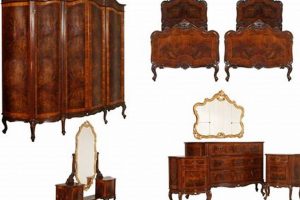
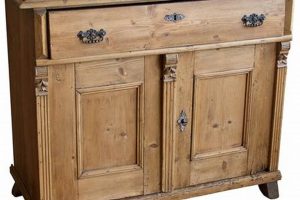
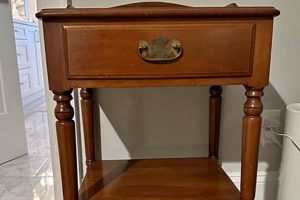
Furnishings from a bygone era, specifically those produced during the reign of Queen Victoria (1837-1901) and intended for use in a sleeping chamber, constitute a distinctive category of collectible items. These pieces often exhibit elaborate ornamentation, dark wood finishes, and opulent fabrics. A four-poster bed with intricate carvings, a dressing table with a tilting mirror, and a wardrobe featuring raised panel designs exemplify this category.
The enduring appeal of these historical items lies in their craftsmanship and aesthetic qualities, which evoke a sense of elegance and grandeur associated with the 19th century. Their acquisition and preservation provide a tangible link to the past, enriching domestic environments with character and historical significance. The presence of such items can elevate a room’s ambiance and contribute to a feeling of refined sophistication. During the Victorian era, these items were statements of status and taste, reflecting the societal values of the time.
The subsequent sections will delve into specific aspects, including considerations for acquisition, preservation techniques, and integration of such pieces into contemporary interior design schemes. Understanding the nuances of materials, construction, and stylistic variations is essential for appreciating the value and longevity of these pieces.
Guidance on Acquiring and Maintaining Antique Bedroom Furnishings
The following recommendations are designed to assist individuals in the selection, care, and proper display of antique bedroom furnishings from the Victorian era.
Tip 1: Examine Authenticity Markers: Scrutinize construction methods. Dovetail joints, hand-carved details, and the presence of original hardware are indicators of genuine age. Absence of these features may suggest a reproduction.
Tip 2: Assess Condition Meticulously: Thoroughly inspect for signs of damage, including woodworm infestation, structural instability, or water damage. Professional restoration can address some issues, but extensive damage may diminish value.
Tip 3: Research Provenance and History: Investigate the item’s history whenever possible. Knowing the maker, original owner, or historical context can enhance its significance and investment potential. Consult antique dealers and historical societies.
Tip 4: Consider Compatibility with Existing Dcor: Evaluate how the piece will integrate into the intended space. Victorian furniture often features dark finishes and elaborate designs; ensure it complements the room’s overall aesthetic. Avoid clashing styles.
Tip 5: Implement Preventative Conservation Measures: Maintain stable environmental conditions. Control humidity and temperature to prevent warping, cracking, and finish deterioration. Direct sunlight can fade or damage delicate materials.
Tip 6: Employ Gentle Cleaning Techniques: Use appropriate cleaning agents for antique finishes. Avoid harsh chemicals or abrasive materials. Dust regularly with a soft cloth. Consult a professional conservator for specialized cleaning needs.
Tip 7: Seek Professional Restoration When Necessary: Address structural or cosmetic damage promptly. Engage qualified restorers experienced in working with antique furniture. Inappropriate repairs can devalue the item.
Adhering to these guidelines will help to ensure the longevity and preservation of antique bedroom furnishings, protecting their value and historical significance.
The subsequent section will address the integration of vintage bedroom furniture into modern living spaces.
1. Craftsmanship
Craftsmanship is a defining characteristic of vintage Victorian bedroom furniture, directly influencing its aesthetic appeal, structural integrity, and monetary value. The Victorian era witnessed a surge in both mechanized production and artisanal skill. The best examples of bedroom furniture from this period showcase a meticulous attention to detail, evident in the complex joinery, hand-carved embellishments, and precisely executed inlays. Superior craftsmanship ensured the longevity of these pieces, allowing them to endure for over a century. For instance, a carefully constructed dovetail joint in a mahogany dresser, built to withstand decades of use, exemplifies the enduring quality derived from skilled labor. Similarly, the intricate floral motifs hand-carved into a bed’s headboard showcase the artisan’s dedication and mastery.
The techniques employed often involved specialized skills passed down through generations of cabinetmakers and furniture artisans. These techniques included precise wood selection, meticulous carving and turning, and the application of various finishes, such as shellac and varnish, to protect and enhance the wood’s natural grain. Ignoring the craftsmanship when evaluating these pieces leads to an incomplete understanding of their true value. A cursory glance might overlook the subtle nuances that distinguish a mass-produced item from a handcrafted masterpiece. A close examination reveals the precision of the carving, the smoothness of the finish, and the overall attention to detail that speaks to the artisan’s skill.
The appreciation of craftsmanship in vintage Victorian bedroom furniture offers practical benefits. It enables informed purchasing decisions, ensuring that the investment aligns with the item’s quality and historical significance. Furthermore, recognizing quality craftsmanship is crucial for proper restoration and preservation. Understanding the original construction methods allows restorers to maintain the piece’s integrity, avoiding inappropriate modern techniques that could diminish its value. The recognition of the craftsman’s dedication ultimately elevates the item beyond mere furniture, transforming it into a piece of art and a tangible link to a bygone era.
2. Materials
The selection of materials is paramount in assessing the value, durability, and aesthetic character of antique bedroom furnishings from the Victorian era. The choices made by Victorian furniture makers reflect both the prevailing tastes of the time and the availability of resources.
- Mahogany
Mahogany was a favored wood, prized for its rich color, fine grain, and stability. It was frequently used in high-end pieces, providing a luxurious appearance. The robust structure of mahogany ensured that pieces like four-poster beds and large wardrobes maintained their integrity over decades. This wood also lent itself well to intricate carving, allowing for detailed ornamentation.
- Rosewood
Rosewood, characterized by its dark hues and distinctive grain patterns, was another premium material utilized for decorative elements and veneers. Its inherent beauty made it a popular choice for accentuating surfaces and creating visually striking inlays. Rosewood’s density also contributed to the longevity of furniture pieces.
- Walnut
Walnut offered a more moderately priced alternative to mahogany and rosewood. Its versatility allowed it to be employed in both solid wood construction and veneers. The warm tones of walnut contributed to the inviting and comfortable atmosphere often sought in bedroom settings. It also stained and polished well, adapting to various design aesthetics.
- Upholstery Fabrics
Upholstery played a crucial role in the overall design of Victorian bedroom furniture. Velvet, silk, damask, and brocade fabrics were frequently used to cover chairs, settees, and bed frames. These luxurious materials enhanced the comfort and aesthetic appeal of the furnishings. The patterns and colors chosen often reflected the Victorian emphasis on ornate detailing and rich textures.
The specific materials utilized in antique Victorian bedroom furniture are instrumental in determining its authenticity, condition, and market value. Identifying these materials correctly requires knowledge of wood types, finishes, and upholstery practices prevalent during the era. The quality of the material significantly influenced the longevity and aesthetic impact of the pieces.
3. Ornamentation

Ornamentation is an integral component of period bedroom furnishings, embodying the Victorian era’s emphasis on embellishment and visual richness. The degree and style of adornment significantly influence the perceived value, historical accuracy, and aesthetic appeal of such pieces.
- Carved Wood Motifs
Elaborate carvings featuring floral patterns, foliage, scrolls, and sometimes figural representations were common. These motifs were typically executed in high relief on headboards, footboards, dressing tables, and wardrobes. The skill and intricacy of the carving directly correlate with the furniture’s perceived value and artistic merit. An example would be a bed frame adorned with meticulously carved roses and acanthus leaves, demonstrating a high level of craftsmanship.
- Inlays and Veneers
Inlays, often using contrasting woods, mother-of-pearl, or ivory, added visual interest and sophistication. Geometric patterns, floral designs, or even miniature scenes could be depicted. Veneers, thin layers of exotic or highly figured woods applied to a more common substrate, allowed for the creation of elaborate surfaces at a lower cost. A dressing table featuring a burled walnut veneer inlaid with mother-of-pearl accents exemplifies this technique.
- Metal Mounts and Hardware
Brass, bronze, and ormolu (gilded bronze) were frequently used for handles, pulls, escutcheons, and decorative mounts. These metal elements often featured intricate designs, complementing the overall aesthetic of the furniture. High-quality hardware not only served a functional purpose but also contributed to the piece’s visual appeal and perceived value. A wardrobe with ornate brass pulls and escutcheons, each featuring a unique design, exemplifies this facet.
- Upholstery Details
While ornamentation often refers to surface embellishments, upholstery details also contributed significantly to the overall aesthetic. Tufting, buttoning, fringe, and elaborate trim were common on chairs, settees, and bed frames. The selection of rich fabrics like velvet, silk, or damask further enhanced the opulent feel. A chaise lounge upholstered in velvet with deep button tufting and fringed trim exemplifies the integration of ornamentation with comfort.
These ornamental features are definitive hallmarks. The absence or degradation of such embellishments can significantly impact its historical accuracy and aesthetic value. Therefore, a thorough understanding of these elements is essential for appreciating and evaluating the pieces.
4. Rarity

The scarcity of antique bedroom furnishings originating from the Victorian era significantly influences their desirability and market value. Limited production numbers, coupled with the effects of time and attrition, contribute to the increasing rarity of certain pieces. Factors such as specialized craftsmanship, limited availability of particular materials, and the historical context of their creation contribute to the rarity. The greater the scarcity, the more likely the item commands higher prices. For example, a bedroom suite crafted by a renowned cabinetmaker, produced in limited quantities to commemorate a specific event or patron, would inherently possess a higher degree of rarity. The impact of time is evident as environmental damage, improper storage, or destructive events impact the survival rate of these pieces.
Understanding rarity is crucial for collectors and enthusiasts seeking to invest in or appreciate vintage bedroom furniture. Recognizing the markers of raritysuch as limited edition markings, unique design elements, or documentation of provenanceenables informed decision-making. Pieces displaying characteristics indicating scarcity often serve as focal points within collections, commanding attention for both their aesthetic qualities and historical significance. The ability to identify and assess rarity mitigates the risk of overpaying for common items or misidentifying reproductions as genuine artifacts. This assessment process is relevant in the context of restoration efforts, as the rarity of a piece may dictate conservation strategies, balancing the desire for preservation with the need to maintain historical authenticity. Preservation aims to make sure that the item can survive for the next decades or maybe centuries.
The challenges associated with determining rarity include the difficulty in tracing production records and the potential for subjective interpretations of “uniqueness.” Despite these challenges, a thorough understanding of production techniques, historical context, and material availability allows for a more accurate assessment of an item’s scarcity. Recognizing this is essential for informed appreciation and investment. High rarity ensures long-term value as well as historical significance to bedroom furnishings.
5. Condition

The condition of vintage Victorian bedroom furniture significantly influences its value, structural integrity, and aesthetic appeal. Deterioration occurs due to age, environmental factors, and usage. Damage impacts both the historical accuracy and functional utility of the piece. Examples include woodworm infestation weakening structural components, finish degradation due to prolonged exposure to sunlight, and upholstery damage from wear and tear. The presence and extent of such damage directly affect the furniture’s desirability to collectors and end-users alike. Pieces in original, well-preserved condition command higher prices and are more sought after, reflecting their relative scarcity and enhanced historical value.
Restoration efforts represent a critical aspect of condition management. Skillful restoration can mitigate damage, stabilize structural weaknesses, and revive original finishes. However, improper restoration can diminish value by altering the original character or employing incompatible materials. For example, replacing hand-carved wooden elements with modern substitutes or applying inappropriate finishes can detract from the furniture’s authenticity. Preservation strategies, such as climate control and regular cleaning, serve to minimize further deterioration. Understanding the impact of various environmental factors, such as humidity and temperature fluctuations, facilitates proactive maintenance and prolongs the lifespan of these items. Therefore a proper restoration can help to maintain not only the value but also the authenticity.
In conclusion, the assessment and management of condition are paramount in the valuation and preservation of Victorian bedroom furniture. Recognizing the signs of deterioration, implementing appropriate restoration techniques, and adopting preventative maintenance strategies are essential for safeguarding these artifacts. Condition serves as a key determinant of historical authenticity and market value, requiring careful consideration by collectors, dealers, and enthusiasts. The future of vintage bedroom furniture is heavily dependent on the overall physical condition.
6. Provenance

The term provenance, referring to the documented history of ownership for a work of art or antique, holds considerable significance in the realm of vintage Victorian bedroom furniture. A well-documented history can substantially increase the value and desirability of a piece, providing assurance of authenticity and insight into its past. The cause-and-effect relationship is evident: a verifiable chain of ownership leading back to the Victorian era enhances buyer confidence and, consequently, market price. Provenance acts as a tangible link to historical events, notable figures, or prominent households, transforming a piece of furniture from a mere object into a cultural artifact. For example, a bed documented as having belonged to a renowned Victorian-era author would possess a value far exceeding a similar piece with unknown origins. The importance of this documentation can not be overstated, as it adds tangible evidence to the history of the piece.
Practical applications of provenance extend beyond simple valuation. A clear lineage allows for a more nuanced understanding of the furniture’s original context, informing restoration efforts and guiding conservation strategies. Detailed documentation might reveal the specific type of finish used, the original fabric patterns, or the maker’s particular techniques, enabling restorers to maintain historical accuracy. Furthermore, provenance can aid in identifying fraudulent claims or replicas. A careful examination of historical records, estate inventories, and auction catalogs can expose inconsistencies or discrepancies that might indicate a piece is not what it purports to be. For example, a piece claimed to have originated from a specific workshop can be disproven if the workshop’s records do not reflect its creation.
In summary, provenance serves as a crucial component in assessing the authenticity, value, and historical significance of vintage Victorian bedroom furniture. It provides verifiable evidence of past ownership, enriching the object’s story and increasing its appeal. While tracing provenance can present challenges, particularly when historical records are incomplete or inaccessible, the effort yields significant benefits, from informed purchasing decisions to responsible restoration practices. Understanding the importance of provenance enables collectors and enthusiasts to appreciate the rich heritage embedded within these tangible remnants of the Victorian era.
Frequently Asked Questions
The following questions and answers address common inquiries regarding the identification, valuation, preservation, and acquisition of antique bedroom furnishings from the Victorian era.
Question 1: What are the primary indicators of authenticity in vintage Victorian bedroom furniture?
Authenticity can be assessed by examining construction techniques such as dovetail joints, the presence of hand-carved details, the type of wood used (e.g., mahogany, rosewood, walnut), and the style of hardware. Original finishes and documented provenance also contribute to establishing authenticity.
Question 2: How does the condition of a piece influence its value?
Condition plays a significant role in determining value. Pieces in original, well-preserved condition command higher prices. Damage, such as woodworm infestation, structural instability, or finish degradation, can substantially reduce value, particularly if restoration is required.
Question 3: What factors contribute to the rarity of Victorian bedroom furniture?
Rarity can be attributed to limited production runs, specialized craftsmanship, the use of scarce materials, and historical significance. Pieces produced by renowned makers or associated with notable events often possess greater rarity.
Question 4: Is it advisable to restore antique Victorian bedroom furniture?
Restoration should be approached with caution. While skillful restoration can enhance appearance and structural integrity, improper techniques or the use of incompatible materials can diminish historical accuracy and value. Engage experienced restorers familiar with antique furniture.
Question 5: How can potential buyers verify the provenance of a given piece?
Provenance can be verified through documentation such as sales receipts, estate inventories, auction catalogs, and family histories. Consultation with antique dealers and historical societies may also provide valuable information. A documented chain of ownership increases confidence in authenticity.
Question 6: What are the key considerations for integrating antique bedroom furniture into a modern interior?
Integration requires careful consideration of scale, style, and color palette. Victorian furniture often features dark finishes and ornate details, requiring a balanced approach to complement contemporary elements. Contrasting textures and strategic placement can create a harmonious blend of old and new.
The preceding questions and answers provide a foundational understanding of the factors influencing the value, authenticity, and care of vintage Victorian bedroom furniture. Thoughtful consideration of these elements is crucial for collectors, enthusiasts, and anyone seeking to incorporate these pieces into their homes.
The next section will delve into the practical aspects of caring for antique furniture.
In Summary
This exploration has elucidated the multifaceted nature of vintage Victorian bedroom furniture, emphasizing the critical roles of craftsmanship, materials, ornamentation, rarity, condition, and provenance in determining its value and historical significance. A thorough understanding of these attributes enables informed decisions regarding acquisition, preservation, and integration into contemporary settings.
Continued vigilance in preserving these tangible remnants of the Victorian era remains essential. As custodians of these artifacts, individuals and institutions bear the responsibility of ensuring their longevity for future generations. The knowledge and practices outlined herein serve as a foundation for safeguarding this cultural heritage, promoting its appreciation, and fostering a deeper understanding of the craftsmanship and societal values it embodies.