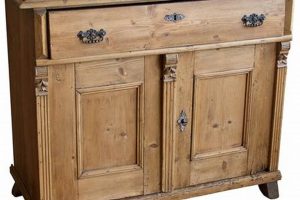
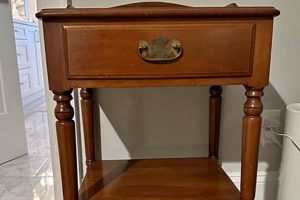
Items manufactured by the Dixie Furniture Company, particularly those produced several decades ago, are often sought after for their craftsmanship, design aesthetics, and historical significance. These pieces represent a bygone era of furniture production, reflecting the styles and manufacturing techniques prevalent during their respective periods. An example would be a mid-century modern dresser from the 1960s or a French Provincial-style bedroom set from the 1950s bearing the company’s mark.
The appeal of these older furnishings stems from several factors. Durability and construction quality are often superior to contemporary mass-produced items. Furthermore, many appreciate the unique designs and the character inherent in objects that have aged gracefully. From a historical perspective, these possessions offer a tangible link to past decades, reflecting evolving tastes and societal values. The acquisition and restoration of such items can be a rewarding endeavor.
The subsequent discussion will delve into specific aspects of identifying, appraising, restoring, and ultimately, appreciating these older items, offering guidance for enthusiasts and collectors alike. This includes insights into recognizing authentic markings, understanding common design trends, and employing appropriate restoration techniques. Furthermore, it will address the market value and how to best preserve such unique examples of furniture making.
Tips for Acquiring and Maintaining Items
This section offers practical advice for those interested in acquiring or preserving pieces manufactured by the Dixie Furniture Company, with a focus on ensuring authenticity and longevity.
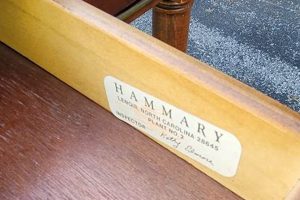
Tip 1: Verify Markings and Labels: Examine the piece carefully for the presence of the Dixie Furniture Company’s markings. These can often be found on the back of drawers, inside cabinets, or on the underside of tables. The presence and style of the mark can assist in dating the item.
Tip 2: Assess Structural Integrity: Prior to purchase, thoroughly inspect the furniture for signs of structural damage such as loose joints, warping, or evidence of pest infestation. Addressing these issues can be costly and impact the item’s value.
Tip 3: Research Design Styles: Familiarize oneself with the design styles prevalent during the Dixie Furniture Company’s production years. Understanding the characteristics of Mid-Century Modern, French Provincial, or Colonial Revival styles will aid in identifying and valuing pieces.
Tip 4: Consider Restoration Carefully: While restoration can enhance an item’s appearance, it is essential to approach it judiciously. Avoid aggressive sanding or stripping that could damage the original finish or details. Consult with a professional restorer for valuable or historically significant items.
Tip 5: Protect Against Environmental Damage: Extreme temperature fluctuations and humidity can damage wood furniture. Maintain a stable environment and use appropriate cleaning products to preserve the finish and structural integrity.
Tip 6: Document Provenance: Whenever possible, gather information about the item’s history, such as previous owners or documented sales. Provenance can significantly enhance value and historical interest.
Tip 7: Seek Expert Appraisal: For high-value or rare items, consider obtaining a professional appraisal to determine its market worth and ensure proper insurance coverage.
Adhering to these guidelines will assist in making informed decisions regarding the acquisition and care of possessions from the Dixie Furniture Company, preserving them for future generations.
The subsequent section will summarize the main points discussed and provide concluding remarks on the enduring legacy of items manufactured by the Dixie Furniture Company.
1. Construction

The construction quality of items manufactured by the Dixie Furniture Company is a crucial factor in their enduring value and appeal. The methods and materials used directly influence the durability, aesthetic qualities, and potential for restoration of these pieces.
- Wood Selection and Preparation
The choice of wood species, such as hardwoods like maple or walnut, significantly impacts the furniture’s strength and resistance to wear. Proper drying and seasoning of the wood before construction are essential to prevent warping or cracking over time. For example, pieces from the mid-20th century often exhibit solid wood construction, contrasting with veneered particleboard used in some later mass-produced furniture.
- Joinery Techniques
The joinery methods employed in the construction of cabinets and tablesdovetail joints, mortise-and-tenon joints, and other traditional techniquesdetermine the structural integrity of the furniture. These joints provide superior strength and stability compared to more modern methods like screws or staples. Examination of the joinery reveals the level of craftsmanship invested in the piece, often indicative of its age and quality.
- Finishing Processes
The application of finishes, including staining, sealing, and lacquering, protects the wood surface from moisture and wear, while also enhancing its aesthetic appeal. Vintage pieces often feature hand-applied finishes that exhibit a richness and depth not easily replicated with modern automated processes. Proper finish application is crucial in preserving the furniture’s appearance and preventing deterioration.
- Hardware and Detailing
The quality and design of hardware, such as drawer pulls, hinges, and decorative elements, contribute to the overall aesthetic and functionality of the furniture. Original hardware can significantly enhance the value and authenticity of vintage items. Attention to detail in the construction, such as carved accents or decorative inlays, reflects the craftsmanship and design sensibilities of the period in which the furniture was produced.
In summary, the robust construction methods employed by the Dixie Furniture Company, characterized by durable materials, strong joinery, careful finishing, and quality hardware, contribute to the longevity and collectibility of their pieces. Understanding these construction details is essential for identifying, valuing, and preserving these examples of furniture making.
2. Style

The aesthetic style significantly influences the appeal and market value of items produced by the Dixie Furniture Company. Different design periods and movements impacted their output, resulting in a range of styles that reflect evolving tastes and manufacturing capabilities. Understanding these stylistic variations is crucial for identifying, dating, and appreciating these pieces. The company produced items reflecting popular trends, such as French Provincial, Mid-Century Modern, and Colonial Revival. Consequently, the chosen style is a fundamental component of its identity.
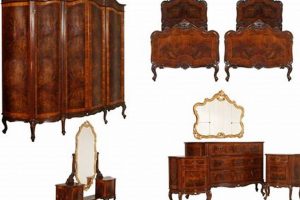
For instance, a French Provincial-style dresser from the 1950s, characterized by its curved lines, ornate carvings, and light finish, appeals to collectors seeking traditional elegance. Conversely, a minimalist, geometric dresser from the 1960s, designed in the Mid-Century Modern style, attracts those who value simplicity and functionality. The condition of the piece, of course, influences its marketability. The interplay between the original design aesthetic and the care it has received dictates its worth. A well-preserved example of a less popular style may be more desirable than a damaged piece from a more coveted period.
In conclusion, the style of Dixie Furniture Company items is not merely a superficial attribute but rather an integral characteristic that shapes their desirability, historical significance, and potential for restoration. A keen awareness of these varied styles allows collectors and enthusiasts to make informed decisions, preserve these objects effectively, and appreciate the aesthetic legacy embodied in each piece. Identifying a piece’s style, therefore, is an essential first step for any individual interested in buying, selling, or restoring objects from this brand.
3. Markings

Markings on items produced by the Dixie Furniture Company serve as crucial indicators of authenticity, age, and production period, significantly influencing their value and desirability. These markings provide verifiable evidence of origin, differentiating genuine pieces from reproductions or imitations.
- Location and Format
The location of markings varies depending on the furniture type and production era. Typically, markings are found on the back of drawers, inside cabinet doors, or on the underside of tables. The format may include the company name, a logo, a production number, or a date stamp. For example, earlier pieces may feature an embossed stamp, while later items may have a printed label or a stamped number. The specific location and format can provide clues to the item’s age and manufacturing process.
- Evolution of Markings
The Dixie Furniture Company’s markings evolved over time, reflecting changes in the company’s branding and manufacturing practices. Early markings may be simple and understated, while later markings may be more elaborate and include additional information such as model numbers or design names. Studying the evolution of markings can help date pieces more accurately and identify potential inconsistencies or alterations.
- Significance of Missing Markings
The absence of markings does not automatically indicate that an item is not genuine. Markings may have been lost due to wear, damage, or restoration efforts. However, the absence of markings should raise a red flag and prompt further investigation. Comparing the item’s design, construction, and materials to known examples of authentic Dixie Furniture Company pieces can help determine its legitimacy.
- Use in Authentication
Markings are a primary tool for authenticating items. Experts use markings to verify the origin, age, and production period of pieces. By comparing markings to documented examples and historical records, they can identify inconsistencies or red flags that suggest an item is not genuine. Markings are particularly valuable in distinguishing between original pieces and later reproductions, which may attempt to mimic the appearance of authentic items.
In conclusion, markings on items manufactured by the Dixie Furniture Company provide essential information for authentication, dating, and valuation. Understanding the location, format, and evolution of these markings is crucial for collectors, dealers, and enthusiasts seeking to identify and appreciate these pieces. While the absence of markings does not definitively indicate inauthenticity, it warrants careful examination of other characteristics such as construction and style.
4. Condition

The condition of items from the Dixie Furniture Company directly influences their market value and desirability among collectors and enthusiasts. It reflects the level of care and preservation over time, impacting both aesthetic appeal and structural integrity. Poor condition, characterized by damage, wear, or improper restoration, typically diminishes value. Conversely, well-maintained pieces in original condition command higher prices and are more sought after. For example, a French Provincial-style dresser with significant veneer damage and water stains will be less valuable than an identical model with its original finish intact and minimal wear.
Condition assessments involve evaluating several factors, including the state of the finish, the structural integrity of the frame, and the presence of original hardware. The degree of wear, such as scratches, dents, or discoloration, affects the overall appearance and collectability. Originality is a key consideration; pieces that retain their original finish and hardware are generally more valuable than those that have been refinished or modified. Professional restoration, when executed appropriately, can improve condition, but excessive or poorly executed restoration can detract from authenticity and value. For instance, replacing original drawer pulls with modern reproductions lowers the piece’s historical accuracy and potentially its value, as it no longer completely reflects its original condition.
In conclusion, the condition of furniture is a critical factor in determining its overall worth and collectability. Understanding the elements that constitute good or poor condition allows buyers, sellers, and collectors to make informed decisions. Preservation efforts, aimed at maintaining the original condition, are paramount in retaining both the aesthetic appeal and historical significance of the item. A clear understanding of this factor is also essential for appreciating furniture’s past and what makes it a desirable item.
5. Rarity

The concept of rarity significantly influences the desirability and valuation of items produced by the Dixie Furniture Company. Pieces deemed rare often command higher prices and attract greater interest from collectors due to their limited availability and unique characteristics.
- Limited Production Runs
Specific furniture designs or collections may have been produced in limited quantities due to various factors, such as experimental designs, short-lived trends, or production constraints. These limited production runs contribute to the scarcity of certain pieces, increasing their appeal to collectors. An example would be a particular style of side table only manufactured for a single year.
- Discontinued Styles
When a particular style of furniture is discontinued by the manufacturer, the existing pieces become increasingly rare over time, especially if they are well-preserved. Styles reflecting a short-lived fad might be more scarce than those produced for more extended periods. Identifying discontinued styles requires detailed knowledge of catalogs and production records.
- Unique Features or Customization
Furniture with unique features, such as custom finishes, rare hardware, or unusual design elements, can be considered rare due to their one-of-a-kind nature. These pieces may have been specially commissioned or modified by the original owners, making them highly sought after by collectors seeking distinctive items.
- Regional Availability
The distribution patterns of the Dixie Furniture Company may have resulted in certain styles or collections being more prevalent in specific geographic regions. This regional availability can make pieces scarce in other areas, increasing their desirability to collectors seeking items from outside their original distribution zone. Pieces found outside of the southeastern United States may be considered rarer.
In summation, rarity stemming from factors such as limited production, discontinued styles, unique features, and regional availability significantly enhances the desirability and value of items made by the Dixie Furniture Company. Understanding these nuances is essential for collectors and enthusiasts seeking to acquire and appreciate these artifacts of furniture making. Furthermore, such understanding is paramount for effective trading and conservation efforts.
6. Provenance

Provenance, in the context of items manufactured by the Dixie Furniture Company, refers to the documented history of ownership and custody of a particular piece. Its significance lies in its ability to authenticate the item, establish its historical context, and ultimately, influence its market value. The existence of a verifiable chain of ownership, supported by documentation such as original sales receipts, family records, or historical photographs, bolsters the item’s credibility and attractiveness to collectors. Without such documentation, establishing authenticity becomes significantly more challenging, relying solely on stylistic analysis and construction details, which can be subject to interpretation and uncertainty. For instance, a Dixie Furniture Company dresser accompanied by a bill of sale from the 1940s and a photograph of it in its original owner’s home holds substantially more value than an identical dresser with no documented history.
The impact of provenance extends beyond mere authentication. It provides valuable insights into the item’s journey through time, linking it to specific historical events, social contexts, or individuals. For example, a Dixie Furniture Company dining table known to have been used in a prominent local family’s home during a significant historical period gains enhanced historical relevance. Furthermore, provenance can reveal prior restoration attempts, modifications, or repairs, informing potential buyers about the item’s physical condition and past interventions. The practical application of understanding provenance involves meticulous research, including examining family archives, consulting local historical societies, and verifying information against available records. This thoroughness safeguards against fraudulent claims and ensures the integrity of the item’s history.
In summary, provenance serves as a critical component in the appraisal and appreciation of objects manufactured by the Dixie Furniture Company. Although establishing provenance can be a complex and time-consuming process, the resulting benefits in terms of enhanced authenticity, historical context, and market value make the effort worthwhile. Challenges in tracing provenance often arise from incomplete or lost records, emphasizing the importance of preserving existing documentation and conducting thorough research. The existence of well-documented history not only elevates a piece’s worth but also safeguards the historical narrative that this furniture represents.
Frequently Asked Questions About Items Manufactured by the Dixie Furniture Company
The following frequently asked questions address common concerns and misconceptions regarding items manufactured by the Dixie Furniture Company. The answers aim to provide clarity and guidance for collectors, enthusiasts, and those interested in acquiring or preserving these pieces.
Question 1: How can the authenticity of a piece be verified?
Verification relies on examining markings, construction techniques, and stylistic details. Compare these features against known authentic examples and consult resources detailing the company’s production history. Documentation of previous ownership, if available, also aids in verifying authenticity.
Question 2: What factors influence the value of pieces from this company?
Value is determined by a combination of factors, including condition, rarity, style, and provenance. Items in excellent original condition, representing highly sought-after styles, and possessing a well-documented history generally command the highest prices.
Question 3: Is restoration advisable, and what are the potential risks?
Restoration should be approached with caution. While it can enhance the appearance and functionality of a piece, improper restoration can diminish its value and authenticity. Consult with a qualified professional experienced in restoring vintage furniture before undertaking any restoration work.
Question 4: How should vintage furniture be properly cleaned and maintained?
Cleaning and maintenance should be performed using gentle, non-abrasive methods. Avoid harsh chemicals or solvents that can damage the finish. Regular dusting and occasional polishing with appropriate furniture polish can help preserve the piece’s appearance.
Question 5: Where can one find reliable information and resources about these items?
Reliable information sources include books and articles on furniture history, online databases of furniture manufacturers, and experts specializing in vintage furniture. Historical societies and museums may also possess relevant information and artifacts.
Question 6: What are the key indicators of structural damage or potential problems?
Key indicators of structural damage include loose joints, warping, cracks, evidence of pest infestation, and signs of water damage. Thoroughly inspect the item for these issues before purchase or restoration to assess its overall condition and stability.
This FAQ section addresses fundamental questions, offering a foundation for those engaging with or interested in vintage furniture manufactured by the Dixie Furniture Company.
The subsequent segment will offer resources and further avenues for exploring this subject matter.
Conclusion
The preceding discussion provides an overview of critical aspects pertaining to vintage dixie furniture. The analysis underscored the importance of authentication, condition assessment, stylistic awareness, and historical context in evaluating and appreciating pieces manufactured by the Dixie Furniture Company. Moreover, it emphasized the impact of construction quality, rarity, and provenance on value and collectibility. A thorough understanding of these factors is paramount for collectors, dealers, and enthusiasts seeking to engage with these items responsibly and knowledgeably.
The enduring legacy of these possessions resides not only in their aesthetic appeal or functional utility but also in their capacity to connect individuals with a tangible representation of past eras. Continued research, preservation efforts, and informed collecting practices will ensure that these artifacts remain accessible and valued for generations to come. Future focus should be on expanding documented provenance and refining authentication methods to protect and enhance the historical and market value of vintage dixie furniture.