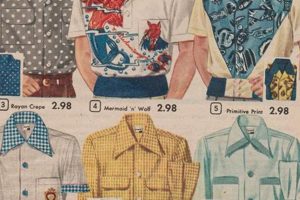
Apparel from bygone eras, specifically those related to athletic endeavors, represent a distinct category of clothing. These garments often feature designs, logos, and materials indicative of the period in which they were manufactured. Examples include screen-printed tees from collegiate games in the 1970s or shirts emblazoned with defunct professional team insignias.
The appeal of these items stems from several factors, including nostalgia, rarity, and historical significance. They can offer a tangible connection to past sporting events, teams, and athletes. Further, their limited availability frequently drives up their value, making them sought-after collectibles. The fabrics and construction techniques utilized often reflect the manufacturing standards and aesthetic preferences of their respective eras.
The subsequent discussion will delve into the identification, valuation, and care of these collectible garments. Attention will also be given to the influence of this style on contemporary fashion trends.
Guidance on Acquiring and Preserving Athletic-Related Garments
The following recommendations serve as a resource for those interested in acquiring and maintaining apparel commemorating past athletic events and teams. These guidelines are intended to assist in informed purchasing and preservation decisions.
Tip 1: Verify Authenticity: Scrutinize labels, seams, and printing techniques. Research known characteristics of apparel produced during the purported era. Discrepancies may indicate reproduction.
Tip 2: Assess Condition: Examine the garment for signs of wear, including stains, tears, and fading. The presence and severity of damage will affect its value and longevity.
Tip 3: Research Market Value: Consult online auction sites, collector forums, and specialized dealers to establish a fair price. Prices are influenced by rarity, condition, and demand.
Tip 4: Consider Fabric Composition: Different fabrics require specific cleaning and storage methods. Identify the material and follow appropriate care instructions to prevent damage.
Tip 5: Implement Proper Storage: Store items flat and away from direct sunlight to prevent fading and degradation. Acid-free tissue paper may be used for added protection.
Tip 6: Exercise Caution in Cleaning: Hand washing in cold water with a mild detergent is often preferable to machine washing. Avoid harsh chemicals and excessive agitation.
Tip 7: Document Provenance: Maintain records of purchase, including receipts and any available historical information. This documentation can enhance the garment’s value and authenticity.
Adherence to these recommendations will facilitate responsible acquisition, preservation, and enjoyment of this unique segment of clothing.
The subsequent section will explore the impact of these garments on contemporary fashion and popular culture.
1. Authenticity Verification
The validation of genuineness in athletic-related apparel from past eras is a critical process. The market for these items is susceptible to the proliferation of counterfeit goods, replicas, and misrepresented merchandise. As such, potential purchasers must employ due diligence to ascertain the true origins and age of any garment under consideration. The failure to properly authenticate can result in significant financial losses and the acquisition of items devoid of historical value.
Numerous factors contribute to authenticating a garment. Inspection of manufacturing details, such as stitching patterns and label designs, is crucial. For example, single-stitch construction is a characteristic of many athletic tees produced prior to the 1990s. The presence of a double-stitch on a tee claiming to be from the 1970s would be indicative of potential inauthenticity. Similarly, examining the screen-printing quality and the specific inks used can provide further clues. Certain ink formulations and printing techniques were prevalent during specific periods. Furthermore, verifying the legitimacy of the team logos and designs depicted on the shirt is paramount. Discrepancies in logo design or color schemes, when compared to known historical standards, should raise immediate concern. In the absence of definitive documentation, acquiring garments from reputable dealers specializing in period memorabilia is generally advisable.
The rigorous authentication process is not merely an academic exercise; it directly impacts the perceived value and historical significance. Establishing provenance and confirming authenticity safeguards the integrity of the market and ensures that genuine artifacts are properly preserved and appreciated. Furthermore, the ability to distinguish between authentic and reproduced items is essential for collectors and enthusiasts seeking to build meaningful collections that represent authentic reflections of athletic history.
2. Material Composition
The constituent materials of vintage athletic apparel are a crucial determinant of value, durability, and historical accuracy. Understanding the fabrics employed during specific periods provides insight into manufacturing techniques, performance characteristics, and authenticity verification. This analysis emphasizes key compositional considerations that inform the evaluation of such garments.
- Cotton Variations
Cotton was a prevalent material in athletic apparel. Its specific characteristics, such as thread count and fiber length, varied according to the era and intended use. Heavier weight cottons were common in earlier decades, offering durability but limiting breathability. Conversely, lighter weight blends appeared later, prioritizing comfort and moisture-wicking properties. The type of cotton utilized can assist in dating the garment’s manufacture and assess its intended function.
- Synthetic Fiber Integration
The introduction of synthetic fibers, such as polyester and rayon, marked a shift in athletic apparel. These fibers offered enhanced properties, including wrinkle resistance, colorfastness, and improved moisture management. The percentage and type of synthetic fiber blended with natural fibers provide valuable clues about the garment’s age and its intended technological capabilities. For instance, a high percentage of polyester might indicate a later production date, corresponding with the wider adoption of synthetic fabrics.
- Dyeing Techniques
The methods used to dye the fabric are indicative of the period and quality of the piece. Natural dyes were common in earlier garments, resulting in softer, more muted colors, and making them more susceptible to fading. Synthetic dyes offered brighter, more durable colors but were not as widely available until later periods. Examining dye consistency, color saturation, and fading patterns can aid in authentication and dating.
- Fabric Construction Methods
The manner in which the fabric was constructed knit, woven, etc. also offers insights. Knit fabrics, such as jersey, were commonly used for athletic apparel because of their stretch and breathability. The type of knit, such as single knit or double knit, can provide further information about the garment’s intended performance and quality. Examining the fabric’s weave or knit structure, along with the stitching patterns, contributes to a more thorough understanding of its manufacturing origins.
Consideration of these compositional facets provides a more complete understanding of athletic apparel. The evolution of fabrics and construction techniques reflects the changing demands of athletic performance and manufacturing innovation. Recognizing and understanding these features enhances the appreciation and preservation of these historical textiles.
3. Era Identification
Determining the period of origin for apparel relating to athletic history is essential to assess its authenticity, value, and historical relevance. The accurate identification of an item’s era involves a multifaceted analysis, drawing upon a range of material and design indicators.
- Label Characteristics
Labels provide critical clues to a garment’s age. Manufacturers’ logos, branding styles, and sizing conventions have evolved over time. Early labels often featured woven designs and simple text, whereas later iterations incorporated printed materials and more complex graphics. Analyzing the label’s design, fabric, and printing method can narrow down the potential period of manufacture.
- Seam Construction
The stitching techniques used in garment construction have varied significantly throughout history. Single-stitch construction, where a single line of stitching secures the seams, was common in athletic apparel prior to the 1990s. The presence of double-stitched seams typically indicates a later production date. Examining the seam type and stitch density is a key indicator of age.
- Graphic Design Elements
The logos, fonts, and graphic styles employed on athletic apparel are highly indicative of the era. Each decade possesses distinct design trends and stylistic preferences. Examining the artwork, the font used, and the method of printing provides valuable context. For instance, a screen-printed tee with a specific font can be compared against graphic design trends to determine its approximate period.
- Fabric Composition and Weight
The types of fabric used in vintage sport t shirts also offer insights into their era of origin. Fabrics from earlier decades, like the 1960s and 1970s, frequently used 100% cotton or cotton blends. The weight of the fabric and its texture can also be a factor. Some older t-shirts use a much heavier and thicker cotton material than what is found on more modern shirts.
The convergence of these individual elements provides a comprehensive basis for period determination. Combining the knowledge of label characteristics, seam construction, graphic design, and fabric composition empowers collectors and enthusiasts to accurately categorize and appreciate these garments.
4. Graphic Design

The aesthetic appeal and historical context of athletic-related garments from bygone eras are significantly influenced by graphic design. The visual elements present on these shirts reflect prevailing artistic trends, printing technologies, and marketing strategies of their respective periods, making graphic design a critical element in understanding and valuing these items.
- Typography and Lettering Styles
The fonts and lettering used on athletic apparel serve as immediate indicators of their vintage. Blocky, sans-serif fonts might suggest a mid-century origin, while script or decorative fonts could point to an earlier period. The specific typography choices often align with broader design trends of the era, offering clues to the garment’s age and cultural context. Collegiate athletic tees, for example, have featured distinct typographic styles depending on the decade.
- Illustrative Imagery and Logos
The visual motifs, team emblems, and illustrations present on these garments reflect the artistic sensibilities and marketing approaches of their time. Simple, block-printed logos are characteristic of earlier apparel, while more complex, multi-colored designs indicate later printing capabilities. The evolution of team logos and mascots is chronicled on these shirts, providing insight into the cultural significance of these athletic symbols.
- Color Palettes and Combinations
The colors utilized in the designs are also indicative of the period. Muted, earthy tones were common in older garments, whereas brighter, more saturated colors gained popularity with the advent of synthetic dyes and improved printing methods. The specific color combinations, such as the use of contrasting hues or tonal palettes, reflect the aesthetic preferences of the era.
- Printing Techniques and Quality
The methods employed to apply the graphics to the shirts have evolved substantially over time. Early garments often featured basic screen-printing techniques, resulting in thicker, more textured prints. Later innovations allowed for more detailed and vibrant designs, achieved through techniques like heat transfers and digital printing. The print quality, durability, and the type of ink used provide valuable information about the manufacturing process and the garment’s age.
These graphic design elements collectively contribute to the unique character and historical narrative conveyed by athletic-related garments from the past. The design features on these shirts are more than just decorative elements; they represent a tangible connection to the visual culture and marketing practices of their era.
5. Team Affiliation

The association of a garment with a specific athletic team or organization constitutes a crucial determinant of its collectibility and historical significance. The value of these shirts is intrinsically linked to the enduring popularity and cultural impact of the teams they represent. A shirt bearing the insignia of a historically successful or culturally relevant team carries a premium compared to one associated with a less prominent organization. For example, apparel featuring logos of championship-winning teams, such as the Boston Celtics during their 1980s dominance, or teams with a significant cultural following, such as the Oakland Raiders, often command higher prices in the collectors’ market. This is primarily due to the enduring nostalgia and emotional connection fans retain with these teams and their eras of success.
The provenance of an item, specifically its verifiable connection to a specific player, event, or season, further enhances its value. A shirt documented as having been issued to or worn by a prominent athlete becomes significantly more desirable. Letters of authentication from reputable sources, photographs of the shirt being worn, or official team records corroborating its origin can substantially increase its market value. Conversely, shirts lacking clear documentation or those associated with less successful or controversial periods in a team’s history may experience lower demand. The influence of specific players can also amplify the value of the shirt such as Michael Jordan and the Chicago Bulls. Even for basic team affiliation items, there is high market demand to collectors and fashion consumers alike.
In summary, team affiliation is not merely a superficial attribute but a fundamental element defining the desirability and cultural significance of these garments. Understanding the historical context, on-field success, and cultural impact of the teams associated with these shirts is essential for collectors and enthusiasts. Identifying the team’s popularity and historic moments provides a better understanding of the garment and the history it brings. This understanding is crucial for assessing authenticity, establishing value, and appreciating the enduring legacy these items represent.
6. Condition Assessment

The evaluation of physical state is paramount when assessing apparel from bygone eras associated with athletic endeavors. The extent of wear, damage, and preservation directly impacts the item’s value, authenticity verification, and potential for long-term conservation.
- Fabric Integrity
The structural soundness of the fabric is a primary consideration. Evaluations must assess the presence of tears, holes, fraying, and weakened areas. Degradation due to age, environmental factors, or improper storage can significantly diminish the fabric’s strength and aesthetic appeal. For example, prolonged exposure to sunlight can weaken cotton fibers, rendering the garment fragile. The presence of staining, particularly persistent stains that resist cleaning, is also a critical factor in the overall evaluation.
- Graphic Print Quality
The integrity of the screen-printed or applied graphics is essential. Examination should focus on cracking, fading, peeling, and distortion of the design. Loss of pigment, detail, or adherence to the fabric detracts from the visual impact. Older screen prints may exhibit a natural degree of wear, which can be acceptable if the design remains largely intact. The level of detail visible, the sharpness of the lines, and the overall vibrancy of the colors contribute significantly to the garment’s perceived value.
- Seam and Stitching Endurance
The durability of seams and stitching is crucial for maintaining the garment’s structural integrity. Assessment involves checking for loose threads, unraveling seams, and broken stitching. Compromised seams can lead to further damage and eventual disintegration of the garment. Areas that experience high stress, such as shoulder seams and necklines, are particularly vulnerable. The type of stitching used and its overall condition provide insight into the garment’s original construction quality and its subsequent wear.
- Presence of Alterations
Modifications to the original design, such as alterations to the fit or additions of non-original elements, can impact value. While minor repairs may be acceptable or even necessary for preservation, significant alterations can detract from authenticity and historical accuracy. It is essential to distinguish between period-correct repairs and modern modifications. For instance, the replacement of a damaged collar with a non-original material can diminish the garment’s collectibility.
These assessments, when conducted thoroughly, enable a comprehensive understanding of the garment’s current status, informing preservation efforts and impacting its potential valuation. This diligence is essential for both collectors and vendors engaging in the acquisition and maintenance of athletic apparel. These assessments ensures both the integrity and value of sport t shirts.
7. Collectibility Factors
The value of vintage athletic shirts is fundamentally determined by specific collectibility factors, which function as primary drivers of market demand and perceived worth. The interplay between rarity, condition, historical significance, and provenance dictates the appeal and potential investment value of these garments. Scarcity, resulting from limited production runs or the destruction of unsold inventory, elevates the desirability of certain shirts. The garment’s physical condition significantly influences its market price; items with minimal wear, intact graphics, and original tags command a premium. The association of a shirt with pivotal moments in sports history, iconic teams, or legendary athletes generates substantial collector interest. For example, a shirt commemorating a Super Bowl victory or bearing the signature of a Hall of Fame player attains heightened value. A verifiable ownership history, establishing a direct link to a specific event or individual, further amplifies its desirability. An example is a vintage shirt documented as having been worn by a professional athlete during a televised game, which commands a significantly higher price.
Practical implications arise from comprehending these factors. Collectors seeking to maximize investment returns must prioritize acquiring shirts exhibiting a convergence of these attributes. Authenticators and appraisers rely on these parameters to assess the legitimacy and fair market value of vintage athletic apparel. Furthermore, insurers and estate planners utilize these criteria to determine appropriate coverage and disposition strategies for collections. Garments of exceptional rarity or historical importance may warrant museum-quality preservation to ensure their long-term survival.
In conclusion, the convergence of these components is critical for assessing garments of this type. A deficiency in one area will affect other attributes to reduce the desirability and perceived value. Understanding these dynamics empowers collectors, appraisers, and preservationists to make informed decisions and protect the heritage associated with athletic apparel.
Frequently Asked Questions
The following represents answers to commonly encountered inquiries regarding vintage athletic tees. These responses are intended to provide clarity and guidance for collectors, enthusiasts, and individuals seeking information on this topic.
Question 1: What distinguishes a garment from previous eras from contemporary athletic apparel?
Garments from the past generally exhibit distinct features, encompassing manufacturing techniques, fabric compositions, and graphic designs reflective of their period of origin. Distinguishing attributes may include single-stitch construction, natural fiber content, and period-specific logos or branding.
Question 2: How does one verify the legitimacy of garments purported to be of considerable age?
Verification requires careful examination of manufacturing details, labels, stitching patterns, and printing methods. Comparison with known historical references and consultation with experienced appraisers or authenticators are advisable.
Question 3: What criteria affect valuation?
The value of such articles is determined by a confluence of factors, notably rarity, condition, historical significance, team affiliation, and provenance. Garments associated with major events, iconic teams, or prominent athletes typically command higher prices.
Question 4: What are the recommended practices for preserving the integrity of such items?
Proper storage is crucial. Recommendations include flat storage away from direct sunlight, the use of acid-free materials, and gentle handling. Washing should be performed with care, utilizing mild detergents and avoiding harsh chemicals.
Question 5: Are reproductions and recreations of clothing considered equivalent to the real thing?
Recreations, while potentially possessing aesthetic appeal, lack the historical authenticity and collectibility value of genuine vintage articles. Reproductions are typically not considered equivalent, and their market value is significantly lower.
Question 6: How is the availability of certain sport-related garment types affecting market value?
The availability of this garment from any team are impacted with fans which may have large historical moments that the respective team experienced. Each shirt varies with its individual characteristics based on the respective team. These characteristics will affect overall prices and value.
These FAQs provide a foundational understanding of garments associated with historical athletic pursuits. Further inquiry and research are encouraged to expand comprehension and refine decision-making in this specialized field.
The following section will discuss the influence of vintage sport t shirts on contemporary fashion trends.
Conclusion
This exploration has illuminated the multifaceted nature of garments from previous eras associated with athletic endeavors. Key considerations include authenticity verification, material composition, era identification, graphic design analysis, team affiliation assessment, condition evaluation, and the influence of various collectibility factors. These elements converge to determine both the intrinsic historical value and the potential market value of individual pieces.
The enduring appeal of vintage sport t shirts extends beyond mere nostalgia; it represents a tangible connection to pivotal moments in sports history, cultural trends, and the evolution of textile manufacturing. Continued research, responsible acquisition practices, and diligent preservation efforts are essential to ensure that these artifacts remain accessible for future generations.