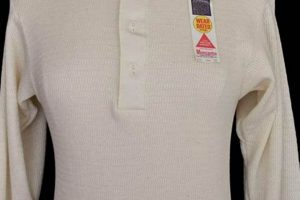
Apparel originating from concert tours of the musical group the Grateful Dead, produced in earlier decades, is highly sought after. These items represent more than just band merchandise; they are tangible relics of a cultural movement. As an example, a garment sold at a 1977 show featuring iconic artwork would fall into this category.
The enduring appeal of these garments stems from several factors. They offer a connection to a specific time and place, evoking memories of the band’s performances and the associated counter-culture. Furthermore, their scarcity, coupled with the unique designs often employed, elevates their value as collector’s items. Their historical significance places them as artifacts of music and fashion history.
The subsequent sections will delve into the history of designs, factors influencing value, identifying authentic pieces, and guidance on proper preservation.
Guidance on Acquisition and Preservation
The following guidelines provide essential information for individuals interested in acquiring or maintaining vintage Grateful Dead concert apparel. Adherence to these points can aid in ensuring authenticity, value retention, and longevity.
Tip 1: Examine Fabric Composition: Verify that the fabric aligns with materials used during the shirt’s purported era. Older items frequently feature single-stitch construction, a characteristic rarely found in modern replicas.
Tip 2: Scrutinize Graphics and Printing Techniques: Original tour apparel often showcases distinctive printing styles and ink types common to the period. Meticulously compare the imagery against known authentic examples.
Tip 3: Research Tour Dates and Artwork: Confirm the compatibility of the graphic design with specific tour dates. Many designs were created to commemorate specific events, establishing a verifiable link.
Tip 4: Assess Condition and Wear: The presence of wear is to be expected; however, excessive damage can significantly diminish value. Evaluate the item’s structural integrity and the level of degradation.
Tip 5: Verify Licensing and Copyright Marks: Authentic articles typically display legible licensing or copyright information. The absence of these markings can indicate an unoriginal product.
Tip 6: Consult Experienced Collectors and Dealers: Seeking guidance from knowledgeable individuals within the collecting community can offer valuable insights and prevent costly errors.
Tip 7: Implement Proper Storage Methods: Safeguard the garment from sunlight, humidity, and pests. Archival-quality storage materials and controlled environments can extend its lifespan.
Acquiring knowledge and employing diligence are paramount in navigating the market for vintage Grateful Dead merchandise. By adhering to these guidelines, collectors can make informed decisions and preserve these cultural artifacts.
The subsequent section will address the authentication process in greater detail, providing a comprehensive analysis of key indicators and red flags.
1. Design Authenticity

Design authenticity represents a cornerstone in the evaluation of garments associated with the Grateful Dead’s touring history. Accurate assessment of the artwork is vital for determining the item’s origin and its subsequent value. The visual elements serve as a primary indicator of legitimacy, connecting the item to a specific period and event.
- Iconographic Motifs
The band’s iconography, including the Steal Your Face skull, dancing bears, and roses, are frequently incorporated into shirt designs. Authentic examples feature accurate depictions of these symbols, reflecting the artistic styles prevalent during the shirt’s purported era. Variations or inaccuracies may suggest reproduction or unauthorized production.
- Period-Specific Aesthetics
Artistic styles evolve over time, and Grateful Dead apparel reflects the trends of each decade. Early examples may showcase hand-drawn or screen-printed designs, while later shirts might incorporate digital techniques. Recognizing these period-specific aesthetics aids in dating the item and verifying its authenticity.
- Color Palettes and Ink Types
The color palettes and ink types employed in the design are also indicative of the garment’s age. Older shirts often feature muted colors and specific ink formulations that are no longer in common use. Examination of these elements can provide further insight into the shirt’s origin and potential authenticity.
- Copyright and Licensing Information
Legitimate designs often feature copyright notices or licensing information, indicating authorized production. The absence of such marks, or discrepancies in the cited copyright holder, may suggest an unauthorized reproduction. Scrutinizing these details is a key aspect of the authentication process.
The visual integrity of the design serves as a critical identifier. By carefully examining the iconographic motifs, aesthetic styles, color palettes, and licensing details, collectors and enthusiasts can better assess the legitimacy and historical significance of vintage Grateful Dead tour shirts.
2. Fabric Era

The fabric era is an essential determinant in authenticating vintage Grateful Dead concert apparel. The composition and construction of the material directly correlate with the period of production, offering verifiable evidence of the garment’s potential legitimacy. Understanding fabric types prevalent during the band’s active touring years provides a crucial filter for identifying genuine articles.
For example, shirts produced in the 1970s often utilized single-stitch construction, a method where the seams are sewn with a single line of stitching. This contrasts with later manufacturing techniques employing double-stitched seams for increased durability. Consequently, examining the stitching pattern can offer an initial indication of the shirt’s age. Furthermore, the specific types of cotton and polyester blends used in the era can serve as further corroboration. Examining the weight and texture of the fabric, and comparing it to known examples from the purported era, aids in validation. A shirt claimed to be from the early 1970s constructed with a modern, heavyweight cotton and double-stitched seams would raise immediate suspicion.
In conclusion, diligent assessment of the fabric era is paramount when evaluating garments associated with the Grateful Dead’s touring history. Characteristics like stitching style, material composition, and fabric weight provide tangible clues about the shirt’s authenticity. Discrepancies between the fabric’s properties and the claimed production period represent a significant red flag, requiring further investigation. These observations are critical for minimizing the risk of acquiring counterfeit or misrepresented items.
3. Print Quality

Print quality is a fundamental element in assessing the authenticity and value of vintage Grateful Dead tour shirts. It offers insight into the production techniques and artistic styles prevalent during the shirt’s purported era. Consequently, scrutiny of the print is crucial for distinguishing genuine articles from contemporary reproductions.
- Ink Types and Application
Early shirts often feature plastisol or water-based inks, applied through manual screen-printing processes. Authentic prints display a characteristic texture and color saturation unique to these techniques. Modern reproductions may utilize digital printing methods, resulting in a smoother, less textured finish. Examination of the ink type and application method is a critical step in the authentication process.
- Detail Resolution and Clarity
Original prints exhibit a certain level of detail resolution dictated by the screen-printing technology of the time. Fine lines and intricate details may show slight imperfections or variations in ink coverage, indicative of manual production. Modern digital prints often achieve a higher level of detail and clarity, lacking the subtle imperfections of vintage prints. Analyzing the resolution and clarity of the design offers clues regarding the shirt’s origin.
- Color Vibrancy and Fading
Over time, the colors in vintage prints naturally fade due to exposure to light, washing, and general wear. Authentic shirts typically display a degree of fading or color shift consistent with their age. Reprints may exhibit brighter, more vibrant colors, lacking the subtle patina of age. Assessment of color vibrancy and the presence of natural fading contributes to the overall authentication process.
- Print Registration and Alignment
The screen-printing process involves layering different colors to create the final design. Imperfect registration, where the colors are slightly misaligned, is a common characteristic of vintage prints. Modern printing techniques offer more precise registration, eliminating this imperfection. Close examination of the print registration can reveal subtle differences between original and reproduced designs.
In summary, the print quality of vintage Grateful Dead tour shirts is a multifaceted indicator of authenticity. By carefully evaluating ink types, detail resolution, color vibrancy, and print registration, collectors can make informed assessments and avoid costly errors. Understanding these aspects of print quality is essential for navigating the market for vintage band merchandise and preserving these cultural artifacts.
4. Tour Verification
The process of confirming a garment’s association with a specific Grateful Dead tour is critical in establishing its authenticity and value. The band’s extensive touring history produced a wide variety of merchandise, often tied to specific dates and locations. Therefore, verification that a shirt aligns with a particular tour is essential. For example, a shirt displaying artwork referencing a specific venue from the 1988 tour must have verifiable evidence, such as documented designs or firsthand accounts, linking it to that tour.
Without proper tour verification, a garment’s purported origin remains unsubstantiated, significantly diminishing its desirability and market value. Numerous instances exist of reproduced or counterfeit shirts falsely attributed to specific, highly sought-after tours. A design initially released exclusively during the 1977 Barton Hall concert, but replicated and sold more recently, would lack the historical relevance and inherent value of an original. Collectors rely on archival resources, tour schedules, and established design catalogs to corroborate a shirt’s provenance.
In conclusion, accurate tour verification provides a crucial link between a garment and its place in the Grateful Dead’s history. Failure to establish this link casts doubt on the item’s authenticity and undermines its value as a collectible. Thorough investigation, utilizing available resources and expert knowledge, is imperative for individuals seeking to acquire legitimate vintage apparel.
5. Condition Assessment
The condition of vintage Grateful Dead tour shirts directly impacts their value and collectibility. Degradation over time, caused by factors such as wear, storage conditions, and washing practices, affects fabric integrity, print vibrancy, and overall structural soundness. A shirt exhibiting significant fading, holes, or staining will inherently be less desirable than one in excellent condition, even if both are authentic and originate from the same tour. This principle underscores the importance of meticulous condition assessment.
Accurate assessment involves evaluating several factors. Fabric integrity, including the presence of tears, fraying, or thinning, is crucial. Print quality, analyzed for fading, cracking, or bleeding, reveals the preservation of the original design. The presence of stains, discoloration, or odors indicates potential damage from improper storage or cleaning. Seam integrity is assessed to ensure structural stability. A shirt stored in direct sunlight for extended periods might exhibit severe fading, diminishing its aesthetic appeal and market value. Conversely, a shirt carefully stored in archival-quality conditions, even with minor wear, could retain a significant portion of its original value.
Condition assessment represents a critical element in the valuation process for vintage Grateful Dead tour shirts. By considering these aspects, collectors and enthusiasts can make informed decisions, understanding the impact of condition on both the item’s historical significance and its market value. Variations in condition account for substantial price differences, reinforcing the importance of careful evaluation.
6. Licensing Presence

The presence of licensing and copyright marks on garments is a critical factor in determining the authenticity of vintage Grateful Dead tour shirts. These marks serve as indicators of authorized production and distribution, differentiating legitimate merchandise from unauthorized reproductions or counterfeits. Scrutinizing these marks provides a valuable tool for collectors and enthusiasts seeking to acquire genuine artifacts from the band’s touring history.
- Copyright Notices
Copyright notices typically include the copyright symbol (), the year of publication, and the name of the copyright holder. The presence of a copyright notice indicates that the artwork or design is protected by intellectual property law, and its use requires permission from the copyright owner. On vintage Grateful Dead shirts, these notices often appear near the artwork or on the garment’s tag. Discrepancies in the cited year or copyright holder may suggest an unauthorized reproduction.
- Licensing Agreements
Licensing agreements grant permission to third parties to manufacture and distribute merchandise featuring copyrighted artwork or designs. Licensed products often display trademarks or logos of the licensing company, indicating authorized production. Vintage Grateful Dead shirts may feature licensing marks from companies such as Winterland Productions, a prominent licensor of band merchandise during the 1970s and 1980s. The absence of such marks, or inconsistencies with known licensing agreements, raises concerns about authenticity.
- Trademark Symbols
Trademark symbols, such as the Registered Trademark symbol () or the Trademark symbol (), indicate that a particular word, phrase, or design is legally protected and associated with a specific brand or product. These symbols often appear alongside the band’s name, logo, or other identifying marks. The presence of trademark symbols on vintage Grateful Dead shirts reinforces the garment’s association with the band and its authorized merchandise program.
- Garment Tag Information
Garment tags provide essential information about the shirt’s manufacturer, fabric composition, and country of origin. Authentic vintage shirts often feature tags from well-known apparel companies that were commonly used during the shirt’s purported era. The tag may also include licensing information or copyright notices. Scrutinizing the tag’s design, font, and information can offer valuable clues regarding the shirt’s authenticity and production period. Inconsistencies or inaccuracies in the tag information may indicate a reproduction or counterfeit.
The presence and accuracy of licensing and copyright marks offer verifiable evidence of authorized production, enhancing their collectibility and historical significance. Conversely, the absence of such marks or the presence of inconsistencies raises concerns about the item’s legitimacy. Diligent examination of these details is a critical step in evaluating vintage Grateful Dead tour shirts and ensuring the acquisition of genuine artifacts.
Frequently Asked Questions
The following section addresses commonly encountered queries and misconceptions surrounding historical Grateful Dead concert apparel. It provides factual information intended to inform collectors and enthusiasts.
Question 1: What defines a Grateful Dead tour shirt as “vintage”?
Generally, “vintage” designates items at least two decades old, indicating production during the Grateful Dead’s active touring years (1965-1995). This age provides historical context and scarcity.
Question 2: Where can authentic examples be reliably acquired?
Reputable vintage clothing stores, established auction houses specializing in music memorabilia, and well-vetted online marketplaces offer potential acquisition avenues. Rigorous authentication practices are essential.
Question 3: What factors most significantly influence the market value of these items?
Scarcity, condition, design (especially iconic imagery), verified tour association, and the presence of licensing marks contribute significantly to valuation.
Question 4: How can reproductions or counterfeit items be distinguished from authentic pieces?
Examination of fabric composition, print quality, stitching style (single vs. double), and the presence of accurate licensing details are crucial in differentiating authentic shirts from reproductions.
Question 5: What are the recommended storage and preservation techniques for vintage shirts?
Archival-quality storage materials, protection from sunlight and humidity, and gentle handling practices are essential for preserving fabric integrity and preventing degradation.
Question 6: Is professional authentication advisable before purchasing a high-value shirt?
For significant investments, professional authentication services offered by experts in music memorabilia and vintage apparel are highly recommended to mitigate the risk of acquiring counterfeit items.
In summary, thorough research, diligent examination, and informed decision-making are crucial when dealing with vintage Grateful Dead tour shirts. Understanding the key characteristics that define authenticity and value ensures a more rewarding collecting experience.
The subsequent section will explore the evolving trends in the market for vintage Grateful Dead memorabilia, highlighting emerging areas of interest and investment.
Conclusion
This exploration has demonstrated that garments originating from the Grateful Dead’s concert tours, produced in earlier decades, represent a significant area of collecting interest. Authentication requires careful assessment of design, fabric, print, licensing, and verifiable association with specific tours. Condition impacts value, and proper preservation is critical.
The market for authentic examples will likely continue to evolve as appreciation for cultural artifacts of this era grows. Diligence in research, acquisition, and care are paramount for those engaging with these tangible pieces of music history. Future collectors should prioritize expertise and caution.