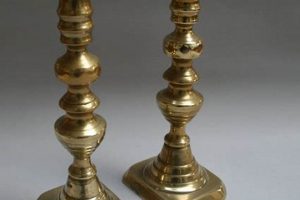
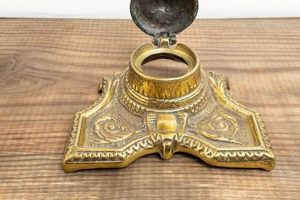
Figurines crafted from a copper-zinc alloy, possessing an aged aesthetic and shaped to resemble a mythical equine creature with a single spiraled horn, are objects of considerable interest to collectors and enthusiasts of decorative arts. These items typically exhibit signs of wear and patina indicative of their age, adding to their perceived value and charm. Common examples include decorative shelf pieces, paperweights, and components incorporated into larger assemblages.
These artifacts hold significance due to their aesthetic appeal, potential historical relevance, and the inherent value of the materials used in their creation. Their popularity stems from the symbolism associated with the mythical beast, representing purity, grace, and magic. Furthermore, the increasing scarcity of well-preserved examples contributes to their desirability among collectors, leading to potential appreciation in value over time. They often reflect the design trends and manufacturing techniques prevalent during their era of production.
The following discussion will delve into the identification, preservation, and valuation of these unique metal sculptures, providing a detailed analysis of their historical context and market dynamics. Examining the methods used to authenticate and care for these pieces will equip readers with the knowledge necessary to appreciate and potentially acquire these captivating collectibles.
Tips for Identifying and Preserving Brass Unicorn Figurines
The following guidelines offer practical advice for assessing the authenticity, condition, and value of brass unicorn figurines, enabling informed decisions regarding their acquisition, care, and potential restoration.
Tip 1: Verify Material Composition: Authentic examples are typically crafted from brass or a brass alloy. Employ a magnet to test the material. Brass is non-ferrous; therefore, a magnet should not adhere to the piece. The presence of magnetic attraction suggests the item is constructed from a different, less valuable metal.
Tip 2: Assess Patina and Wear: Genuine aged artifacts exhibit a natural patina, characterized by subtle color variations and surface oxidation. Avoid pieces with excessive or uniform polishing, which may indicate recent restoration aimed at concealing damage or artificially aging the item.
Tip 3: Examine Manufacturing Details: Investigate the construction techniques employed. Pieces made using older methods, such as lost wax casting, often display unique markings or imperfections indicative of handcraftsmanship, increasing their collectibility. Modern reproductions typically exhibit smoother surfaces and fewer irregularities.
Tip 4: Identify Maker’s Marks: Carefully inspect the figurine for any maker’s marks, signatures, or foundry stamps. These markings can provide valuable information about the piece’s origin and potential rarity, contributing to its overall value.
Tip 5: Research Historical Context: Investigate the historical period and artistic movements associated with the figurine’s apparent design. This research can help determine the piece’s authenticity and potential provenance, enhancing its appeal to collectors.
Tip 6: Proper Cleaning and Storage: Use a soft, dry cloth to remove dust and surface dirt regularly. Avoid harsh chemicals or abrasive cleaners, as these can damage the patina and surface finish. Store the figurine in a cool, dry place away from direct sunlight to prevent further degradation.
Implementing these strategies assists in accurately evaluating and maintaining brass unicorn figurines, preserving their aesthetic qualities and potential financial worth.
The subsequent sections will explore the market value and restoration considerations related to these collectibles, providing a comprehensive understanding for enthusiasts and potential investors.
1. Authenticity Verification

The acquisition of a brass unicorn figurine marketed as vintage necessitates stringent authenticity verification procedures. This process is crucial due to the prevalence of reproductions and forgeries in the collectibles market. Failure to adequately verify authenticity can result in financial loss and the acquisition of an item lacking the historical or artistic value associated with genuine vintage pieces. For example, a seemingly aged unicorn figurine offered at a premium price may, upon closer inspection using metallurgical analysis, be revealed as a modern casting with artificially induced patina. Such instances underscore the importance of rigorous verification before purchase.
Several methods are employed to ascertain the genuineness of a supposed vintage brass unicorn. These include physical examination for telltale signs of age (such as specific types of wear or patina consistent with the purported era), the presence of maker’s marks or foundry stamps that align with historical records, and comparative analysis with known authentic examples. Scientific techniques, like X-ray fluorescence (XRF) spectroscopy, can determine the elemental composition of the brass, providing data to confirm whether the alloy matches those used during the period the figurine is claimed to originate from. Comparing manufacturing techniques with the period when the item was made is important; lost wax casting may have been a technique used.
The accurate verification of authenticity is not merely a matter of financial prudence; it also contributes to the preservation of cultural heritage. By distinguishing genuine vintage pieces from imitations, collectors and enthusiasts aid in maintaining the integrity of the historical record and supporting the market for authentic artifacts. While challenges persist in definitively establishing authenticity, particularly with older or less documented items, a combination of meticulous research, expert consultation, and scientific analysis significantly mitigates the risk of acquiring a fraudulent piece. Without due diligence, it can lead to the devaluation of the collection itself.
2. Patina Development

Patina development is a crucial characteristic distinguishing authentic vintage brass unicorn figurines from modern reproductions. This surface alteration, acquired over time, serves as a visual testament to the item’s age and exposure to environmental factors, thereby contributing significantly to its perceived value and historical significance.
- Oxidation Process
The primary driver of patina is the gradual oxidation of the brass alloy’s constituent metals, primarily copper and zinc, when exposed to air and moisture. This chemical reaction results in the formation of a thin layer of oxides and carbonates on the surface. For instance, prolonged exposure to a humid environment can accelerate the oxidation process, leading to a deeper and more pronounced patina. The composition of the patina varies depending on environmental factors, contributing to its unique appearance on each piece.
- Color Variations
The color of the patina varies from subtle golden hues to deep browns and even greenish-blue tones, depending on the specific composition of the brass alloy and the environmental conditions to which the figurine has been exposed. In urban environments with high levels of sulfur dioxide, the patina may exhibit a darker, more tarnished appearance. This range of color variations provides valuable clues regarding the figurine’s age, history, and storage conditions, enabling collectors to assess its authenticity.
- Surface Texture
In addition to color changes, patina also affects the surface texture of the brass. Over time, the formation of oxides and carbonates can create a slightly rough or uneven surface, adding to the figurine’s tactile appeal and visual depth. Conversely, attempts to remove the patina through aggressive cleaning methods can result in a unnaturally smooth and polished surface, diminishing the item’s vintage character and value. Preserving the original surface texture is therefore essential for maintaining the integrity of a vintage brass unicorn.
- Distinguishing from Artificial Patina
Modern forgers often attempt to replicate the appearance of patina through artificial aging techniques, such as chemical treatments or surface coatings. However, these artificial patinas typically lack the complexity and depth of genuine patina, often appearing uniform or overly contrived. Microscopic examination and chemical analysis can help distinguish between genuine and artificial patina, enabling collectors to identify fraudulent pieces and protect their investment.
The nuances of patina development on a vintage brass unicorn offer insights into its history and authenticity. A careful study of its color, texture, and composition reveals a complex story of age, environment, and preservation. This information empowers collectors to make informed decisions, safeguard their investments, and appreciate the unique character of these timeless artifacts.
3. Manufacturing Techniques

The identification and valuation of a brass unicorn figurine described as “vintage” are inextricably linked to the manufacturing techniques employed in its creation. These techniques, ranging from casting methods to finishing processes, serve as indicators of age, origin, and authenticity, thereby directly impacting the collectible’s market value and historical significance. The specific methods utilized reflect the technological capabilities and artistic preferences prevalent during the period of production. For example, a figurine produced in the late 19th century might exhibit characteristics of lost-wax casting, evident through subtle imperfections and tooling marks indicative of a handcrafted process. Conversely, a more recent reproduction may display the smooth, uniform surface finish associated with modern die-casting techniques.
The significance of understanding manufacturing techniques extends beyond simple identification; it informs conservation and restoration efforts. Knowledge of the original construction methods allows conservators to employ appropriate cleaning agents and repair techniques that minimize damage and preserve the figurine’s integrity. For instance, the improper application of abrasive polishing compounds to a piece originally finished with a delicate patina can irreversibly alter its surface and diminish its value. An understanding of the alloy composition, determined through an analysis of manufacturing practices of the era, guides the selection of compatible materials for any necessary repairs. Recognizing differences in the processes used in the United States vs. European factories could change the value, based on the rarity of design. A unicorn produced in limited numbers in Germany during a short time frame may increase in value. Careful attention to details related to material composition will affect the final value of the artifact.
In summary, the manufacturing techniques employed in the creation of a vintage brass unicorn are not merely incidental details; they are intrinsic components that shape its identity, value, and preservation. A thorough understanding of these techniques, combined with careful examination and expert consultation, is essential for collectors, historians, and conservators seeking to appreciate and safeguard these artifacts. Recognizing the historical manufacturing methods will assist in securing the piece for future value.
4. Rarity Factors

The market value of a brass unicorn figurine identified as “vintage” is significantly influenced by a constellation of rarity factors. These factors, often intertwined, serve to differentiate a common item from a highly sought-after collectible, thereby driving up its desirability and associated monetary worth. Understanding these elements is critical for collectors and investors seeking to accurately assess the potential value of such pieces.
- Limited Production Runs
Figurines produced in limited quantities, either due to deliberate design choices or unforeseen manufacturing constraints, inherently possess increased rarity. For example, a specific design commissioned for a limited-edition promotional campaign by a now-defunct company would be scarcer than a mass-produced model sold through general retail channels. The documentation or verifiable evidence of such limited production directly impacts the item’s value. The existence of verifiable records regarding the quantity originally manufactured can create a perception of higher value among collectors.
- Unique Design Elements
Instances of atypical designs, variations in posture, or incorporation of unusual materials within a brass unicorn figurine contribute to its rarity. A figurine displaying a particularly elaborate horn design, or one featuring inlaid gemstones (assuming authenticity), would be considered more unique and therefore more valuable than a standard model. These distinctive features are often documented in collector’s guides or historical catalogs, further substantiating their rarity.
- Historical Significance
Connection to a significant historical event, individual, or artistic movement enhances a figurine’s rarity and value. A brass unicorn commissioned as a commemorative piece for a royal celebration, or one attributed to a renowned sculptor, would command a premium. Provenance records, tracing the item’s ownership back to a notable figure or event, play a crucial role in establishing this historical significance.
- Exceptional Condition
The degree of preservation significantly affects a figurine’s rarity, especially for older pieces. An item exhibiting minimal wear, retaining its original finish, and lacking significant damage is considerably rarer than a comparable piece with substantial deterioration. Documentation, such as photographs from the time of acquisition or professional condition reports, can validate the exceptional state and, accordingly, its value.
The combination of these rarity factors determines the ultimate market value of a vintage brass unicorn. While individual aspects may contribute modestly, the convergence of several elementssuch as limited production, unique design, historical association, and exceptional conditiontransforms an ordinary object into a prized collectible, capable of commanding substantial prices within the specialized market.
5. Market Valuation

The process of determining market valuation for a “vintage brass unicorn” is complex, involving the assessment of multiple factors that influence its perceived worth. An informed evaluation demands meticulous attention to detail and a comprehensive understanding of the collectibles market dynamics.
- Condition and Preservation State
The condition of the piece directly impacts its market value. Figurines exhibiting minimal wear, retaining original finishes, and lacking significant damage command higher prices. For instance, a vintage brass unicorn with an intact patina and no visible scratches will be valued significantly more than a similar piece with extensive corrosion or evidence of repair. Preservation efforts, if professionally executed and non-invasive, can positively influence valuation.
- Provenance and Historical Significance
The documented history of ownership and any association with notable events or individuals can substantially increase value. A vintage brass unicorn with verifiable provenance, linking it to a recognized historical figure or a significant event, will be more desirable to collectors. Without such records, the valuation relies primarily on the physical characteristics and inherent rarity of the item.
- Rarity and Production Volume
The scarcity of a particular model or design significantly affects its market valuation. Figurines produced in limited quantities or exhibiting unique design elements are generally more valuable. Information regarding production runs, obtained from historical catalogs or company archives, is essential in determining rarity and establishing a fair market price. For example, a unicorn design made for a specialty product would be rated as more valuable than mass-produced models.
- Current Market Demand and Trends
Prevailing market trends and collector preferences influence the valuation of vintage brass unicorns. Shifting tastes or renewed interest in specific artistic styles can lead to fluctuations in demand and, consequently, prices. Monitoring auction results, sales data, and collector forums provides insights into current market conditions and helps determine a realistic valuation based on contemporary demand. Prices may vary based on popularity and public demand.
These elements, when synthesized, provide a framework for establishing a market valuation for a “vintage brass unicorn.” While objective criteria contribute significantly, subjective factors related to aesthetic appeal and collector sentiment also play a role. A comprehensive assessment, considering all these aspects, ensures a more accurate and defensible valuation for both buyers and sellers.
6. Restoration Ethics
The practice of restoration, when applied to vintage brass unicorn figurines, raises complex ethical considerations. These principles guide interventions intended to repair damage, reverse deterioration, or enhance aesthetic appeal, while simultaneously preserving the item’s historical integrity and inherent value. Ethical restoration necessitates a balanced approach, prioritizing the long-term preservation of the artifact over short-term gains in appearance or marketability. This requires a deep understanding of the object’s original composition, manufacturing techniques, and historical context.
- Reversibility of Interventions
A cornerstone of ethical restoration is the principle of reversibility. Any treatment applied to a vintage brass unicorn should, ideally, be reversible, allowing for future removal or correction without causing further damage to the original material. For instance, using a readily removable adhesive for reattaching a detached horn is preferable to a permanent epoxy resin, which would be difficult or impossible to remove without damaging the underlying brass. This approach ensures that future conservators have the option to employ more advanced techniques without being constrained by irreversible prior interventions. The selection of cleaning agents is similarly governed by reversibility, favoring mild, non-abrasive solutions that can be easily removed without altering the patina or surface texture of the brass.
- Minimal Intervention
The principle of minimal intervention dictates that restoration efforts should be limited to only what is necessary to stabilize the object or address significant damage. Avoidance of unnecessary alterations preserves the authenticity and historical character of the vintage brass unicorn. For example, instead of completely re-polishing a tarnished figurine, a conservator might opt to stabilize the existing patina and address only localized corrosion spots. This approach respects the natural aging process and prevents the erasure of historical evidence embedded in the artifact’s surface. Comprehensive documentation of any intervention is vital to maintain transparency and provide future conservators with a clear understanding of the object’s treatment history.
- Material Compatibility
When replacing missing components or filling losses, the materials used should be chemically and physically compatible with the original brass alloy. Incompatible materials can cause accelerated corrosion or structural instability. For example, using a modern brass alloy with a different zinc content to replace a missing section of the horn could lead to galvanic corrosion at the interface between the two metals. Conservators should strive to use materials that closely match the original in composition, color, and texture. This may involve sourcing reclaimed brass from similar-era artifacts or employing specialized techniques to replicate the original alloy’s properties. The selection of compatible materials is essential for ensuring the long-term stability and aesthetic integrity of the restored vintage brass unicorn.
- Respect for Patina
Patina, the surface layer of oxidation that forms on brass over time, is a significant indicator of age and historical authenticity. Ethical restoration recognizes the importance of preserving this patina whenever possible. Aggressive cleaning or polishing techniques that remove the patina can significantly diminish the value and historical character of a vintage brass unicorn. Conservators may opt to selectively clean only areas of heavy corrosion or stabilize the patina to prevent further degradation. In some cases, replicating the appearance of patina on newly added material may be appropriate, but this should be done with careful consideration and a clear understanding of the original patina’s composition and appearance. The goal is to integrate the restored areas seamlessly with the existing patina, minimizing the visual impact of the intervention.
These principles underscore the ethical obligations of conservators and collectors when dealing with vintage brass unicorns. By adhering to these guidelines, it is possible to preserve the historical significance and inherent value of these artifacts for future generations. Failure to uphold these standards can result in irreversible damage and the loss of invaluable cultural heritage.
7. Symbolic Significance
The symbolic significance interwoven with a vintage brass unicorn transcends its material composition and form, profoundly influencing its appeal and perceived value within collector circles and beyond. The unicorn itself, a creature deeply embedded in mythology and folklore across various cultures, embodies purity, grace, and potent magic. Consequently, the representation of this mythical beast in a tangible form, particularly when rendered in a durable and historically resonant material like brass, amplifies these inherent symbolic qualities. This connection to established symbolic systems directly affects the object’s desirability, acting as a significant driver of its market value and perceived cultural worth. A brass unicorn figurine, therefore, is not merely a decorative item but a repository of potent symbolic meaning, imbued with cultural narratives that resonate with collectors and enthusiasts.
The historical context further enhances the symbolic weight of a vintage brass unicorn. Depending on the era of its creation, the figurine may reflect specific artistic movements, cultural values, or social trends. For example, a brass unicorn crafted during the Victorian era might embody the romanticism and idealized notions of virtue prevalent during that period. The patina acquired over time serves as a tangible marker of its history, further enriching its symbolic depth. The very act of collecting such an item can be seen as an attempt to connect with these historical narratives, imbueing the collector with a sense of continuity and participation in a larger cultural tapestry. It is important to note that understanding specific events or timeframes related to production can give further value. Certain battles or coronations may have influenced popularity, design, or distribution of the figure.
In summary, the symbolic significance of a vintage brass unicorn is an integral component of its identity and value. The unicorn’s inherent mythological associations, combined with the historical and cultural context of its creation, imbue the figurine with a rich layer of meaning that extends far beyond its physical attributes. Understanding this complex interplay of symbolism and materiality is essential for collectors, historians, and anyone seeking to appreciate the multifaceted nature of these artifacts. The challenge lies in decoding the specific symbolic language encoded within each piece, necessitating a careful examination of its design, historical provenance, and cultural context, making the item a treasure that is rich and valued.
Frequently Asked Questions
The following section addresses commonly encountered inquiries regarding the identification, valuation, and preservation of vintage brass unicorn figurines. These questions aim to clarify potential misconceptions and provide accurate information for collectors and enthusiasts.
Question 1: How can one differentiate a genuine vintage brass unicorn from a modern reproduction?
Distinguishing between authentic vintage pieces and reproductions necessitates careful examination. Key indicators include the presence of a natural patina (as opposed to artificially applied aging), manufacturing techniques consistent with the purported era of production (e.g., lost wax casting), and the presence of verifiable maker’s marks or foundry stamps. Metallurgical analysis can also provide insights into the alloy composition, confirming whether it aligns with historical standards. Modern reproductions often exhibit smoother surfaces, uniform finishes, and a lack of authentic patina.
Question 2: What factors contribute most significantly to the market value of a vintage brass unicorn?
Several factors influence market value, including the figurine’s condition, provenance, rarity, and current market demand. Pieces in excellent condition, with verifiable historical provenance, limited production runs, and unique design elements, typically command higher prices. Market trends and collector preferences also play a role in determining valuation. Furthermore, if the piece was a specialty product made during a particular timeframe, this may increase in value.
Question 3: Is it advisable to clean a vintage brass unicorn, and if so, what methods should be employed?
Cleaning should be approached with caution. Excessive cleaning or the use of harsh chemicals can damage the patina and diminish the figurine’s value. Gentle dusting with a soft cloth is generally sufficient for routine maintenance. If more thorough cleaning is required, mild, non-abrasive cleaning agents specifically formulated for brass should be used sparingly. Consultation with a professional conservator is recommended for valuable or delicate pieces.
Question 4: How should a vintage brass unicorn be stored to ensure its long-term preservation?
Proper storage is crucial for preventing deterioration. Figurines should be stored in a cool, dry environment away from direct sunlight and extreme temperature fluctuations. Acid-free tissue paper or archival-quality storage boxes can provide additional protection. Avoid storing the figurine in humid or corrosive environments, as this can accelerate tarnishing and corrosion.
Question 5: Can a damaged vintage brass unicorn be restored, and what ethical considerations should guide the restoration process?
Restoration is possible, but ethical considerations are paramount. Any restoration efforts should prioritize reversibility, minimal intervention, and material compatibility. The goal is to stabilize the object and address significant damage without altering its historical character or authenticity. Comprehensive documentation of all restoration procedures is essential. The restorer needs to keep ethical restoration in mind when working on the figure.
Question 6: How does the symbolic significance of the unicorn influence the desirability and value of a vintage brass figurine?
The unicorn’s association with purity, grace, and magic imbues the figurine with a rich symbolic layer that enhances its appeal to collectors. This symbolic weight, combined with the figurine’s historical and artistic qualities, contributes to its overall desirability and value. Collectors are often drawn to the symbolic meaning represented by the piece and wish to keep it maintained properly.
Understanding these frequently asked questions assists in making informed decisions regarding the acquisition, care, and appreciation of vintage brass unicorn figurines. The information provided serves as a foundation for further exploration and engagement with these unique collectibles.
The subsequent section will provide a glossary of terms related to the collecting and preservation of vintage brass objects, offering a valuable resource for enthusiasts.
Conclusion
The preceding analysis has explored the multifaceted nature of the vintage brass unicorn as a collectible object. It has highlighted the importance of authenticity verification, patina assessment, and understanding manufacturing techniques in determining value. The impact of rarity factors and ethical restoration practices has been examined, alongside the enduring symbolic significance of the unicorn itself.
Continued research, careful examination, and adherence to ethical preservation standards will ensure that these artifacts retain their historical, artistic, and financial value for future generations. This commitment to due diligence is crucial in navigating the complexities of the collectibles market and appreciating the lasting legacy of these unique and captivating pieces.