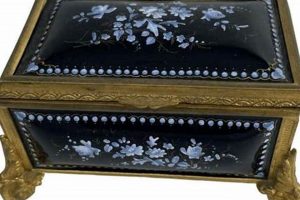
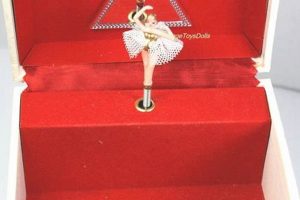
These decorative items, designed to encase standard tissue boxes, frequently exhibit characteristics associated with past eras. Construction materials often include fabric, wood, metal, or plastic, styled with aesthetics reminiscent of earlier decades, such as floral patterns, geometric designs, or particular color palettes popular during specific periods.
The appeal of these objects lies in their capacity to evoke nostalgia, complement vintage-themed interior design schemes, and introduce a touch of historical charm to contemporary settings. They represent a tangible connection to design sensibilities of bygone eras, adding character and visual interest to otherwise utilitarian objects. Their enduring popularity speaks to a consistent appreciation for craftsmanship and design elements from the past.
The subsequent sections will explore different materials used, specific design trends associated with particular decades, and offer guidance on sourcing and maintaining these items.
Acquiring and Maintaining Decorative Tissue Holders of Past Eras
The following are guidelines for individuals interested in collecting or preserving these artifacts.
Tip 1: Verify Authenticity. Thoroughly examine construction materials and design elements to ascertain if the item genuinely originates from the purported era. Research common manufacturing techniques and stylistic conventions associated with the period in question. Examples can include bakelite plastics from the 1930s-1940s or specific embroidery styles of the Victorian Era.
Tip 2: Assess Condition Critically. Evaluate structural integrity and surface condition. Minor wear is often acceptable, but significant damage, such as cracks, severe discoloration, or missing components, can substantially reduce value and aesthetic appeal.
Tip 3: Research Market Value. Consult reputable antique price guides and online auction archives to determine current market values for comparable items. Consider condition, rarity, and provenance when evaluating price reasonableness.
Tip 4: Implement Gentle Cleaning Methods. Avoid harsh chemicals or abrasive cleaners, which can damage delicate surfaces. Opt for gentle cleaning solutions and soft cloths. For fabric covers, consider professional cleaning services to preserve delicate materials and intricate detailing.
Tip 5: Ensure Proper Storage. Store in a location free from extreme temperature fluctuations, humidity, and direct sunlight. These conditions can accelerate degradation of materials. For delicate items, consider acid-free storage boxes or archival-quality wrapping materials.
Tip 6: Document Provenance. If possible, retain any documentation relating to the item’s history, such as original receipts, family records, or expert appraisals. This information enhances the item’s value and historical significance.
Tip 7: Consider Professional Restoration. For items with significant historical or sentimental value, consult with a professional conservator experienced in restoring vintage artifacts. A skilled restorer can address damage while preserving the item’s original character and authenticity.
Proper diligence in acquisition and maintenance ensures preservation and appreciation of these examples of historical design.
The concluding section will summarize key considerations for incorporating these objects into modern interior design.
1. Materials

The selection of materials is a defining characteristic of decorative tissue containers originating from prior decades. The type of material employed influences not only the aesthetic appeal but also the durability, perceived value, and historical context of these objects.
- Plastics
Bakelite, Catalin, and other early plastics were prevalent in the manufacture of these covers from the 1930s through the 1950s. These materials provided durability, affordability, and the ability to be molded into various shapes and colors. Their presence is indicative of the Art Deco and Mid-Century Modern design movements. However, these plastics are prone to discoloration and cracking over time, requiring careful maintenance.
- Wood
Wood, particularly walnut, oak, and mahogany, was commonly used for covers from the Victorian era through the Mid-Century period. Wood offered a more traditional and refined aesthetic, often featuring intricate carvings or inlays. These wooden covers demonstrate a commitment to craftsmanship and are frequently associated with more formal interior designs. Proper preservation of wooden covers requires attention to humidity control to prevent warping and cracking.
- Fabric
Embroidered linen, crocheted cotton, and velvet were popular choices for creating decorative covers, particularly in the Victorian and Cottagecore styles. Fabric offered an opportunity for intricate detailing and personalization through needlework and embellishments. These fabric covers often feature floral motifs, geometric patterns, or monograms. Their delicate nature necessitates careful cleaning to prevent damage and discoloration.
- Metal
Brass, copper, and chrome were occasionally used, especially during the Art Deco and Mid-Century Modern periods. Metal offered a sleek, modern aesthetic and durability. These metal covers often feature geometric designs or streamlined shapes. However, they are susceptible to tarnishing and corrosion, requiring periodic polishing to maintain their luster.
The specific material employed in a decorative tissue container from an earlier period serves as a significant indicator of its age, design influences, and potential value. Understanding the properties and historical context of these materials is crucial for collectors and enthusiasts seeking to appreciate and preserve these artifacts.
2. Patterns

Surface designs are integral to the identity and value of decorative tissue containers from past eras. The patterns adorning these objects serve as visual markers, indicating the period of origin and reflecting prevailing aesthetic tastes. The choice of pattern is not arbitrary; it directly impacts the object’s appeal and its integration into specific interior design schemes. Understanding these patterns provides insight into the historical and cultural context in which these covers were produced and utilized. The influence of patterns extends beyond mere decoration; they can be a significant factor in determining collectibility and market value.
Examples include the geometric motifs characteristic of Art Deco examples, which often feature stylized sunbursts, chevrons, and stepped forms. These patterns evoke the era’s fascination with modernism and machine-age aesthetics. Floral patterns, particularly roses, violets, and lilies-of-the-valley, were common during the Victorian era. Needlepoint, crochet, and printed fabrics with these floral motifs offered a homespun charm. Mid-century modern examples often feature abstract or atomic-inspired designs, reflecting the optimism and forward-thinking attitudes of the post-war period. The practical significance of recognizing these patterns lies in the ability to accurately date and classify these covers, aiding in preservation efforts and enabling informed purchasing decisions. Distinguishing between authentic period patterns and later reproductions is crucial for collectors seeking to acquire genuine artifacts.
In summation, patterns on decorative tissue containers from previous decades are more than mere ornamentation; they are critical identifiers linking the object to a specific time period and design movement. Challenges in pattern identification arise from the presence of reproductions or altered designs. However, careful examination and historical research remain essential tools for unraveling the historical and artistic significance of these patterns. Their recognition and appreciation contribute to a deeper understanding and preservation of decorative tissue container heritage.
3. Era
The era of origin is a fundamental determinant of the design, materials, and ultimately, the value of a vintage tissue box cover. Different periods exhibit distinct aesthetic preferences, manufacturing capabilities, and social contexts, all of which directly influenced the creation of these items. For example, a tissue box cover originating from the Art Deco era (1920s-1930s) is likely to feature geometric patterns, streamlined shapes, and materials like Bakelite or chrome, reflecting the era’s emphasis on modernity and industrial design. Conversely, a cover from the Victorian era (1837-1901) would likely display ornate detailing, floral motifs, and be constructed from materials such as embroidered fabric or carved wood, indicative of the period’s romantic and elaborate aesthetic.
Understanding the era associated with a particular tissue box cover is crucial for several practical reasons. Firstly, it aids in authenticating the item. By comparing the design, materials, and construction techniques with those typical of a specific period, one can assess the likelihood of the item being a genuine artifact rather than a reproduction. Secondly, knowledge of the era helps in determining the appropriate care and preservation methods. Materials used in different periods may require different cleaning agents and storage conditions to prevent deterioration. For instance, certain plastics from the mid-20th century are prone to degradation if exposed to direct sunlight, requiring specialized storage solutions. Additionally, the era influences market value. Covers from certain periods or design movements may be more sought after by collectors, commanding higher prices. For example, examples from the Mid-Century Modern era (1945-1965) are often highly desirable due to their iconic designs and association with a period of significant social and technological change.
In summary, the era is not merely a chronological marker but an integral attribute defining the characteristics, authenticity, and value of a vintage tissue box cover. Recognizing the specific era contributes to informed collecting, appropriate preservation, and a deeper appreciation of the historical and cultural significance of these objects. Challenges in era identification can arise from design revivals or the mixing of stylistic elements from different periods; however, thorough research and careful examination of materials and construction techniques remain essential for accurate assessment.
4. Condition

The physical state of a decorative tissue container from a prior era, often described as its “condition,” is a primary determinant of its value, desirability, and suitability for preservation. The assessment of condition involves a comprehensive evaluation of its structural integrity, surface appearance, and the presence of any damage or deterioration.
- Structural Integrity
Structural integrity refers to the soundness and stability of the object’s construction. Cracks, breaks, warping, or loose joints compromise the overall stability of the container and diminish its value. Examples include cracks in Bakelite plastic covers from the 1940s or warping in wooden covers due to humidity exposure. Such flaws not only detract from the aesthetic appeal but also increase the risk of further damage over time, influencing preservation efforts.
- Surface Appearance
The surface appearance encompasses the finish, color, and any decorative elements present on the container. Discoloration, fading, staining, or loss of original paint or varnish significantly impacts the aesthetic appeal. Sun-faded fabric covers or tarnished metal surfaces exemplify this. Evaluating surface appearance is vital for assessing the extent of wear and tear and determining the feasibility of restoration.
- Material Degradation
Material degradation refers to the breakdown of the constituent materials due to age, environmental factors, or improper care. This can manifest as crumbling plastic, rotting wood, or corroded metal. The presence and severity of material degradation directly impact the object’s longevity and potential for restoration. For instance, significant rot in a wooden cover may render it beyond repair, significantly reducing its value.
- Completeness and Originality
Completeness refers to the presence of all original parts and components. Originality indicates that the item has not been altered or modified from its original state. Missing embellishments, replaced hardware, or repainted surfaces detract from the item’s historical accuracy and collector value. A cover with all original components in excellent condition is generally more valuable than one with missing or altered parts.
Condition serves as a multifaceted indicator of a vintage tissue box cover’s history and potential for continued appreciation. Thorough assessment of these factors is essential for collectors, enthusiasts, and anyone interested in preserving these tangible artifacts of design history. The correlation between high-quality condition and value underpins the principles of responsible ownership and informed acquisition within the realm of vintage collectibles.
5. Rarity
Rarity significantly influences the valuation and desirability of decorative tissue containers originating from past eras. Scarcity, whether due to limited initial production, attrition over time, or unique design attributes, elevates these items beyond mere functional objects into sought-after collectibles.
- Limited Production Runs
Covers produced in small quantities, perhaps due to experimental designs or niche market appeal, are inherently rarer. Examples include tissue box covers created for specific promotional events or those manufactured by artisan workshops with limited output. Their scarcity directly increases their value, as supply cannot readily meet demand.
- Material Scarcity
Covers constructed from materials that are now difficult to source or were initially expensive contribute to rarity. Covers featuring genuine ivory inlays or those crafted from limited-availability plastics from the mid-20th century are illustrative. The inherent difficulty in obtaining these materials restricts their availability, bolstering their desirability among collectors.
- Survival Rate
The number of examples that have survived to the present day significantly impacts rarity. Tissue box covers are susceptible to damage, loss, and disposal over time. Those crafted from fragile materials or subject to heavy use may have a lower survival rate, making surviving examples more valuable. Covers made of easily cracked plastics or intricately embroidered fabrics particularly exemplify this.
- Unique Design or Features
Covers possessing unusual designs, unconventional features, or demonstrably unique characteristics contribute to rarity. Examples include tissue box covers with integrated music boxes or those customized with personalized monograms or artwork. These distinctive attributes set them apart from more common examples, increasing their appeal to collectors seeking one-of-a-kind items.
In summation, rarity in the context of decorative tissue containers from previous decades is a multifaceted attribute shaped by production constraints, material limitations, survival rates, and distinctive design features. Recognizing and evaluating these factors is crucial for assessing the true value and significance of these objects in the realm of vintage collectibles. Challenges in assessing rarity can involve incomplete historical records or fraudulent claims; however, diligent research and expert consultation remain essential for discerning true scarcity.
6. Craftsmanship
The term “craftsmanship,” when applied to decorative tissue containers of past eras, denotes the level of skill, care, and attention to detail invested in their creation. It serves as a critical determinant of an object’s aesthetic appeal, structural integrity, and ultimately, its historical and collectible value. High-quality craftsmanship indicates a dedication to producing a durable and visually pleasing object, employing techniques that often reflect the artistic and technological capabilities of the period. For instance, a tissue box cover featuring intricate hand-carved wooden details or meticulously embroidered fabric showcases a high degree of craftsmanship, contrasting sharply with mass-produced items of lesser quality. This distinction directly impacts the object’s perceived worth and its ability to serve as a tangible representation of its era.
Craftsmanship influences preservation efforts. A well-crafted tissue box cover, constructed using durable materials and robust joinery, is inherently more resistant to the ravages of time and environmental factors. Such an item is more likely to retain its original form and finish, requiring less intervention to maintain its integrity. Conversely, a poorly crafted cover, constructed with inferior materials or employing weak construction methods, is prone to deterioration and damage. Consider, for example, a metal tissue box cover with expertly applied enamel versus one with a poorly adhered paint coating; the former is likely to resist chipping and corrosion, while the latter deteriorates rapidly. Recognizing the quality of craftsmanship facilitates informed conservation decisions. Detailed examination and appropriate preservation protocols become crucial in preserving an object embodying high craftsmanship.
In conclusion, craftsmanship is an integral component of a tissue box cover from previous decades, affecting not only its aesthetic properties but also its longevity and historical value. The challenges in assessing craftsmanship often involve subjective interpretations of quality; however, a thorough examination of materials, construction techniques, and surface detailing provides a reliable basis for evaluation. Appreciating the importance of craftsmanship enhances the collector’s ability to discern genuine artifacts from inferior reproductions and supports the responsible preservation of these tangible examples of design and skill.
Frequently Asked Questions
This section addresses common inquiries regarding the acquisition, identification, and preservation of decorative tissue containers from past eras. The information provided is intended to assist collectors, enthusiasts, and anyone seeking to understand the nuances of these historical objects.
Question 1: How can the authenticity of a tissue box cover vintage be verified?
Authenticity can be assessed by examining materials, construction techniques, and design motifs prevalent during the purported era of origin. Consult reputable antique guides and compare the item’s characteristics with known examples from that period. Researching manufacturer marks or labels, if present, can also provide valuable insights.
Question 2: What factors influence the market value of a tissue box cover vintage?
Market value is influenced by condition, rarity, materials used, craftsmanship, historical significance, and provenance. Items in excellent condition, crafted from scarce materials, or possessing unique designs generally command higher prices. Documentation relating to the item’s history can further enhance its value.
Question 3: What are the recommended cleaning methods for a delicate tissue box cover vintage?
Gentle cleaning methods are recommended to avoid damaging fragile surfaces. Use soft cloths and mild, pH-neutral cleaning solutions. Avoid abrasive cleaners or harsh chemicals. For fabric covers, consider professional cleaning services to preserve delicate materials and intricate detailing.
Question 4: How should a tissue box cover vintage be stored to prevent damage?
Proper storage involves protecting the item from extreme temperature fluctuations, humidity, and direct sunlight. These conditions can accelerate material degradation. Use acid-free storage boxes or archival-quality wrapping materials for delicate items.
Question 5: What are the common materials used in the construction of a tissue box cover vintage?
Common materials include Bakelite and other early plastics (1930s-1950s), wood (Victorian era through Mid-Century period), embroidered fabric (Victorian and Cottagecore styles), and metal (Art Deco and Mid-Century Modern periods).
Question 6: How can the era of a tissue box cover vintage be determined?
The era can be determined by examining design motifs, materials, and construction techniques. Research typical characteristics of different periods, such as the geometric patterns of Art Deco or the floral motifs of the Victorian era. Consult period design catalogs and historical resources for comparative analysis.
In summary, careful research, diligent examination, and appropriate preservation techniques are essential for appreciating and maintaining the value of decorative tissue containers from past eras.
The concluding section will offer guidance on incorporating these objects into modern interior design schemes.
Conclusion
The preceding exploration has underscored the multifaceted attributes of the decorative tissue container from prior decades, extending beyond mere functionality. The investigation encompasses material composition, pattern analysis, period authentication, assessment of physical condition, determination of scarcity, and evaluation of craftsmanship. Understanding these elements is imperative for discerning value and preserving these cultural artifacts.
Continued interest and careful stewardship of these items ensure the preservation of design sensibilities from bygone eras. Further research and responsible collecting practices will contribute to a deeper understanding and appreciation of this tangible aspect of design history.