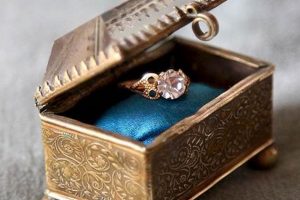
The term describes the original casing or container supplied with a Rolex watch manufactured in a prior era. These receptacles, often constructed from materials like leatherette, wood, or plastic, served primarily to protect the timepiece during purchase and transport. These containers represent more than mere packaging; they are artifacts that accompanied luxury timepieces.
The preservation and value of these original containers are significantly enhanced when the accompanying documentation, such as the warranty papers and booklets, are also present. Complete sets, containing the watch, the original container, and all original paperwork, are highly prized by collectors. The integrity of this set contributes significantly to the overall provenance and desirability of the timepiece.
The increasing importance of these containers within the collector community necessitates a closer examination of their identifying characteristics, variations across different eras, and their impact on the value of vintage Rolex watches. The following sections will delve into these aspects, providing a comprehensive overview for enthusiasts and prospective buyers.
Acquiring containers from prior eras involves careful consideration. Authenticity and condition are paramount when evaluating potential acquisitions.
Tip 1: Verify Authenticity Marks: Examine the item for verifiable markings. These may include the Rolex crown logo, reference numbers, or date codes embossed or printed on the interior or exterior. Compare these marks to known authentic examples from the corresponding era.
Tip 2: Assess Material Consistency: The materials used should align with the manufacturing period of the watch. A genuine container from the 1960s should exhibit materials and construction techniques consistent with that era. Discrepancies should raise concerns about authenticity.
Tip 3: Scrutinize Construction Quality: Examine the stitching, hinges, and lining. Original containers typically demonstrate a high degree of craftsmanship. Poor quality construction or inconsistencies in finishing may indicate a replica or later replacement.
Tip 4: Research Reference Numbers: Specific reference numbers correspond to particular watch models and production years. Research these numbers to ensure compatibility with the timepiece it is intended to house. A mismatch can devalue both the container and the watch.
Tip 5: Evaluate Condition Carefully: Condition significantly impacts value. Damage such as tears, stains, or broken hinges will detract from its worth. Assess the item’s overall state of preservation, considering factors like fading, discoloration, and wear.
Tip 6: Consult Expert Opinions: Seek advice from reputable watch dealers or collectors specializing in vintage Rolex. Their expertise can assist in identifying authentic examples and avoiding costly mistakes.
Tip 7: Request detailed pictures: Ask for detailed close-up images from the seller and inspect every detail.
Careful authentication and meticulous examination are critical for successful acquisition. Prioritizing research and expert consultation safeguards against purchasing fraudulent or misrepresented items.
The understanding gained through these considerations provides a foundation for evaluating the role of these containers in the broader context of vintage Rolex collecting.
1. Rarity and Scarcity

The rarity and scarcity of a vintage Rolex box directly influences its value and desirability among collectors. The fewer examples of a particular box that exist, the more sought-after it becomes, particularly if it corresponds to a historically significant or low-production-number Rolex watch.
- Limited Production Runs
Boxes associated with Rolex watches produced in limited quantities, such as special editions or those manufactured for specific markets, are inherently scarcer. For example, a box designed for a rare military Submariner or a Comex-issued Sea-Dweller will command a significantly higher premium due to the limited number originally produced.
- Short Production Periods
A box model used for only a brief period of time is more scarce than those with longer production cycles. A vintage Rolex box used between 1967 and 1969 for Submariner 5513, may be harder to find than those used for the same Submariner model produced for 10 years, adding value.
- Survival Rate
The survival rate of original boxes is generally lower than that of the watches they once contained. Boxes are often discarded, damaged, or lost over time, contributing to their increasing rarity. A well-preserved box, especially one from the earlier half of the 20th century, is a notable find.
- Regional Variations
Some boxes were specifically designed for certain geographic regions or markets, making them scarce outside of those areas. A box created exclusively for the Asian market, for instance, will be more difficult to locate in Europe or North America, increasing its rarity and collector appeal in those regions.
The rarity of a vintage Rolex box is determined by a combination of original production numbers, survival rates, and regional variations. These factors coalesce to establish its position within the collector’s market and significantly impact its potential value. Obtaining a rare example can substantially enhance the provenance and overall value of a vintage Rolex watch.
2. Material Composition

The material composition of a receptacle provides crucial insights into its authenticity, age, and relative value. Early examples often employed materials distinct from those used in later periods, reflecting changes in manufacturing techniques and prevalent aesthetic preferences. For instance, containers from the mid-20th century frequently featured leatherette or wood, while later iterations adopted plastic or more modern synthetic materials. The presence of a material inconsistent with the purported age of the associated timepiece raises immediate concerns regarding the item’s originality.
Variations in the materials used also correlate with the relative luxury of the watch it originally housed. Higher-end models tended to be presented in containers constructed from more expensive materials, such as polished wood or high-quality leather. Conversely, more utilitarian models might have been packaged in simple cardboard or inexpensive plastic containers. A stainless steel Submariner, for example, would likely have been accompanied by a different container than a gold Daytona, reflecting the disparity in their original retail prices. Understanding these material differences is essential for accurately assessing the value and matching a container with the appropriate vintage timepiece.
Furthermore, the degradation of materials over time serves as a valuable indicator of age and storage conditions. Leatherette may exhibit cracking or peeling, while wood can warp or show signs of water damage. The degree and nature of this wear can provide clues regarding the container’s history and authenticity. Careful examination of the material composition, therefore, is not merely an academic exercise but a practical necessity for collectors seeking to acquire genuine and well-preserved vintage Rolex containers, impacting both provenance and valuation.
3. Era-Specific Design

Era-Specific Design constitutes a critical element in determining the authenticity and value of a vintage Rolex box. The design characteristics, including the overall shape, color scheme, interior lining, and the style of the Rolex crown logo, evolved significantly over time. These design elements serve as reliable markers for identifying the period of manufacture, enabling collectors to assess whether a box is consistent with the production era of a particular Rolex watch. For example, a box with a specific shade of green used in the 1970s would be incongruous if paired with a Rolex watch manufactured in the 1950s. This discrepancy immediately signals a potential mismatch or inauthenticity.
The design nuances also extend to smaller details such as the type of hinge used, the presence or absence of specific markings, and the font used for the Rolex logo. Boxes from the 1960s, for instance, often feature a different style of hinge and a more minimalist design compared to the elaborately styled boxes of the 1980s and 1990s. Certain models, like those intended for specific markets or special editions, received containers with unique design features not found on standard models. These variations, while subtle, are crucial in differentiating genuine items from reproductions. Therefore, a thorough understanding of these era-specific design traits is imperative for collectors and dealers seeking to accurately authenticate and value vintage Rolex boxes.
Understanding era-specific design ensures proper and complete vintage sets, increases the intrinsic value of the set, and ensures confidence in the collector’s world. Furthermore, The ability to accurately identify the age and origin of a vintage Rolex container through its design features is not merely an academic pursuit, but a practical skill that safeguards against costly errors and contributes to the preservation of horological history. By scrutinizing these design details, collectors can make informed decisions, enhancing their collections and deepening their appreciation for the evolution of the Rolex brand.
4. Condition & Completeness

The condition of a vintage Rolex box and its completeness are paramount factors influencing its value and collectibility. Damage such as tears, stains, crushing, or missing components detract significantly from its worth. A box exhibiting pristine condition, with sharp corners, unfaded colors, and intact linings, commands a premium. Completeness refers to the presence of all original accompanying materials, including inner cushions, watch holders, instruction manuals, warranty papers, and any other inserts initially provided with the watch. A complete set, comprising the box, its inner components, and the original paperwork, represents the ideal acquisition for collectors.
The impact of condition and completeness can be illustrated with examples. Consider two identical vintage Rolex Submariner boxes from the 1960s. One, in near-mint condition with all original inserts and paperwork, might fetch several thousand dollars at auction. The other, showing signs of significant wear and lacking the inner cushion and warranty papers, would likely sell for a fraction of that amount. The difference in value reflects the heightened desirability of a well-preserved and complete example. The practical significance lies in the potential for significant appreciation in value over time. A collector who invests in a box exhibiting exceptional condition and completeness not only acquires a desirable artifact but also positions themselves for potential financial gain as the market for vintage Rolex items continues to evolve.
In conclusion, the condition and completeness of a vintage Rolex box are not merely cosmetic considerations; they are defining characteristics that dictate its market value and long-term investment potential. Collectors prioritize these factors, recognizing that a well-preserved and complete example represents a tangible link to the past and a potentially lucrative asset. The challenge for collectors lies in diligently assessing condition and confirming completeness before acquisition, relying on expert opinions and thorough research to ensure authenticity and long-term satisfaction.
5. Authentication Markers
Authentication markers on vintage Rolex boxes serve as crucial indicators of originality, enabling collectors to differentiate genuine articles from reproductions. These markers may include specific Rolex crown logos, reference numbers, date codes, and unique stamps or engravings applied during the manufacturing process. The presence, absence, or specific style of these markers can confirm or refute a box’s authenticity, thereby impacting its value and desirability within the collector community. The cause-and-effect relationship is clear: accurate authentication, facilitated by these markers, leads to increased confidence in a vintage Rolex box’s value and provenance.
The precise location and style of the Rolex crown logo, for example, varied across different eras. A logo placed in an incorrect location or rendered in a font inconsistent with the period raises immediate red flags. Similarly, reference numbers stamped on the box’s interior must correlate with the watch models they were intended to house. Date codes, often subtly embedded within the box’s design, provide further confirmation of its production timeframe. Examining the stitching, hinge types, and material consistency, in conjunction with these authentication markers, allows for a more comprehensive assessment. For instance, the presence of a laser-etched serial number (a modern technique) on a box purportedly from the 1950s would be a clear indication of inauthenticity. These identifiers give information related to model numbers or serials used during that time.
Understanding authentication markers is essential for responsible acquisition and valuation. The absence of appropriate markings, or the presence of inconsistencies, should prompt further scrutiny or rejection of the item. Challenges in authentication arise from the sophistication of modern forgeries and the constant evolution of Rolex’s branding and design. The practical significance of this knowledge extends beyond monetary value. Accurate authentication preserves the integrity of the vintage Rolex market, ensuring that collectors acquire genuine historical artifacts. Authentication markers are a component of the vintage set with the main role to ensure that the set are legit or not. They also create trust.
Frequently Asked Questions
This section addresses common inquiries regarding vintage Rolex containers, providing concise and informative answers to aid collectors and enthusiasts.
Question 1: What factors determine the value of a vintage Rolex box?
The value is influenced by several key factors, including rarity, material, era-specific design, condition, completeness, and authentication markers. Scarce examples in excellent condition with original paperwork command the highest prices.
Question 2: How can one identify a fake Rolex container?
Examine it for correct logos, reference numbers, and date codes. Compare the material and construction to known authentic examples from the corresponding era. Consult with experts when necessary.
Question 3: Does the presence of the original box significantly increase the value of a vintage Rolex watch?
Yes, it can substantially increase the value, particularly for rare or desirable models. A complete set (watch, container, and paperwork) is highly prized by collectors.
Question 4: Are there specific periods or materials that are more valuable than others?
Boxes from the mid-20th century, especially those constructed from high-quality leather or wood, are generally more valuable than later plastic versions. Those associated with limited-production watches also command a premium.
Question 5: What is the best way to store a vintage Rolex container to preserve its condition?
Store it in a cool, dry place away from direct sunlight and extreme temperatures. Avoid stacking heavy objects on top to prevent crushing or deformation.
Question 6: Where can one find reliable information and resources for identifying and valuing vintage Rolex boxes?
Consult reputable watch dealers, auction houses specializing in vintage timepieces, and online forums or communities dedicated to Rolex collecting. These resources can provide valuable insights and expert opinions.
A thorough understanding of these FAQs can empower collectors to make informed decisions when acquiring or valuing these horological artifacts.
The next article section will describe more in detail the restoration methods.
In Summary
The preceding exploration has underscored the importance of the vintage Rolex box as a critical element in the assessment, authentication, and overall value of vintage Rolex timepieces. Factors such as rarity, material composition, era-specific design, condition, and the presence of verifiable authentication markers collectively determine its significance. These artifacts, often overlooked, represent tangible links to the past, offering valuable insights into the history and evolution of the Rolex brand.
Consequently, continued research and meticulous attention to detail are essential for collectors and enthusiasts seeking to preserve the integrity of the vintage Rolex market. The careful consideration of each box’s attributes ensures not only the accurate valuation of these items but also the safeguarding of their historical value for future generations. The legacy of the Rolex brand resides, in part, within these unassuming containers; their preservation remains paramount.