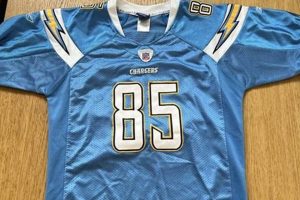
Apparel from the Green Bay Packers American football team, produced in previous eras, constitutes a collectible market. These items represent tangible connections to the team’s history and significant moments in its past. For example, a game-worn Bart Starr shirt from the 1960s is considered a valuable item.
Acquiring these artifacts holds intrinsic value for enthusiasts and collectors. These items offer insight into evolving design trends, manufacturing techniques, and the team’s cultural impact across different decades. Their rarity and association with iconic players or events contribute to their desirability and potential appreciation in value.
The subsequent sections will delve into identifying authentic pieces, assessing their condition, and exploring the factors that determine their market value, offering a comprehensive overview for those interested in acquiring or appraising them.
Tips for Evaluating Collectible Green Bay Packers Apparel
Assessing the authenticity and value of Green Bay Packers apparel from prior years requires careful examination and attention to detail. The following guidelines provide essential steps for evaluating these items.
Tip 1: Verify Manufacturing Details: Examine the tags and labels for recognizable manufacturers known to have produced official team merchandise during the item’s purported era. Inconsistencies in labeling can indicate a reproduction.
Tip 2: Assess Material Composition: The fabric should align with the materials commonly used during the period of production. For instance, early examples often feature heavier cotton or wool blends, while later versions utilize synthetic materials.
Tip 3: Scrutinize Stitching and Construction: Authentic pieces generally exhibit consistent and high-quality stitching techniques. Irregularities or modern stitching methods may suggest a fake.
Tip 4: Analyze Team Logos and Emblems: Compare the logos and emblems to historical references and team archives. Discrepancies in design, color, or placement are cause for concern.
Tip 5: Evaluate Player Names and Numbers: Confirm the font style, size, and placement of player names and numbers against known examples. Deviations from established patterns can indicate inauthenticity.
Tip 6: Investigate Provenance: Whenever possible, research the item’s history and origin. Documentation, such as certificates of authenticity or letters of provenance, can significantly increase confidence in its legitimacy.
Tip 7: Consult with Experts: If uncertainty persists, seek guidance from reputable appraisers or collectors specializing in sports memorabilia. Their expertise can provide valuable insights and validation.
Adhering to these guidelines can improve the accuracy of assessments, ensuring informed decisions when acquiring or evaluating these artifacts.
The subsequent sections will discuss preserving and storing these items to maintain their condition and value over time.
1. Era of Production

The “Era of Production” significantly influences the characteristics and value of apparel worn by the Green Bay Packers. The period in which an item was manufactured dictates the materials used, design aesthetics, manufacturing techniques, and the cultural context surrounding its creation. These elements collectively shape the desirability and historical relevance of the apparel.
- Material Composition
Different eras utilized distinct materials. Early examples often featured heavy wool or cotton, reflecting the textile technology of the time. As synthetic fabrics became prevalent, later items incorporated polyester and nylon blends. The specific materials employed provide insight into the garment’s age and authenticity. For instance, the presence of modern synthetic fibers in a purportedly pre-1960s garment would raise concerns regarding its originality.
- Design and Styling
The cut, fit, and overall design evolved over time. Early shirts typically featured simpler designs and looser fits, while later versions incorporated more athletic cuts and complex graphics. Changes in team logos, numbering styles, and striping patterns also reflect specific historical periods. A comparison of design elements with documented team standards from a particular era is essential for authentication.
- Manufacturing Techniques
Advancements in manufacturing processes are evident in different production periods. Early apparel was often hand-sewn or produced using rudimentary machinery, resulting in variations in stitching and construction. Later manufacturing processes enabled more consistent and precise production techniques. Examining the stitching, seams, and overall construction quality can offer clues about the item’s age and origin.
- Cultural Context
The cultural context surrounding a particular era can impact the value of a shirt. Apparel associated with significant moments in team history, such as championship victories or iconic players, often commands a premium. Understanding the historical significance of an item within the broader narrative of the Green Bay Packers adds to its appeal for collectors. Shirts from the Vince Lombardi era, for example, are highly sought after due to their association with the team’s dominant performance during that period.
In summary, the “Era of Production” is a foundational element in evaluating apparel worn by the Green Bay Packers. Careful consideration of the materials, design, manufacturing techniques, and cultural context associated with a specific period is crucial for determining an item’s authenticity, historical significance, and overall value.
2. Player Association

The link between a Green Bay Packers garment from a prior era and the player who wore or was associated with it directly influences the item’s desirability and monetary value within the collectors’ market. The player’s achievements, notoriety, and overall impact on the team’s history contribute significantly to the artifact’s appeal.
- Game-Worn Attribution
Confirmation that a player wore a shirt during an official game elevates its significance. Such attribution often requires documented provenance, photographic evidence, or authentication from reputable sources. A shirt demonstrably worn by a Hall of Fame player in a Super Bowl appearance, for example, would possess considerably greater value than a similar shirt without such verifiable history.
- Signature and Personalization
A player’s signature on a Green Bay Packers shirt from a prior era enhances its collectibility. Personalization, such as an inscription or message, further increases its uniqueness and potential value. The authenticity of the signature must be verifiable through reputable authentication services to ensure its legitimacy and prevent fraudulent claims.
- Era Dominance and Legacy
The period during which a player performed and their lasting impact on the Green Bay Packers’ legacy correlate directly with the value of their associated attire. Players from championship-winning teams or those who achieved significant individual accolades command higher premiums. The shirt worn by a quarterback during a Super Bowl victory, for instance, is inherently more valuable than one worn by a lesser-known player during a losing season.
- Rarity and Availability
The scarcity of shirts associated with specific players affects their market price. Shirts from players with shorter careers or those who played in eras before widespread commercialization are often rarer and more valuable. Limited availability increases competition among collectors, driving up the prices of these sought-after artifacts.
Therefore, the “Player Association” serves as a critical determinant in assessing the worth of Green Bay Packers attire from previous periods. Factors such as game-worn verification, signatures, player legacy, and scarcity all contribute to an item’s desirability and market value among collectors and enthusiasts.
3. Material Authenticity

Material authenticity is paramount in establishing the legitimacy and value of historical Green Bay Packers apparel. The fabrics and construction methods employed during a specific era serve as indicators of its origin. Deviations from known material standards raise concerns about reproduction or misrepresentation. For instance, the presence of synthetic fibers in a shirt purported to originate from the 1940s immediately casts doubt on its authenticity, as these materials were not widely used until later periods. The type of cotton, the weave of the fabric, and even the dyes used provide clues that can either validate or invalidate the item’s claim to be a genuine artifact.
The evolution of materials in sports apparel directly affects the ability to accurately date and authenticate a shirt. Early examples often featured heavier cotton or wool blends, reflecting manufacturing capabilities of the time. Later decades introduced lighter, more breathable synthetic fabrics tailored for athletic performance. Examining the composition and texture of the material, alongside documented historical records, allows experts to determine whether it aligns with the purported era. For example, comparing the stitching patterns and seam construction to known examples from manufacturers like Sand-Knit or Rawlings can further solidify material authenticity. Failure to match these established benchmarks signifies potential issues requiring further investigation.
Consequently, the assessment of material authenticity forms a cornerstone in the valuation and preservation of vintage Green Bay Packers attire. It not only confirms the age and origin of the item but also dictates its proper care and handling. Understanding these material nuances aids collectors and historians in making informed decisions, ensuring the accurate representation and preservation of these historical artifacts. Neglecting material analysis risks misclassification and diminishes the cultural and financial worth of these tangible links to the team’s past.
4. Condition Assessment

The state of preservation, or condition, directly dictates the value and collectibility of Green Bay Packers apparel from previous eras. Degradation from environmental factors, wear, or improper storage reduces an item’s historical integrity and market worth. Tears, staining, fading, and alterations diminish value, making pristine or near-mint examples highly prized. A shirt worn in a single game with minimal damage holds significantly greater appeal than a heavily worn and damaged example, even if both were originally identical. The impact of condition is such that a well-preserved common-era shirt may command a higher price than a rare shirt exhibiting substantial damage.
Assessing condition involves a systematic evaluation of multiple factors. Fabric integrity, seam strength, the vibrancy of colors, and the presence of original tags all contribute to the overall assessment. Evaluation includes consideration of the type and extent of damage, such as moth holes in wool items, cracking of screen-printed logos, or yellowing of fabrics. The presence of repairs or alterations impacts value, as originality is a key attribute for collectors. Professional grading services offer standardized condition assessments, providing a consistent and objective evaluation that enhances confidence in the item’s authenticity and value. For instance, a shirt graded “Excellent” by a recognized service commands a higher premium than an ungraded item due to the verified condition.
In summary, rigorous condition assessment is critical for evaluating collectible Green Bay Packers shirts. It influences value, dictates proper preservation methods, and informs purchasing decisions. Challenges lie in subjective interpretation and the difficulty of objectively quantifying wear. However, standardized grading and careful visual inspection enable accurate condition appraisals, ensuring the long-term preservation and appreciation of these historical artifacts.
5. Rarity Determination
The scarcity of Green Bay Packers apparel from bygone eras significantly influences its market value. The rarity of an item stems from several factors, including limited production runs, specific event commemoration, and the survival rate of garments over time. Items produced in small quantities, such as those for specific playoff games or team anniversaries, are inherently more difficult to acquire, thus increasing their desirability among collectors. Furthermore, the passage of time contributes to rarity, as wear and tear, loss, and disposal reduce the number of existing examples. For instance, a shirt manufactured for a single Super Bowl appearance in the 1960s would be considerably rarer than a standard regular-season shirt from the 1980s, directly impacting its market valuation.
Establishing the rarity of these items requires meticulous research and documentation. Factors include examining production records, team archives, and auction databases. Collector networks and expert appraisers often play a crucial role in verifying the quantity and availability of specific items. Distinguishing between limited editions and mass-produced shirts is paramount. Consider a shirt from a player’s final season versus a shirt produced annually throughout their career; the former is likely to be more scarce and therefore more valuable. The presence of unique features, such as player-specific alterations or team-issued patches, further enhances an item’s rarity and potential value. Auction records demonstrate the significant price premiums attached to extremely rare and well-documented pieces, underscoring the importance of thorough rarity assessment.
Ultimately, accurate rarity determination is essential for collectors and appraisers of vintage Green Bay Packers attire. It informs pricing, guides purchasing decisions, and ensures the proper valuation of historical artifacts. Challenges remain in accessing complete production records and accounting for undocumented items. However, by combining rigorous research with expert knowledge, informed assessments of rarity can be made, preserving the historical and financial value of these unique pieces of sports memorabilia.
6. Manufacturer Verification

Manufacturer verification represents a critical process in authenticating vintage Green Bay Packers apparel. The production entity’s identity, discernible through tags, labels, and construction techniques, serves as a primary indicator of legitimacy. Discrepancies between established manufacturing standards and the item in question raise concerns about authenticity, potentially diminishing its value and historical significance. For example, identification of a Russell Athletic tag on a shirt purported to originate from the 1950s would immediately cast doubt on its veracity, as Russell Athletic did not become a prominent manufacturer of NFL apparel until later decades.
The prevalence of counterfeit merchandise necessitates diligent manufacturer verification. Common manufacturers known for producing Green Bay Packers apparel include, but are not limited to, Sand-Knit, Rawlings, Wilson, and Champion. Each manufacturer utilized distinctive tagging systems, font styles, and construction methods during specific eras. Comparing these details against documented examples helps establish authenticity. Examining stitching patterns, material compositions, and logo placements further contributes to the verification process. For example, Sand-Knit shirts are characterized by distinct tagging and sizing conventions, while Rawlings shirts often feature specific labeling and construction techniques. Accurate identification of these characteristics provides critical evidence for verifying the manufacturer and, subsequently, the garment’s authenticity.
In summary, manufacturer verification is an indispensable component of authenticating Green Bay Packers apparel. It mitigates the risk of acquiring counterfeit items, preserves the historical integrity of these artifacts, and ensures accurate valuation within the collectors’ market. While challenges remain in tracking evolving manufacturing practices and identifying subtle inconsistencies, rigorous verification procedures provide essential safeguards for collectors and historians alike.
7. Market Valuation
The valuation of Green Bay Packers apparel from past eras is a complex process, influenced by a combination of tangible and intangible factors. Market valuation reflects the intersection of scarcity, historical significance, player association, condition, and collector demand. The absence of accurate market valuation leaves potential buyers and sellers vulnerable to misrepresentation and financial loss. For example, the sale of a falsely attributed or poorly authenticated shirt can result in significant financial repercussions for the purchaser. An accurate valuation incorporates verifiable data, expert analysis, and understanding of the evolving dynamics within the sports memorabilia market.
Market dynamics frequently shift due to unforeseen events, shifting player popularity, or the discovery of previously unknown items. Auction results, private sales, and dealer inventories provide data points for determining value. A sudden surge in interest for a specific player’s artifacts, perhaps following a hall of fame induction, can dramatically increase the market value of his associated apparel. Conversely, negative publicity surrounding a player can negatively affect the value of related items. Online marketplaces offer accessibility but also increase the risk of encountering counterfeit or misrepresented merchandise. Thus, understanding these diverse factors remains critical to making informed purchasing or selling decisions.
Ultimately, understanding market valuation is crucial for individuals interested in acquiring or divesting of vintage Green Bay Packers garments. Challenges lie in the subjective nature of appraising historical significance and the ever-present risk of encountering fraudulent items. Reliance on verifiable data, expert opinions, and due diligence is essential for navigating this intricate landscape, preserving the historical and financial integrity of these collectible artifacts.
Frequently Asked Questions
The following section addresses common inquiries regarding the acquisition, authentication, and valuation of collectible Green Bay Packers attire from prior eras.
Question 1: What characteristics distinguish authentic pieces from reproductions?
Authentic pieces exhibit manufacturing details consistent with their purported era, including specific tagging, stitching techniques, and material compositions. Logos and emblems conform to historical team standards. Reputable authentication services provide expert verification.
Question 2: How does player association impact the value of vintage shirts?
Items demonstrably worn by prominent players, particularly those associated with significant achievements, command higher premiums. Signatures, personalization, and documentation of game-worn status further enhance value.
Question 3: What role does condition play in determining market price?
Condition significantly influences value; pristine or near-mint items command higher prices. Damage, alterations, or repairs diminish an item’s historical integrity and market worth.
Question 4: How is rarity assessed in the context of these collectibles?
Rarity stems from limited production runs, specific event commemorations, and the survival rate of garments over time. Scarcity significantly increases desirability and market value.
Question 5: Which manufacturers are known for producing authentic Green Bay Packers apparel?
Manufacturers with established histories of producing official team merchandise include Sand-Knit, Rawlings, Wilson, and Champion. Tagging systems, font styles, and construction methods vary among manufacturers and across eras.
Question 6: Where can reputable authentication services be found?
Reputable authentication services specialize in sports memorabilia and possess expertise in evaluating vintage apparel. Seek recommendations from established collectors or industry experts.
Accurate assessment of authenticity, player association, condition, rarity, and manufacturer is essential for informed purchasing or selling decisions.
The subsequent section will explore the ethical considerations involved in collecting and trading these historical artifacts.
Conclusion
This exploration of apparel worn by the Green Bay Packers from earlier periods has underscored critical factors influencing their value and historical significance. Assessing authenticity, player association, condition, rarity, and manufacturer verification is paramount in navigating the market. The insights provided aim to equip collectors and enthusiasts with the knowledge necessary for informed decision-making.
Continued vigilance and adherence to best practices are essential for preserving the integrity of these artifacts. The ongoing study and ethical collection of apparel worn by the Green Bay Packers from prior years ensures that these tangible links to the team’s heritage endure for future generations.