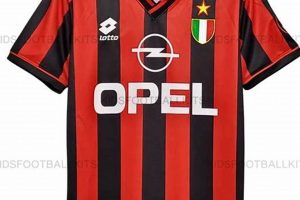
Apparel from prior decades that represents athletic teams, leagues, or sporting events holds significant value. These items, often constructed from materials and displaying designs indicative of their era, are collected and worn by enthusiasts. For example, a jersey worn by a professional baseball player in the 1970s, or a t-shirt commemorating the 1984 Olympics, falls within this category.
The appeal lies in several factors. These garments provide a tangible link to sports history, evoking nostalgia and a sense of connection to past athletic achievements. The scarcity of certain pieces, particularly those associated with specific players or events, contributes to their desirability and potential market value. Furthermore, the distinctive aesthetics of past eras often offer a unique stylistic alternative to contemporary sports merchandise.
This exploration will now delve into the various facets of collecting and appreciating these nostalgic garments, including identification, preservation, and the evolving market landscape.
Acquiring and Maintaining Athletic-Related Garments from Past Eras
The following outlines several key considerations for those interested in procuring and preserving athletic-related garments from prior decades. Careful attention to these points can enhance both the collection and its long-term value.
Tip 1: Authentication is paramount. Prior to purchase, rigorously examine the item for signs of authenticity. Research manufacturer tags, team logos, and stitching patterns characteristic of the claimed era. Consult with established experts when necessary.
Tip 2: Assess condition meticulously. Note any signs of wear, such as fading, staining, or tearing. While minor imperfections are common in older items, excessive damage can significantly impact value. Consider the cost of professional restoration if needed.
Tip 3: Understand market valuation. Research comparable sales data to gauge the garment’s fair market value. Factors such as rarity, player association, and condition will influence pricing. Be wary of inflated prices based on speculation.
Tip 4: Prioritize proper storage. Protect these garments from sunlight, moisture, and pests. Acid-free storage boxes or garment bags are recommended. Avoid hanging delicate items, as this can lead to stretching or distortion.
Tip 5: Implement careful cleaning procedures. Hand-washing with a mild detergent is generally preferable to machine washing. Avoid harsh chemicals or bleach. Consult with a textile conservation specialist for fragile or heavily soiled items.
Tip 6: Document the acquisition. Maintain a detailed record of each item, including its provenance, purchase price, condition, and any restoration work performed. This documentation will be invaluable for insurance purposes and potential future sales.
Tip 7: Insure the collection appropriately. Obtain insurance coverage that reflects the current market value of the collected items. Periodically re-evaluate the collection’s value and adjust coverage accordingly.
By diligently adhering to these guidelines, individuals can safeguard their investment in sports-related garments from prior eras and ensure their preservation for future generations.
The subsequent sections will elaborate on specific aspects of valuation and historical context.
1. Authenticity Verification

The value of a vintage sports shirt is intrinsically linked to its verifiable authenticity. Without proper authentication, a garment, regardless of its apparent age or design, remains of questionable provenance and significantly diminished worth. This verification process serves as a critical gatekeeper, distinguishing genuine historical artifacts from reproductions or mere vintage-style imitations. The absence of rigorous authentication protocols can lead to misrepresentation, fraud, and a devaluation of the entire market. For example, a t-shirt claimed to be from the 1969 Woodstock music festival will be valued at pennies without proper validation and documentation.
Authenticity verification encompasses a multifaceted approach. This often begins with a detailed examination of manufacturing tags, including brand markings, sizing indicators, and fabric composition labels. These tags, if present and consistent with the purported era, offer initial clues regarding legitimacy. Furthermore, close scrutiny of construction techniques, such as stitching patterns and seam finishing, can reveal discrepancies inconsistent with known manufacturing practices of the period. Certain details, almost undetectable to the amateur eye, will give hints of original product.
In conclusion, authenticity verification is not merely a procedural step in the acquisition of vintage sports shirts, but a foundational pillar upon which the entire ecosystem rests. The ability to accurately and reliably assess the authenticity of these garments is paramount to maintaining the integrity of the market, protecting collectors from fraudulent practices, and preserving the historical significance of these tangible representations of sporting history.
2. Fabric Condition
Fabric condition serves as a crucial determinant in assessing the value, preservation needs, and overall desirability of athletic-related garments from prior decades. The integrity of the textile directly impacts its aesthetic appeal, structural soundness, and long-term survivability. The state of the fabric informs decisions regarding cleaning, restoration, and storage, influencing the garment’s historical representation and potential market worth.
- Fiber Degradation
Over time, textile fibers naturally degrade due to environmental factors such as sunlight, humidity, and oxidation. This degradation can manifest as fading, embrittlement, and loss of tensile strength. A cotton t-shirt from the 1970s, repeatedly exposed to sunlight, may exhibit significant color loss and a weakened structure, rendering it more susceptible to tearing and damage. The extent of fiber degradation directly correlates with the garment’s historical value and the level of intervention required for its preservation.
- Staining and Discoloration
Stains and discoloration represent common challenges in maintaining older fabrics. Perspiration, dirt, and other contaminants can penetrate the fibers, causing permanent alterations to the garment’s appearance. For example, a vintage baseball jersey displaying significant staining from game-related wear may be less desirable to collectors than a similar jersey in pristine condition. Effective stain removal techniques are essential, but aggressive methods can further damage the fabric, necessitating a delicate balance between cleaning and preservation.
- Structural Damage
Tears, holes, and seam separations constitute structural damage that compromises the integrity of the garment. These flaws can arise from wear and tear, improper storage, or insect infestation. A wool sweater from the 1950s, exhibiting moth damage, requires professional repair to prevent further deterioration. The nature and extent of structural damage influence the cost of restoration and the garment’s long-term viability as a collectible item.
- Fabric Composition and Weave
The specific fabric composition and weave pattern influence its durability and susceptibility to damage. Natural fibers, such as cotton and wool, exhibit different properties than synthetic fibers, such as polyester and nylon. A tightly woven fabric, like denim, will generally withstand wear better than a loosely woven fabric, such as linen. Understanding the fabric’s characteristics is essential for selecting appropriate cleaning and preservation techniques.
The assessment of fabric condition requires a comprehensive evaluation of these interrelated factors. Collectors and preservationists must carefully consider the extent of fiber degradation, staining, structural damage, and the inherent properties of the textile to make informed decisions regarding the care and handling of athletic-related garments from prior decades. This assessment informs subsequent steps in the preservation process, ensuring the long-term survivability and historical value of these artifacts.
3. Era Specificity

Era specificity constitutes a fundamental attribute of vintage sports shirts, differentiating them from contemporary apparel and establishing their historical significance. The garment’s design, manufacturing techniques, and associated cultural references must align with a particular historical period to validate its authenticity and enhance its collectibility.
- Design Elements and Silhouettes
Distinct design elements, such as collar styles, sleeve lengths, and overall silhouettes, are characteristic of specific eras. For example, a fitted baseball jersey with short sleeves and a button-down front is indicative of the mid-20th century, while a looser-fitting t-shirt with a crew neck and longer sleeves is more typical of the late 20th century. These design cues provide immediate visual identifiers, allowing for a preliminary assessment of the garment’s age and origin. The cut of the shirt is also a clear indication of when it was produced. These differences can lead to identifying more accurate products.
- Manufacturing Techniques and Materials
The methods employed in manufacturing sports shirts, as well as the materials utilized, have evolved considerably over time. Early examples often feature natural fibers, such as cotton or wool, constructed using traditional techniques like hand-stitching or manual looms. Later examples may incorporate synthetic materials, such as polyester or nylon, produced using automated machinery. The presence of specific manufacturing techniques and materials serves as a critical indicator of the garment’s era of origin. For instance, a shirt with no polyester is automatically defined as not vintage. A shirt containing a union label is a very good sign that the article is vintage.
- Team Logos and Branding
Team logos and branding elements undergo periodic revisions and updates, reflecting changes in ownership, marketing strategies, and aesthetic preferences. These changes can provide valuable clues regarding the garment’s era of production. For example, the evolution of the New York Yankees’ logo, or the introduction of new team mascots, can be traced through the logos displayed on vintage sports shirts. Identifying the specific logo used on a garment allows for a more precise determination of its age. Additionally, some leagues had very distinct logos that provide insight into which decade the shirt came from.
- Cultural and Social References
Sports shirts often incorporate cultural and social references specific to their era, reflecting popular trends, historical events, and prevailing attitudes. These references can manifest in the form of slogans, graphics, or imagery that resonate with the spirit of the time. For example, a shirt commemorating a specific championship victory or featuring a popular catchphrase from the era provides a tangible link to a particular moment in history. The incorporation of such references enhances the garment’s historical significance and its appeal to collectors.
In summary, era specificity is paramount in evaluating vintage sports shirts. By carefully analyzing design elements, manufacturing techniques, team logos, and cultural references, collectors can accurately determine a garment’s age and historical significance, enhancing its value and preserving its place in sports history. This knowledge is key to ensuring the value of the shirt.
4. Team Representation

Team representation is a core element in the domain of garments from prior decades representing sports teams. The specific manner in which a team is depicted on such a garment directly influences its value, historical relevance, and appeal to collectors. Accurate and period-authentic team representation ensures the garments legitimacy and its ability to evoke a sense of nostalgia and connection to sports history.
- Logo Accuracy and Evolution
The precise rendering of a team’s logo is paramount. Logos evolve over time, reflecting changes in branding, ownership, or aesthetic preferences. A garment featuring an outdated or inaccurate logo immediately raises questions about its authenticity and historical accuracy. For instance, the evolution of the Boston Celtics’ logo from a simple shamrock to a more detailed design can be traced through garments from different eras. The correct logo for the shirts Era is important.
- Color Schemes and Uniform Designs
Team colors and uniform designs are highly specific to particular periods. Deviations from the established color schemes or uniform designs of a given era indicate potential inauthenticity. The shift from flannel uniforms to more modern materials in baseball, for example, is reflected in the appearance of vintage baseball shirts. The correct color and design matters for a shirt to be valid.
- Player Depictions and Rosters
Garments featuring player depictions or team rosters provide valuable context and enhance their collectibility. The accuracy of player names, numbers, and likenesses is crucial. A vintage shirt featuring an incorrect player name or an inaccurate depiction of a player’s uniform detracts from its value. The presence of a notable player’s name or image can significantly increase a shirt’s appeal. Identifying what players are on the shirt and if they played during that era is important for authenticity.
- League Affiliations and Championships
The accurate representation of a team’s league affiliation and championship victories is essential for establishing its historical context. A garment commemorating a specific championship must accurately reflect the team’s league affiliation at the time and the details of the championship victory. Inaccuracies or misrepresentations in this regard diminish the shirt’s historical value. Ensuring that the league and accomplishments match the shirt is important.
The nuances of team representation are therefore central to the identification, valuation, and preservation of athletic-related garments from prior decades. Accurate team representation is vital to historical and monetary shirt value. Careful attention to these details ensures the authenticity and historical significance of these tangible artifacts of sports history.
5. Player Association

Player association is a critical factor influencing the value and desirability of athletic-related garments from prior decades. The connection a shirt has to a specific athlete significantly enhances its historical relevance and market appeal. This association can manifest in various forms, each contributing to the garment’s overall significance.
- Game-Worn Authenticity
A garment demonstrably worn by a player during a professional game holds the highest premium. Such items provide a tangible link to a specific moment in sports history. Authentication processes, often involving photo matching or provenance documentation, are essential in verifying game-worn status. Examples include jerseys worn by Michael Jordan during his championship seasons or baseball shirts worn by Babe Ruth, each fetching substantial sums at auction. The more relevant or well known a player is, the shirt will be worth much more than shirts of no name players.
- Player Autographs and Memorabilia
The presence of a player’s autograph on a vintage garment increases its value, particularly if the signature is authenticated. Furthermore, shirts associated with significant events in a player’s career, such as milestone achievements or awards ceremonies, hold additional appeal. A signed Hank Aaron baseball shirt, commemorating his record-breaking home run, exemplifies this type of collectible. Always make sure the autograph is real, and can be validated with existing data online.
- Team and Era Specificity
The player’s association with a specific team and era further enhances the garment’s historical context. A shirt worn by a star player during a team’s championship season is highly sought after by collectors. The combination of player notoriety, team success, and era authenticity creates a compelling narrative that drives demand. For instance, a Joe Namath New York Jets shirt from the 1969 Super Bowl victory holds immense value due to its association with a legendary player and a historic sporting event. Ensure the shirts matches the era, and that a player was present during that era.
- Rarity and Limited Editions
The scarcity of a player-associated garment further elevates its collectibility. Limited edition shirts, produced in small quantities to commemorate special occasions or player achievements, command higher prices due to their rarity. A shirt honoring Wayne Gretzky’s final NHL season, produced in a limited run, exemplifies this category. With an exclusive shirt, collectors will always seek to add to their collection.
These factors collectively underscore the importance of player association in the market for vintage sports shirts. The connection to a specific athlete, particularly one of historical significance, elevates a garment from a mere piece of clothing to a tangible representation of sports history, thereby driving its value and desirability among collectors.
6. Market Value

The market value of athletic-related garments from prior decades is a dynamic metric determined by a confluence of factors, including condition, authenticity, historical significance, and player association. The interplay of these elements dictates the price these items command in various marketplaces, ranging from online auctions to specialized vintage shops. Understanding the drivers of market value is essential for both collectors seeking to acquire desirable pieces and sellers aiming to maximize returns on their investments. For example, a game-worn jersey from a prominent athlete of a celebrated team from a well-known sports league sells for more than a generic sports tee. Also, The demand for garments from the 1990s is far higher than those from earlier periods.
Fluctuations in market value are often influenced by external factors, such as media coverage, historical anniversaries, and the cyclical nature of fashion trends. Increased media attention surrounding a particular player or team can lead to a surge in demand for related memorabilia, driving up prices. Similarly, anniversaries of significant sporting events can create renewed interest in vintage garments associated with those events. The market value also depends on current trends of styles. The price of a basketball shirt can also be determined by what players are currently wearing on the court. For example, the popularity of vintage NBA jerseys worn by celebrities has led to an increase in the market value.
In conclusion, market value serves as a critical indicator of the historical and cultural significance of athletic-related garments from prior decades. Its understanding allows enthusiasts, collectors, and investors alike to navigate the vintage market effectively. While predicting future price trends with certainty remains elusive, the principles of assessing authenticity, condition, and historical context offer a solid foundation for informed decision-making. Therefore, it is important to consider these factors when evaluating the vintage sports shirts market.
Frequently Asked Questions
The following addresses common inquiries surrounding the acquisition, authentication, and valuation of athletic garments originating from past eras. These answers intend to provide clear guidance for collectors and enthusiasts.
Question 1: How can the authenticity of garments from prior decades representing sports teams be determined?
Authenticity verification involves a multi-pronged approach. Examination of manufacturing tags, assessment of construction techniques, and comparison with known historical examples are essential steps. Consulting with established experts is also advisable.
Question 2: What factors significantly affect the market value of shirts from prior decades representing sports teams?
Market value is influenced by several elements, including condition, rarity, player association, and historical significance. Garments demonstrably worn by prominent athletes during significant events command premium prices.
Question 3: What are the critical considerations for preserving the quality of shirts from prior decades representing sports teams?
Proper storage is crucial. Protect these items from sunlight, moisture, and pests. Acid-free storage containers are recommended. Gentle cleaning methods are necessary, avoiding harsh chemicals or excessive agitation.
Question 4: What are some common signs that indicate an item is NOT an athletic garment from prior decades?
Inconsistencies in manufacturing techniques, discrepancies in team logos or branding, and the use of anachronistic materials are indicative of inauthenticity. A lack of verifiable provenance also raises concerns.
Question 5: How is the condition of a vintage shirt related to its overall value?
The condition dramatically affects the value. Damage such as stains, tears, or significant fading lowers price. A perfectly preserved shirt has a chance to receive a very high price.
Question 6: Where can a collector of vintage sports shirts purchase new pieces?
Those seeking new pieces can find vintage sports shirts at specialty stores, auctions, estate sales, and online marketplaces. It is important to verify the source to ensure the seller has proper knowledge.
Understanding these frequently asked questions can equip individuals with the necessary knowledge to navigate the landscape of athletic garments from prior decades with greater confidence.
This exploration has covered the critical aspects related to vintage sports shirts. The following step would be expanding on finding the most popular marketplaces.
Conclusion
This exploration has elucidated the core elements defining “vintage shirts sports,” encompassing aspects of authenticity, condition assessment, era specificity, team representation, player association, and market valuation. A comprehensive understanding of these factors is critical for collectors, enthusiasts, and investors seeking to navigate this specialized market effectively. The intersection of sports history, fashion trends, and collectible culture contributes to the enduring appeal of these garments.
As the interest in tangible historical artifacts continues to grow, the market for “vintage shirts sports” is expected to evolve further. Diligence in authentication, informed decision-making, and a deep appreciation for the historical context are paramount for those seeking to engage with this unique and ever-changing domain. Maintaining the integrity and preserving the legacy of these items remains the responsibility of both current and future generations.