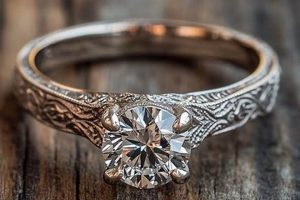
Ornate designs, intricate details, and a sense of timeless elegance characterize bridal ring ensembles that draw inspiration from past eras. These sets often feature design elements reminiscent of the Edwardian, Art Deco, or Victorian periods, incorporating milgrain detailing, filigree work, and unique gemstone cuts. For example, a pairing might include a center stone with a halo setting and delicate engravings on the band, complemented by a wedding band echoing the same aesthetic.
The enduring appeal of these designs lies in their ability to convey a sense of history and individuality. The craftsmanship involved in creating such pieces ensures a high level of detail and artistry. Furthermore, these sets often provide a connection to sentimental eras, offering an alternative to contemporary styles that may lack the same nuanced character. Their enduring nature and classical aesthetic make them valuable heirlooms, capable of being passed down through generations.
The following sections will delve into specific design elements, popular gemstone choices, and considerations when selecting a bridal ring ensemble that embodies the enduring allure of bygone eras. The information presented aims to guide prospective buyers in making an informed decision that reflects their personal style and preferences, while honoring the rich legacy of historical jewelry design.
Selecting Time-Honored Bridal Ring Ensembles
Choosing a bridal ring set inspired by historical design requires careful consideration of several factors. Adherence to these guidelines can ensure the selection of a piece that reflects personal style and embodies the enduring elegance of vintage aesthetics.
Tip 1: Research Historical Periods. Familiarize oneself with the distinct characteristics of various eras, such as the geometric shapes of the Art Deco period or the floral motifs of the Victorian era. This understanding allows for a more informed selection that aligns with individual preferences.
Tip 2: Evaluate Metal Type and Condition. Gold, platinum, and silver are common metals. Assess the integrity of the metal, particularly in older pieces, and consider the potential for restoration if needed. Select metal that complements the chosen gemstone and design style.
Tip 3: Consider Gemstone Cut and Setting. Antique cuts, such as Old European or Rose cuts, offer a distinctive appearance. Examine the gemstone’s cut, clarity, and color. Ensure the setting is secure and appropriate for the chosen gemstone.
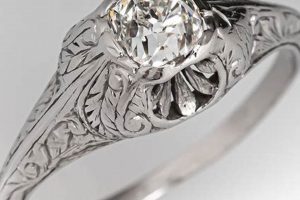
Tip 4: Examine Detailings and Embellishments. Details such as milgrain, filigree, and hand engraving contribute to the overall aesthetic. Scrutinize the quality of these embellishments to ensure they are well-executed and consistent with the design’s historical inspiration.
Tip 5: Consider Overall Design Harmony. Evaluate how the engagement ring and wedding band complement each other. Ensure the styles are cohesive and the rings sit comfortably together on the finger.
Tip 6: Verify Authenticity and Provenance. For genuine antique pieces, research the seller’s reputation and request documentation regarding the ring’s origin and history. Appraisals from qualified gemologists can also provide verification.
Tip 7: Determine Ring Size and Comfort. Ensure the ring fits comfortably and accurately. Sizing adjustments should be performed by a professional jeweler experienced in working with antique or vintage-inspired pieces to avoid damaging delicate settings or embellishments.
Careful attention to these details ensures the selection of a set that authentically captures the essence of a bygone era, offering a unique and timeless symbol of commitment.
The following sections will explore where to source high-quality sets and how to care for them.
1. Era Influences

Era influences serve as the foundational framework for bridal ring sets inspired by vintage aesthetics. The selection of a specific historical period dictates the design elements, materials, and gemstone cuts characteristic of the ring. For example, the Art Deco era (circa 1920s-1930s) heavily influenced the incorporation of geometric shapes, symmetrical patterns, and the use of gemstones like emeralds and sapphires. Conversely, rings inspired by the Victorian era (1837-1901) often exhibit floral motifs, intricate filigree work, and a preference for diamonds accompanied by colored gemstones such as pearls or garnets. Therefore, a lack of awareness of these era-specific features undermines the ability to accurately identify and appreciate the nuances of a vintage-inspired bridal ring set.
The impact of historical periods extends beyond mere aesthetics. The materials and craftsmanship employed during specific eras can affect the ring’s durability, maintenance requirements, and overall value. Rings from the Edwardian period (1901-1910), known for their delicate platinum settings and intricate lacework, require specialized care due to the inherent softness of the metal. Similarly, the gemstone cuts popular in certain eras, such as the Old European cut diamond, possess unique light performance characteristics that distinguish them from modern cuts. This knowledge empowers consumers to make informed decisions regarding the authenticity and long-term care of their chosen ring set.
In summary, era influences constitute an indispensable component of bridal ring sets that evoke a historical aesthetic. Understanding the design elements, materials, and craftsmanship associated with specific periods allows for a more nuanced appreciation of these rings. This comprehension also contributes to informed decision-making regarding authenticity, value, and long-term maintenance, ensuring that the selected ring set authentically reflects the desired historical style and endures as a cherished symbol of commitment. Recognizing these periods provides a crucial component in appreciating these symbolic pieces of jewelry.
2. Metal Choice
The selection of metal for bridal ring sets inspired by historical designs is a decision that fundamentally shapes the piece’s aesthetic, durability, and value. The inherent properties of each metal influence not only the overall appearance but also the long-term maintenance requirements and suitability for specific historical styles.
- Platinum’s Durability and Purity
Platinum, prized for its strength and hypoallergenic properties, emerged as a popular choice during the Edwardian and Art Deco periods. Its inherent white color enhances the brilliance of diamonds and complements intricate filigree work. Platinum’s density makes it highly resistant to wear and tear, ensuring the longevity of delicate designs. However, platinum is a more expensive option than gold, and its malleability requires skilled craftsmanship.
- Gold’s Versatility and Color Options
Gold, available in various karats and colors (yellow, white, rose), offers versatility in achieving diverse vintage aesthetics. Yellow gold evokes a sense of warmth and tradition, aligning well with Victorian-era designs. White gold, achieved by alloying gold with other metals, provides a brighter, more modern appearance, often used in Art Deco reproductions. Rose gold, with its subtle pink hue, offers a romantic and unique option, gaining popularity in recent adaptations of vintage styles. The karat of gold determines its purity and durability, with lower karats being more resistant to scratching but also less valuable.
- Silver’s Historical Significance and Affordability
Silver, particularly sterling silver, was a common choice for jewelry in earlier periods due to its affordability and workability. While less durable than gold or platinum, silver allowed for intricate detailing and elaborate designs to be created at a lower cost. Silver requires regular polishing to prevent tarnishing and is generally less suitable for settings requiring high levels of security for gemstones. Its use is most often seen in reproductions or adaptations rather than genuine antique pieces.
- Metal Alloys and Their Impact
The use of alloys in metals, such as rhodium plating on white gold or specific combinations in rose gold, influences the metal’s color, hardness, and resistance to tarnish. Rhodium plating, while enhancing the whiteness and scratch resistance of white gold, requires periodic reapplication. Understanding the composition of metal alloys is crucial for proper care and maintenance, ensuring the longevity and visual appeal of the ring set.
Ultimately, the selection of metal profoundly impacts the overall aesthetic and longevity of sets inspired by historical designs. Each metal offers a unique combination of properties that align with particular styles and preferences. Careful consideration of these factors ensures the selection of a bridal ring set that not only captures the desired vintage aesthetic but also stands the test of time. The metal choice, coupled with design, stones, and embellishments, all culminate in capturing that essence of times gone by.
3. Gemstone Cuts
Gemstone cuts, especially in the context of bridal ring sets inspired by past eras, are not merely a facet of design but a defining characteristic that significantly contributes to the overall aesthetic and historical accuracy. The choice of cut directly influences the light performance, visual appeal, and perceived authenticity of the piece.
- Old European Cut Diamonds
The Old European cut, prevalent from the late 19th century to the early 20th century, features a round shape with a high crown, deep pavilion, and a small table. This cut produces a distinctive “fire,” characterized by broader flashes of spectral colors compared to modern brilliant cuts. In designs that echo the Edwardian or Victorian eras, the presence of Old European cut diamonds is a hallmark of authenticity, providing a visual cue to the ring’s vintage inspiration.
- Rose Cut Diamonds
The rose cut, with its flat base and a crown composed of triangular facets, was popular in the 16th century and experienced resurgence in later periods. This cut exhibits a soft, romantic glimmer rather than intense brilliance, aligning with the understated elegance often associated with antique jewelry. Including rose-cut diamonds in bridal ring sets channels the historical context and contributes to a unique and subdued aesthetic.
- Asscher Cut Diamonds
The Asscher cut, developed in 1902, is a step-cut diamond with a square shape and cropped corners. Its distinct geometry creates a captivating play of light, characterized by concentric squares and a mesmerizing “hall of mirrors” effect. The Asscher cut became synonymous with the Art Deco era, making it a prominent feature in designs seeking to capture the bold and geometric spirit of the period.
- Colored Gemstone Cuts
Beyond diamonds, the cuts applied to colored gemstones further amplify the vintage aesthetic. Emerald cuts, cushion cuts, and cabochons are frequently employed to showcase the unique color and clarity of stones like sapphires, emeralds, and rubies. The selection of a specific cut should complement the gemstone’s inherent characteristics and align with the overall design of the ring set, contributing to a cohesive and historically informed visual narrative.
The interplay between gemstone cuts and the overall design is essential to the success of sets that emulate past eras. These cuts not only influence the aesthetic appeal but also offer a tangible connection to historical styles, adding depth and character to the ensemble. The selection of authentic or appropriate cuts enhances the credibility and allure of such sets, underscoring their appeal as meaningful symbols of enduring commitment.
4. Setting Types

The selection of setting types is paramount in creating bridal ring sets that effectively capture the essence of historical design. Settings not only secure the gemstones but also contribute significantly to the overall aesthetic, reflecting specific stylistic trends of different eras. This consideration of setting type is thus critical to creating authentic vintage-inspired designs.
- Prong Settings and Their Evolution
Prong settings, characterized by metal claws that grip the gemstone, have undergone stylistic evolutions across different periods. In rings from the Victorian era, prong settings were often delicate and ornate, crafted from yellow gold and designed to enhance the gemstone’s size. By contrast, the Edwardian era saw the rise of platinum prong settings, which were finer and allowed for more light to enter the diamond, maximizing brilliance. Contemporary adaptations often blend these historical approaches, but maintaining the period-appropriate aesthetic is critical. Examples of this can include classic solitaire settings to more elaborate multi-stone arrangements.
- Bezel Settings and Art Deco Influences
Bezel settings, which encircle the gemstone with a metal rim, provide a secure and protective setting. This style gained significant popularity during the Art Deco era, where clean lines and geometric forms were emphasized. Rings of this period often feature bezel-set gemstones with stepped edges or geometric patterns surrounding the center stone. Modern iterations may adopt similar design elements, ensuring the metal complements the stone. Bezels also can offer an alternative aesthetic for those wary of prongs.
- Halo Settings and Their Historical Context
Halo settings, consisting of smaller gemstones encircling a larger center stone, add visual impact and enhance the perceived size of the primary gem. Although halo settings have gained widespread popularity in contemporary jewelry, their origins can be traced back to earlier periods. Vintage halo designs often featured milgrain detailing and intricate metalwork. Modern adaptations must replicate these nuanced details to authentically capture the style. Consider the size and placement of the smaller gems to accurately convey a ring inspired by history.
- Channel Settings and Band Integration
Channel settings, where gemstones are set within a groove or channel in the ring band, provide a sleek and secure way to incorporate additional stones. While not exclusive to any particular era, channel settings were frequently employed in Art Deco designs to add linear accents and geometric patterns. These types of settings can be found in both engagement rings and wedding bands that complement and enhance the appearance. The execution of clean lines, and the precision in stone placement is fundamental in retaining an authentic appearance.
Understanding the historical context and design elements associated with various setting types is crucial for creating bridal ring sets that convincingly evoke past eras. By carefully considering the setting’s form, metal, and detailing, jewelers and buyers alike can achieve a harmonious blend of style and historical accuracy, resulting in a unique and meaningful symbol of commitment. It is a delicate balance between practical gemstone security and appealing aesthetic.
5. Design Details
The integration of specific design details constitutes a critical element in the creation of sets that evoke a historical aesthetic. These nuances, often subtle, serve as visual cues that distinguish a ring from contemporary designs and anchor it within a particular period. Consequently, the success of achieving an authentic inspires design hinges on the meticulous incorporation of elements such as milgrain edging, filigree work, and engraving styles characteristic of the chosen historical era. Without proper attention to these nuances, the ring risks appearing as merely a modern approximation, devoid of the historical resonance.
Milgrain, for instance, involves the addition of tiny beads of metal along the edges of a ring, a technique common in Edwardian and Art Deco pieces. Filigree encompasses delicate, interwoven metal threads that create intricate patterns and openwork designs, often seen in rings inspired by the Victorian era. Hand engraving, with its personalized motifs and flowing lines, adds a layer of bespoke craftsmanship that contrasts with the uniformity of mass-produced pieces. The choice and execution of these design elements directly influence the set’s overall aesthetic, dictating whether it successfully transports the observer to a specific moment in jewelry history. The more exacting the design details, the truer to form the inspiration will seem.
In summary, design details function as the linchpin in the creation of sets with strong ties to past eras. Their careful selection and accurate execution are essential for achieving an authentic and compelling visual effect. A thorough understanding of these historical nuances allows for a more nuanced appreciation of these ring sets and ensures that the chosen piece not only captures the eye but also resonates with the depth and character of a bygone era. The lack of detail or misuse of these characteristics quickly separates authentic-looking pieces from imitations.
6. Authenticity
In the realm of sets inspired by earlier periods, the concept of authenticity transcends mere aesthetics; it represents a tangible connection to history and craftsmanship. Verifying authenticity requires rigorous examination, encompassing material analysis, design element assessment, and provenance research. Cause and effect dictate that a verifiable lineage directly correlates with increased value and historical significance. The presence of hallmarks, original documentation, or credible appraisals serves as evidence, differentiating genuine articles from reproductions. For instance, a platinum engagement ring exhibiting the distinct filigree work characteristic of the Edwardian era, accompanied by a documented history tracing its ownership back to that period, commands a higher premium than a newly manufactured piece mimicking the style. The absence of such verification diminishes not only monetary worth but also the intrinsic historical value.
The importance of authenticity stems from its ability to provide a unique narrative and symbolic weight to the set. In cases of genuine articles, each scratch, imperfection, and hallmark tells a story of prior ownership and the era from which it originated. Examples illustrating this include rings discovered within estate sales and antique jewelry collections, their origin supported by verifiable records. This contrasts with sets designed to emulate vintage styles, which can possess aesthetic appeal but lack the inherent historical value associated with the genuine article. Understanding authenticity enables buyers to make informed decisions, weighing the relative importance of historical connection against considerations of cost and condition.
Ultimately, the pursuit of authenticity in sets necessitates a commitment to due diligence and a willingness to engage with historical research and expert appraisal. While replicas and reproductions may offer affordable alternatives, they lack the unique historical connection and tangible value embodied by verified pieces. Recognizing the interplay between historical accuracy and design features is paramount, as authenticity is not merely an aesthetic attribute but a defining characteristic that elevates a from a mere fashion accessory to a meaningful artifact with a story to tell. Prioritizing this understanding ensures the selection of a ring with enduring historical and monetary value.
7. Ring Fit

Proper ring fit is a critical consideration for all jewelry, but it presents particular challenges and considerations when selecting sets inspired by earlier periods. The intricacies of designs from those periods, combined with potential variations in finger size and shape, necessitate careful attention to ensure both comfort and security.
- Sizing Variations in Antique Pieces
Antique rings often conform to sizing standards that differ from contemporary practices. Older rings may have been handmade, resulting in slight inconsistencies in size. It is crucial to have the ring professionally sized by a jeweler experienced in antique work, as resizing methods suitable for modern rings may damage delicate filigree or stone settings. Furthermore, repeated sizing can compromise structural integrity, emphasizing the need for accuracy from the outset.
- Accounting for Band Width and Profile
The width and profile of the band directly impact how a ring feels on the finger. Wider bands tend to fit more snugly, requiring a slightly larger size adjustment. Bands with unique profiles, such as knife-edge or comfort-fit designs, will also influence the perceived fit. These considerations are especially important for multi-band sets inspired by historical periods, where the combined width can significantly affect comfort.
- Impact of Stone Setting on Fit
The design of stone settings can influence ring fit. High-profile settings, where the stone sits prominently above the band, may cause the ring to feel top-heavy and prone to spinning. In contrast, bezel settings, which encircle the gemstone with a metal rim, can provide a more secure and balanced fit. Evaluate how the setting interacts with adjacent fingers and whether it causes irritation or discomfort.
- Long-Term Comfort Considerations
Changes in finger size can occur over time due to fluctuations in weight, temperature, or medical conditions. It is advisable to choose a ring size that allows for slight variations without compromising security. Consider whether resizing will be feasible in the future, given the ring’s design and materials. In some cases, sizing beads or bars can be added to the inner band to provide a more secure fit without altering the ring’s original structure.
Ensuring proper ring fit is not merely a matter of comfort but also a critical factor in preserving the beauty and integrity of sets inspired by past eras. A well-fitting ring minimizes the risk of damage, loss, and discomfort, allowing the wearer to fully appreciate the beauty and historical significance of their jewelry. Careful evaluation of sizing standards, band profile, stone setting, and long-term comfort considerations will ensure that the ring remains a cherished and wearable heirloom for years to come.
Frequently Asked Questions
The following questions address common inquiries and misconceptions surrounding sets that draw inspiration from historical designs.
Question 1: How can one distinguish a genuine antique ring from a modern one emulating style?
Verification involves examining hallmarks, studying construction methods, and analyzing wear patterns. Consultations with experienced appraisers often provide definitive determinations. Documentary evidence, when available, further substantiates age and origin.
Question 2: What are the advantages of selecting authentic sets over reproductions?
Authentic pieces possess historical value and unique provenance, often appreciating over time. They embody the craftsmanship and design sensibilities of a particular era, offering a tangible connection to the past. Conversely, reproductions lack this inherent historical significance.
Question 3: What specific design elements characterize sets inspired by the Art Deco period?
Geometric patterns, symmetrical arrangements, and the use of contrasting colors are hallmarks. The incorporation of materials such as platinum, onyx, and calibre-cut gemstones is also common.
Question 4: How does the selection of gemstone cuts contribute to the authenticity?
Employing period-appropriate gemstone cuts, such as Old European, rose, or Asscher cuts, enhances the credibility and visual appeal of set styles. Modern brilliant cuts, while possessing exceptional brilliance, often deviate from the aesthetic associated with jewelry from past eras.
Question 5: What steps are involved in properly caring for sets containing delicate filigree or milgrain detailing?
Gentle cleaning with mild soap and water is recommended, avoiding abrasive materials or harsh chemicals. Professional inspection and cleaning by a jeweler familiar with pieces with filigree is advisable to maintain its structural integrity.
Question 6: What are the factors influencing the cost of sets inspired by specific periods?
Gemstone quality, metal purity, design intricacy, and the reputation of the artisan or manufacturer all contribute to value. Pieces with verifiable historical significance command higher prices.
The above addresses the nuanced considerations inherent in the pursuit of these unique historical pieces.
Subsequent discussions will explore avenues for procuring high-quality sets.
Concluding Insights on Vintage Style Bridal Ring Sets
The preceding discourse has illuminated multifaceted aspects of sets incorporating historical aesthetics. Emphasis has been placed on distinguishing authentic pieces from reproductions, evaluating design characteristics of prominent eras, understanding the significance of gemstone cuts, and recognizing essential considerations for care and maintenance. These critical factors influence both the historical accuracy and long-term value of such ensembles.
The selection of vintage style bridal ring sets signifies more than a mere aesthetic preference; it represents an engagement with history, artistry, and enduring elegance. The decision to acquire such a set warrants thoughtful consideration, ensuring that the chosen piece embodies both personal sentiment and a genuine appreciation for design legacies. Future endeavors in this market should prioritize authenticity verification and informed evaluation to preserve the value and integrity of historical pieces.
![Timeless Vintage Bridal Set Wedding Rings: [Era] Style | Vintage Treasures: Discover Rare Antiques, Collectibles & Retro Finds](https://roopevintage.com/wp-content/uploads/2026/04/th-375-300x200.jpg "Timeless Vintage Bridal Set Wedding Rings: [Era] Style Vintage Treasures: Discover Rare Antiques, Collectibles & Retro Finds")