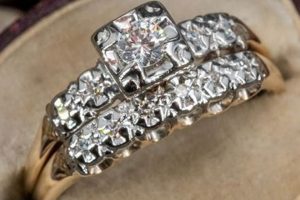
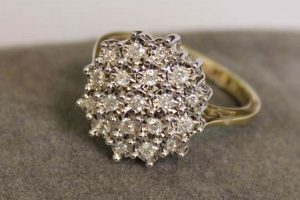
These unique pieces of jewelry combine the timeless elegance of pearls with design aesthetics from past eras, often featuring intricate metalwork and distinctive settings. As an example, an Art Deco ring might showcase a lustrous pearl surrounded by geometric patterns of diamonds and platinum.
Such jewelry represents a tangible connection to history, embodying the romance and craftsmanship of bygone days. The allure lies in their rarity, individuality, and the subtle variations inherent in natural pearls, making each ring a singular heirloom. These items hold both sentimental and intrinsic value, often appreciating in worth over time.
The subsequent sections will delve into the specific characteristics that define these treasured items, exploring factors such as pearl types, metal choices, popular design periods, and considerations for acquisition and care.
Essential Considerations for Acquiring Heirloom Adornments
This section outlines crucial considerations when selecting a ring that blends historical charm with pearl’s timeless elegance.
Tip 1: Pearl Quality Assessment: Evaluate the luster, surface perfection, shape, and nacre thickness of the pearl. High-quality pearls exhibit a deep, radiant shine and minimal surface blemishes.
Tip 2: Metal Type and Hallmarks: Examine the metal for hallmarks indicating its purity (e.g., 950 platinum, 18k gold). Consider the metal’s durability and how its color complements the pearl. Common vintage choices include platinum, white gold, and yellow gold.
Tip 3: Design Era Identification: Familiarize yourself with distinct stylistic elements from different historical periods (e.g., Art Deco geometric shapes, Edwardian filigree). This knowledge aids in authenticating the ring’s vintage origins.
Tip 4: Setting Security and Integrity: Inspect the prongs or bezel that secure the pearl to ensure they are intact and hold the pearl firmly. Loose settings can lead to pearl loss or damage.
Tip 5: Authenticity Verification: Seek expert appraisal to confirm the ring’s vintage status and the pearl’s natural or cultured origin. Appraisers can identify reproductions or altered pieces.
Tip 6: Budget Considerations: Establish a budget that reflects the desired pearl quality, metal type, design complexity, and vintage significance. Prices vary significantly based on these factors.
Tip 7: Dealer Reputation and Return Policies: Purchase from reputable jewelers specializing in vintage pieces. Ensure they offer clear return policies and certificates of authenticity.
By carefully considering these aspects, one can confidently acquire a refined adornment that embodies both historical appeal and enduring value.
The following segments will focus on caring for and maintaining these treasured pieces.
1. Pearl Luster

Pearl luster is a critical determinant of value and aesthetic appeal in adornments, particularly in assessing antique or vintage pearl wedding rings. It represents the pearl’s capacity to reflect light, influencing its perceived brightness and overall beauty.
- Nacre Quality and Reflection
Luster is directly correlated with the quality of the nacre, the layers of calcium carbonate that compose a pearl. Tightly packed, uniform nacre layers reflect light more intensely, resulting in a superior luster. In a vintage ring, diminished luster often indicates age-related nacre deterioration, impacting the pearl’s visual impact.
- Surface Clarity and Light Scattering
The surface clarity of a pearl affects its luster. Blemishes, imperfections, or irregularities on the pearl’s surface can scatter light, reducing the intensity and directionality of the reflection. Evaluating surface clarity is important in ascertaining the original quality and subsequent preservation of a pearl featured in an aged ring.
- Luster Consistency and Uniformity
Consistent luster across the entire surface of the pearl is a sign of quality. Variations in luster can detract from the overall appearance. For rings with multiple pearls or complex settings, uniformity of luster across all pearls enhances the design’s cohesion.
- Distinguishing Luster from Surface Shine
It is crucial to differentiate luster from surface shine. Luster is the deep, internal glow originating from the nacre, while surface shine is a superficial reflection. Well-preserved vintage pearls exhibit a distinguishable, vibrant luster that transcends simple surface shine. This distinction is crucial in assessing authenticity and value.
The interplay of these facets directly influences the desirability and worth of such rings. Superior luster signifies the pearl’s inherent quality, its level of care, and contributes profoundly to the item’s antique allure.
2. Metal Purity
Metal purity is a principal factor in determining the value, durability, and aesthetic of vintage pearl wedding rings. The composition of the metal alloy used in the ring’s construction directly impacts its longevity and its ability to protect the delicate pearl.
- Gold Karatage and Alloy Composition
The karatage of gold (e.g., 18k, 14k) indicates the proportion of pure gold to other metals in the alloy. Higher karatage signifies greater gold content, resulting in a richer color and increased intrinsic value. However, pure gold is too soft for jewelry, so it’s alloyed with other metals like silver, copper, or zinc to enhance its hardness and durability. In vintage pearl rings, the specific alloy composition can influence the metal’s color, ranging from the warm hues of higher-copper alloys to the paler tones of higher-silver alloys. This, in turn, affects the overall aesthetic harmony of the ring.
- Platinum Grade and Durability
Platinum, often favored for high-end jewelry, is typically used in purities of 90-95% (e.g., Pt900, Pt950). Its high density and inherent strength provide a secure setting for pearls, minimizing the risk of damage. Platinum’s resistance to tarnish and its hypoallergenic properties further enhance its appeal. Identifying the specific platinum grade in a vintage ring provides insights into its quality and longevity.
- Hallmarks and Assay Marks
Hallmarks and assay marks are stamped onto precious metal jewelry to indicate the metal’s purity and origin. These marks are crucial for verifying the authenticity and metal content of a vintage ring. For example, a British hallmark might indicate the metal’s purity, the assay office where it was tested, and the maker’s mark. The presence and legibility of these marks significantly contribute to the ring’s traceability and value.
- Impact on Pearl Setting Security
The metal’s strength and malleability directly impact the security of the pearl setting. A metal with insufficient strength may result in loose prongs or bezels, increasing the risk of pearl loss or damage. Malleability allows the jeweler to precisely shape the setting to securely hold the pearl. The choice of metal and the quality of the setting are therefore critical in ensuring the long-term preservation of both the metal and the pearl.
In summary, metal purity not only dictates the intrinsic worth and longevity of vintage pearl wedding rings but also significantly influences their aesthetic character and the security of the pearl setting. Detailed examination of the metal’s composition, hallmarks, and its impact on setting security is therefore essential when evaluating such pieces.
3. Era Style
The era style of a wedding ring significantly influences its aesthetic and historical value, particularly for pieces incorporating pearls. The design conventions, metalworking techniques, and gemstone arrangements characteristic of specific periods deeply impact how pearls are integrated into the overall composition. For example, a ring from the Edwardian era (c. 1901-1910) might feature seed pearls delicately arranged in filigree settings of platinum or white gold, reflecting the era’s emphasis on lightness and intricate detail. Conversely, an Art Deco ring (c. 1920-1935) would likely showcase a single, prominent pearl juxtaposed against geometric patterns of diamonds and colored gemstones, set in platinum or white gold, emblematic of the period’s bold, modern aesthetic.
The correlation between era style and vintage pearl wedding ring valuation is substantial. The rarity and condition of rings showcasing specific designs and materials from particular periods directly affect their collectibility. Understanding the nuances of each era allows informed judgments regarding authenticity and potential restoration requirements. For instance, knowing that rose-cut diamonds were commonly used alongside pearls in Georgian-era (c. 1714-1830) jewelry informs an assessment of the ring’s likely origins and potential value. Similarly, the presence of synthetic gemstones in what purports to be a Victorian-era ring (c. 1837-1901) would raise immediate concerns about its authenticity.
In essence, comprehending era style is indispensable when appraising vintage pearl wedding rings. It allows for accurate dating, assessment of material integrity, and an understanding of the design principles that contribute to the ring’s overall historical and artistic merit. Challenges arise from imprecise dating and the potential for alterations or repairs over time, necessitating careful examination and often, professional appraisal. However, possessing knowledge of era-specific design characteristics remains paramount in connecting the ring to its historical context and appreciating its enduring elegance.
4. Setting Integrity
Setting integrity is paramount in the preservation and value of vintage pearl wedding rings. The security and structure of the setting directly impact the pearl’s safety and the ring’s longevity, especially considering the delicate nature of pearls and the age of these artifacts.
- Prong Security and Wear Assessment
Prongs are frequently used to secure pearls in rings. Over time, prongs can wear down, bend, or break, compromising the pearl’s stability. A careful assessment of prong condition is crucial; loose prongs must be tightened or replaced by a skilled jeweler to prevent pearl loss. Evidence of prior repairs should also be noted as they may indicate underlying structural weaknesses.
- Bezel Setting Examination and Stability
Bezel settings, where a metal rim encircles the pearl, offer robust protection. However, the bezel itself can become damaged or distorted, leading to a loose fit. Thorough inspection of the bezel’s integrity, ensuring it remains snug against the pearl without gaps, is essential. Any signs of bending, cracking, or separation between the bezel and the ring’s shank warrant immediate attention.
- Channel Setting Analysis and Pearl Alignment
Channel settings, where pearls are set within a groove, are less common but still require careful evaluation. The channel walls must remain intact and securely hold the pearls in alignment. Misaligned or displaced pearls within a channel setting indicate potential damage to the setting and necessitate professional repair to prevent further instability.
- Structural Integrity of the Ring Shank and Shoulders
The ring shank (the band) and shoulders (the part connecting the setting to the shank) provide the foundation for the entire piece. Cracks, thinning, or distortion in these areas can jeopardize the setting’s stability. Repairing or reinforcing these structural elements is crucial for maintaining the overall integrity of the ring and safeguarding the pearl. Ignoring these issues can lead to catastrophic failure and loss of the pearl.
The facets of setting integrity collectively ensure the enduring beauty and value of vintage pearl wedding rings. Addressing issues proactively, through careful inspection and timely repair, preserves the pearl’s safety and maintains the ring’s historical and aesthetic worth. Neglecting these considerations can lead to irreversible damage and devaluation of these treasured heirlooms.
5. Authenticity Marks

Authentication marks are critical indicators in verifying the origin and period of manufacture for vintage pearl wedding rings. These markings, typically applied by manufacturers, assay offices, or retailers, provide tangible evidence supporting the ring’s purported age and material composition. Their presence, type, and condition significantly affect a ring’s value and desirability.
- Hallmarks and Metal Purity
Hallmarks are official marks stamped on precious metal items, including gold, platinum, and silver, to denote the metal’s purity and often the country of origin. For example, a British hallmark might include the fineness mark (e.g., .925 for sterling silver), the assay office mark (e.g., an anchor for Birmingham), and the maker’s mark. In the context of vintage pearl wedding rings, these marks authenticate the metal content and assist in dating the piece, as hallmark designs and regulations have changed over time. The absence of expected hallmarks, or the presence of incorrect marks, raises concerns about the ring’s authenticity.
- Maker’s Marks and Designer Signatures
Maker’s marks are unique identifiers assigned to jewelry manufacturers or individual artisans. These marks, which can be initials, logos, or symbols, allow researchers to trace the ring back to its creator. Certain makers, such as Cartier or Tiffany & Co., are highly sought after, and their signatures on vintage pearl wedding rings significantly increase the item’s value. However, counterfeit marks are a concern, necessitating careful comparison with known authentic examples.
- Patent Numbers and Design Registrations
Patent numbers indicate that a particular design or manufacturing technique used in the ring was protected by intellectual property law. These numbers, when present, provide specific information about the ring’s construction and potential date of creation. Searching patent databases using these numbers can reveal original design drawings and manufacturing details, further validating the ring’s authenticity. However, the absence of a patent number does not necessarily indicate inauthenticity, as not all designs were patented.
- Retailer Marks and Inventory Codes
Luxury retailers often applied their own marks or inventory codes to jewelry sold in their stores. These marks, which might be a retailer’s logo or a unique serial number, provide evidence of the ring’s provenance. Tracing these marks can sometimes reveal the original point of sale and, in some cases, information about the original owner. However, retailer marks are less common than hallmarks or maker’s marks and are often more challenging to research.
The presence, legibility, and accurate interpretation of authentication marks are paramount in assessing the authenticity and value of vintage pearl wedding rings. Careful examination, often with the aid of a jeweler’s loupe and reference materials, is essential to avoid misidentification or the purchase of counterfeit items. Discrepancies in marking styles or inconsistencies with known historical practices serve as red flags requiring further investigation.
6. Provenance Research

Provenance research, when applied to vintage pearl wedding rings, involves the systematic investigation of an item’s ownership history, origins, and creation context. The documented history of a ring, from its initial creation to its current ownership, can profoundly influence its value and desirability. The impact stems from the ability to connect the ring to significant historical events, notable individuals, or renowned designers, thereby enhancing its narrative appeal. As an illustration, a pearl ring documented as part of a royal family’s collection or designed by a celebrated jeweler possesses increased value due to its verifiable association with prestige and artistry.
The process typically includes examining historical records such as sales receipts, estate inventories, auction catalogs, and family archives. These documents provide tangible evidence linking the ring to its past owners and verifying its age and origin. The discovery of a 1920s Art Deco pearl ring with original sketches from a prominent design house can substantially increase its market value, confirming its authenticity and design pedigree. Conversely, a lack of verifiable provenance can raise suspicion about the ring’s authenticity and potentially diminish its value, regardless of its aesthetic appeal or material components. Instances of forged or misrepresented provenance highlight the importance of rigorous research and expert verification.
In conclusion, provenance research provides essential insights that validate the historical narrative and authenticity of vintage pearl wedding rings. While challenges such as incomplete or inaccessible records exist, the effort to establish a clear and documented history significantly contributes to the ring’s overall value and its enduring appeal to collectors and enthusiasts. The intersection of historical research and material analysis is essential for ensuring the integrity of the vintage jewelry market and preserving these tangible connections to the past.
Frequently Asked Questions Regarding Vintage Pearl Wedding Rings
The following addresses common inquiries and clarifies misconceptions surrounding these unique items.
Question 1: What factors determine the value of a vintage pearl wedding ring?
Value is contingent on several key elements. These include the quality and size of the pearl, the precious metal used in the setting (e.g., platinum, gold), the ring’s historical period and style, the presence of any designer signatures or hallmarks, and its overall condition. Provenance, if available, also significantly influences value.
Question 2: How can a reproduction be distinguished from an authentic ring?
Distinguishing an authentic example requires careful examination. Close scrutiny of hallmarks, maker’s marks, and design characteristics specific to the purported era is crucial. The presence of materials inconsistent with the alleged period (e.g., synthetic gemstones in an Edwardian ring) is a red flag. Professional appraisal is recommended for definitive authentication.
Question 3: What are the most common types of pearls found in rings?
Natural pearls, though rare and highly valued, are occasionally encountered. Cultured pearls, including Akoya, freshwater, and South Sea varieties, are more frequently seen in vintage rings. Each type exhibits distinct characteristics in terms of size, shape, luster, and origin.
Question 4: How should a vintage pearl wedding ring be properly cared for?
Care involves gentle handling and avoiding harsh chemicals. Pearls should be cleaned with a soft, damp cloth and stored separately from other jewelry to prevent scratching. Regular professional cleaning and inspection are advisable to maintain the ring’s integrity.
Question 5: What are the risks associated with resizing a vintage ring?
Resizing can potentially damage the setting or distort the ring’s original design, particularly for rings with intricate metalwork. It is essential to employ a skilled jeweler experienced in working with antique jewelry and to consider the ring’s structural limitations before undertaking any alterations.
Question 6: Where can a ring be reliably appraised for authentication and valuation?
Reputable sources include certified gemologists, antique jewelry specialists, and members of recognized appraisal associations. Ensure the appraiser possesses expertise in vintage jewelry and pearl identification.
Careful consideration of these points ensures informed decisions and proper stewardship of these valuable items.
The subsequent segment addresses practical considerations for purchase.
Conclusion
The preceding discussion has examined the multifaceted nature of vintage pearl wedding rings, encompassing aspects of quality assessment, historical context, authentication, and care. Understanding these elements is paramount for both collectors and individuals seeking a refined piece of jewelry that embodies historical significance. The value of such rings extends beyond their material composition, reflecting a tangible connection to past eras and artisanal craftsmanship.
Prospective acquisitions should be approached with due diligence, prioritizing informed evaluation and professional consultation. The enduring appeal of these objects lies in their unique blend of natural beauty and historical narrative, a legacy deserving of careful preservation and appreciation.