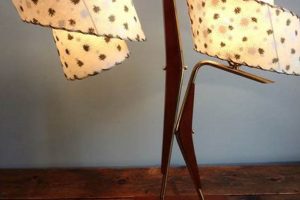
These lighting fixtures, originating in the mid-20th century, were designed to sit atop or near television sets. Their soft, ambient glow aimed to reduce eye strain caused by the contrast between a bright television screen and a dark room. Characterized by ceramic construction and often featuring figural or abstract designs, these items are now highly sought after by collectors and enthusiasts. A common example is a panther-shaped ceramic light, glazed in a vibrant color and intended to cast a gentle light upward.
The popularity of these lamps stemmed from a genuine concern for visual health during the early days of television viewing. Their warm light served as a functional solution, mitigating the harshness of the screen and making prolonged viewing more comfortable. Furthermore, these objects represent a specific era in design and technology, reflecting the aesthetic sensibilities and cultural priorities of the time. This historical context contributes significantly to their current desirability.
The following sections will delve into the specific styles, manufacturers, and collectible aspects of these vintage lighting solutions, offering a detailed guide for those interested in acquiring or learning more about them.
Tips for Identifying and Collecting Authentic Examples
Acquiring genuine examples requires careful consideration and research. This section offers advice to help discern authenticity and maximize value when engaging with these vintage items.
Tip 1: Research Manufacturers and Markings: Familiarize yourself with prominent manufacturers such as Lane, McCoy, and Royal Haeger. Look for stamped or inscribed markings on the base of the lamp. These markings often indicate the manufacturer, design name, and production date.
Tip 2: Examine the Ceramic Quality: Authentic pieces generally feature high-quality ceramic construction with smooth glazing. Be wary of items with visible imperfections, such as uneven glazing, cracks, or chips, unless they are consistent with age-related wear.
Tip 3: Investigate the Wiring and Electrical Components: Original wiring and sockets should be inspected for safety. While rewiring is common for safety reasons, significantly altered electrical components may detract from the item’s value. Look for original, period-appropriate plugs and switches.
Tip 4: Scrutinize the Design Details: Pay close attention to the design elements. Compare the piece to known examples in reference books or online databases. Deviations from established designs may indicate reproductions or altered items.
Tip 5: Assess the Lamp’s Condition: The condition significantly impacts value. A lamp in excellent condition, with original components and minimal wear, will command a higher price than one with significant damage or repairs.
Tip 6: Consider the Rarity of the Design: Certain designs or color variations are rarer than others. Research the specific model to determine its scarcity, as rarity can significantly affect its collectibility and value.
Tip 7: Seek Expert Advice: When in doubt, consult with an appraiser or antique dealer specializing in mid-century ceramics. Their expertise can provide valuable insights and help avoid costly mistakes.
By adhering to these guidelines, prospective buyers can enhance their ability to identify authentic pieces and build valuable collections.
The following section will explore the ongoing market trends and preservation techniques related to these vintage lighting fixtures.
1. Ceramic Material

Ceramic material is fundamentally linked to these vintage lamps, serving as the primary medium for their construction. The prevalence of ceramic is not arbitrary; its properties, including moldability, heat resistance, and aesthetic versatility, made it exceptionally suitable for mass-producing decorative and functional lighting fixtures. The molding process allowed for intricate designs, while the glazing techniques afforded a wide range of colors and finishes, aligning with the mid-century design trends. The material’s inherent stability ensured durability, a practical consideration for an item intended for long-term use. Examples include figural representations, such as panthers or deer, which were readily achievable thanks to the moldability of clay. Without ceramic, the distinctive aesthetic and design features of these lamps would not have been possible, and alternative materials would have presented significant manufacturing and design challenges.
The choice of ceramic also had significant effects on the light quality emitted by these lamps. The opaque nature of most ceramics meant that the light could not shine directly through the body of the lamp, but rather was diffused upwards and outwards, creating the soft, ambient glow intended to reduce eye strain. Different types of ceramic and glazing techniques further affected the color and intensity of the light. For instance, a darker glaze would absorb more light, resulting in a dimmer glow. The ceramic also provided a stable base, preventing the lamp from overheating. The material characteristics and functional requirements, as well as the aesthetic trends of the period, all coalesced to make ceramic the predominant choice for these lighting fixtures.
In summary, the association between ceramic material and this form of vintage lighting is intrinsic. Ceramic was not merely a material choice, but an essential component that defined the form, function, and aesthetic of these collectible items. Understanding the material’s properties and its effect on design and light quality is crucial for collectors seeking to identify and appreciate authentic examples. The challenges associated with other materialssuch as metal’s heat conductivity or plastic’s lack of aesthetic appeal at the timereinforce the importance of ceramic in the history and value of these lights.
2. Figural Design
Figural design represents a defining characteristic of mid-century television lighting fixtures. The incorporation of recognizable shapes and forms, often animals or stylized abstractions, transformed a functional item into a decorative art piece. This design choice was not merely aesthetic; it reflected broader cultural trends and aspirations of the era.
- Animal Representations
The most prevalent figural designs involved depictions of animals, such as panthers, deer, horses, and birds. These choices were often symbolic, representing qualities like grace, power, or domesticity. A panther, for instance, symbolized sleekness and modernity, aligning with the aspirations of a postwar consumer culture. The use of animal figures resonated with a broad audience, contributing to the item’s widespread popularity and desirability. These representations were not always realistic; instead, they were frequently stylized or abstracted to fit the aesthetic sensibilities of the time.
- Abstract Forms
In addition to animal figures, abstract forms were also employed, using geometric shapes and fluid lines to create visually engaging designs. These abstract pieces often evoked a sense of modernism and artistic experimentation. Some examples incorporated asymmetrical shapes or bold color combinations to capture the spirit of innovation. Abstract designs offered an alternative to more literal representations, appealing to those seeking a more sophisticated or avant-garde aesthetic.
- Color Palette and Glazing Techniques
The choice of color palette and glazing techniques further enhanced the impact of figural designs. Vibrant colors, such as turquoise, avocado green, and mustard yellow, were commonly used, reflecting the optimistic and forward-looking mood of the mid-century era. Glazing techniques, such as drip glazing or crackle glazing, added texture and visual interest to the ceramic surface. These aesthetic details contributed to the overall artistic value and collectibility of the lighting fixtures.
- Integration with Lighting Function
The figural design was carefully integrated with the lamp’s lighting function. The shape of the figure often influenced the direction and intensity of the light emitted. For example, a panther lamp might be designed to cast light upwards from its back, creating a soft, ambient glow. The placement of the bulb and the contours of the figure were thoughtfully considered to maximize the lamp’s functionality while preserving its artistic appeal.
The prevalence of figural designs in mid-century television lamps underscores the importance of aesthetics in everyday objects. These lighting fixtures were not simply utilitarian items; they were expressions of personal style and cultural values. The combination of functional lighting and artistic design made these objects desirable additions to the modern home. The enduring popularity of these items today reflects a continued appreciation for their artistic merit and historical significance.
3. Ambient Glow
The concept of ambient glow is intrinsically linked to the historical purpose and aesthetic appeal of mid-century television lamps. This gentle, diffused light was not merely a byproduct of the lamp’s design but a deliberate feature intended to enhance the viewing experience and create a comfortable atmosphere.
- Reduction of Eye Strain
The primary function of the ambient glow was to mitigate eye strain caused by the stark contrast between a bright television screen and a darkened room. The softer light provided by the lamp served as a visual buffer, reducing the strain on the viewer’s eyes during prolonged periods of television viewing. This was particularly relevant during the early days of television, when screen technology was less advanced, and viewing habits often involved watching in dimly lit environments.
- Enhancement of Viewing Experience
Beyond reducing eye strain, the ambient glow contributed to a more immersive and enjoyable viewing experience. The gentle light created a sense of warmth and comfort, transforming the viewing area into a cozy and inviting space. The soft light minimized reflections on the television screen, improving visibility and reducing distractions. This created a more conducive environment for focused attention and enjoyment of the televised content.
- Aesthetic Contribution to Interior Dcor
The ambient glow was not only functional but also aesthetically pleasing. The soft, diffused light enhanced the lamp’s figural design, highlighting its contours and colors. This added a touch of elegance and sophistication to the room’s dcor. The warm light also created a welcoming atmosphere, making the space feel more inviting and comfortable. The ambient glow became an integral part of the lamp’s overall aesthetic appeal, contributing to its desirability as a decorative object.
- Reflection of Mid-Century Design Values
The focus on ambient glow reflected broader mid-century design values, which emphasized both functionality and aesthetics. Designers of the era sought to create objects that were not only useful but also visually appealing. The television lamp, with its functional ambient glow and artistic figural design, exemplified this design philosophy. The emphasis on comfort, convenience, and style was central to the ethos of mid-century design, making the ambient glow a key element in the success and popularity of these lighting fixtures.
The significance of ambient glow in the context of mid-century television lamps extends beyond mere illumination. It represents a thoughtful integration of function and design, a reflection of cultural values, and a contribution to the overall viewing experience. The enduring appeal of these lamps is partly attributable to the gentle, diffused light they provide, creating a comforting and aesthetically pleasing atmosphere that resonates with viewers to this day. The soft lighting also enhanced the contours and colors of the lamps’ figural design contributing significantly to the lamp’s desirability as a decorative object and increasing the market value for these sought after items.
4. Rarity and Value

The correlation between rarity and value in the context of vintage television lamps is a significant determinant of their desirability among collectors. Scarcity, driven by limited production runs, manufacturing errors, or the destruction of examples over time, directly influences the market price of these items. Lamps produced by smaller, lesser-known manufacturers or those featuring unique designs tend to be more difficult to find, thus commanding higher prices. The effect of rarity on value is amplified when the lamp also exhibits exceptional condition or boasts a provenance connecting it to a notable figure or event. For example, a panther lamp manufactured by a company with a short operational lifespan and featuring a rare color glaze will typically be valued substantially higher than a more common design in standard condition. This relationship underscores the importance of research and authentication in establishing the true worth of a given piece.
Further illustrating this connection, specific color variants within a popular design series can significantly impact value. A common deer lamp from a well-known manufacturer may sell for a modest sum, while a limited-edition version in a unique color, such as a rare speckled glaze or an unusual color combination, could fetch several times that amount. The practical application of this understanding lies in the ability to assess the authenticity and market value of a potential acquisition accurately. Collectors who are well-versed in manufacturer history, design variations, and known production volumes are better equipped to identify undervalued pieces and make informed purchasing decisions. Moreover, recognizing the nuances of rarity allows for a more nuanced understanding of the object’s historical context and cultural significance.
In conclusion, the interplay between scarcity and worth is a fundamental aspect of the vintage television lamp market. While condition, aesthetics, and historical significance all play a role in determining value, rarity serves as a primary driver of price appreciation. The challenge for collectors lies in accurately assessing the rarity of a given piece, requiring diligent research, expert consultation, and a keen understanding of the historical landscape surrounding these vintage objects. This understanding ensures informed acquisition and appreciation of these unique pieces of mid-century design.
5. Historical Context

The emergence and popularity of vintage television lamps are inextricably linked to the historical context of mid-20th century America. The rapid proliferation of television ownership during the post-World War II era created a new social and cultural phenomenon: the family gathered around the television set. Concerns arose regarding the potential strain on viewers’ eyes caused by the stark contrast between the bright screen and a darkened room. This concern directly fueled the demand for a soft, ambient light source to mitigate this effect. The television lamp thus became a practical solution, reflecting a broader societal awareness of emerging technological impacts. Moreover, the designs of these lamps often featuring stylized animals or abstract shapes mirrored the prevalent aesthetic trends of the era, showcasing the influence of modernism and the burgeoning consumer culture. An example of this is the iconic panther lamp, whose sleek design embodied the futuristic aspirations of the time, directly appealing to consumers embracing new technologies and lifestyles. The purchase of such a lamp became an act of both practicality and a display of modern sensibilities.
Beyond the immediate functional need, these lamps represent a significant shift in domestic design and leisure activities. They symbolize the transition from radio to television as the primary source of home entertainment, transforming living rooms into media consumption spaces. The lamps are also emblematic of the postwar economic boom, where increased disposable income enabled families to invest in decorative and functional items to enhance their homes. Advertisements from the period further reinforce this connection, often depicting families comfortably gathered around the television, bathed in the soft glow of a television lamp, emphasizing the role of these lamps in creating a harmonious and modern living environment. Understanding this historical backdrop allows collectors and enthusiasts to appreciate these lamps not merely as objects, but as tangible representations of a specific cultural moment.
In conclusion, the historical context is not merely a backdrop to the existence of vintage television lamps, but an integral component of their identity and value. Recognizing the societal concerns, aesthetic trends, and economic conditions that fostered their creation enables a deeper understanding and appreciation of these objects. The challenges in preserving and authenticating these lamps lie in accurately interpreting the historical evidence manufacturers’ catalogs, advertising materials, and design trends to distinguish genuine artifacts from reproductions. By connecting the lamps to their broader historical narrative, one can gain a more complete understanding of their significance within the landscape of mid-20th century design and culture.
Frequently Asked Questions
The following section addresses common inquiries and misconceptions regarding vintage television lamps, providing factual information for collectors and enthusiasts.
Question 1: How does one differentiate between an authentic vintage television lamp and a reproduction?
Authenticity can be determined through careful examination of manufacturer’s marks, ceramic quality, and wiring. Original lamps typically feature stamped or impressed marks on the base, indicating the manufacturer and date of production. The ceramic should exhibit high-quality glazing, and the wiring, while potentially replaced for safety, should reflect period-appropriate materials and construction. Deviations from known designs or the presence of modern manufacturing techniques are indicative of reproductions.
Question 2: What factors influence the value of a vintage television lamp?
Value is determined by several factors, including the lamp’s rarity, condition, manufacturer, design, and historical provenance. Lamps from lesser-known manufacturers, those in exceptional condition, and those with unique designs tend to command higher prices. Provenance connecting the lamp to a notable event or individual can also significantly increase its value.
Question 3: Is it safe to use vintage television lamps with their original wiring?
It is strongly recommended to have the wiring of vintage lamps inspected and potentially replaced by a qualified electrician before use. Original wiring may be frayed, cracked, or otherwise compromised, posing a fire hazard or risk of electrical shock. Rewiring with modern components ensures safe operation while preserving the lamp’s aesthetic value.
Question 4: How should vintage television lamps be cleaned and maintained?
Cleaning should be performed with care to avoid damaging the ceramic or glazing. Use a soft, damp cloth to gently wipe down the lamp’s surface. Avoid abrasive cleaners or harsh chemicals, as these can scratch or discolor the finish. Periodically inspect the wiring and bulb socket for signs of wear or damage.
Question 5: Were these lamps intended to be the sole source of light in a room while watching television?
No, these lamps were designed to provide a soft, ambient glow that reduced eye strain caused by the contrast between the bright television screen and the surrounding darkness. They were not intended to replace general room lighting, but rather to supplement it, creating a more comfortable viewing environment.
Question 6: Where can one find reliable information and resources for identifying and appraising vintage television lamps?
Reliable information can be obtained from antique dealers specializing in mid-century ceramics, online databases of manufacturers’ marks and designs, and price guides for vintage collectibles. Consultations with qualified appraisers can provide expert assessments of authenticity and value.
In summary, acquiring and maintaining vintage television lamps requires careful attention to authenticity, condition, and safety. Reliable information and expert consultation are crucial for informed decision-making.
The following section will provide a guide to prominent manufacturers and designers of vintage television lamps.
Conclusion
This exploration of vintage television lamps has illuminated their historical context, design features, and significance within mid-20th century material culture. Understanding the purpose, materials, figural designs, and the impact of rarity on value is crucial for collectors and enthusiasts seeking to appreciate and acquire authentic pieces. The analysis has emphasized the importance of discerning authentic examples, properly maintaining their integrity, and acknowledging their place in the history of domestic entertainment.
As interest in mid-century design endures, vintage television lamps remain tangible artifacts representing a distinct era. Continued research and preservation efforts are essential to ensure their legacy persists, offering future generations insight into the intersection of technology, design, and societal values. Further study may yield even greater appreciation for these unique pieces of Americana.