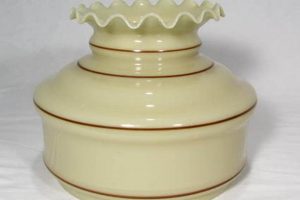
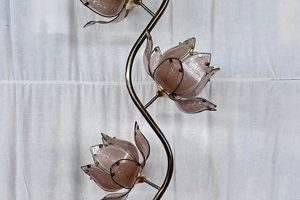
This type of lighting fixture, often dating from the Art Deco or Mid-Century Modern periods, features a design inspired by the elegant, trumpet-shaped calla lily flower. These lamps typically utilize materials such as glass, metal (often brass or chrome), and sometimes even ceramic, to recreate the distinctive curves and form of the floral namesake. Examples range from table lamps with single or multiple “blooms” to floor lamps boasting intricate, stylized representations of the plant.
The appeal of these lighting pieces lies in their blend of functionality and artistic expression. Beyond providing illumination, they serve as decorative objects, adding a touch of sophistication and visual interest to interior spaces. Their historical significance is tied to design movements that valued organic forms and handcrafted details. These objects reflect the aesthetic sensibilities of eras prioritizing elegance and natural motifs in domestic environments.
Subsequent sections will examine the key features, identifying characteristics, factors influencing valuation, and tips for preserving the condition of these coveted vintage items.
Preservation Strategies for the Floral-Inspired Lighting Fixture
The following guidance outlines critical steps to maintain the integrity and value of this specific lighting artifact. Adherence to these practices ensures its longevity and continued aesthetic appeal.
Tip 1: Gentle Cleaning Protocols: Employ a soft, lint-free cloth dampened with a mild soap solution to cleanse surfaces. Abrasive cleaners or scouring pads are strictly prohibited, as they can irreparably damage delicate glass or metal finishes.
Tip 2: Shade Security Measures: Ensure the lily-shaped glass or other shade components are securely fastened to the lamp base. Loose shades are susceptible to accidental breakage. Regularly inspect and tighten any securing mechanisms.
Tip 3: Electrical System Examination: A qualified electrician should periodically inspect the wiring, sockets, and plugs. Replace frayed cords or faulty components immediately to prevent fire hazards.
Tip 4: Bulb Selection Considerations: Utilize bulbs with wattage ratings appropriate for the fixture. Excessive heat from improperly rated bulbs can degrade or damage the lamps materials over time. LED bulbs are often a safer, energy-efficient alternative.
Tip 5: Environmental Control: Shield the object from prolonged exposure to direct sunlight or excessive humidity. These environmental factors can cause fading, discoloration, or corrosion of sensitive materials.
Tip 6: Professional Restoration Consultation: For significant damage or complex repairs, consult a qualified restoration specialist experienced in handling vintage lighting. Amateur repairs may diminish the items value or cause further harm.
Tip 7: Careful Handling Practices: When moving the lighting device, always support it by the base, never by the shade. Wrap fragile components in protective padding during transport to minimize the risk of breakage.
Consistent application of these measures will help preserve both the function and the historical aesthetic of this desirable antique piece, ensuring its enjoyment for years to come.
The next section will explore identifying markers and key historical details of these lighting creations.
1. Aesthetic Emulation
Aesthetic emulation, in the context of the floral lighting fixture, refers to the degree to which the design faithfully captures the essence and form of the calla lily flower. This characteristic significantly influences the object’s artistic merit and collector appeal.
- Floral Realism
This facet gauges the fidelity of the lamp’s design to the actual botanical structure of the calla lily. Highly realistic representations exhibit accurate petal curvature, stamen depiction, and overall proportion. Conversely, stylized interpretations may abstract or exaggerate certain features for artistic effect. Lamps with greater floral realism often command higher prices among collectors valuing faithful replication of nature.
- Material Representation
The materials chosen for construction contribute significantly to the aesthetic emulation. For instance, frosted glass may be employed to mimic the delicate texture and translucent quality of calla lily petals. Polished metals can represent the stem or other structural components. The successful pairing of materials enhances the illusion of natural form, elevating the artistic value of the lamp. The type of the metal, like brass, chrome or bronze can affect the price, because their rarity.
- Light Interaction
A key element of aesthetic emulation is how the lamp’s design interacts with light. The shape and translucency of the “petals” influence the quality and distribution of illumination. A well-designed lamp casts a soft, diffused glow that enhances the flower-like appearance, while poorly designed ones may create harsh shadows or uneven light distribution, detracting from the intended aesthetic.
- Stylistic Interpretation
Different design movements have embraced varied approaches to aesthetic emulation. Art Deco examples often exhibit geometric stylization of the calla lily form, while Art Nouveau pieces tend to feature more flowing, organic representations. Understanding the stylistic interpretation associated with a particular lamp helps contextualize its artistic value and historical significance. Some may be simple, others might have gold plating. Both can be valuable.
The successful integration of floral realism, material representation, and light interaction, within a given stylistic interpretation, defines the overall aesthetic emulation of the fixture. Highly successful examples blur the line between functional object and sculptural art, contributing to their desirability among collectors and enthusiasts.
2. Material Composition
The constituent materials of a floral-inspired lighting fixture are central to its aesthetic, structural integrity, and valuation. Material choices dictate the lamp’s visual appeal, its longevity, and its susceptibility to degradation. The selection of materials directly affects light diffusion, weight distribution, and the overall expression of the floral form. For instance, a shade crafted from delicate, hand-blown art glass, such as Favrile glass common in early 20th-century production, provides a uniquely soft and diffused illumination compared to a shade formed from painted metal. The former material is more prone to damage but generally more valuable due to its artistic merit and scarcity.
The metals employed in the base and structural elements, such as brass, bronze, or iron, determine the lamp’s weight, stability, and resistance to corrosion. Brass, frequently used in high-quality examples, offers both aesthetic appeal and relative durability. However, cheaper alternatives like pot metal, found in mass-produced examples, are prone to cracking and disintegration over time, diminishing the lamp’s value. The wiring and electrical components, often overlooked, are equally critical. Original cloth-covered wiring, while aesthetically consistent with the lamp’s period, presents a significant fire hazard and necessitates professional replacement with modern, safer alternatives. Therefore, material composition has huge impact the light fixture of this kind of type.
In summary, the specific materials used in these vintage objects are not merely decorative; they are fundamental to its performance, preservation, and historical context. Understanding the material composition is crucial for proper care, authenticating the lamp’s origin, and assessing its overall value. Ignoring the material properties can lead to irreversible damage and a diminished appreciation of its historical significance.
3. Historical Period

The historical period in which a floral-inspired lighting fixture was created profoundly influences its design, materials, construction techniques, and ultimately, its value and collectibility. Each era imparts distinct stylistic characteristics, reflecting the prevailing artistic and technological trends of the time. The period serves as a lens through which to understand the lamp’s cultural significance and place within the broader history of decorative arts.
- Art Deco Influence (1920s-1930s)
The Art Deco period favored stylized and geometric interpretations of natural forms. Floral lighting fixtures from this era often feature sleek lines, stepped designs, and materials such as chrome, Bakelite, and mirrored glass. The calla lily motif, with its elegant shape, was particularly well-suited to the Art Deco aesthetic. Examples include lamps with frosted glass shades shaped into simplified calla lily forms, mounted on polished chrome bases. These lamps embody the Art Deco emphasis on modernity, luxury, and streamlined design. Many include geometric patterns.
- Art Nouveau Influence (1890-1910)
Art Nouveau, preceding Art Deco, embraced flowing lines, organic shapes, and the celebration of nature. Floral lighting fixtures from this period display intricate, hand-crafted details, often incorporating stained glass, wrought iron, and patinated bronze. Calla lily lamps from the Art Nouveau era tend to be more naturalistic in their representation, with sinuous stems and delicately rendered petals. These pieces exemplify the Art Nouveau ideals of beauty, craftsmanship, and the integration of art and nature.
- Mid-Century Modern Influence (1940s-1960s)
The Mid-Century Modern movement prioritized functionality, simplicity, and the use of new materials. Floral lighting fixtures from this period often feature clean lines, minimalist forms, and materials such as fiberglass, plastic, and teak wood. Calla lily lamps from the Mid-Century Modern era may abstract the floral form into more geometric shapes, reflecting the movement’s emphasis on modern industrial design. Examples include lamps with simple, stylized calla lily shades made of molded plastic or fiberglass, mounted on slender wooden bases. The lamps are typically made out of simple materials.
- Impact of Manufacturing Techniques
The available manufacturing techniques of each period significantly shaped the design and production of these lighting fixtures. The advent of mass production in the early 20th century allowed for the creation of more affordable and widely available lamps, but often at the expense of hand-crafted details. Conversely, earlier periods relied on skilled artisans and traditional techniques, resulting in more unique and highly valued pieces. Understanding the manufacturing context helps to assess the authenticity and rarity of a lamp.
In essence, the historical period provides critical insight into the design, materials, and cultural context of floral lighting fixtures. By understanding the prevailing aesthetic trends and technological capabilities of each era, one can better appreciate the artistry, craftsmanship, and historical significance of these decorative objects. For instance, a calla lily lamp crafted from hand-blown Tiffany glass during the Art Nouveau period represents a pinnacle of artistic achievement and commands a significant premium in the market, whereas a mass-produced example from the Mid-Century Modern era may be more affordable but still holds value as a representative artifact of its time.
4. Illumination Quality

Illumination quality, when considered within the context of vintage calla lily lamps, extends beyond mere brightness. It encompasses the character, distribution, and color temperature of the light emitted, significantly impacting the aesthetic appeal and functional utility of these lighting fixtures. The original design intent and the materials employed were carefully considered to produce a specific lighting effect, one that is often compromised by modern replacement bulbs or altered shades.
- Diffusion Characteristics
The degree to which light is diffused, or scattered, plays a critical role in the ambience created by these vintage lamps. Shades constructed from frosted glass, common in Art Deco examples, were designed to soften the light and reduce glare. Clear glass shades, on the other hand, produce a more focused and intense beam. The diffusion characteristics are directly influenced by the shade’s material composition, thickness, and surface texture. An original shade, carefully matched to the lamp’s design, will typically provide a more pleasing and historically accurate illumination quality than a modern replacement.
- Color Temperature
The color temperature of the light source, measured in Kelvin (K), dictates the warmth or coolness of the emitted light. Incandescent bulbs, commonly used in the early 20th century, produced a warm, yellowish light (around 2700K). Modern LED replacements offer a range of color temperatures, but selecting a bulb with a similar color temperature to the original is crucial for preserving the lamp’s intended aesthetic. A cool, bluish light (above 4000K) can clash with the warm tones of vintage materials and detract from the lamp’s overall appeal. Incorrect color temperature can also affect how colors are perceived within the room.
- Intensity and Distribution
The intensity of the light, measured in lumens, and its distribution pattern across the space, are key factors in determining the lamp’s functional utility. A table lamp intended for reading will require a higher intensity and a more focused beam than a decorative accent lamp designed to provide ambient illumination. The design of the shade, the number of light sources, and the lamp’s placement within the room all contribute to the overall intensity and distribution of light. Consider the lamp’s original purpose when selecting replacement bulbs to ensure adequate illumination for the intended task or environment.
- Flicker and Stability
The stability of the light output, free from flicker or noticeable variations in intensity, is an important aspect of illumination quality. Older lighting technologies, such as gas discharge lamps, were prone to flicker, which can cause eye strain and discomfort. Modern LED bulbs generally offer a more stable and flicker-free light output, but it is essential to select high-quality bulbs from reputable manufacturers to ensure consistent performance. The wiring and electrical components of a vintage lamp should be inspected and, if necessary, updated to ensure a stable and safe power supply, which can also affect flicker.
These considerations collectively define the illumination quality emanating from these vintage artifacts. Recognizing the intended lighting effect, and replicating it with appropriate bulb selection and shade maintenance, preserves not only the aesthetic integrity of the piece but also its functional value as a source of illumination and ambient enhancement. Alterations to these factors, while potentially improving energy efficiency or light output, can undermine the lamp’s historical accuracy and overall appeal.
5. Rarity Factor
The rarity factor, in the context of vintage calla lily lamps, is a critical determinant of value, dictating the desirability and market price of specific examples. This factor considers several interconnected elements that collectively contribute to the scarcity and uniqueness of a given lamp.
- Limited Production Runs
Lamps produced in limited quantities, either due to experimental designs, short-lived manufacturing processes, or deliberate efforts to create exclusive pieces, inherently possess a higher rarity factor. For instance, a calla lily lamp crafted by a renowned artisan in a small workshop during the Art Nouveau period, with only a few documented examples surviving, will be significantly more valuable than a mass-produced lamp from the Mid-Century Modern era. The scarcity creates higher demand.
- Material Scarcity and Uniqueness
The employment of rare or unique materials in the construction of a vintage calla lily lamp elevates its rarity factor. Examples include the use of specific types of art glass, such as Favrile glass produced by Tiffany Studios, or the incorporation of precious metals like sterling silver or hand-carved ivory. The limited availability of these materials, combined with the craftsmanship required to incorporate them into the lamp’s design, contributes to its exceptional value and appeal to collectors.
- Provenance and Historical Significance
A well-documented provenance, tracing the ownership and history of a vintage calla lily lamp, can significantly enhance its rarity factor. If a lamp can be linked to a notable historical figure, a significant event, or a prominent collection, its value increases dramatically. The historical significance adds a layer of intrigue and cultural value to the lamp, making it more desirable to collectors seeking pieces with a compelling story.
- Condition and Preservation State
The condition of a vintage calla lily lamp is a crucial element of its rarity factor. Lamps that have been meticulously preserved in their original condition, with minimal repairs or alterations, are far rarer and more valuable than those that have been heavily restored or damaged. Original finishes, intact wiring, and undamaged shades contribute to the lamp’s authenticity and desirability, making it a prized possession for discerning collectors. Poor condition decreases the value, even if the item is from a rare production.
The interplay of limited production, material scarcity, provenance, and condition collectively determines the rarity factor of vintage calla lily lamps. These lamps, characterized by unique design elements and low production numbers, command the highest prices in the collector market. Evaluating the rarity factor is thus essential for both assessing the value and appreciating the historical significance of these decorative objects.
Frequently Asked Questions
The following questions and answers address common inquiries regarding these light fixtures, providing information on identification, care, and valuation.
Question 1: How can the authenticity of a vintage calla lily lamp be verified?
Authenticity verification involves examining construction materials, design characteristics specific to its purported era, and any identifying marks or signatures. Consultation with a qualified antique appraiser is recommended for definitive confirmation.
Question 2: What are the primary factors influencing the valuation of this type of lamp?
Valuation is influenced by factors including the lamp’s age, the rarity of the design, the quality of materials used, its condition, and its provenance or documented history.
Question 3: How should a vintage calla lily lamp be cleaned to avoid damage?
Cleaning requires a gentle approach using a soft, lint-free cloth dampened with a mild soap solution. Abrasive cleaners and harsh chemicals are strictly prohibited as they can cause irreparable damage.
Question 4: Is it advisable to replace the original wiring on a vintage calla lily lamp?
Replacing original wiring is strongly recommended due to potential fire hazards associated with aging or damaged insulation. A qualified electrician should perform the rewiring to ensure safety.
Question 5: What types of light bulbs are appropriate for use in these vintage fixtures?
Bulbs with wattage ratings appropriate for the fixture are essential. LED bulbs are often a safer, energy-efficient alternative, but the color temperature should be considered to maintain the intended aesthetic.
Question 6: How should a vintage calla lily lamp be stored when not in use?
Storage should occur in a dry, climate-controlled environment away from direct sunlight. Fragile components should be wrapped in protective padding to prevent damage during storage or transport.
These FAQs offer essential guidance for owners and collectors. Proper identification, careful maintenance, and informed restoration practices are crucial for preserving the value and integrity of these artifacts.
The subsequent section will provide resources for further exploration and expert consultation.
Conclusion
The preceding exploration of the vintage calla lily lamp has revealed its significance as more than a mere source of illumination. This type of lighting fixture embodies a fusion of artistic expression, historical context, and material craftsmanship. Key aspects, including aesthetic emulation, material composition, historical period, illumination quality, and rarity factor, contribute to its valuation and desirability among collectors. Furthermore, responsible preservation and informed restoration practices are essential for safeguarding the integrity of these artifacts for future generations.
Continued research and appreciation of these historical lighting objects will enrich understanding of design evolution and cultural aesthetics. Engaging with experts, consulting historical records, and practicing diligent care are crucial steps in ensuring the longevity and continued relevance of the vintage calla lily lamp as a tangible representation of design history. Further investigation is encouraged to promote responsible stewardship and appreciation.