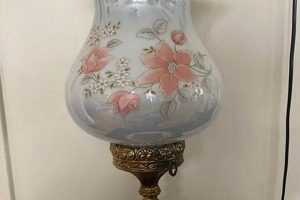
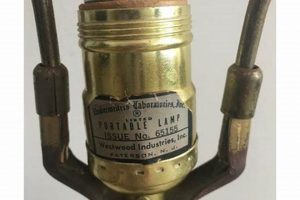
Objects embodying the aesthetic of Louis Comfort Tiffany’s stained-glass creations, produced in past eras, are of considerable interest to collectors and design enthusiasts. These illuminate spaces with a warm glow, characterized by intricate glasswork mosaics depicting floral, geometric, and naturalistic motifs. These lighting fixtures often feature patinated metal bases, complementing the vibrant shades crafted from hand-cut glass pieces joined by copper foil. They represent a specific period in decorative arts, demonstrating artisanal techniques.
The enduring appeal of these objects lies in their artistic value and historical significance. They represent a pinnacle of the Arts and Crafts movement, emphasizing handcrafted quality and naturalistic design principles. Owning a fixture of this nature provides a tangible connection to a rich artistic legacy, while also offering a unique and aesthetically pleasing source of illumination. They serve as conversation pieces, adding character and elegance to interior spaces and often increasing in value over time.
The subsequent sections will delve into key aspects of these historical luminaries, including identifying authentic pieces, understanding their construction, assessing condition and value, and providing guidance on proper care and restoration to preserve their beauty for generations to come.
Guidance on Acquiring Objects Evocative of Tiffany’s Lighting
This section provides guidelines for identifying, evaluating, and maintaining lighting fixtures in the style of Louis Comfort Tiffany’s original creations. Prudent examination and care will maximize the longevity and value of these decorative assets.
Tip 1: Examine the Glass Quality. Authentic examples often use distinctive types of glass, including Favrile glass known for its iridescent surface. Closely inspect the color saturation, texture variations, and any inclusions or imperfections that are characteristic of hand-blown glass.
Tip 2: Assess the Copper Foil Technique. The individual pieces of glass are joined using the copper foil method. Examine the solder lines for uniformity and smoothness. Original pieces typically exhibit meticulous craftsmanship, while reproductions may show inconsistencies or poor workmanship.
Tip 3: Investigate the Base Material and Patina. The bases of these fixtures are often crafted from bronze or other metals. Observe the patina, which is the surface oxidation that develops over time. An authentic patina will appear natural and even, whereas artificial aging may look forced or uneven.
Tip 4: Identify Manufacturer Markings. Some original pieces feature identifying marks or stamps from Tiffany Studios or associated workshops. Research known markings and their placement on authentic examples to verify the piece’s provenance. However, the absence of a mark does not automatically negate authenticity.
Tip 5: Scrutinize the Design and Motifs. These fixtures are known for their intricate floral, geometric, and naturalistic designs. Compare the motifs and color palettes to established examples of Tiffany’s work. Deviations from known designs may indicate a reproduction.
Tip 6: Verify the Electrical Components. Examine the wiring and sockets for signs of age and authenticity. Original wiring may be brittle or deteriorated, and sockets may have unique characteristics. Consider having the electrical components inspected and replaced by a qualified professional for safety reasons.
Tip 7: Obtain Professional Appraisal. For valuable or uncertain pieces, seek the expertise of a qualified appraiser specializing in decorative arts. A professional appraisal can provide an accurate assessment of authenticity, condition, and market value.
These guidelines assist in making informed decisions when acquiring and preserving examples of lighting from this design period. Careful assessment of these qualities provides reasonable assurance of quality and authenticity.
The concluding portion of this article will provide resources and suggestions for further exploration of this lighting style.
1. Glass composition

The glass composition employed in objects made in the style of Louis Comfort Tiffany’s lighting is a critical determinant of their aesthetic and monetary worth. The effects achieved by these fixtures are a direct result of the specific types of glass used, influencing both light transmission and perceived color. Favrile glass, a proprietary type developed by Tiffany, is characterized by its iridescent surface, produced through the application of metallic oxides during the glassmaking process. The presence and quality of Favrile glass are primary indicators of authenticity and craftsmanship in vintage pieces. The variations in color saturation, opacity, and texture, achieved through controlled chemical additions and temperature variations, contribute to the unique visual character of each shade. For example, floral motifs within a shade often utilize a range of opalescent glass, where a milky appearance diffuses the light, contrasting with transparent colored glass that creates focal points of intense color.
Understanding glass composition is essential for assessing the condition of these objects. Degradation of the glass, caused by environmental factors or improper handling, can significantly diminish their value. For instance, prolonged exposure to ultraviolet radiation can cause fading or discoloration of certain glass types. The presence of cracks, chips, or repairs also impacts value, particularly if the repairs are not executed with historically accurate materials and techniques. Identifying the specific types of glass used allows for targeted conservation efforts, such as using appropriate cleaning agents that will not damage the iridescent surface or chemically alter the composition of the glass itself.
In conclusion, glass composition is fundamental to the identification, valuation, and preservation of lighting fixtures evocative of Tiffany’s designs. The careful selection and manipulation of specific glass types, notably Favrile glass, defines their aesthetic appeal and historical significance. While recognizing authentic materials presents a challenge, a comprehension of glass characteristics is crucial for maintaining these objects and appreciating their artistic merit. It underscores the necessity for specialized expertise in evaluating and preserving these distinctive artifacts.
2. Construction Techniques

The methods employed in the creation of lighting fixtures reminiscent of the Tiffany style are fundamental to their structural integrity, aesthetic qualities, and historical authenticity. These techniques, primarily involving the manipulation and assembly of glass and metal, define the object’s character and directly influence its value and longevity.
- Copper Foil Method (Louis Comfort Tiffany Method)
This technique involves wrapping each individual piece of cut glass with thin copper foil. The foil is then soldered together, creating a strong and visually appealing bond between the glass segments. The precision of the cuts and the neatness of the solder lines are indicators of quality and craftsmanship. Irregularities in the solder work or poorly aligned glass can detract from the aesthetic appeal and structural soundness.
- Glass Selection and Cutting
The selection of glass types, including color, texture, and opacity, is a crucial step. Artisans carefully chose glass pieces that would create the desired visual effects when illuminated. Cutting the glass to precise shapes and sizes required skill and specialized tools. Inaccurate cuts could lead to gaps or overlaps in the design, compromising the overall appearance and structural stability.
- Base Construction and Material
The base of the lamp provides structural support and complements the design of the shade. Bases were typically crafted from bronze, iron, or other metals. The method of construction, including casting, stamping, and hand-working, influenced the base’s durability and aesthetic. The quality of the metalwork, the presence of intricate details, and the finish or patina all contribute to the lamp’s value.
- Assembly and Finishing
The final stage involved assembling the shade and attaching it to the base. The shade’s sections had to be carefully aligned and secured to ensure a stable and visually balanced structure. The finishing touches, such as polishing the solder lines and applying a protective coating, enhanced the lamp’s appearance and durability.
The construction techniques utilized in these lighting fixtures were central to their artistic and functional success. Careful attention to detail, skilled craftsmanship, and the use of quality materials were essential for creating objects that would stand the test of time. The application of the copper foil method, coupled with the meticulous selection and cutting of glass, defines the aesthetic hallmark of quality examples. A careful consideration of these construction elements is necessary for assessing the authenticity, value, and long-term preservation of these decorative art pieces.
3. Patina and Aging

The surface characteristics of historical lighting fixtures are significant indicators of age, authenticity, and past environmental exposure. Patina, the surface layer resulting from oxidation and other chemical changes over time, provides valuable insights into the history and condition of pieces evocative of Louis Comfort Tiffany’s designs.
- Composition of Patina on Metal Components
The metal bases and framework of these fixtures typically exhibit a patina formed by the oxidation of bronze, copper, or other metals. This patina often appears as a greenish or brownish layer on the surface. A naturally developed patina is generally uniform and nuanced, reflecting decades of exposure to atmospheric conditions. Artificial patination techniques, sometimes employed to mimic age, often lack the subtle variations and depth of a genuine patina. The integrity and authenticity of the patina on metal components contributes significantly to the object’s value.
- Effects of Aging on Glass
Glass components also exhibit signs of aging, albeit differently than metals. Prolonged exposure to light, particularly ultraviolet radiation, can cause fading or discoloration of certain glass types. Additionally, the surface of the glass may develop a subtle iridescence or a slightly textured appearance due to minute surface alterations over time. These aging characteristics can be indicative of the glass’s original composition and manufacturing process. However, severe clouding or pitting of the glass surface can detract from its aesthetic appeal and diminish its value.
- Impact of Environmental Factors
The environment in which these lighting fixtures were stored or displayed significantly influences the development of patina and the overall aging process. Exposure to moisture, pollutants, or extreme temperature fluctuations can accelerate oxidation and corrosion of metal components. Similarly, exposure to direct sunlight can exacerbate fading or discoloration of glass. The presence of localized variations in patina or aging patterns may indicate past damage or improper storage conditions, affecting the object’s condition and value.
- Distinguishing Natural Aging from Artificial Alteration
Detecting artificial attempts to simulate patina or age is crucial for assessing the authenticity of these lighting fixtures. Artificial patination techniques often involve the application of chemical treatments or coatings to the metal surface. These treatments typically lack the depth and complexity of a naturally developed patina. Similarly, artificially aged glass may exhibit surface treatments that appear unnatural or inconsistent with the glass’s original composition. Careful examination, often aided by magnification, can reveal the presence of artificial alterations, affecting the object’s perceived value.
The interplay between patina and aging characteristics offers invaluable clues to the history, authenticity, and overall condition of lighting fixtures in the style of Louis Comfort Tiffany. Recognizing and interpreting these signs of age requires a discerning eye and an understanding of the materials and processes involved in their creation. A comprehensive assessment of patina and aging is integral to informed collecting, preservation, and valuation of these unique decorative art objects.
4. Motif design

The motifs featured in lighting fixtures that emulate the style of Louis Comfort Tiffany are integral to their aesthetic and historical significance. These recurring visual themes, often drawn from nature or geometry, are not merely decorative elements; they are fundamental components that define the artistic identity and, consequently, the value of these objects. A direct correlation exists between the fidelity of the motif design to established patterns and the perceived authenticity of the piece. For instance, a shade featuring a ‘Dragonfly’ motif, with its characteristic iridescent wings and intricately detailed body, immediately evokes the Tiffany aesthetic. Conversely, a shade displaying a poorly executed or anachronistic motif would raise immediate suspicion regarding its origin and value.
The importance of motif design extends to its influence on light diffusion and visual impact. The careful arrangement of colored glass within a floral or geometric pattern dictates how light is filtered and projected, creating the characteristic warm and vibrant ambiance associated with these lamps. Examples include the ‘Wisteria’ design, where cascading blossoms crafted from subtly shaded glass create a sense of depth and movement, and the ‘Geometric’ patterns, where precise arrangements of colored glass generate intricate light patterns on surrounding surfaces. Practical application of this understanding is evident in the restoration process. Replacing damaged glass with pieces that accurately match the original motif is paramount to maintaining the lamp’s artistic integrity.
In conclusion, motif design is not simply an aesthetic choice but a critical element that defines the authenticity, artistic value, and functional performance of lighting fixtures in the Tiffany style. Challenges in identification and authentication highlight the need for detailed knowledge of established motifs and their variations. Understanding motif design, therefore, is crucial for collectors, restorers, and enthusiasts seeking to appreciate and preserve these iconic objects. This knowledge acts as a linchpin, linking art historical context, craftmanship, and market value to promote an encompassing comprehension of this type of lighting’s relevance.
5. Authenticity verification
Authenticity verification constitutes a critical process in determining the genuineness and value of lighting fixtures presented as having originated from, or been produced in the style of, Louis Comfort Tiffany’s workshops. Given the considerable market value and prevalence of reproductions, establishing authenticity requires careful examination and expert knowledge.
- Signature and Markings Analysis
Examination of signatures, stamps, or identifying marks is a primary step in authenticity verification. Original pieces from Tiffany Studios often bear distinctive markings on the base or shade. However, the absence of a mark does not automatically indicate a reproduction, as some authentic pieces were unsigned. Conversely, the presence of a mark does not guarantee authenticity, as reproductions may incorporate counterfeit signatures. Thorough analysis of the marking’s style, placement, and consistency with known authentic examples is essential. Examples include comparing the font and style of the signature to documented Tiffany Studios marks, and verifying the materials used in the marking process are consistent with the period. Inconsistencies can indicate a reproduction.
- Glass Composition and Quality Assessment
Authenticity verification hinges upon the assessment of the glass itself. Tiffany employed unique glassmaking techniques, resulting in distinct color variations, textures, and iridescence. Favrile glass, characterized by its iridescent surface, is a hallmark of authentic pieces. Examination involves analyzing the glass’s chemical composition, color saturation, and surface characteristics. For instance, the presence of specific metallic oxides used to create iridescence can serve as an indicator of authenticity. Microscopic analysis can reveal the presence of subtle imperfections or variations in the glass, characteristic of hand-blown techniques used in authentic pieces, versus the more uniform appearance of machine-made glass used in reproductions.
- Construction Technique Scrutiny
The method of construction offers valuable clues to authenticity. Original Tiffany-style lamps were assembled using the copper foil technique, where individual pieces of glass are wrapped in copper foil and soldered together. The quality of the solder work, the uniformity of the foil, and the precision of the glass cuts are all factors to consider. Examination of the solder lines, the presence of any gaps or overlaps, and the alignment of the glass pieces can reveal inconsistencies indicative of a reproduction. Authentic examples typically exhibit meticulous craftsmanship, with clean solder lines and precise glass alignment, while reproductions often display less refined workmanship.
- Provenance Research and Documentation
Establishing the provenance, or history of ownership, of a lighting fixture can provide strong evidence of authenticity. This involves tracing the object’s ownership from its creation to the present day through historical records, auction catalogs, sales receipts, and expert appraisals. Documented provenance can significantly enhance the credibility of an object. However, the absence of documented provenance does not necessarily negate authenticity, but it does necessitate a more rigorous examination of other factors. Conversely, fraudulent documentation can be created to support the authenticity of a reproduction, requiring careful verification of the source and validity of any supporting documents.
The multifaceted approach to authenticity verification, incorporating signature analysis, glass assessment, construction scrutiny, and provenance research, is paramount in distinguishing genuine examples from reproductions. The accurate determination of authenticity not only influences the monetary value of these lighting fixtures, but also preserves the legacy and artistry of Louis Comfort Tiffany’s contributions to decorative arts.
Frequently Asked Questions Regarding Vintage Tiffany Style Lamps
This section addresses common inquiries and misconceptions concerning lighting fixtures designed in the style of Louis Comfort Tiffany. The information provided aims to clarify key aspects relevant to identification, valuation, and preservation.
Question 1: What defines a lighting fixture as being in the style of Louis Comfort Tiffany?
A lighting fixture is considered to be in the style of Louis Comfort Tiffany if it emulates the design principles and construction techniques employed by Tiffany Studios. This includes the use of stained glass assembled via the copper foil method, intricate designs featuring floral, geometric, or naturalistic motifs, and the application of iridescent Favrile glass. However, it is crucial to note that “Tiffany style” does not automatically denote authenticity as a product of Tiffany Studios.
Question 2: How does Favrile glass contribute to the unique aesthetic of these fixtures?
Favrile glass, a type of iridescent art glass developed by Louis Comfort Tiffany, is characterized by its shimmering surface and varied coloration. The iridescence is achieved through the application of metallic oxides during the glassmaking process. This unique property contributes to the warm, diffused light and rich color palette associated with authentic Tiffany-style lighting.
Question 3: What are the key indicators of authenticity in objects claiming to be original Tiffany Studios pieces?
Key indicators of authenticity include the presence of a signature or marking from Tiffany Studios, the use of genuine Favrile glass, meticulous construction using the copper foil method, and documentation supporting the object’s provenance. However, the absence of a signature does not automatically negate authenticity, nor does the presence of a signature guarantee it.
Question 4: How does the patina on metal components affect the value of these lighting fixtures?
The patina on metal components, such as the base and framework, can contribute to the value of these lighting fixtures, provided it is a natural patina resulting from decades of oxidation. An authentic patina exhibits subtle variations and depth, reflecting genuine age. Artificial patination techniques, often used to simulate age, typically lack the nuanced appearance of a natural patina and may detract from the object’s value.
Question 5: What are the primary concerns when cleaning or restoring a lighting fixture reminiscent of Tiffany’s style?
When cleaning or restoring these lighting fixtures, the primary concerns are preserving the integrity of the glass and metal components. Harsh cleaning agents or abrasive materials can damage the iridescent surface of Favrile glass or remove the patina from metal components. Restoration efforts should prioritize the use of historically accurate materials and techniques to maintain the object’s authenticity and value. It is highly recommended that a trained professional do any restoration.
Question 6: How can a prospective buyer differentiate between a genuine vintage piece and a modern reproduction?
Differentiating between a genuine piece and a reproduction requires careful examination of several factors, including the quality of the glass, the precision of the construction, the presence of appropriate markings, and the object’s provenance. Consulting with a qualified appraiser or expert in decorative arts is advisable for uncertain or valuable pieces.
The answers given are intended to provide general guidance. Due diligence and expert consultation remain crucial when evaluating individual cases.
The next section will explore the ethical considerations surrounding the acquisition and ownership of these types of art and decorative items.
Conclusion
This exploration has illuminated the multifaceted aspects of vintage tiffany style lamps, encompassing their historical context, construction techniques, design elements, and authentication challenges. The enduring appeal of these luminaries stems from their artistic merit, reflecting a specific era in decorative arts and epitomizing the Arts and Crafts movement’s emphasis on handcrafted quality. Distinguishing authentic pieces from reproductions requires a discerning eye and a thorough understanding of materials, methods, and markings.
The responsibility for preserving these objects falls upon collectors, restorers, and enthusiasts alike. Continued research, ethical acquisition practices, and meticulous conservation efforts are essential to ensure that the artistic legacy of vintage tiffany style lamps endures for future generations. As custodians of these artifacts, a commitment to authenticity and thoughtful stewardship is paramount.