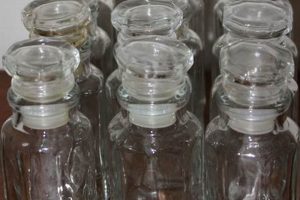
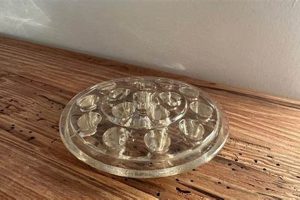
An antique decorative vessel crafted from molded glass, typically dating from the late 19th to mid-20th century, showcases intricate patterns and textures achieved through the pressing process. These items represent a period of mass production that democratized access to elaborate glassware. For example, a clear glass container adorned with a hobnail design and a scalloped rim, produced in the early 1900s, exemplifies the stylistic characteristics of this type of collectible.
The appeal of these historical objects lies in their affordability relative to hand-blown glass, combined with their aesthetic appeal and historical significance. They offer a tangible link to past design trends and manufacturing techniques. Their durability also contributes to their enduring value as functional or purely ornamental pieces. Furthermore, these remnants of yesteryear possess potential investment value, with certain patterns and manufacturers commanding higher prices in the collectors’ market.
The following sections will explore specific design styles, manufacturers known for producing noteworthy examples, identification tips for authenticating pieces, and methods for properly cleaning and preserving these fragile artifacts.
Tips for Collectors of Antique Molded Glass Containers
The acquisition and preservation of historical molded glass requires careful consideration. These guidelines are intended to assist both novice and experienced collectors.
Tip 1: Verify Authenticity: Scrutinize the item for signs of mold lines, which are characteristic of the pressing process. However, their absence does not guarantee hand-blown origin, as some pressed glass underwent secondary finishing to obscure these marks.
Tip 2: Identify the Pattern: Consult reference guides and online databases to determine the pattern name and manufacturer. Knowing the pattern allows for informed valuation and identification of potential reproductions.
Tip 3: Assess for Damage: Examine the glass under bright light for cracks, chips, or repairs. Even minor damage can significantly decrease the value of a piece. Look for areas of discoloration or staining, especially in pieces that may have been used as flower containers.
Tip 4: Research the Maker: Investigate the manufacturer’s history and production dates. Certain companies, such as Fenton or Cambridge, are highly sought after by collectors. Their markings, or lack thereof, can influence the object’s desirability.
Tip 5: Evaluate Color and Clarity: The color and clarity of the glass are important factors. Rare colors, such as vaseline or uranium glass, often command higher prices. Cloudy or discolored glass may indicate age or improper cleaning methods used in the past.
Tip 6: Handle with Care: These items are often fragile and susceptible to damage. When handling, support the piece from the base and avoid grasping it by thin or delicate areas.
Tip 7: Document Your Collection: Maintain a detailed inventory of your collection, including photographs, descriptions, and purchase information. This documentation will be invaluable for insurance purposes and future appraisals.
Adhering to these guidelines can help ensure the acquisition of genuine items, prevent costly mistakes, and enhance the long-term enjoyment of collecting historical molded glass.
The subsequent sections will delve into specific cleaning techniques and appropriate display methods for these treasured objects.
1. Pattern Identification

The accurate determination of pattern names represents a fundamental step in researching a historical molded glass container. The design motifs, geometric arrangements, or figural representations pressed into the glass surface provide critical clues to the object’s origin, maker, and relative value. Establishing the correct design is necessary for accessing relevant historical records and pricing guides.
- Establishing Provenance
Identifying the pattern frequently allows for tracing the item back to a specific manufacturer and time period. For example, recognizing the “Hobnail” pattern on a container points towards a likely origin with Fenton Art Glass Company during the early 20th century. This established provenance adds historical context and can affect market value.
- Differentiating Originals from Reproductions
Certain historical designs have been reproduced over time, often with variations in quality or material. A thorough understanding of the original design characteristics enables collectors to differentiate genuine antique pieces from later imitations. Subtle differences in the mold lines, glass clarity, or the precision of the pressed design can indicate the age and authenticity of the container.
- Assessing Market Value
The rarity and desirability of a particular pattern significantly impact the item’s market value. Patterns produced in limited quantities, those associated with renowned manufacturers, or those exhibiting exceptional design aesthetics command higher prices among collectors. Online pricing guides and auction records rely heavily on accurate design identification for valuation purposes.
- Facilitating Research and Collection
Pattern recognition is essential for cataloging and expanding a collection. By identifying and categorizing items based on their designs, collectors can gain a deeper appreciation for the historical evolution of molded glass production. Furthermore, accurate design names enable efficient searching for similar examples and related historical information.
Precise pattern identification provides the foundation for informed decision-making within the sphere of historical molded glass containers. The ability to accurately distinguish design motifs enables the establishment of provenance, the differentiation of originals from reproductions, the assessment of market value, and the facilitation of further research. Mastery of design recognition is, therefore, paramount for both seasoned collectors and novice enthusiasts.
2. Manufacturer's Markings

Manufacturer’s markings represent a critical element in determining the origin, authenticity, and value of antique molded glass containers. These marks, often subtle or obscured, provide tangible evidence linking a piece to a specific glassmaking company, offering insight into its history and production context.
- Identification and Provenance
The presence of a maker’s mark directly attributes a container to a particular manufacturer. Marks, such as those used by Fenton, Cambridge, or Imperial Glass, establish a chain of custody, verifying its historical origins. For instance, a “Fenton” mark on a container signifies production by the Fenton Art Glass Company, enabling collectors to trace its manufacturing period and style. Establishing provenance increases an object’s desirability and historical significance.
- Dating and Production Era
Manufacturer’s marks evolve over time, and variations in a company’s branding can provide clues to the container’s production era. A specific mark used by a company between 1910 and 1920, if found on a container, indicates it was made during that period. These historical milestones link to changes in design trends, manufacturing methods, and availability of specific materials. Dating based on these marks adds precision to historical analysis.
- Authenticity Verification
The absence or presence of a correct maker’s mark can serve as a critical indicator of authenticity. Reproductions or forgeries often lack precise markings, or they may feature inaccurate or incorrectly applied marks. Comparing a mark to verified examples in reference guides can help distinguish genuine antique items from more recent copies. For instance, incorrect font size or placement raises red flags of a possible forgery.
- Valuation and Collectibility
Containers produced by well-known or highly regarded manufacturers command higher prices in the collectors’ market. A maker’s mark establishes the item’s desirability among collectors seeking particular brands or design styles. For example, a container with a “Cambridge Glass” mark is generally more valuable than an unmarked container of similar design but unknown origin. The manufacturer’s reputation contributes significantly to an object’s overall value and collectibility.
In summary, the presence, form, and accuracy of manufacturer’s markings greatly influence the assessment of molded glass. These marks provide key information about the container’s maker, manufacturing period, authenticity, and market value. By carefully studying these markings, collectors can gain deeper insights into the history of each item and make well-informed decisions regarding acquisition and preservation.
3. Glass Composition

The elemental makeup significantly dictates the properties and aesthetic characteristics of these historical artifacts. Varying formulations, utilizing different combinations of silica, soda, lime, and other additives, produced distinct visual and physical outcomes. For example, the addition of lead oxide resulted in crystal glass, prized for its brilliance and clarity. Conversely, the presence of manganese dioxide served as a decolorizing agent to counteract impurities in raw materials, yielding clear, colorless glass, particularly common in mass-produced tableware. Understanding the glass composition is crucial for authenticating and assessing the condition of these pieces, as certain formulations are more susceptible to degradation or specific types of damage over time.
Specific compositional characteristics directly correlate to the durability and longevity of these containers. For instance, formulas containing higher percentages of soda are more prone to surface etching or “sick glass,” a condition characterized by iridescent or milky clouding. Conversely, the inclusion of boron in some formulas enhanced thermal shock resistance, making the glass more suitable for holding hot liquids. Practical applications of compositional knowledge include selecting appropriate cleaning agents and storage conditions to mitigate potential degradation. An overly alkaline cleaning solution, for instance, can exacerbate surface etching on glass high in soda content.
In conclusion, the relationship between composition and artifact integrity is fundamental to preservation and appreciation. Variations in glass recipes dictated optical properties, durability, and susceptibility to environmental factors. A thorough understanding of these formulations equips collectors and conservators with the necessary knowledge to properly care for these historical objects, ensuring their preservation for future generations. Challenges persist in definitively identifying specific glass compositions without destructive testing; however, visual examination coupled with historical research can provide valuable insights.
4. Production Era

The period during which a molded glass container was manufactured significantly influences its characteristics, value, and historical context. Understanding the era of production provides crucial insights into the techniques, designs, and social factors that shaped these objects. Examining the timelines helps ascertain the authenticity, assess the degree of rarity, and contextualize the piece within larger historical trends.
- Technological Advancements
The evolution of glass pressing technology directly impacted the complexity and intricacy of available designs. Early molded glass, produced in the mid-19th century, often exhibits simpler patterns due to the limitations of early pressing machinery. Later, more sophisticated technologies enabled the creation of highly detailed and elaborate motifs. A container with intricate Art Nouveau detailing, for example, would definitively point to a late 19th or early 20th-century production date, reflecting advancements in mold-making and pressing techniques.
- Design Trends and Styles
Prevailing aesthetic preferences heavily influenced the shapes, patterns, and colors. The Victorian era favored ornate, elaborate designs with floral motifs and intricate textures. The Art Deco period brought geometric shapes, bold colors, and streamlined forms to molded glass. The specific design language of a container provides a clear indication of its production era. For example, a container with geometric patterns and vibrant emerald green coloring likely comes from the Art Deco era.
- Economic and Social Factors
The affordability of molded glass made it accessible to a broad range of consumers, particularly during periods of industrial expansion. Mass production techniques democratized access to decorative glassware, leading to widespread availability of items in various styles. The economic conditions of the time directly affected the quality and quantity of molded glass produced. Containers made during periods of economic prosperity may exhibit higher quality materials and more elaborate designs, while those from times of economic hardship may be simpler and more utilitarian.
- Material Availability
The availability and cost of raw materials impacted the composition and coloration of the glass. Certain pigments and additives were more readily accessible during specific periods. For example, the use of uranium to create vibrant green glass was popular in the late 19th and early 20th centuries. Changes in material availability due to wars or trade restrictions influenced the colors and types of glass produced. A container with a specific color associated with a certain period provides information about the materials available at the time of production.
These factors collectively highlight the importance of considering the production era when evaluating it. The interplay of technological advancements, design trends, socioeconomic factors, and material availability shaped the characteristics and value. By understanding these influences, collectors and historians can gain a more complete appreciation for the artistry and historical significance.
5. Condition Assessment

Evaluating the physical state of a historical molded glass container is crucial for determining its authenticity, value, and long-term preservation needs. A thorough assessment identifies existing damage, predicts potential future deterioration, and informs appropriate conservation measures.
- Surface Imperfections and Structural Integrity
Surface damage, such as chips, cracks, scratches, and staining, directly impacts the value and stability of the item. Minute cracks, often invisible to the naked eye, may expand over time due to temperature fluctuations or handling. Staining, resulting from prolonged contact with liquids or environmental pollutants, can alter the aesthetic appearance and potentially weaken the glass structure. Severe cracking compromises the object’s structural integrity, rendering it more susceptible to further damage. For example, a visible crack running along the base of a historical hobnail container significantly decreases its market value and necessitates careful handling to prevent catastrophic breakage.
- Clarity and Discoloration
The optical properties, including clarity and coloration, are essential indicators of the overall health. Cloudiness, often caused by chemical reactions or the leaching of components, reduces the transparency and diminishes the aesthetic appeal. Discoloration, resulting from exposure to sunlight or improper storage, can alter the intended color of the glass. The presence of “sick glass,” characterized by an iridescent or milky film, indicates irreversible degradation of the glass matrix. An evaluation of clarity and color irregularities provides insights into past environmental exposure and inherent material vulnerabilities. A subtle yellowing of a piece initially produced in clear glass, for instance, suggests prolonged exposure to ultraviolet radiation.
- Repairs and Alterations
Previous repairs or alterations significantly affect the value and historical integrity. Repairs performed using inappropriate materials or techniques can cause further damage or obscure original features. Alterations, such as the addition of embellishments or modifications to the original design, detract from the object’s authenticity. Evidence of amateur repairs, such as visible glue lines or mismatched glass fragments, negatively impacts the object’s worth. Careful examination for signs of alteration is essential for determining the true historical and artistic significance.
- Evidence of Wear and Use
The presence of wear marks, such as scuffing or abrasion on the base, provides insights into how it was used and handled over time. Excessive wear may indicate frequent use or improper storage, potentially compromising its structural integrity. Wear patterns can also contribute to the object’s historical narrative, offering tangible evidence of its role in past social contexts. For example, consistent wear marks on the rim of a drinking vessel suggest frequent use, providing insights into its everyday function. This evidence of wear and use also provides some insight to the overall lifetime and era it was used.
Therefore, a comprehensive condition assessment involves a detailed examination of the surfaces, the structural integrity, optical properties, repairs, and alterations to determine the overall state. The assessment guides conservation practices, informs valuation, and provides valuable information about its history and past usage.
6. Rarity Factors
The limited availability of specific examples significantly influences their desirability and market value. Rarity stems from several sources, reflecting the intersection of production quantities, survival rates, and collector demand.
- Limited Production Runs
Certain manufacturers produced items in small quantities due to experimental designs, limited material availability, or short-lived market trends. These pieces are inherently scarcer than those from mass-produced lines. For example, a container produced in a limited-edition color or with a unique pattern variation represents a smaller fraction of overall production. Fewer examples exist, increasing the competition among collectors and driving up prices.
- Pattern Popularity and Survival Rate
Some patterns proved less popular at the time of production, resulting in lower initial sales and, consequently, fewer surviving examples today. Furthermore, the fragility of glass contributes to a natural attrition rate over time. Accidental breakage, improper storage, and environmental damage reduce the number of intact specimens. Patterns initially produced in smaller volumes and subject to higher rates of breakage exhibit increased rarity. A container pattern deemed “unfashionable” at its debut may now command a premium due to its scarcity.
- Color Variations
Color variations within a given pattern can significantly affect rarity. Experimentation with color formulas, limited runs of specific hues, or the use of expensive pigments resulted in certain colors being far less common than others. Pieces in rare colors, such as uranium glass or specific shades of carnival glass, are highly sought after by collectors. A clear pressed glass container may be relatively common, while the same container in an unusual color might be quite rare.
- Geographical Distribution and Regional Preferences
Production primarily destined for specific geographical regions contributes to localized rarity. Items produced in limited quantities for a particular market or reflecting regional aesthetic preferences become scarce outside their original distribution area. The patterns reflecting regional preferences, such as patterns popular in specific rural states might be a rare find somewhere else. The items with these conditions are mostly popular in areas it was originally produced for, therefore these containers are a niche market.
These elements directly influence market dynamics, determining collectibility and driving valuations. Rare patterns command higher prices and generate greater collector enthusiasm, underscoring the significance of understanding factors contributing to their scarcity. The rarity of a container makes a lot of difference in the market, from the history and value.
7. Market Value

The economic worth of antique molded glass vessels is determined by a confluence of factors, each contributing uniquely to its final price. Scarcity, condition, provenance, design desirability, and current collector trends interact to establish an item’s valuation in the antiques market. High demand for a particular pattern, coupled with a limited number of available examples in excellent condition, inevitably drives up the market value. Conversely, readily available patterns with significant damage or undocumented history command considerably lower prices. For example, a Fenton Art Glass container in the “Water Lily and Cattails” pattern in pristine condition with its original label would fetch a substantially higher price than a similar container with a crack or missing label.
Understanding market dynamics enables collectors and sellers to make informed decisions regarding acquisition, disposal, and preservation efforts. Evaluating auction records, consulting with experienced appraisers, and monitoring online marketplaces provides valuable insights into current pricing trends. The presence of a manufacturer’s mark, the identification of a sought-after pattern, or documentation of historical significance can significantly enhance an object’s market appeal. Furthermore, protecting vintage glass items from damage through proper storage and careful handling preserves their value. A documented Heisey Glass container, maintained in excellent condition, provides both aesthetic pleasure and a potential financial asset.
However, predicting market value presents inherent challenges due to fluctuating collector preferences and economic conditions. While general trends can be observed, individual pieces may experience unexpected price surges or declines based on factors beyond objective assessment. Authenticity verification remains paramount, as misrepresented or falsely attributed items significantly depreciate in value. A proactive approach involving continuous market monitoring, informed appraisal practices, and a strong emphasis on authenticity verification contributes to successful engagement. Despite market uncertainties, knowledgeable participation empowers individuals to navigate the complexities of valuation and appreciation in the sphere.
Frequently Asked Questions About Historical Molded Glass Containers
The following addresses common inquiries regarding historical molded glass containers, offering concise explanations and clarifications. These questions are intended to guide collectors, enthusiasts, and researchers in understanding the nuances of these artifacts.
Question 1: How does one differentiate between genuine antique molded glass and more recent reproductions?
Distinguishing genuine pieces necessitates careful examination. Look for mold lines, a characteristic of the pressing process, and compare the item to known examples in reference guides. Recent reproductions often exhibit inferior glass quality, less precise detailing, and lack authentic manufacturer’s marks. Subtle differences in weight, clarity, and design intricacy can also indicate a reproduction.
Question 2: What are the most common types of damage found in antique molded glass, and how do they affect its value?
Common forms of damage include chips, cracks, scratches, and staining. Chips and cracks significantly reduce value, particularly if they are large or located in prominent areas. Scratches may have a minimal impact if they are light and do not detract from the overall aesthetic. Staining, if severe or irreversible, diminishes the value. The degree of damage directly correlates to a reduction in market worth.
Question 3: How should historic vessels be properly cleaned to prevent damage?
Cleaning delicate pieces requires gentle methods. Avoid abrasive cleaners or harsh chemicals, which can etch or discolor the glass surface. Use lukewarm water, a mild dish soap, and a soft brush to remove dirt and debris. Rinse thoroughly and dry with a lint-free cloth. For stubborn stains, consider using diluted vinegar or a specialized glass cleaner specifically formulated for antiques.
Question 4: What factors contribute to the rarity of a particular pattern or color?
Rarity results from a combination of factors, including limited production runs, low survival rates, and specific color formulas. Patterns produced in small quantities, those susceptible to breakage, and those utilizing rare or expensive pigments are inherently scarcer. Color variations within a given pattern also contribute to rarity, with uncommon hues commanding higher prices among collectors.
Question 5: How does the presence of a manufacturer’s mark affect the assessment of the value?
Manufacturer’s marks provide crucial evidence of origin and authenticity. Their presence can significantly increase the value, particularly for pieces produced by renowned glassmaking companies. Marks offer tangible proof of provenance, verifying the item’s historical context and maker. The absence of a mark does not automatically devalue an object, but it necessitates more rigorous research to establish its origin and worth.
Question 6: Where does one find reliable information on identifying patterns, assessing values, and preserving their vessels?
Reliable resources include reference books on molded glass, online databases dedicated to antique glassware, and the expertise of experienced appraisers. Auction catalogs and collector forums provide valuable insights into current market trends. Museums and historical societies often offer educational resources and preservation guidelines.
These FAQs offer a foundation for those seeking to understand the intricacies of collecting and caring for these historical artifacts. Further research and consultation with experts will enhance your knowledge.
The following section provides resources and further reading for continued learning.
Conclusion
This exploration of the historical molded glass container has illuminated key aspects influencing its value, authenticity, and preservation. From design motifs to manufacturer’s markings, from glass composition to condition assessment, a comprehensive understanding empowers collectors and enthusiasts. Factors influencing rarity and market dynamics further contribute to an informed approach in navigating the world of these delicate historical artifacts.
The legacy endures as tangible links to a bygone era of craftsmanship and design. Continued study, careful stewardship, and a commitment to preservation ensure that these containers remain appreciated and accessible to future generations, embodying the aesthetic values and manufacturing techniques of their respective times. Such efforts safeguard an important part of cultural heritage.

![Buy: Stunning Vintage Blue Glass Ashtray [Collectible] | Vintage Treasures: Discover Rare Antiques, Collectibles & Retro Finds](https://roopevintage.com/wp-content/uploads/2026/04/th-631-300x200.jpg "Buy: Stunning Vintage Blue Glass Ashtray [Collectible] Vintage Treasures: Discover Rare Antiques, Collectibles & Retro Finds")