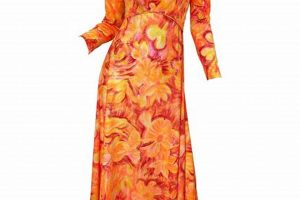
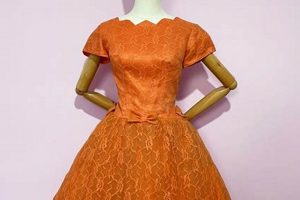
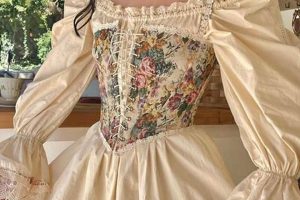
Apparel originating from Japan, produced in earlier eras, embodies distinctive styles, fabrics, and design aesthetics. These garments often reflect specific periods, such as the post-war era or the economic boom of the 1980s, and may feature unique patterns, silhouettes, or embellishments characteristic of Japanese fashion during those times. A silk kimono from the early 20th century, repurposed into a modern dress, exemplifies this category.
Acquiring such items provides access to sartorial heritage, showcasing the evolution of Japanese aesthetics and manufacturing techniques. These articles of clothing represent a tangible link to the past, providing insights into cultural values and social trends. The appeal lies in their inherent scarcity and distinctive character, presenting an alternative to mass-produced contemporary fashion. Furthermore, preservation and appreciation of these pieces contribute to sustainable consumption by extending the lifespan of textiles and promoting reuse.
The subsequent sections will delve into specific eras and design elements associated with these historical fashion pieces, covering topics such as identifying authentic pieces, caring for delicate textiles, and integrating these unique finds into contemporary wardrobes.
Tips for Acquiring Japanese Vintage Apparel
This section provides guidance for navigating the world of historical Japanese garments, focusing on key considerations for potential buyers and enthusiasts.
Tip 1: Researching Historical Periods: Prior to acquisition, dedicate time to understanding the specific historical periods associated with available garments. Familiarize oneself with the typical fabrics, silhouettes, and embellishments characteristic of each era. For example, garments from the Taisho era exhibit different design sensibilities than those from the Showa period.
Tip 2: Authenticating Garment Construction: Examine the garment’s construction techniques for indicators of age and origin. Hand-stitched seams, unique closures, and traditional lining materials are often indicative of genuine vintage pieces. Conversely, mass-produced garments often feature machine stitching and synthetic materials.
Tip 3: Inspecting Fabric Condition: Carefully assess the condition of the fabric, paying close attention to signs of wear, discoloration, or damage. Note any fading, staining, or tearing, and factor these imperfections into the overall value and potential restoration costs. Silk, a common material, is particularly susceptible to degradation over time.
Tip 4: Verifying Label and Tag Information: If present, examine labels and tags for manufacturer information, fabric content, and care instructions. Researching vintage Japanese brands can aid in verifying authenticity and dating the garment. Note that label terminology and regulations have evolved over time.
Tip 5: Considering Size and Fit: Be aware that sizing standards have changed significantly over time. Consult detailed measurements and compare them to contemporary sizing charts to ensure a proper fit. Alterations may be necessary to accommodate modern body types.
Tip 6: Investigating Seller Reputation: Prioritize purchasing from reputable dealers specializing in vintage textiles. Review seller feedback, ask detailed questions about the garment’s history and condition, and request additional photographs if necessary.
Tip 7: Understanding Cultural Significance: When acquiring garments with traditional elements, such as kimonos or haori, familiarize oneself with their cultural significance and proper etiquette associated with wearing them. Respectful handling and appreciation are essential.
By adhering to these guidelines, enthusiasts can make informed decisions when acquiring historical Japanese garments, ensuring both the authenticity and longevity of their treasured pieces.
The concluding section will summarize the key benefits and lasting impact of engaging with this unique facet of fashion history.
1. Era Identification

Era identification is crucial to understanding and appreciating historical Japanese apparel. Determining the period in which a dress was created provides essential context for its design, materials, and construction. Each era in Japanese history brought forth distinct aesthetic preferences and technological advancements in textile production. Consequently, an understanding of these period-specific characteristics is vital for accurate assessment and valuation. For example, a dress featuring intricate hand-painted designs and silk sourced from domestic sericulture likely originates from the pre-World War II period, while a dress made of synthetic materials and featuring bold geometric patterns may be indicative of the economic boom of the 1980s. Without proper era identification, attributing value and appreciating cultural significance becomes inherently difficult.
The practical significance of era identification extends to several domains. For collectors, accurate dating informs purchasing decisions and facilitates the curation of historically coherent collections. Museums and academic institutions rely on accurate era identification for proper cataloging and interpretation of their textile holdings. Furthermore, this knowledge aids in the appropriate conservation and preservation of these garments, as different materials and construction techniques require tailored approaches. For example, a Meiji-era silk kimono dress should not be cleaned using the same methods as a 1970s polyester dress. Incorrect handling can lead to irreversible damage and loss of historical information.
In summary, era identification serves as the foundation for understanding historical Japanese apparel. Its importance extends beyond mere dating, providing the critical framework for evaluating design, materials, construction, and cultural significance. Challenges remain in distinguishing subtle variations between closely related periods. Continuous research and collaboration between experts are vital to refine era identification techniques and ensure the accurate preservation and appreciation of these pieces of cultural heritage.
2. Textile Analysis
Textile analysis forms an essential component in the study and preservation of historical Japanese garments. Identifying fiber content, weave structure, and dyeing techniques offers critical insights into the dress’s origins, age, and cultural context. Natural fibers like silk, cotton, and hemp were prevalent in earlier periods, while the introduction of synthetic materials such as rayon and polyester marked later decades. The specific type of silk used, whether raw silk or processed crepe, provides clues about the garment’s intended purpose and wearer’s social status. Similarly, the weave pattern reveals manufacturing capabilities and regional variations. For instance, complex brocades indicate advanced weaving skills and potentially higher social standing of the owner. The dyeing process is also informative; natural dyes derived from plants and insects were employed historically, resulting in subtle color variations that differ from the consistent hues achieved with synthetic dyes.
The condition of the textile directly impacts the preservation strategy. Silk, for example, is susceptible to degradation from light, moisture, and insect damage. Analysis can reveal the extent of deterioration and guide appropriate conservation methods. Identification of mordants used in the dyeing process is also vital, as some mordants can accelerate fabric decay. The presence of metallic threads, often incorporated for embellishment, poses unique conservation challenges due to their tendency to corrode and damage adjacent fibers. Recognizing the potential for such issues through textile analysis enables conservators to implement preventative measures and stabilize fragile materials. For example, an examination of a Meiji-era dress might reveal the use of shibori tie-dyeing techniques, requiring specialized cleaning and storage protocols to protect the intricate patterns.
In summary, textile analysis serves as a crucial diagnostic tool for understanding Japanese historical dress. Its application allows for accurate dating, assessment of cultural significance, and informed conservation decisions. Challenges include identifying blended fibers and accurately dating naturally dyed fabrics. Continuous research and collaboration between textile scientists, historians, and conservators are vital to refining analytical techniques and enhancing our ability to preserve these valuable cultural artifacts. The information gained informs strategies for maintaining the structural integrity and aesthetic qualities of these fragile historical items, ensuring their continued accessibility for future generations.
3. Design Motifs

Design motifs are intrinsic to the identity of historical Japanese garments, functioning as visual markers of time, culture, and social status. The motifs adorning a vintage dress often serve as direct reflections of the era’s prevailing artistic trends, societal values, and technological capabilities. For instance, dresses from the Meiji period frequently feature patterns borrowed from traditional ukiyo-e prints, showcasing landscapes, flora, and fauna rendered in a distinctive woodblock style. These motifs were not merely decorative; they carried symbolic meanings understood by contemporary viewers, communicating aspirations, allegiances, and personal characteristics. The presence or absence of certain motifs, therefore, provides valuable insights into the garment’s intended purpose and the social context in which it was worn. The impact of motifs on the overall aesthetic and historical significance of the garment cannot be understated.
Further exemplifying the importance, consider the frequent use of geometric patterns, such as asanoha (hemp leaf) or shippo (seven treasures), on dresses from the Taisho and early Showa periods. These patterns, often rendered in bold colors and art deco-inspired designs, reflect the influence of Western modernism on Japanese aesthetics. The adaptation of traditional motifs into contemporary styles demonstrates the dynamic interplay between cultural heritage and evolving artistic sensibilities. Moreover, the specific arrangement and scale of these motifs can indicate the wearer’s personal tastes and socio-economic background. Wealthier individuals might opt for larger, more elaborate patterns executed with finer materials and more sophisticated techniques, whereas those with limited means might choose simpler, more economical alternatives. Thus, design motifs provide nuanced information about the individual as well as the broader societal trends that shaped their sartorial choices.
In summation, design motifs represent a crucial element for interpreting historical Japanese dresses. Their careful analysis offers a multifaceted perspective on the garment’s origins, cultural significance, and social context. Challenges exist in accurately decoding the symbolic meanings of certain motifs, particularly those that have fallen out of common usage. However, through continuous research and interdisciplinary collaboration, historians and textile scholars can unlock the rich narratives embedded within these visual elements, ensuring a more complete understanding and appreciation of these garments as tangible expressions of Japanese history and culture.
4. Construction Quality
Construction quality is a definitive attribute of authentic historical Japanese garments, influencing durability, aesthetic appeal, and indicative of production era. Higher construction quality suggests skilled craftsmanship and often correlates with superior materials, resulting in garments that withstand the test of time. Hand-stitched seams, meticulous pattern matching, and reinforced stress points are hallmarks of earlier construction, predating mass production. The presence of such features enhances the garment’s structural integrity and its ability to retain its shape and form over decades. Conversely, garments with inferior construction, such as uneven stitching, flimsy linings, or poorly attached embellishments, raise concerns about authenticity and long-term preservation. For instance, a silk kimono dress from the Meiji period exhibiting precise hand-sewing and durable construction has a greater likelihood of being genuine and retaining its value compared to a garment of similar appearance displaying sloppy workmanship.
The importance of assessing construction quality extends to conservation efforts. Proper evaluation informs appropriate cleaning and storage techniques. Garments with weak seams or delicate fabrics require specialized handling to prevent further damage. Identification of original construction methods is also crucial for accurate restoration. When replicating missing or damaged elements, conservators strive to match the original techniques and materials as closely as possible to maintain historical integrity. Modern techniques, while often more efficient, may compromise the garment’s authenticity and long-term stability. The absence or presence of details, such as meticulously hand-rolled hems or reinforced collar linings, is a critical factor in assessing the garment’s provenance and informing conservation strategy. Careful attention to the details helps determine the garment’s value, guides its care, and ensures its survival as a cultural artifact.
In summary, construction quality plays a pivotal role in evaluating the authenticity and preserving historical Japanese garments. Superior craftsmanship indicates a genuine article, while substandard construction raises red flags. Understanding construction techniques informs conservation efforts and helps maintain historical accuracy. Challenges in assessment arise from the need for specialized knowledge and the potential for deceptive alterations. Despite these challenges, a keen understanding of construction techniques and material characteristics provides essential insight. Prioritizing construction quality in the acquisition and preservation ensures that the historical and cultural value of these textile treasures is maintained for future generations.
5. Cultural Context

The cultural context surrounding vintage Japanese dresses exerts a profound influence on their design, production, and interpretation. Societal norms, historical events, and artistic movements directly shape garment styles and material choices. Dresses from the Taisho era, for instance, often reflect the blending of Western silhouettes with traditional Japanese fabrics and motifs, a direct consequence of increased international exchange. The colors, patterns, and embellishments applied to garments hold symbolic meaning, influenced by traditions and customs. The status of the wearer, informed by social hierarchies and economic realities, is often discernable through the garment’s design and materials. Therefore, ignoring the cultural milieu leads to an incomplete and potentially inaccurate understanding of a piece’s significance.
Understanding the cultural context allows for a deeper appreciation of the garment’s intended function and its historical role. For example, a momesan dress, a practical garment worn by women in early to mid-20th century Japan, reveals insights into the working-class lives and the prevailing fashion constraints of the time. Similarly, the evolution of the kimono dress demonstrates the changing status of women and the gradual adaptation of traditional attire to modern lifestyles. An understanding of wartime austerity measures elucidates the prevalence of repurposed fabrics and simplified designs in clothing from the 1940s. This knowledge is not merely academic; it directly informs conservation practices, display strategies, and interpretations presented in museum settings. Properly contextualized garments enhance the educational value of exhibitions and foster a more nuanced understanding of Japanese history and culture.
In essence, the cultural context provides an indispensable framework for analyzing and appreciating vintage Japanese dresses. This context informs our understanding of the design, production methods, and the social narratives embedded within these artifacts. Challenges remain in fully deciphering the complexities of cultural symbolism and interpreting the nuances of historical fashion trends. Continuous research and cross-disciplinary collaboration are crucial to refining our understanding and ensuring that the cultural significance of these garments is accurately conveyed. The preservation and display of these dresses, grounded in a thorough understanding of their cultural origins, contribute to the ongoing appreciation of Japanese heritage.
Frequently Asked Questions About Japanese Vintage Dress
This section addresses common inquiries and misconceptions surrounding the study, acquisition, and preservation of historical Japanese apparel.
Question 1: What distinguishes a genuine vintage Japanese dress from a reproduction or contemporary garment inspired by Japanese design?
Authenticity is determined through a combination of factors, including fabric composition, construction techniques, design motifs, and the presence of manufacturer’s labels or tags indicative of the garment’s era. Older garments typically feature natural fibers, hand-sewn details, and patterns characteristic of specific historical periods. Contemporary garments often utilize synthetic materials and mass-production techniques.
Question 2: How does one properly care for delicate vintage Japanese garments, particularly those made of silk?
Professional cleaning by a specialist experienced in handling vintage textiles is highly recommended. Hand washing with pH-neutral detergents may be considered for certain items, but only after careful testing. Proper storage involves using acid-free tissue paper, padded hangers, and controlled environmental conditions (low light, moderate humidity) to prevent damage from pests and environmental factors.
Question 3: Where can authentic vintage Japanese dresses be reliably sourced?
Reputable sources include established vintage clothing dealers specializing in Japanese textiles, antique shops with a proven track record of authentication, and online auction sites where sellers provide detailed provenance information and high-resolution photographs. Thorough research and careful scrutiny of seller credentials are essential before making a purchase.
Question 4: What are the typical price ranges for Japanese vintage dresses, and what factors influence valuation?
Prices vary significantly depending on factors such as rarity, condition, fabric quality, design intricacy, and historical significance. Dresses from renowned designers or specific historical periods command higher prices. Garments in excellent condition with minimal damage are typically more valuable than those requiring extensive restoration.
Question 5: Are there any legal or ethical considerations when acquiring vintage Japanese garments, particularly those with cultural significance?
It is important to ensure that garments are acquired through legal and ethical channels, avoiding items obtained through illicit means or representing culturally sensitive artifacts. Researching the garment’s provenance and respecting cultural traditions associated with specific designs are essential.
Question 6: How can vintage Japanese dresses be integrated into a contemporary wardrobe while maintaining respect for their historical value?
Styling vintage garments with modern pieces can create unique and fashionable looks. However, it is crucial to avoid alterations that compromise the garment’s original design and construction. Consider layering vintage dresses with contemporary separates or accessorizing with modern jewelry and footwear to create a balanced aesthetic.
In summary, acquiring and caring for historical Japanese apparel necessitates informed decision-making, meticulous attention to detail, and a deep appreciation for cultural heritage. Further exploration into specific design eras and conservation techniques will be presented in the subsequent section.
The next section provides a glossary of essential terms related to Japanese textiles and garment construction.
Conclusion
The examination of “japanese vintage dress” reveals a rich tapestry of historical, cultural, and aesthetic significance. From understanding era-specific design motifs to analyzing textile composition and construction quality, each element contributes to a comprehensive appreciation of these garments as tangible artifacts. Cultural context informs their symbolic value and historical role, underscoring the importance of ethical acquisition and conscientious preservation.
Continued research and dedication to responsible stewardship are essential for safeguarding the legacy of these unique pieces. Engaging with historical Japanese apparel presents opportunities to connect with the past, learn from evolving design aesthetics, and contribute to the preservation of cultural heritage for future generations. This ongoing exploration is vital for a greater understanding of fashion history and its intersection with broader societal narratives.