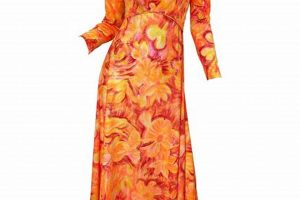
Garments produced by the Emilio Pucci fashion house in previous decades, specifically dresses, represent a significant segment of the vintage clothing market. These items are recognized for their vibrant, geometric prints, luxurious fabrics, and innovative designs that epitomized the jet-set lifestyle of the 1960s and 1970s. For example, a shift dress with a kaleidoscopic pattern dating from the early 1970s would be considered a key example.
The enduring appeal of these articles of clothing stems from their artistic merit and their representation of a particular era in fashion history. Collecting them offers access to high-quality, unique pieces, often appreciating in value due to their rarity and historical significance. Moreover, owning such a garment allows wearers to express individuality and appreciation for distinctive design, standing apart from contemporary fast fashion trends. Their increasing value comes from the brand’s lasting impact on high fashion.
The subsequent sections will delve into the aspects of identifying authentic examples, assessing their condition, and exploring the factors influencing their collectibility and value, as well as providing advice on where to locate these dresses. We will also explore how these coveted items continue to influence modern fashion and inspire contemporary designers.
Tips for Acquiring “Pucci Dress Vintage”
Acquiring an authentic garment requires careful consideration. The following tips provide guidance on identifying, assessing, and maintaining these valuable pieces.
Tip 1: Verify Authenticity Through Signature Identification: Authentic items frequently feature Emilio Pucci’s signature integrated within the print design or on a sewn-in label. Examine the signature’s style and consistency with known examples from the purported era of production. Consult reputable vintage fashion resources for comparison.
Tip 2: Analyze Fabric Composition and Construction: The fashion house often utilized high-quality silk jersey, cotton, and other premium materials. The garment’s construction should exhibit meticulous attention to detail, including clean seams and durable stitching. Inferior fabrics or sloppy construction are indicators of potential inauthenticity.
Tip 3: Assess Print Quality and Color Saturation: The brand’s prints are known for their vibrant colors and sharp, well-defined patterns. Faded colors, blurred lines, or inconsistencies in the print suggest age-related wear or potential counterfeiting.
Tip 4: Scrutinize the Garment’s Condition Meticulously: Inspect for damage such as stains, tears, or fading. While minor imperfections may be acceptable in older pieces, significant damage can detract from the garment’s value. Professional restoration can address certain issues, but its cost should be factored into the overall investment.
Tip 5: Research the Garment’s Provenance: Whenever possible, gather information about the garment’s history. Provenance can significantly enhance its value and desirability. Documentation, such as original receipts or photographs of the garment being worn by its original owner, can strengthen its claim of authenticity and increase its appeal to collectors.
Tip 6: Consult with a Specialist: When in doubt, seek the opinion of a reputable vintage clothing dealer or appraiser specializing in the brand. Their expertise can help determine authenticity, assess condition, and estimate the garment’s market value.
Following these tips will help minimize risks and make informed decisions. Careful examination, thorough research, and expert consultation are crucial for navigating the vintage market.
The following section will consider specific designers who have been influenced by these designs, offering further insight on the brand’s impact and continued relevance.
1. Iconic geometric patterns

The enduring appeal of garments lies significantly in its utilization of iconic geometric patterns. These designs, far from mere surface decoration, are integral to the brand’s identity and its influence on fashion trends. Their complexity, color combinations, and placement contribute to the distinctive aesthetic that defines the label’s vintage dresses.
- Kaleidoscopic Motifs
The brand frequently employs kaleidoscopic motifs, creating intricate patterns through the repetition and mirroring of geometric shapes. These designs evoke a sense of dynamism and movement, transforming the dress into a wearable work of art. Examples include the “Emilioform” prints, characterized by their abstract, swirling forms. These complex patterns demand precise printing techniques, a hallmark of the brand’s commitment to quality.
- Optical Illusions and Trompe-l’il
Certain patterns create optical illusions, playing with perception and depth. By strategically arranging geometric shapes, the designs simulate three-dimensionality on a two-dimensional surface. This trompe-l’il effect adds a layer of sophistication and visual interest, challenging the viewer’s perception. An example of this can be seen in certain recurring styles that give the illusion of pleating or ruching, even though the fabric is flat.
- Signature Color Combinations
Beyond the geometric forms themselves, the brand is also known for its signature color combinations. Bold, contrasting hues are juxtaposed to create eye-catching and memorable designs. The use of vibrant pinks, oranges, greens, and blues, often in unexpected pairings, became a trademark of the brand’s aesthetic. These color palettes evoke a sense of optimism and luxury, reflecting the brand’s association with the jet-set lifestyle.
- Integration with Garment Construction
The geometric patterns are not merely applied to the surface of the dress; they are carefully integrated into the garment’s construction. The placement of the patterns is often considered in relation to the dress’s cut and shape, enhancing its overall silhouette. For instance, patterns might be strategically positioned to accentuate the waistline or elongate the figure, demonstrating a thoughtful approach to design that goes beyond purely aesthetic considerations.
In summary, the strategic utilization of kaleidoscopic motifs, signature color combinations, and integration with garment construction elevates garments beyond mere articles of clothing. They stand as testaments to the brand’s innovative design philosophy and the enduring appeal of geometric abstraction in fashion. These patterns are integral to its legacy and continue to captivate collectors and enthusiasts alike.
2. Luxurious silk jersey

The prevalence of luxurious silk jersey in the brand’s vintage dresses is not incidental; it represents a deliberate choice central to the brand’s design ethos and the garments’ ultimate appeal. This fabric selection had a direct impact on the drape, comfort, and overall aesthetic of the dresses. The fluid, lightweight nature of silk jersey allowed for the creation of flowing silhouettes that complemented the bold, geometric prints. The fabric’s inherent sheen enhanced the vibrancy of the colors, further amplifying the visual impact. The connection is critical; the fabric choice enabled the designs to be fully realized.
The adoption of silk jersey also aligned with the brand’s association with a sophisticated, jet-setting clientele. The fabric’s wrinkle-resistant properties made it ideal for travel, a significant consideration for the label’s target market. Furthermore, the comfort and ease of movement afforded by silk jersey contributed to the garments’ wearability, transforming them from static pieces of art into functional and desirable clothing items. For example, a 1960s shift dress in silk jersey would have been easily packed and worn for a weekend getaway, retaining its elegance and shape throughout the journey. A real-world example would be an archival dress that retained both color and construction, highlighting the jersey’s value.
In summation, the utilization of luxurious silk jersey represents a fundamental element of the garments’ construction. It was vital for allowing the vibrant, geometric patterns to realize their full visual potential. The practical benefits of silk jersey, such as its wrinkle resistance and comfortable drape, further contributed to the garments’ desirability among a discerning clientele. Understanding this connection is crucial for appreciating the design choices and the lasting appeal of these vintage fashion treasures.
3. Bold color palettes
The deployment of audacious color schemes in vintage dresses from the Emilio Pucci fashion house constitutes a signature design element and a key factor in their enduring appeal. These palettes, characterized by unexpected juxtapositions and vibrant saturations, transcend mere ornamentation, becoming integral to the brand’s visual identity.
- Juxtaposition of Contrasting Hues
A hallmark of the brand’s aesthetic involves the deliberate pairing of intensely contrasting colors. Combinations such as electric blue and hot pink, or lime green and tangerine orange, are frequently observed. This approach departs significantly from more conventional color harmonies, generating a visual dynamism that immediately captures attention. In one example, a 1960s shift dress features a swirling geometric pattern rendered in precisely such a configuration, immediately identifiable because of its boldness.
- Unconventional Color Combinations
Beyond simple contrasts, the garments often showcase hues rarely seen together in contemporary fashion. Turquoise and mustard yellow, or fuchsia and olive green, represent typical examples. These unexpected pairings create a unique and memorable aesthetic, distinguishing the brand from its competitors. For instance, a vintage scarf displays this bold combination, a color story that may not be seen anywhere else during the same timeframe.
- High Color Saturation
The intensity of color is maximized in many examples. Pigments are deployed at their highest saturation levels, resulting in vibrant, eye-catching designs. This contributes to the garments’ overall sense of luxury and exuberance. This is particularly noticeable in silk jersey dresses, where the fabric’s inherent sheen further amplifies the colors’ luminosity.
- Color as a Defining Element
In many instances, color assumes precedence over pattern or form. The bold palettes become the primary focus, overshadowing the geometric shapes themselves. This approach challenges conventional notions of design hierarchy, placing color at the forefront of the aesthetic experience. The colors are so impactful that they are often the first element someone sees, leading them to believe it is a “garment by Emilio Pucci”.
The strategic use of these bold color palettes represents a calculated design choice, contributing significantly to the recognition and collectibility. The colors, often unconventional and intensely saturated, become a defining characteristic, elevating the brand to an iconic position within the landscape of vintage fashion. These details represent a deliberate effort to create pieces that are not only visually striking but also instantly recognizable, thus securing the brand’s legacy.
4. Jet-set aesthetic

The visual embodiment of international travel, luxury, and social exclusivity during the mid-20th century exerts a significant influence on the design and perception of garments. This association, intentionally cultivated and consistently reflected in design choices, contributes substantially to their desirability and enduring cultural relevance.
- Effortless Elegance and Travel-Ready Design
The aesthetic emphasizes clothing that transitions seamlessly from international flights to glamorous social events. Lightweight fabrics, wrinkle-resistant materials, and comfortable yet stylish silhouettes characterize this design philosophy. For instance, silk jersey dresses, easily packed and requiring minimal ironing, were ideal for women traveling between continents. The implications for are clear: they were designed for a specific lifestyle, and this is a central part of their story.
- Bold Prints and Colors Reflecting Global Destinations
The vibrant colors and geometric patterns often evoke the exotic locales frequented by the jet-set elite. Motifs inspired by Mediterranean landscapes, African textiles, and Asian art are frequently incorporated into the designs. A dress featuring swirling patterns reminiscent of the Amalfi Coast captures the essence of this global inspiration. This design philosophy further connects the garments to a world of adventure and sophistication.
- Association with Celebrities and High Society
The brand actively cultivated relationships with prominent figures in the worlds of entertainment, art, and high society. These individuals, frequently photographed wearing the garments in glamorous settings, served as influential ambassadors for the brand’s aesthetic. Examples include photographs of actresses and socialites sporting the dresses on yachts or at exclusive resorts. Their association with these figures solidified their status as symbols of luxury and privilege.
- Embodiment of a Carefree and Optimistic Lifestyle
Beyond the overt displays of wealth and privilege, the aesthetic also conveys a sense of freedom and optimism. The clothing suggests a life unburdened by the constraints of traditional social norms. The flowing silhouettes, bold colors, and playful patterns reflect a spirit of adventure and self-expression. The garments represent an ideal, a world of effortless elegance and boundless possibilities. This is crucial for a collector, as it embodies a particular dream.
- Accessibility and Global Impact
This aesthetic wasn’t only limited to celebrities and the extremely rich; it provided a look of the upper class to any one, even if they didn’t take a trip around the world. This accessibility made the fashion house more approachable and made way for the design of clothes that many wanted to have.
The connection between a high-fashion brand and the jet-set lifestyle proves indispensable for understanding the brand’s vintage dress category. The garments are not merely articles of clothing; they are tangible expressions of a bygone era defined by luxury, international travel, and social exclusivity. This association remains central to their collectibility and enduring appeal.
5. Designer signature presence
The presence of the designer’s signature on garments is a critical factor in authenticating and valuing the piece. This element serves as a primary marker of legitimacy and significantly influences its collectibility and market value.
- Integration within the Print Design
The signature is often incorporated directly into the garment’s print design, seamlessly blending with the geometric patterns. This method makes the signature difficult to counterfeit, enhancing its reliability as an authentication tool. Real-world examples include recurring signature motifs cleverly hidden amongst kaleidoscopic patterns on dresses from the 1960s. This integration serves a dual purpose: aesthetic enhancement and verification of origin.
- Placement on Sewn-In Labels
The signature is commonly found on sewn-in labels, typically located in the neckline or side seam. The font style, color, and material of the label are crucial details to examine. Variations in these attributes can indicate different production periods or potential inconsistencies. For example, early labels exhibit specific characteristics that differ from those used in later decades. Knowledge of these variations is essential for accurate assessment.
- Variations Across Production Periods
The designer’s signature underwent subtle variations throughout different production periods. These changes, while seemingly minor, provide valuable clues about the garment’s age and authenticity. Collectors meticulously study these nuances to determine the precise era of production. An instance of this would be a change in the signature font between the 1960s and 1970s productions.
- Deterrence of Counterfeiting
The presence of a well-executed designer signature acts as a deterrent to counterfeiting. Replicating the signature accurately requires significant skill and attention to detail, making it a challenging task for counterfeiters. A poorly executed signature is a significant red flag, indicating potential inauthenticity. The signature, therefore, serves as a protective measure, safeguarding the brand’s integrity and value.
The designer’s signature on vintage dresses is more than a mere brand identifier; it represents a multifaceted element crucial for authentication, valuation, and the preservation of the garment’s historical significance. Its presence, style, and consistency with known examples are paramount considerations for collectors and enthusiasts.
Frequently Asked Questions about “Pucci Dress Vintage”
The following questions and answers address common inquiries regarding vintage dresses from the fashion house, providing clarification on authentication, care, and valuation.
Question 1: How can the authenticity of an Emilio Pucci vintage dress be verified?
Authentication involves careful examination of several key elements. The presence and style of Emilio Pucci’s signature, integrated within the print or on a sewn-in label, is paramount. Scrutiny of the fabric composition, print quality, and construction details is also essential. Comparison with known authentic examples from reputable vintage fashion resources is recommended.
Question 2: What are the primary factors influencing the value of a Pucci vintage dress?
Several factors contribute to value, including the garment’s condition, rarity, design, and provenance. Dresses in excellent condition, featuring iconic prints and originating from significant periods in the brand’s history, command higher prices. Provenance, such as documented ownership by a notable figure, can also enhance value.
Question 3: What are the recommended methods for cleaning and preserving a Pucci vintage dress?
Professional dry cleaning by a specialist experienced in handling vintage garments is generally recommended. Avoid harsh chemicals or excessive heat. For storage, use padded hangers and breathable garment bags to protect the fabric from dust and light. Flat storage is preferable for delicate knitwear to prevent stretching.
Question 4: How can one identify the approximate age or era of a Pucci vintage dress?
The design and style of the print, the type of fabric used, and the construction techniques employed provide clues about the garment’s age. Examining the label’s design and any care instructions can also offer insights. Consulting vintage fashion resources and comparing the dress to documented examples from different periods is advisable.
Question 5: What are the most common condition issues encountered in Pucci vintage dresses, and how do they impact value?
Common issues include staining, fading, tears, and weakened seams. The extent of the damage significantly impacts value. Minor imperfections may be acceptable in older pieces, but substantial damage can detract significantly. Professional restoration can address some issues, but its cost should be considered.
Question 6: Where are the most reliable sources for acquiring authentic Pucci vintage dresses?
Reputable vintage clothing dealers, auction houses specializing in fashion, and established online marketplaces with stringent authentication processes are the most reliable sources. Exercise caution when purchasing from unverified sources, and always request detailed photographs and condition reports.
This FAQ aims to provide clarity on key aspects of identifying, caring for, and valuing these iconic garments. Diligent research and informed decision-making are crucial for successful acquisition and preservation.
The subsequent section will explore the enduring influence of the brand’s designs on contemporary fashion, highlighting its lasting legacy.
pucci dress vintage
The preceding exploration has illuminated key facets of garments created by Emilio Pucci across past decades. Factors such as pattern, fabric, signature presence, and association with the jet-set lifestyle contribute to their collectibility and historical relevance. Authentic identification necessitates meticulous scrutiny, while appropriate care ensures their long-term preservation. Valuation is influenced by a confluence of factors, demanding informed assessment.
The enduring influence of these garments on contemporary design underscores their lasting significance within the broader fashion landscape. Continued awareness of authentication techniques and preservation methods remains paramount for both collectors and enthusiasts seeking to safeguard this legacy. Further research into specific production periods and design variations is encouraged to deepen appreciation for the brand’s contribution to fashion history.