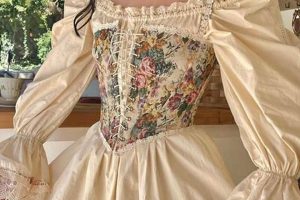
Garments originating from the 1920s represent a distinctive period in fashion history. These items of clothing, typically women’s wear, showcase the stylistic trends prevalent during the “Roaring Twenties,” including dropped waistlines, shorter hemlines, and embellishments such as beads, sequins, and fringe. The attire reflects a departure from the more restrictive silhouettes of previous eras, embodying the era’s newfound freedom and social change.
The significance of these garments lies in their representation of a pivotal shift in cultural norms and societal values. The styles are embodiments of the Jazz Age, reflecting a sense of liberation, modernity, and economic prosperity. Preservation of these historical pieces provides invaluable insights into the aesthetic preferences, manufacturing techniques, and social dynamics of the time. Furthermore, these period-specific creations serve as a source of inspiration for contemporary designers and fashion enthusiasts, illustrating the enduring appeal of the era’s design principles.
Further exploration of the subject reveals a wealth of information related to fabrics, construction methods, designers, and social influences that shaped the development of this particular fashion moment. An in-depth analysis uncovers the nuances of its impact on subsequent decades and continues to influence modern style choices.
Tips Regarding Garments of the 1920s
The following recommendations are intended to provide guidance in understanding, acquiring, and caring for apparel characteristic of the 1920s.
Tip 1: Authenticate Construction and Materials: Examine the construction techniques and fabrics used. Original examples frequently exhibit hand-sewn elements, bias-cut construction, and materials such as silk, rayon, and cotton blends that were common during the period.
Tip 2: Identify Period-Specific Embellishments: Look for embellishments such as beading, sequins, fringe, and lace that were hallmarks of the era’s design aesthetic. Assess the quality and method of attachment to determine if they are consistent with original manufacturing practices.
Tip 3: Assess Condition and Damage: Given their age, these items often exhibit signs of wear. Evaluate the extent of any damage, including stains, tears, and fading, and determine if restoration is feasible or necessary. Be aware of the potential costs associated with repair.
Tip 4: Consider Size and Fit: Sizing standards have evolved over time. Garments from this era may not correspond to modern sizing charts. Prior to acquisition, carefully measure the garment and compare the measurements to the intended wearer’s dimensions.
Tip 5: Research Provenance and History: If possible, investigate the history and provenance of the garment. Documentation or information about its previous ownership can add value and context to the item.
Tip 6: Implement Proper Storage Techniques: To preserve integrity, store garments flat or on padded hangers in a cool, dark, and dry environment. Avoid direct sunlight and humidity, which can cause fabric degradation. Use acid-free tissue paper to protect delicate embellishments.
Tip 7: Exercise Caution in Cleaning: Due to the age and fragility of the materials, professional cleaning is generally recommended. Avoid harsh chemicals and excessive agitation, which can damage delicate fabrics and embellishments. Spot cleaning should be performed with extreme care.
Adhering to these recommendations facilitates informed decisions related to preservation, acquisition, and enjoyment of historically significant clothing.
The subsequent sections of this analysis will delve into specific examples and further considerations regarding the historical significance of this apparel.
1. Silhouette

The silhouette of garments originating from the 1920s represents a radical departure from preceding fashion eras. The change reflects evolving social norms and a rejection of restrictive Edwardian styles, thereby influencing garment design and construction techniques.
- Dropped Waistline
The defining characteristic is the dropped waistline, positioned at the hips rather than the natural waist. This design elongated the torso and created a more androgynous shape, exemplified by straight, columnar dresses. This shift signified a move away from the hourglass figure previously emphasized in women’s fashion.
- Tubular Shape
The tubular shape, or “garonne” look, minimized curves and emphasized a streamlined, almost boyish figure. This silhouette was achieved through loose-fitting designs that lacked corsetry or structured support, promoting freedom of movement and comfort.
- Hemline Elevation
Hemlines rose significantly during this decade, exposing the legs and ankles. This unprecedented exposure challenged Victorian modesty standards and reflected the era’s increasing emphasis on youthfulness and liberation. The higher hemlines also facilitated the energetic dances popular during the Jazz Age.
- Bias Cut Influence
The introduction of the bias cut, popularized by designers like Madeleine Vionnet, allowed fabrics to drape fluidly and hug the body subtly. This technique added sophistication and movement to the otherwise simple silhouettes, enhancing the garment’s visual appeal.
These features collectively define the unique silhouette characteristic of attire from the 1920s, reflecting the decade’s progressive social and cultural landscape. The emphasis on freedom, modernity, and simplicity distinguishes this period’s fashion from previous eras and continues to influence contemporary design.
2. Embellishments

Garments originating from the 1920s are characterized by elaborate embellishments that reflect the era’s opulent aesthetic and innovative design techniques. These decorative elements are integral to the distinctive visual identity of this period’s fashion and provide valuable insight into the era’s artistic sensibilities.
- Beading and Sequins
Extensive use of beads and sequins was prevalent, adorning surfaces of garments in intricate patterns and geometric designs. These embellishments, often crafted from glass or iridescent materials, created a shimmering effect that captured the energy of the Jazz Age. Examples include dresses entirely covered in beaded floral motifs or geometric Art Deco patterns, enhancing the garment’s visual texture and sophistication. The application of these materials also demonstrates advanced craftsmanship.
- Fringe Detailing
Fringe, typically made of silk, rayon, or beaded strands, added movement and dynamism to the attire. Applied to hemlines, sleeves, and necklines, the fringe accentuated dance movements and contributed to the overall sense of liberation and fluidity. Garments with layered fringe exemplified the era’s rejection of restrictive silhouettes and embraced a more expressive form of adornment.
- Embroidery Techniques
Intricate embroidery, often executed by hand, enhanced the visual complexity of garments from the 1920s. Motifs ranged from geometric patterns inspired by Art Deco to stylized floral designs reflecting the influence of nature. Embroidered elements were commonly found on bodices, skirts, and sleeves, adding a tactile dimension to the overall aesthetic. The detailed craftsmanship of embroidery underscored the high level of artistry associated with this period’s fashion.
- Lace Inserts and Overlays
Lace, both machine-made and handmade, was utilized to create delicate inserts and overlays that added texture and transparency to garments. Lace panels were strategically placed to accentuate the dcolletage, sleeves, and hemlines, providing a contrast to the heavier fabrics and embellishments. The incorporation of lace exemplified the era’s appreciation for refined details and feminine aesthetics, adding a sense of lightness and grace to the overall design.
These embellishments collectively define the aesthetic of clothing from the 1920s, underscoring the era’s emphasis on luxury, innovation, and artistic expression. The intricate details and craftsmanship of these decorative elements contribute significantly to the historical and cultural value of the period’s garments.
3. Fabrics

The selection of fabrics was critical to achieving the desired silhouette and aesthetic of garments originating from the 1920s. The lightweight and fluid nature of materials such as silk, rayon (then known as artificial silk), and fine cotton allowed for the characteristic dropped waistlines and tubular shapes. These materials draped gracefully, enabling the desired freedom of movement associated with the era’s dances and social activities. For example, silk charmeuse and crepe were frequently used in creating evening wear, their lustrous surfaces enhancing the shimmer of beaded embellishments. The introduction and increasing availability of rayon also democratized fashion, providing a more affordable alternative to silk while still maintaining a similar drape and sheen.
The choice of fabrics also directly impacted the construction techniques employed. The delicate nature of silk and rayon necessitated careful handling and specialized sewing methods, often involving bias-cut construction to maximize the fabric’s drape. In contrast, heavier fabrics like velvet or brocade were reserved for more structured garments or trims, providing a contrasting texture and visual interest. The practical significance of understanding these fabric choices lies in identifying and preserving authentic pieces. Recognizing the characteristic materials used in this era helps distinguish original garments from later imitations, informing conservation efforts and historical research.
In summary, the fabrics used in the creation of attire from the 1920s were not merely components, but integral elements that defined the era’s style. Their properties directly influenced the silhouette, construction, and overall aesthetic. The challenges in preservation stem from the inherent fragility of these materials, requiring specialized knowledge and techniques to ensure the longevity of these historically significant garments. Understanding the interplay between fabric choice and design remains essential for appreciating the full context and artistry of fashion from the Roaring Twenties.
4. Construction

The construction of garments from the 1920s reflects both the aesthetic preferences and the technological capabilities of the era. Manufacturing techniques and design principles of the time resulted in clothing distinct from both earlier and later periods. The methods employed in the assembly of these dresses are intrinsic to their value and authenticity. For instance, a prevalent characteristic is the relative lack of internal structure compared to preceding Victorian or Edwardian attire. Dresses frequently relied on the drape of the fabric and strategic seaming, rather than corsetry, to achieve the desired silhouette. Hand-sewing was common, particularly in detailing and embellishment, indicating a level of craftsmanship often absent in mass-produced clothing of later decades. The prevalence of bias-cut construction, which allowed fabrics to conform to the body’s curves, illustrates an innovative approach to garment making that maximized the fluidity and movement of lighter materials. These choices in construction directly affected the comfort and appearance of the garments, facilitating the active lifestyles of women during the Jazz Age.
Further analysis of construction methods reveals information about the available resources and labor practices of the time. The use of simplified patterns and techniques allowed for efficient production, while the incorporation of delicate embellishments often necessitated skilled hand labor. Examining seam finishes, closures, and lining materials offers additional clues regarding the garment’s origin and intended purpose. For example, the type of stitching used, such as hand-rolled hems or piped edges, indicates the level of attention to detail and the resources invested in the garment’s creation. The choice of closures, whether hooks and eyes, snaps, or early zippers, reflects the technological advancements available to manufacturers. Understanding these construction elements allows for accurate dating and attribution, assisting in the authentication process and informing conservation strategies. Recognizing these construction details holds practical significance in assessing the condition of a garment. For example, knowing that seams are likely to be fragile due to age and the properties of the fabrics used informs appropriate handling and storage practices.
In conclusion, the construction of garments from the 1920s provides a comprehensive understanding of the era’s fashion. Examining the techniques, materials, and design principles employed reveals not only the aesthetic preferences of the time but also the social and economic factors that influenced clothing production. Challenges in preservation arise from the delicate nature of the fabrics and the often-fragile construction, necessitating specialized care and expertise. The construction details contribute significantly to the overall value and historical importance of attire from the Roaring Twenties. This facet ensures the longevity of these items for future generations.
5. Social context

The societal milieu of the 1920s profoundly shaped the design, production, and reception of women’s garments. The era’s shifting social norms and cultural values directly influenced the stylistic trends prevalent in clothing, particularly in attire.
- The Rise of the “Flapper”
The emergence of the “flapper” epitomized the era’s rejection of traditional gender roles and Victorian ideals. The flapper lifestyle, characterized by a spirit of independence, a penchant for jazz music, and a desire for social freedom, directly influenced garment design. Dresses became shorter, looser, and more revealing, reflecting the flapper’s active lifestyle and disregard for conventional modesty standards. This sartorial shift embodied a broader cultural movement toward female emancipation and self-expression.
- The Influence of the Jazz Age
The Jazz Age, with its vibrant music, dance, and nightlife, significantly shaped the aesthetic of clothing. The energetic rhythms of jazz music inspired the creation of dresses designed for movement and performance. Embellishments such as fringe, beads, and sequins added dynamism to garments, accentuating the dancers’ movements and enhancing the visual spectacle. Dance halls and nightclubs became important venues for showcasing the latest styles, further solidifying the connection between fashion and social activity.
- Economic Prosperity and Consumerism
The economic prosperity of the 1920s fueled a surge in consumerism and mass production, making fashion more accessible to a wider segment of the population. The availability of new fabrics, such as rayon, and innovative manufacturing techniques allowed for the creation of affordable garments that emulated the styles of high fashion. Department stores and mail-order catalogs played a significant role in disseminating the latest trends, transforming fashion from a luxury reserved for the elite to a mainstream cultural phenomenon. This shift towards mass consumerism also contributed to a standardization of styles and a homogenization of fashion trends.
- The Impact of Art Deco
The Art Deco movement, with its emphasis on geometric forms, streamlined designs, and luxurious materials, profoundly influenced the aesthetic of the period. Art Deco motifs, such as zigzags, chevrons, and sunbursts, were incorporated into the embellishments and patterns of attire. The influence of Art Deco extended beyond the visual design to encompass the overall philosophy of modernity and progress that characterized the era. The integration of Art Deco elements into fashion reflected a desire to embrace the future and to create a new visual language that resonated with the spirit of the times.
These social factors collectively shaped the design and cultural significance of garments originating from the 1920s. The period’s clothing reflects the decade’s defining trends and pivotal cultural moments, which continues to resonate in contemporary fashion and design.
6. Preservation

The conservation of garments originating from the 1920s is paramount in maintaining material culture and historical understanding. These items provide tangible connections to a transformative era and require specialized care to ensure their longevity.
- Environmental Control
Maintaining a stable environment is fundamental in preventing deterioration. Fluctuations in temperature and humidity can cause fabrics to expand and contract, leading to structural damage. Light exposure, both natural and artificial, accelerates fading and weakens fibers. Storage in a cool, dark, and dry environment is essential, typically involving climate-controlled storage facilities or carefully monitored display cases. Examples include museums employing specialized lighting filters and humidity regulators to protect delicate textiles on display.
- Proper Storage Techniques
The methods employed in storing garments significantly impact their condition. Hanging dresses on padded hangers supports the garment’s shape and prevents stress on seams and fabrics. Flat storage in acid-free boxes or tissue paper protects against dust, pests, and physical damage. Rolling rather than folding delicate textiles can minimize creasing. Correct storage minimizes distortion and degradation, preserving the original form. Museums carefully wrap delicate items to protect them.
- Gentle Cleaning Practices
Due to the age and fragility of fabrics, cleaning garments requires specialized knowledge and techniques. Wet cleaning or dry cleaning methods may be too harsh for certain materials. Spot cleaning with mild detergents and gentle blotting is preferable to aggressive washing. Preservation often favors non-interventionist approaches that minimize risk. Professional textile conservators assess each garment’s condition and determine the safest course of action, which might involve surface cleaning with soft brushes or vacuuming through a screen.
- Structural Stabilization and Repair
Addressing structural weaknesses and damage is a critical aspect of conservation. Tears, holes, and weakened seams can be stabilized through careful stitching, patching, or the application of support fabrics. The use of archival-quality materials and reversible techniques ensures that repairs do not cause further damage. Conservation stitching should be performed by trained professionals who understand textile properties and historic construction methods. Repair stabilizes and improves the integrity of the garments.
Implementing these preservation strategies is crucial to safeguarding garments from the 1920s for future generations. These techniques, when applied with expertise and care, ensure that these material artifacts continue to offer insights into the past and inspire contemporary design and cultural understanding.
Frequently Asked Questions Regarding Garments of the 1920s
The following questions address common inquiries and misconceptions concerning apparel from the 1920s. These responses aim to provide clarity and informed perspectives on the subject.
Question 1: What are the defining characteristics that distinguish genuine dresses from the 1920s from later reproductions?
Authentic items typically exhibit specific construction techniques, fabrics, and embellishments characteristic of the era. Hand-sewn elements, bias-cut construction, and the use of materials such as silk, rayon, and cotton blends are indicators. Embellishments like hand-applied beading, sequins, and fringe also distinguish original examples from modern replicas.
Question 2: How should garments from the 1920s be properly stored to prevent deterioration?
Optimal storage involves maintaining a stable environment with controlled temperature and humidity. Garments should be stored flat or on padded hangers in a cool, dark, and dry space. Acid-free tissue paper should be used to protect delicate embellishments and prevent fabric degradation. Direct sunlight and exposure to humidity should be avoided.
Question 3: What cleaning methods are appropriate for attire from the 1920s?
Given the age and fragility of the materials, professional cleaning is generally recommended. Harsh chemicals and excessive agitation should be avoided. Spot cleaning should be performed with extreme care, using mild detergents and gentle blotting techniques. Wet cleaning or dry cleaning may be too aggressive for certain fabrics and embellishments.
Question 4: How did the social and cultural context of the 1920s influence fashion trends?
The social and cultural context of the 1920s significantly influenced fashion trends. The rise of the “flapper,” the influence of jazz music, and the economic prosperity of the era contributed to the adoption of shorter hemlines, looser silhouettes, and more elaborate embellishments. These trends reflected a shift towards greater freedom, modernity, and self-expression.
Question 5: What are some common types of damage found in existing pieces of clothing from the 1920s, and how can these be addressed?
Common types of damage include fabric fading, staining, tearing, and the loss of embellishments. Conservation strategies involve stabilizing weakened areas through careful stitching or patching, replacing missing embellishments with historically accurate materials, and implementing preventive measures to minimize further deterioration.
Question 6: Why is it important to preserve garments from the 1920s?
Preserving attire from the 1920s is important because they offer invaluable insights into the social, cultural, and economic dynamics of the era. These tangible artifacts provide direct connections to the past, allowing us to study the evolution of fashion, design, and manufacturing techniques. Their preservation also contributes to a broader understanding of historical trends and cultural values.
Key takeaways emphasize the delicate nature of garments, the importance of proper storage and cleaning practices, and the significance of understanding the historical context in which they were created.
The analysis will now address common misconceptions and unresolved issues related to these historical artifacts.
Conclusion
The preceding exploration of the subject has illuminated key aspects of garments originating from the 1920s. Their defining silhouettes, intricate embellishments, choice of fabrics, construction techniques, and reflection of the era’s social context collectively contribute to their historical significance. Proper preservation techniques are essential in maintaining these tangible links to a transformative period in fashion history.
Continued research and dedicated conservation efforts are vital to ensuring the longevity and accessibility of garments from the 1920s. These pieces serve as valuable resources for understanding the past and inspiring future generations of designers and historians. A commitment to their preservation safeguards a critical component of our cultural heritage.