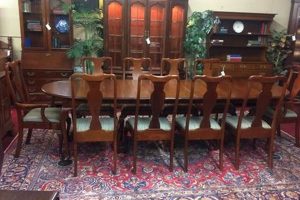
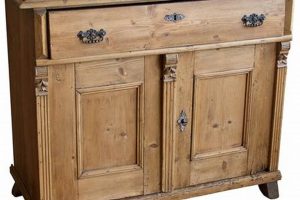
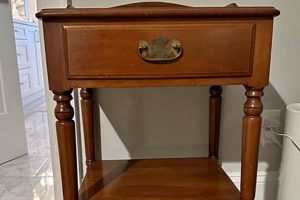
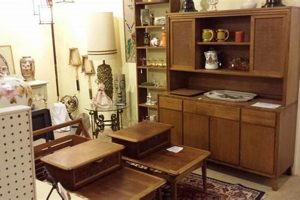
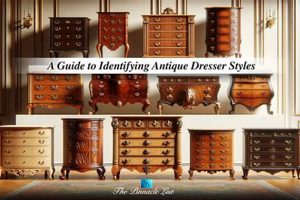
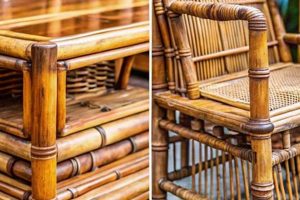
Items crafted by Hammary during earlier periods represent a segment of the furniture market characterized by unique design aesthetics and construction techniques reflective of past eras. These pieces, often acquired through estate sales, antique stores, or online marketplaces, can range from entire bedroom sets to individual accent tables. They are distinguished by specific style characteristics, such as particular wood finishes, hardware, and design motifs common during their production years. For instance, a specific line of end tables from the 1970s might showcase a distinct burl wood veneer and brass accents, exemplifying a particular design trend of that decade.
The enduring appeal of these furnishings stems from several factors. Firstly, the quality of materials and craftsmanship in older furniture can be significantly higher than that of some contemporary mass-produced items. Secondly, owning a piece from the past provides a tangible connection to history and adds a unique character to a home’s interior. These items often appreciate in value over time, making them potentially sound investments. Furthermore, selecting pre-owned items promotes sustainable practices by reducing the demand for new resources and minimizing environmental impact through decreased manufacturing and waste.
The following discussion will delve into aspects related to identifying authentic examples, assessing their condition, and exploring the stylistic evolution present within different production periods. Information regarding restoration techniques, common repair challenges, and strategies for integrating these pieces into contemporary interior design schemes will also be presented. This will aid in the appreciation and preservation of these unique home furnishings.
Guidance for Evaluating and Maintaining Vintage Hammary Furniture
The following guidelines provide practical advice for individuals seeking to acquire, preserve, or restore pieces manufactured by Hammary during its earlier years. Adherence to these suggestions can assist in making informed decisions and ensuring the longevity of these furnishings.
Tip 1: Authenticate the Piece. Verify the item’s origins through manufacturer’s marks or labels. Hammary typically included identifying marks, often located on the underside of tables or inside drawers. Compare these markings to documented examples to confirm authenticity.
Tip 2: Assess Structural Integrity. Examine joints, frames, and legs for signs of weakness or damage. Loose joints should be addressed by a professional restorer to prevent further deterioration. Consider the cost of potential repairs when evaluating the piece’s overall value.
Tip 3: Evaluate Finish Condition. Analyze the existing finish for signs of wear, such as scratches, discoloration, or chipping. While some wear is expected in older items, excessive damage may necessitate refinishing. If refinishing is considered, research appropriate techniques to maintain the piece’s historical value.
Tip 4: Inspect Upholstery (if applicable). For upholstered pieces, carefully examine the fabric for stains, tears, or insect damage. Consider the cost of reupholstering with period-appropriate materials if the existing fabric is significantly damaged.
Tip 5: Research Comparable Sales. Before making a purchase, research the prices of similar items sold at auction or through reputable antique dealers. This will provide a benchmark for determining a fair market value.
Tip 6: Prioritize Preservation. Once acquired, maintain the furniture by dusting regularly with a soft cloth and avoiding harsh cleaning products. Protect surfaces from direct sunlight and extreme temperature fluctuations to prevent damage.
These guidelines are designed to promote informed decision-making when dealing with furniture from Hammary’s historical production periods. By following these suggestions, individuals can enhance their appreciation of the item’s historical significance and preserve its value for years to come.
The subsequent sections will expand on specific aspects of these historical furnishings, providing a more detailed understanding of their craftsmanship and design elements.
1. Authenticity Verification

Authenticity verification is a critical component in assessing items manufactured by Hammary during its vintage production years. The presence of verifiable markings, stamps, or labels serves as primary evidence linking a furniture piece to the company. Absence of such identifying marks raises concerns about its provenance, potentially diminishing its value and historical significance. Discrepancies between purported design elements and documented Hammary styles from specific periods similarly cast doubt on authenticity. For example, a table claimed to be from the 1950s exhibiting design motifs characteristic of the 1970s would necessitate further investigation.
The implications of inadequate verification extend beyond monetary considerations. The structural integrity and material composition often correlate with the production standards of verifiable Hammary pieces from distinct eras. Without authentication, restorative efforts become more complex, as the appropriate materials and techniques may be uncertain. Consider the scenario of attempting to refinish a cabinet where the wood species remains unidentified. Selecting an incompatible stain or sealant could irreparably damage the piece, negating any perceived value gained from the restoration attempt.
Therefore, authentication procedures are indispensable in ensuring responsible acquisition and appropriate care. Verifying claims through comparative analysis against documented Hammary catalogs or expert appraisal provides a baseline for valuing the item and guiding subsequent preservation efforts. This rigorous process minimizes the risk of misrepresentation and safeguards the historical integrity of these furnishings. Moreover, it enables informed decisions regarding investment and stewardship, fostering a deeper appreciation for the craftmanship and design inherent in verifiable vintage Hammary furniture.
2. Design Characteristics

The design characteristics inherent in furnishings produced by Hammary during its vintage years provide critical insights into the aesthetic sensibilities and manufacturing trends of the periods in which they were created. Examining these elements is essential for authentication, valuation, and informed restoration efforts.
- Stylistic Period Influences
Furnishings from different eras reflect prevailing design trends. Pieces from the mid-century modern period may feature clean lines, minimalist forms, and the incorporation of materials like teak and walnut. Conversely, items from earlier decades may exhibit more ornate detailing, such as carved embellishments, cabriole legs, and the use of mahogany or cherry. Identifying the stylistic influences present in a specific piece helps to contextualize its place within design history and contributes to accurate appraisal.
- Material Selection and Application
The choice and application of materials significantly impact a piece’s design. For example, the use of specific veneers, such as burl wood or crotch mahogany, can define the visual character of a table or cabinet. Hardware choices, including drawer pulls and hinges, also contribute to the overall aesthetic. Understanding the typical materials employed by Hammary during different periods aids in determining authenticity and guiding appropriate restoration techniques. Replacing missing hardware with historically accurate reproductions, for example, preserves the original design intent.
- Form and Proportion
The overall form and proportion of a piece are fundamental design characteristics. A buffet from the Art Deco era might feature streamlined silhouettes and geometric shapes, while a Victorian-era dresser may exhibit more elaborate curves and asymmetrical arrangements. Analyzing the dimensions and relationships between different components of a piece provides clues about its intended function and stylistic period. Deviations from established forms can indicate alterations or reproduction pieces.
- Decorative Elements and Ornamentation
Decorative elements, such as carvings, inlays, and applied ornamentation, contribute significantly to the visual appeal of furnishings. The presence, style, and execution of these details offer insights into the craftsmanship and design sensibilities of the period. For example, hand-carved details are often associated with higher-quality pieces from earlier eras, while mass-produced ornamentation may indicate a later production date. Understanding the typical decorative motifs employed by Hammary during its vintage years assists in accurate identification and informed restoration.
By carefully considering these design characteristics, individuals can develop a more nuanced understanding of these historical furniture and more effectively evaluate and preserve examples of this manufacturer’s output. Recognizing the interplay between stylistic influences, material choices, form, and decorative elements enhances appreciation for the aesthetic and historical significance of these furnishings.
3. Construction Quality

Construction quality is a paramount factor in determining the value and longevity of vintage furnishings. With items produced by Hammary during earlier periods, construction quality directly influences structural integrity, resistance to wear, and overall durability. Superior joinery techniques, such as dovetail drawers or mortise-and-tenon joints, are indicative of meticulous craftsmanship and contribute significantly to the furniture’s ability to withstand the passage of time. Inferior construction, characterized by the use of staples or weak adhesives, compromises the structural integrity and diminishes the item’s lifespan. For example, a vintage Hammary dresser with solid wood construction and reinforced joints will typically exhibit greater stability and resist warping or cracking compared to a piece constructed from particleboard or low-quality plywood. Therefore, construction quality acts as a reliable gauge of the initial craftsmanship and influences the present-day condition.
The importance of evaluating construction extends to restoration efforts. Items exhibiting high-quality construction are often more amenable to repair and restoration, enabling preservation of their original design and value. Conversely, items with subpar construction may present significant challenges during restoration, potentially requiring extensive structural modifications or even rendering the piece irreparable. The presence of solid wood components, for example, allows for sanding, refinishing, and the repair of minor damages without compromising structural integrity. However, furniture constructed from veneers over particleboard is susceptible to irreparable damage if the veneer is chipped or delaminated. Consequently, a thorough assessment of construction quality informs decisions regarding investment in restoration and determines the feasibility of preserving the item’s historical value.
In summary, construction quality serves as a critical determinant of both the present condition and future potential of items created by Hammary during its vintage production years. Superior construction correlates with increased durability, enhanced restorability, and sustained value. Therefore, careful examination of joinery, materials, and structural integrity is essential for making informed decisions regarding acquisition, preservation, and restoration. A comprehensive understanding of construction techniques empowers individuals to appreciate the craftsmanship inherent in these furnishings and ensures responsible stewardship of these historical artifacts.
4. Material Composition

The selection and utilization of materials are fundamentally influential in defining the characteristics, durability, and restoration potential of items manufactured by Hammary during its earlier periods. An understanding of material composition is essential for accurate authentication and informed preservation efforts.
- Wood Species Identification
Different wood species exhibit distinct properties that influence structural integrity and aesthetic appeal. Hammary employed a variety of woods, including mahogany, walnut, cherry, oak, and maple, depending on the design style and intended price point. Mahogany, prized for its rich color and workability, was often used in higher-end pieces. Identifying the specific wood species is crucial for selecting appropriate cleaning and restoration products. Applying an oil-based finish to maple, for example, may yield different results than when applied to walnut due to variations in wood porosity and grain structure. Misidentification can lead to improper treatment and potential damage.
- Veneer Application Techniques
Veneer application played a significant role in creating decorative effects and optimizing material usage. Vintage Hammary furniture often incorporates veneers of exotic woods or intricate patterns applied to a substrate of less expensive material. Understanding the veneer application technique, such as hand-applied or machine-pressed, is crucial for proper repair. Delamination or bubbling of veneer requires specialized adhesives and techniques to ensure a durable and aesthetically pleasing result. Improper repair can result in further damage and diminished value.
- Hardware Materials and Finishes
Hardware elements, including drawer pulls, hinges, and knobs, contribute significantly to the overall design and functionality. Hammary utilized a variety of metals, such as brass, iron, and steel, often with specific finishes like antique brass or polished chrome. Identifying the original hardware material and finish is essential for maintaining the authenticity of the piece. Replacing missing or damaged hardware with historically accurate reproductions preserves the original aesthetic. Using incorrect hardware can detract from the item’s value and historical accuracy.
- Upholstery Fabrics and Fillings
For upholstered pieces, the choice of fabric and filling materials influences comfort, durability, and aesthetic appeal. Vintage Hammary furniture may feature fabrics such as velvet, brocade, or damask, often with natural fiber fillings like cotton or horsehair. Understanding the fabric composition and filling materials is essential for proper cleaning and reupholstery. Using inappropriate cleaning products can damage delicate fabrics, while replacing natural fiber fillings with synthetic materials can alter the feel and appearance of the piece.
By carefully analyzing the material composition, individuals can gain a deeper appreciation for the craftsmanship and design inherent in vintage Hammary furniture. Proper identification of materials enables informed decisions regarding cleaning, restoration, and preservation, ensuring the longevity and aesthetic integrity of these historical furnishings. This understanding also facilitates more accurate appraisal and valuation, enhancing the overall ownership experience.
5. Restoration Feasibility

The determination of restoration feasibility is a critical step in evaluating furnishings created by Hammary during its historical production periods. It assesses the practicality and viability of returning a damaged or deteriorated piece to a functional and aesthetically pleasing condition, considering both the technical challenges and economic constraints involved.
- Extent of Damage and Deterioration
The degree of damage significantly impacts restoration feasibility. Minor surface scratches or discoloration are generally easier and less costly to address compared to structural damage, such as broken legs, warped frames, or delaminated veneers. An item with extensive rot or insect infestation may present insurmountable challenges, rendering complete restoration impractical. Assessment of the damage severity is therefore the initial determinant of restoration viability for vintage Hammary furniture. An end table with a minor scratch on the surface is more easily restored than a dresser with severe water damage.
- Availability of Replacement Parts and Materials
Restoration often necessitates the replacement of missing or damaged components. The availability of historically accurate replacement parts or suitable substitutes significantly impacts the feasibility and cost of the project. Sourcing vintage hardware or matching specific wood veneers can be challenging and time-consuming. Reproduction hardware or custom-fabricated components may be required, adding to the overall expense. Without access to appropriate materials, achieving a historically accurate and aesthetically pleasing restoration of vintage Hammary furniture may be compromised.
- Skill Level and Expertise Required
Certain restoration tasks require specialized skills and expertise. Repairing intricate carvings, matching existing finishes, or reupholstering with period-appropriate fabrics demands a high level of craftsmanship. Attempting complex repairs without the necessary skills can result in further damage and diminished value. Engaging a qualified restoration professional is often necessary, but the associated labor costs must be factored into the overall feasibility assessment. A homeowner might be able to re-glue a loose joint, but repairing a severely damaged veneer requires professional expertise.
- Economic Considerations and Value Assessment
The cost of restoration must be weighed against the item’s potential value after restoration. If the cost of materials and labor exceeds the anticipated market value, restoration may not be economically feasible. A thorough appraisal of the piece’s historical significance, rarity, and aesthetic appeal is essential for making an informed decision. Investing in the restoration of a rare or highly desirable piece of Hammary furniture may be justified, while restoring a more common item with limited value may not be financially prudent. One must consider whether the investment of restoration will yield a piece worth more than the cost spent.
In conclusion, determining restoration feasibility for items produced by Hammary requires a comprehensive assessment of damage extent, material availability, skill requirements, and economic considerations. A realistic evaluation of these factors ensures informed decision-making and optimizes resource allocation, promoting responsible preservation of these historical furnishings. Each element is critical to successfully revitalizing a valuable piece of home furnishing, ensuring its future.
6. Market Valuation

Market valuation constitutes a critical aspect of assessing items manufactured by Hammary during its vintage production years. The interplay between supply, demand, condition, provenance, and aesthetic appeal directly influences the economic worth of these furnishings. Market valuation serves as a practical tool for both sellers and prospective buyers, enabling informed decisions regarding acquisition, sale, and insurance coverage. Understanding the factors that contribute to value fluctuations is essential for navigating the complexities of the secondary furniture market. For example, a meticulously preserved Hammary dining table from the Art Deco period, accompanied by documented provenance, commands a significantly higher price than a similar table exhibiting substantial wear or lacking verifiable origins. This discrepancy underscores the importance of comprehensive valuation assessment.
The practical significance of market valuation extends beyond mere transactional considerations. Accurate valuation informs responsible stewardship and preservation efforts. Knowledge of an item’s market value can influence decisions regarding restoration versus replacement. Investing in the professional restoration of a high-value piece becomes a more justifiable expenditure than attempting to salvage a low-value item. Furthermore, market valuation enables accurate insurance appraisals, protecting owners against financial losses in the event of damage or theft. Consider the case of a homeowner who undervalues their vintage Hammary bedroom set on their insurance policy; in the event of a fire, the insurance payout may be insufficient to cover the true replacement cost. Precise valuation mitigates this risk, ensuring adequate financial protection.
In conclusion, market valuation is inextricably linked to understanding items produced by Hammary during its vintage years. Fluctuations in value reflect shifts in consumer preferences, economic conditions, and the availability of comparable pieces. Accurately assessing market value necessitates considering condition, provenance, and stylistic trends. Understanding these dynamics empowers informed decision-making, promotes responsible stewardship, and mitigates financial risks. Navigating the vintage furniture market requires a nuanced understanding of market forces and the ability to accurately assess the economic worth of these tangible assets. The connection is a powerful decision making to buy vintage hammary furniture.
Frequently Asked Questions
The following questions address common inquiries regarding the identification, valuation, and preservation of furnishings produced by Hammary during its vintage years. These answers provide concise information to aid in informed decision-making.
Question 1: How can one ascertain the age of a specific piece of furniture produced by Hammary?
The age can often be determined by examining manufacturer’s markings, style characteristics, and construction techniques. Researching documented catalogs from specific periods can assist in correlating these elements with production timelines. Consulting with antique appraisers is recommended for definitive confirmation.
Question 2: What factors contribute to the determination of market value of such furniture?
Market value is influenced by a confluence of factors, including condition, rarity, provenance, aesthetic appeal, and current market demand. Pieces in excellent condition with verifiable historical documentation command higher prices. Comparable sales data provides a benchmark for valuation.
Question 3: Are there specific cleaning methods recommended for maintaining the finish on items manufactured by Hammary?
Gentle cleaning with a soft cloth and mild soap solution is generally advisable. Harsh chemicals and abrasive cleaners should be avoided, as they can damage the finish. Application of furniture polish specifically formulated for vintage pieces may enhance shine and protection.
Question 4: What are the common challenges associated with restoring furniture from this manufacturer?
Common challenges include matching existing finishes, repairing damaged veneers, sourcing historically accurate hardware, and addressing structural weaknesses. Engaging a qualified restoration professional with experience in vintage furniture is recommended for complex repairs.
Question 5: How does one protect items produced by Hammary from environmental damage?
Protection from direct sunlight, extreme temperature fluctuations, and excessive humidity is crucial. The use of furniture covers, climate control measures, and proper ventilation can mitigate environmental damage. Regular inspection for signs of insect infestation is also recommended.
Question 6: What are the key design characteristics that distinguish items manufactured by Hammary?
Design characteristics vary depending on the production period. Common features include specific wood species, hardware styles, leg designs, and decorative motifs. Researching documented examples from different eras is recommended for accurate identification and appreciation.
These answers provide a basic understanding of key considerations related to furniture manufactured by Hammary. Further research and consultation with experts is advised for specific inquiries.
The discussion now transitions to strategies for integrating these into contemporary interior designs.
Conclusion
The preceding exploration has elucidated various facets pertinent to understanding vintage Hammary furniture. This examination encompassed authentication methods, design characteristics, construction quality, material composition, restoration feasibility, and market valuation. Each element contributes to a holistic understanding of these historical furnishings and informs responsible decision-making regarding acquisition, preservation, and investment. Identifying authentic pieces, assessing structural integrity, and evaluating market value are critical steps in ensuring both the aesthetic and financial worth of these items.
Ultimately, the preservation of vintage Hammary furniture extends beyond mere ownership; it embodies a commitment to safeguarding tangible artifacts of design history. Continued research, meticulous care, and informed appraisal will ensure the legacy of these furnishings endures for future generations. Understanding and appreciating this rich history ensures responsible stewardship for these historical artifacts.