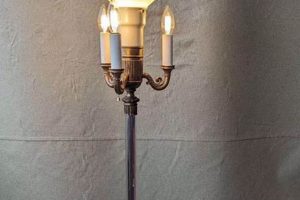
Elaborate lighting fixtures created from a specific type of Italian porcelain, often dating back several decades, are characterized by ornate details and meticulous craftsmanship. These items frequently feature delicate floral arrangements, cherubic figures, or pastoral scenes molded directly onto the porcelain base and shade. Their construction embodies a tradition of artistry extending back to the Capodimonte factory in Naples, a region renowned for its distinctive approach to ceramic production. A physical example could be a table lamp depicting a meticulously rendered bouquet of roses, exhibiting the characteristic raised detailing and subtle color palette associated with this particular porcelain heritage.
These pieces offer significant aesthetic value, serving as tangible connections to a rich artistic legacy. Their presence can elevate the ambiance of interior spaces, introducing an element of historical refinement and handcrafted beauty. They represent not merely functional illumination but also a potential investment, as examples from reputable manufacturers and specific periods can appreciate in value over time. Their historical context further enhances their appeal, grounding them in the story of European artistry and design innovation.
The following sections will delve into specific aspects such as identification techniques, common design motifs, factors influencing valuation, and guidance on proper care and preservation.
Essential Considerations
The following considerations are crucial when evaluating such decorative lighting fixtures. Proper assessment ensures informed decisions regarding acquisition, restoration, and long-term preservation.
Tip 1: Verification of Authenticity: Scrutinize the piece for distinguishing marks, often located on the base or underside. Genuine examples frequently bear the ‘N’ mark topped with a crown, though variations exist depending on the manufacturer and era. Consultation with a qualified expert is recommended for definitive authentication.
Tip 2: Detailed Examination for Damage: Conduct a thorough inspection for cracks, chips, or repairs. Subtle imperfections can significantly impact the item’s value and structural integrity. Use a magnifying glass to identify hairline fractures that may not be readily visible.
Tip 3: Assessment of Porcelain Quality: Evaluate the texture, translucency, and overall finish of the porcelain. Authentic specimens typically exhibit a smooth, refined surface and a characteristic luminosity. Uneven coloration or a grainy texture may indicate lower-quality materials or subsequent alterations.
Tip 4: Evaluation of Decorative Elements: Pay close attention to the intricacy and condition of applied floral arrangements, figures, or scenes. Damaged or missing decorative elements can detract from the piece’s aesthetic appeal and value. Compare the details with documented examples of similar designs.
Tip 5: Confirmation of Electrical Components’ Integrity: Ensure all wiring, sockets, and switches are in safe and functional condition. Faulty electrical components pose a potential fire hazard and may necessitate professional rewiring. Prioritize safety during inspection and usage.
Tip 6: Research Provenance and History: Investigate the item’s known history and previous ownership, if available. Provenance can significantly enhance its value and historical significance. Reputable dealers typically provide documentation to support claims of authenticity and origin.
Sound evaluation involves meticulous attention to detail, historical awareness, and, when necessary, professional guidance. This approach will facilitate informed choices and safeguard the long-term value of these decorative assets.
The subsequent sections will explore techniques for appropriate maintenance and display, ensuring these pieces remain enduring symbols of artistic heritage.
1. Origin Authentication

The authentication of origin constitutes a foundational element in appraising these lighting objects. The term “Capodimonte” denotes a specific style and manufacturing tradition rooted in Naples, Italy. Falsification or misattribution directly impacts valuation and historical significance. Identifying marks, often subtle and varying across different production periods, serve as primary indicators. For example, genuine pieces from the original Royal Factory (1743-1759) bear distinct markings, vastly differing from those of later private manufacturers adopting the Capodimonte designation. Failure to accurately discern these marks results in misrepresentation of the piece, leading to inflated or deflated values and inaccurate placement within art historical contexts.
The process of origin authentication necessitates a multi-faceted approach. Visual inspection alone proves insufficient. Expert knowledge of historical markings, production techniques, and characteristic design elements is crucial. Microscopic analysis of the porcelain body and glaze can reveal telltale signs of authenticity, differentiating genuine Neapolitan porcelain from imitations produced elsewhere. Furthermore, comparative analysis against documented examples from reputable museum collections and auction records provides a valuable cross-referencing tool. Provenance research, tracing the ownership history of an object, offers supplementary evidence supporting claims of origin and authenticity. Consider the implications of a piece sold without proper verification, possibly depriving the buyer of its true value and historical context.
In summary, accurate origin authentication is not merely a perfunctory step but an integral component of assessing the value, historical relevance, and cultural significance of these lighting fixtures. Challenges remain, owing to the proliferation of reproductions and the intricacies of identifying historical markings. The application of rigorous methodologies, encompassing expert consultation and scientific analysis, is paramount in safeguarding the integrity of the market and preserving the historical legacy embodied within authentic pieces.
2. Porcelain Quality

Porcelain quality directly influences the aesthetic appeal, structural integrity, and ultimate value of lighting artifacts. High-quality materials and firing techniques contribute to a refined appearance and durability, while inferior porcelain diminishes these attributes. The specific characteristics of the porcelain employed in these fixtures reflect the skill of the artisans and the technological capabilities of the era in which they were produced.
- Translucency and Purity
The degree of translucency in the porcelain body indicates the purity and refinement of the clay mixture. High-quality porcelain allows light to pass through, creating a luminous effect. Conversely, opaque porcelain suggests the presence of impurities or improper firing. In examples, a highly translucent shade will emit a soft, diffused light, accentuating the delicate details of the molded decoration, while an opaque shade will appear dull and lifeless. This visual difference directly affects the perceived value and desirability.
- Surface Texture and Finish
The surface texture and finish provide further clues about the quality of the porcelain. A smooth, even surface free from imperfections indicates careful preparation and firing. Rough or uneven surfaces, pinholes, or crazing (fine cracks in the glaze) suggest flaws in the manufacturing process or age-related degradation. Close inspection of a piece reveals whether the artist took care to achieve the surface finish as a matter of artistic pride, or whether time has had its toll.
- Color Consistency and Vibrancy
The consistency and vibrancy of the painted or glazed colors are critical aspects of porcelain quality. High-quality pigments and careful application techniques result in rich, even coloration that remains stable over time. Faded, uneven, or poorly applied colors detract from the piece’s aesthetic appeal and indicate inferior materials or workmanship. The delicate pinks of roses, for example, must be uniform across the whole rose, with no streaks or fading.
- Durability and Resistance to Damage
The durability and resistance to damage are essential factors in assessing the long-term value of these fixtures. High-fired porcelain is less susceptible to chipping, cracking, or staining than low-fired alternatives. Examine the piece carefully for signs of previous repairs, which may indicate inherent weaknesses in the porcelain body. A hairline crack not noticed might spread into a much larger defect, greatly diminishing the objects worth.
Consequently, evaluation involves careful scrutiny of translucency, surface texture, color consistency, and durability. These qualities directly impact the visual appeal, longevity, and monetary worth of these vintage illuminants, solidifying the integral link between material quality and artifact value. This highlights why “Porcelain Quality” is an important term to use when searching for and finding “vintage capodimonte porcelain lamps”.
3. Design Motifs

The thematic elements incorporated into these vintage lighting fixtures constitute a defining characteristic, reflecting both the artistic trends of the period and the technical capabilities of the porcelain artisans. These motifs, ranging from classical allegories to pastoral scenes, provide insight into the cultural values and aesthetic preferences prevalent during their production.
- Floral Embellishments
Floral motifs are pervasive, often featuring meticulously rendered roses, lilies, and other botanical specimens. These floral arrangements, frequently executed in high relief, symbolize beauty, abundance, and the transience of life. Actual instances reveal intricate details, such as individual petal textures and subtle color gradations, indicative of the artisans’ skill. The presence and condition of these floral embellishments directly impact the overall value and desirability of the fixture, as missing or damaged petals detract significantly from the aesthetic appeal. For example, a single perfectly formed rose can dramatically enhance the visual impact and market worth.
- Figural Representations
Figural motifs typically depict cherubs, mythological characters, or idealized pastoral figures. These representations serve as allegorical expressions of love, innocence, or idyllic rural life. The level of detail in the sculpting and painting of these figures reflects the artisan’s mastery of form and color. A figure with a missing hand, for instance, lessens the beauty and worth. Similarly, carefully painted examples can command higher prices than those with faded or poorly applied colors.
- Pastoral Scenes
Pastoral scenes portray idealized depictions of rural life, often featuring shepherds, farm animals, and bucolic landscapes. These scenes evoke a sense of tranquility and harmony with nature, reflecting the romanticized view of rural existence prevalent during certain historical periods. On these pieces, tiny figures and small farm animals are typically present, so if one is missing that would alter the overall value.
- Rococo and Neoclassical Influences
Stylistic influences from the Rococo and Neoclassical periods are discernible in the forms and decorative elements of many examples. Rococo influences are evident in the asymmetrical designs, elaborate ornamentation, and playful use of curves. Neoclassical influences manifest in the more restrained forms, geometric patterns, and classical motifs. Rococo fixtures are ornate, while Neoclassical fixtures are more toned down, and both are quite valuable based on the period, style, and condition of the piece.
These design elements are not merely decorative flourishes; they constitute an integral aspect of the historical and artistic significance of these objects. By examining these thematic elements, one gains a deeper appreciation for the craftsmanship, cultural context, and enduring appeal of the category.
4. Craftsmanship Intricacy
The intricate craftsmanship inherent in vintage porcelain lighting fixtures is a defining characteristic that directly influences their value, historical significance, and aesthetic appeal. This intricacy is not merely decorative; it is a testament to the skill, patience, and artistic vision of the artisans who created these pieces. The level of detail present in the molding, painting, and assembly of these objects serves as a primary indicator of their authenticity and quality. For example, the creation of realistic floral elements, with each petal individually formed and meticulously painted, demonstrates a level of dedication rarely found in mass-produced items. This devotion to detail is not just a stylistic choice but a deliberate effort to elevate a functional object into a work of art. One must understand that this is an integral element of these lamps, and without it, the lamps are not authentic.
Understanding the importance of craftsmanship intricacy allows collectors and enthusiasts to discern genuine examples from imitations or later reproductions. A close examination of the porcelain reveals subtle details that distinguish handmade pieces from those produced using less sophisticated methods. The application of glazes, the precision of hand-painted decorations, and the seamless integration of various components all contribute to the overall impression of quality. Furthermore, the presence of minor imperfections, such as slight variations in color or texture, can be indicative of handmade craftsmanship, adding to the item’s charm and historical value. A perfectly formed lamp should be questioned, while a slightly imperfect example with all other indicators present should be praised for its uniqueness and value.
In conclusion, the craftsmanship intricacy observed in vintage lighting fixtures is inextricably linked to their historical and aesthetic worth. Recognizing and appreciating this intricacy is crucial for anyone seeking to collect, restore, or simply admire these artifacts. The attention to detail elevates these functional objects into works of art, embodying the artistic spirit and technical skill of past generations. Challenges in discerning genuine examples from reproductions underscore the need for informed assessment and expert consultation, ensuring that the legacy of these finely crafted items is preserved for future appreciation.
5. Historical Era

The historical era fundamentally shapes the characteristics, styles, and values of porcelain lighting fixtures. These objects are not created in a vacuum; they reflect the artistic sensibilities, technological advancements, and socio-economic conditions of their time. An understanding of the period during which a particular fixture was produced provides crucial context for evaluating its design, materials, and construction techniques. For example, a lamp produced during the mid-20th century might exhibit design elements influenced by post-war modernism, while an earlier piece could showcase the ornate aesthetics of the Victorian era. The historical context influences the value and authenticity of any item deemed as ‘vintage’.
The connection between the historical era and these objects extends beyond mere stylistic considerations. The availability of materials, the prevailing manufacturing processes, and the intended market all contribute to the distinctive features of fixtures from different periods. A piece crafted during a period of economic prosperity might utilize more expensive materials and exhibit a higher degree of craftsmanship than one made during a time of economic hardship. The historical record also aids in authenticating pieces. Lamp wiring, lamp shade quality, and porcelain marks change over time; each contributing its own clue to the overall authenticity of the lamp.
In summary, the historical era serves as an indispensable framework for understanding and appreciating lighting fixtures. By considering the period in which these objects were created, collectors, restorers, and enthusiasts gain a deeper understanding of their artistic significance, material composition, and cultural context. The inherent challenge lies in accurately attributing production dates and verifying historical claims, often requiring expertise in art history, manufacturing techniques, and archival research. This meticulous approach ensures that the historical legacy embodied within these pieces is preserved and accurately interpreted.
6. Functional Condition

Functional condition significantly impacts the value and desirability of porcelain lighting fixtures. The term refers to the operational status of the electrical components and the structural integrity of the fixture. A lamp, regardless of its aesthetic appeal or historical significance, possesses diminished worth if it cannot safely and reliably fulfill its primary purpose: illumination. Cause and effect are clearly linked. Deteriorated wiring, a faulty switch, or a cracked socket directly impede functionality, transforming the piece from a usable antique into a mere decorative object. Functional integrity is an essential component, differentiating a collectible item from a non-functional display piece. Consider two identical lamps; one with original but professionally restored wiring, and the other with frayed, hazardous wiring. The former commands a premium, while the latter may require extensive, costly restoration, diminishing its appeal to potential buyers. Examples of functional condition are lamps wired with cloth-wrapped cords, lamps with corroded sockets, and lamps with damaged shades; each affecting the functionality and value of the lamp.
The practical significance of understanding functional condition extends beyond monetary considerations. Safe operation is paramount. Old wiring can pose a fire hazard, endangering the owner and property. Restoration, when necessary, must be undertaken by qualified professionals who understand the nuances of vintage electrical systems. Attempting DIY repairs can compromise the item’s authenticity and potentially create safety risks. Knowledge of appropriate bulb wattage and socket compatibility is also crucial for preventing damage to the fixture and ensuring optimal performance. For instance, using an oversized bulb in an antique socket can overheat the wiring and damage the porcelain base, causing irreversible harm. Understanding the significance of Functional Condition ensures safe, long-term operation.
Assessing functional condition requires a careful examination of all electrical components, including wiring, sockets, switches, and plugs. Look for signs of wear, corrosion, or damage. Testing the fixture with appropriate safety measures is also advisable, though caution is essential to avoid electric shock or further damage. In conclusion, functional condition is inextricably linked to the value, safety, and long-term viability of these decorative lighting objects. Challenges in assessing this element often necessitate professional inspection, ensuring both aesthetic preservation and safe operational performance.
Frequently Asked Questions
This section addresses common inquiries regarding the identification, valuation, and care of these decorative lighting fixtures, providing informative answers based on established knowledge and best practices.
Question 1: How does one differentiate a genuine Capodimonte porcelain lamp from a reproduction?
Authentic pieces often exhibit specific markings, such as the crowned “N” mark, though variations exist across different production periods. Close examination of porcelain quality, design intricacy, and historical provenance is also crucial. Consultation with a qualified expert is recommended for definitive authentication.
Question 2: What factors contribute to the valuation of a vintage Capodimonte porcelain lamp?
Valuation is influenced by several factors, including the piece’s age, rarity, condition, maker’s mark, and the intricacy of its design. Lamps with exceptional craftsmanship, documented provenance, and minimal damage typically command higher prices.
Question 3: How should a vintage Capodimonte porcelain lamp be properly cleaned and maintained?
Gentle cleaning with a soft, damp cloth is recommended. Avoid abrasive cleaners or harsh chemicals that could damage the porcelain or painted surfaces. Professional cleaning may be necessary for heavily soiled or delicate pieces.
Question 4: What are the common design motifs found in these lighting fixtures?
Common motifs include floral arrangements (roses, lilies), figural representations (cherubs, mythological figures), and pastoral scenes. These designs reflect the artistic and cultural trends prevalent during the lamp’s production period.
Question 5: Is it safe to use a vintage Capodimonte porcelain lamp with its original wiring?
It is strongly recommended to have the wiring inspected and, if necessary, replaced by a qualified electrician. Original wiring may be deteriorated and pose a fire hazard. Prioritize safety by ensuring all electrical components are in good working condition.
Question 6: Where can one find reputable sources for purchasing or appraising these items?
Reputable antique dealers, auction houses specializing in fine art and antiques, and qualified appraisers with expertise in porcelain are reliable resources. Thorough research and due diligence are essential before making any purchase or valuation decisions.
Proper assessment and maintenance are crucial for preserving the aesthetic and historical value of these artifacts. Seek expert guidance when necessary to ensure informed decisions and safeguard the long-term condition of these decorative lighting fixtures.
The following section will provide resources for further research and exploration of this particular decorative art form.
Conclusion
The preceding sections have illuminated various facets relevant to the appreciation and assessment of “vintage capodimonte porcelain lamps.” These fixtures represent a confluence of artistic skill, historical context, and material value, demanding careful consideration by collectors, restorers, and enthusiasts alike. Identification techniques, factors influencing valuation, and appropriate care procedures each contribute to the preservation of these objects’ aesthetic and historical integrity.
Continued exploration and rigorous examination remain essential for safeguarding the legacy of these ornate light sources. The meticulous documentation, informed preservation, and discerning appreciation of “vintage capodimonte porcelain lamps” ensure their enduring presence as tangible links to a rich artistic heritage.