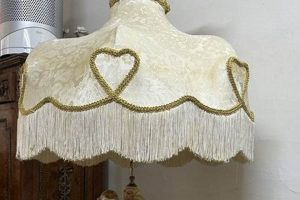
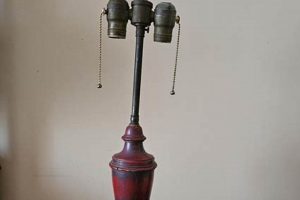
Structures providing support and form for fabric or other materials used to diffuse light emanating from a lamp. These frameworks, often constructed from metal wire or occasionally wood, represent a specific design aesthetic from a past era. As an example, consider a wire armature from the Art Deco period, designed with geometric precision to accommodate silk or parchment.
These supports are important artifacts reflecting trends in interior design and manufacturing techniques. Their preservation offers insights into historical preferences and technological capabilities. Furthermore, repurposing or restoring these items can provide a sustainable alternative to purchasing newly manufactured lighting components, reducing environmental impact while adding unique character to a space.
The following sections will delve into the identification, restoration, and creative reuse of these historical lighting elements. Guidance will be provided on assessing their condition, selecting appropriate materials for repair, and incorporating them into contemporary design schemes.
The acquisition and utilization of these items require careful consideration to ensure both aesthetic appeal and structural integrity. The following advice aims to guide individuals in making informed decisions regarding their selection, restoration, and integration into lighting projects.
Tip 1: Assess Structural Integrity. Prior to purchase or restoration, meticulously examine for rust, corrosion, or warping. These flaws can compromise the overall stability and safety of the assembled lamp.
Tip 2: Identify the Original Style. Research the design period to which it belongs. This knowledge informs appropriate fabric choices and restoration techniques, preserving its historical authenticity.
Tip 3: Measure Accurately. Obtain precise dimensions to ensure compatibility with lamp bases and desired light dispersion. Inaccurate measurements can lead to disproportionate and functionally flawed results.
Tip 4: Consider Fabric Compatibility. Select materials that complement the framework’s design and era. Silk, linen, and parchment are historically accurate choices for many.
Tip 5: Prioritize Safety. When rewiring or adapting a vintage lighting fixture, adhere to current electrical safety standards. Consult with a qualified electrician to ensure proper installation and grounding.
Tip 6: Document the Restoration Process. Maintain a detailed record of the steps taken during restoration, including materials used and techniques employed. This documentation is valuable for future maintenance and historical reference.
Tip 7: Source Replacements Carefully. When original components are missing or damaged, seek out replacements that closely match the original design and materials. Authenticity contributes significantly to the value and historical significance.
These guidelines emphasize the importance of thorough evaluation, informed decision-making, and adherence to safety protocols. By considering these factors, individuals can successfully incorporate antique lighting elements into their environments.
The subsequent section will address creative applications and unconventional uses of antique lighting fixture supports, demonstrating their versatility beyond traditional lighting applications.
1. Material Composition

The inherent characteristics of a vintage lighting fixture support are intrinsically linked to its material composition. The choice of materialtypically metal like iron, brass, or copperdirectly influenced its durability, aesthetic appeal, and susceptibility to environmental degradation. For instance, a frame constructed from wrought iron, common in early 20th-century designs, offered robust strength but was prone to rust if not properly maintained. The presence of corrosion significantly impacts the structural integrity and visual quality, necessitating specialized restoration techniques. Alternatively, brass frames, prevalent in more ornate designs, exhibited greater resistance to corrosion but were susceptible to bending or denting with improper handling. The original material thus dictated the lifespan and preservation requirements of these items.
The material also dictated manufacturing processes and design possibilities. The malleability of brass, for example, allowed for intricate detailing and curvilinear forms, enabling the creation of elaborate Victorian-era supports. The rigidity of iron, on the other hand, often resulted in simpler, more geometric designs characteristic of the Arts and Crafts movement. Understanding the properties of the original material is essential for accurate restoration and appropriate fabric selection. Using a modern, heavy fabric on a delicate brass frame, for instance, could cause stress and potential damage. Similarly, employing abrasive cleaning methods on a plated finish could remove the protective layer, accelerating corrosion.
In conclusion, the material composition of antique lighting fixture supports serves as a critical identifier of its age, style, and necessary preservation methods. Recognising these material properties impacts restoration and long-term care. Challenges associated with restoring materials include locating appropriate replacement parts or replicating specialized finishes. The frames composition is not merely a physical attribute, but a key to its history and continued functionality.
2. Construction Techniques

Examination of construction techniques employed in crafting vintage lamp shade frameworks reveals significant insights into the manufacturing capabilities, design aesthetics, and economic conditions of past eras. Methods of assembly, materials joining processes, and decorative detailing contribute to understanding the object’s provenance and inherent value.
- Wire Forming and Shaping
The manipulation of metal wire into desired shapes constituted a fundamental construction technique. Bending, looping, and shaping were achieved through manual labor or rudimentary machinery. Examples include the formation of circular or geometric outlines and the creation of intricate support structures within the frame. The precision and complexity of wire forming reflected the skill of the artisan and the intended design aesthetic.
- Soldering and Brazing
Joining metal components relied heavily on soldering and brazing. These techniques involved using a filler metal with a lower melting point than the base metals to create a strong bond. The quality of the solder joints directly impacted the structural integrity of the framework. Visible solder marks or poorly executed joints indicated lower quality craftsmanship or subsequent repairs.
- Welding
In later periods, welding techniques became more prevalent. Welding offered a stronger and more seamless join compared to soldering or brazing. The presence of weld lines indicates a more modern manufacturing process. Different welding methods, such as gas welding or electric arc welding, resulted in varying weld appearances and strengths.
- Surface Finishing
The application of surface finishes, such as plating, painting, or lacquering, served both decorative and protective purposes. Plating with materials like nickel or chrome provided corrosion resistance and a polished appearance. Painted finishes offered a wider range of color options but were susceptible to chipping or fading over time. The type and condition of the surface finish contribute to the overall aesthetic and preservation status.
These construction techniques, individually and collectively, provide valuable information about the framework’s origin, quality, and potential restoration needs. Careful analysis of these elements enables a more informed assessment of its historical significance and suitability for integration into contemporary lighting projects.
3. Design Aesthetics

Design aesthetics significantly influence the form and appeal of antique lighting fixture supports. Their styles, reflecting distinct historical periods, dictated materials, shapes, and decorative elements. Understanding these aesthetic principles is crucial for restoration and integrating these items into contemporary settings.
- Art Deco Geometry
The Art Deco era (1920s-1930s) emphasized geometric shapes and streamlined forms. Frameworks from this period often feature stepped designs, sunburst motifs, and the use of materials like chrome and Bakelite. For example, tiered, conical forms with repetitive angular patterns are characteristic. This aesthetic reflected the era’s fascination with modernity and industrial progress.
- Victorian Ornamentation
Victorian-era (1837-1901) aesthetics favored elaborate ornamentation and romantic motifs. Frameworks from this time frequently incorporate floral patterns, scrollwork, and intricate wire detailing. The use of materials like brass and velvet added to the opulent aesthetic. A common example is a fringed support with multiple layers of decorative fabric and beaded embellishments. This reflected a desire for luxury and display.
- Arts and Crafts Simplicity
The Arts and Crafts movement (late 19th-early 20th century) championed handcrafted items and natural materials. Frameworks from this period are characterized by simple, functional designs with minimal ornamentation. Materials like copper and linen were frequently used. A typical example might be a plain, conical support with a hand-hammered copper frame and a natural linen fabric. This reflected the movement’s rejection of mass production and its emphasis on quality and craftsmanship.
- Mid-Century Modern Minimalism
Mid-Century Modern designs (1940s-1960s) focused on clean lines, organic shapes, and the use of new materials like plastic and fiberglass. Frameworks from this period often feature simple, geometric forms and a lack of excessive ornamentation. Examples include simple cylindrical or drum-shaped supports with minimal detailing. This design aesthetic reflected a desire for functionality and a forward-looking perspective.
These diverse aesthetic styles exemplify the range of designs found in vintage lighting fixture supports. By identifying the aesthetic principles of a particular framework, individuals can make informed decisions about its restoration, fabric selection, and integration into a broader design scheme. These decisions will help showcase unique character.
4. Preservation Condition
The existing condition of a vintage lamp shade framework directly dictates its usability, restoration requirements, and ultimate value. It represents a cumulative effect of environmental factors, past usage, and previous repair attempts, all of which influence current integrity and visual appeal.
- Structural Integrity
Structural integrity refers to the framework’s ability to withstand stress and maintain its shape. Indicators of compromised integrity include bent wires, broken joints, and corrosion-weakened materials. A framework with significant structural damage may require extensive repair or reinforcement before it can be safely used. An example is a wire support with rust that has compromised its ability to hold fabric tautly. The implication is higher restoration costs and potential loss of original form.
- Surface Finish
The original surface finish, such as plating, paint, or lacquer, plays a crucial role in both aesthetics and protection against corrosion. A degraded surface finish may exhibit flaking, discoloration, or rust spots. Preserving the original finish, where possible, is highly desirable but often requires delicate cleaning and conservation techniques. A silver-plated surface with significant tarnish impacts visual appeal, requiring specialized cleaning to avoid damage.
- Originality of Components
The presence of original components significantly enhances the historical value and authenticity. The replacement of original parts with modern substitutes detracts from its integrity. Identifying original solder joints, hardware, and decorative elements is essential for assessing overall condition. An example is a frame with mismatched finials or replacement wiring, which decreases its collector’s value.
- Evidence of Past Repairs
Previous repair attempts, whether successful or unsuccessful, leave traces that provide insights into its history. Poorly executed repairs can cause further damage or compromise the structural integrity. Evaluating the quality of past repairs is important for determining the best course of action. A framework with sloppy solder repairs or inappropriate adhesives necessitates professional intervention.
Assessing the preservation condition is a vital initial step in handling vintage lighting fixture frames. This assessment informs restoration strategies, determines feasibility of use, and ensures the long-term preservation of these historical artifacts.
5. Era Identification

Era identification of these items serves as a crucial first step in understanding their historical context, design influences, and appropriate restoration techniques. Determining the period of origin informs decisions regarding material selection, repair methods, and overall conservation strategies.
- Stylistic Characteristics
Each era possesses distinct stylistic characteristics evident in the shape, ornamentation, and overall design. For example, Art Deco frameworks often feature geometric patterns and streamlined forms, while Victorian-era pieces exhibit elaborate floral motifs and intricate wirework. Recognizing these stylistic traits allows for accurate categorization and appropriate restoration. Misidentifying the era can lead to incongruous repairs that diminish historical value. An Art Deco frame repaired with Victorian-era ornamentation will reduce its historical significance.
- Material Usage
The types of materials used in construction varied across different historical periods. Early 20th-century frames commonly utilized iron and brass, while later periods introduced materials like chrome and plastic. Identifying the original materials is essential for sourcing compatible replacements during restoration. Substituting modern materials for historical ones can compromise the authenticity and aesthetic integrity. Using plastic components on a frame originally constructed from brass would be inappropriate.
- Manufacturing Techniques
Manufacturing techniques evolved significantly over time, influencing the construction and detailing of frameworks. Hand-crafted elements are indicative of earlier periods, while mass-produced components suggest later origins. Recognizing the manufacturing process informs appropriate repair methods. Attempting to replicate hand-crafted details using modern mass-production techniques will prove difficult. Replicating details that are easily done by machines are cost savings.
- Hardware and Fasteners
The type of hardware and fasteners used in assembly provides clues about the era of origin. Early frameworks often employed simple rivets or hand-soldered joints, while later models utilized screws, bolts, or welding. Examining the hardware can help narrow down the timeframe of production. Replacing original hardware with modern substitutes detracts from the historical authenticity. The impact is to maintain the right appearance for a piece.
Understanding these facets of era identification enables informed decisions regarding the preservation and utilization of antique lighting fixture supports. Accurate categorization enhances appreciation for the historical context and ensures appropriate restoration practices, prolonging the life and value of these artifacts.
Frequently Asked Questions
This section addresses common inquiries regarding the identification, restoration, and utilization of antique lighting fixture supports. The information aims to clarify misconceptions and provide guidance for collectors and enthusiasts.
Question 1: How can the age of a vintage lamp shade frame be determined?
Age determination involves evaluating stylistic elements, construction techniques, and material composition. Stylistic features characteristic of specific eras, such as Art Deco geometry or Victorian ornamentation, provide initial clues. Examining the type of metal used, the presence of hand-crafted details versus mass-produced components, and the type of fasteners employed can further refine the assessment.
Question 2: What are the common issues encountered when restoring these frameworks?
Common issues include rust or corrosion damage, bent or broken wires, and deteriorated surface finishes. Previous repair attempts using inappropriate materials or techniques can also complicate the restoration process. Identifying the extent of the damage and selecting appropriate conservation methods is crucial for successful restoration.
Question 3: Are replacement parts available for damaged frameworks?
Sourcing authentic replacement parts can be challenging. Specialized antique lighting suppliers or salvage yards may offer components that closely match the originals. Reproduction parts are also available, but their use can diminish the historical value of the framework. Careful consideration should be given to the authenticity and compatibility of replacement parts.
Question 4: Is it possible to rewire a vintage lamp with an original frame safely?
Rewiring a vintage lamp requires careful attention to electrical safety standards. It is advisable to consult a qualified electrician to ensure proper grounding and insulation. Replacing old wiring with modern components is essential to prevent electrical hazards. Adhering to current safety codes is paramount.
Question 5: What types of fabric are appropriate for use with vintage lamp shade frames?
The choice of fabric depends on the style and era of the framework. Historically accurate options include silk, linen, and parchment. The weight and texture of the fabric should be compatible with the structural integrity of the support. Using a fabric that is too heavy or stiff can cause damage to the framework.
Question 6: How can these structures be cleaned without causing damage?
Cleaning requires delicate techniques to avoid damaging the original finish or materials. Mild soap and water can be used for general cleaning, but abrasive cleaners should be avoided. Specialized metal polishes are available for restoring the shine of brass or silver-plated frames. Testing cleaning products on an inconspicuous area first is always recommended.
In summary, careful evaluation, informed restoration techniques, and adherence to safety standards are essential for preserving and utilizing antique lighting fixture supports. Recognizing the historical context and material properties ensures their continued functionality and aesthetic value.
The next section will explore unconventional applications and creative uses of vintage lighting fixture supports beyond traditional lighting.
Conclusion
This exploration has detailed the multifaceted nature of vintage lamp shade frames, emphasizing their historical significance, construction methods, design aesthetics, and preservation requirements. Understanding these components allows for informed restoration and integration into modern settings, preserving artifacts while adapting them for contemporary use.
The continued appreciation and responsible handling of vintage lamp shade frames will ensure the survival of these tangible remnants of design history. Their enduring value lies not only in their functionality but also in their ability to connect present generations with the craftsmanship and artistic sensibilities of the past. Preservation efforts safeguard a valuable cultural heritage.