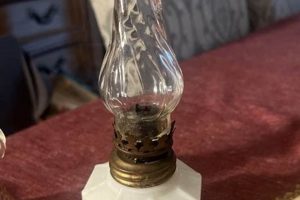
Illuminating accents from prior eras, these delicate light sources combine diminutive size with aesthetic appeal. Often crafted from pressed glass, porcelain, or metal, such pieces served as gentle nightlights or decorative elements in homes of the past, employing small candles or oil lamps to produce a soft, diffused glow.
The enduring attraction stems from their embodiment of bygone elegance and craftsmanship. These historical items offer a tangible connection to earlier periods, serving not only as functional objects but also as collectible artifacts that enhance interior design schemes. The subtle illumination they provided contributed to an atmosphere of intimacy and serenity, qualities still valued today.
The following sections will delve into the identifying characteristics, historical evolution, and preservation of these charming relics, providing a detailed overview for collectors and enthusiasts seeking to understand their significance and value.
Guidance on Acquiring Antique Light Fixtures
Careful consideration is essential when acquiring these delicate historical objects. Attention to detail and a thorough understanding of their characteristics can ensure a worthwhile investment and the preservation of these charming relics.
Tip 1: Authenticate Construction Materials: Verify the composition of the shade and base. Common materials include pressed glass, porcelain, and brass. The presence of incorrect or modern materials may indicate a reproduction.
Tip 2: Examine for Maker’s Marks: Check the base or shade for identifying marks from manufacturers such as Clarke’s or Fenton. The presence of a clear, legible mark significantly increases value.
Tip 3: Assess the Shades Condition: Inspect the glass or porcelain shade for cracks, chips, or discoloration. Even minor damage can detract from the items overall worth and integrity.
Tip 4: Evaluate the Base’s Stability: Ensure the base provides adequate support for the shade. An unstable base presents a safety hazard and diminishes the piece’s functionality.
Tip 5: Research Historical Context: Understand the specific period and style of the fixture. Knowledge of its origin enhances appreciation and aids in accurate valuation.
Tip 6: Consider Original Components: Determine whether the fixture retains its original burner or candle holder. Originality significantly impacts the piece’s collectible value.
Tip 7: Seek Expert Consultation: When in doubt, consult with an antiques specialist experienced in evaluating glass and lighting. Professional guidance ensures informed purchasing decisions.
By following these guidelines, collectors and enthusiasts can confidently acquire authentic and well-preserved pieces. Careful examination and research are crucial for securing valuable additions to any collection.
The subsequent sections will explore the proper care and display of these historical light sources, ensuring their longevity and continued enjoyment.
1. Authenticity verification

The rigorous process of authenticity verification is paramount when acquiring antique light sources. Accurate identification ensures that a piece is genuine, reflecting its true historical value and protecting collectors from misrepresented items. This validation extends beyond mere aesthetic judgment, involving detailed examination and historical research.
- Material Analysis
Material analysis is fundamental to confirming the age and origin of a piece. The presence of specific types of glass, such as pressed glass with characteristic seams, or the use of specific metals like brass or Britannia metal, can indicate the era of manufacture. Modern reproductions often utilize synthetic materials or altered metal compositions, which are easily detectable through visual inspection and, if necessary, spectroscopic analysis.
- Maker’s Mark Identification
Established manufacturers frequently marked their products with distinctive logos, stamps, or signatures. Examples include Clarke’s “Pyramid” mark on glass shades or specific hallmarks on metal components. Identifying and verifying these marks against historical records and manufacturer catalogs is critical. The absence of a known maker’s mark does not automatically invalidate a piece, but its presence significantly strengthens the claim of authenticity.
- Construction Techniques Assessment
Examination of construction techniques provides insight into the manufacturing practices of different periods. Hand-blown glass will exhibit subtle imperfections and variations in thickness, while machine-pressed glass typically displays greater uniformity. Similarly, the method of joining metal components, such as soldering or riveting, can reveal whether techniques consistent with the claimed era were employed. Modern fabrication methods will deviate from these historical practices.
- Style and Design Conformance
Authenticity hinges on the piece’s adherence to prevailing design aesthetics of its purported period. Victorian-era pieces often feature elaborate ornamentation and ornate motifs, while Art Nouveau examples showcase flowing lines and naturalistic themes. Discrepancies in style, such as incorporating elements from a later period, suggest a composite piece or a deliberate reproduction. Careful comparison with documented examples from recognized collections and historical publications is essential.
These multifaceted approaches to authenticity verification are indispensable for responsible acquisition and preservation. Combining material analysis, maker’s mark identification, construction technique assessment, and style and design conformance ensures that collectors obtain genuine historical objects, contributing to the enduring appreciation of these illuminating artifacts.
2. Material Composition

The material composition of antique light sources is intrinsically linked to their identification, valuation, and preservation. The selection of specific materials, such as pressed glass, porcelain, or particular metal alloys, directly influences the lamp’s aesthetic qualities, structural integrity, and historical authenticity. For instance, the use of specific pressed glass formulations, often colored or opalescent, characterizes certain production periods and manufacturers. The presence of lead in the glass, common in older pieces, contributes to its refractive index and brilliance, distinguishing it from later soda-lime glass formulations. Conversely, the utilization of modern plastics or inferior metal alloys is a clear indication of a reproduction or later alteration, thereby impacting its collector value. The types of materials used also dictate preservation strategies, as glass requires different handling compared to metal components to prevent degradation.
A deeper understanding of material composition allows for informed decision-making during acquisition and restoration. The identification of common glass defects, such as ‘crizzling’ (a network of fine cracks caused by chemical instability), enables prompt intervention to prevent further deterioration. Similarly, recognizing the presence of specific metal alloys, like Britannia metal (a tin-based alloy), informs appropriate cleaning and polishing techniques to avoid damage. Examining the type of clay used in porcelain bases can further identify the region and period of production. For example, soft-paste porcelain, prevalent in early European manufacture, has a distinct texture and firing characteristic compared to hard-paste porcelain developed later. Analyzing material composition provides critical evidence that supports historical provenance and helps establish a timeline for its creation.
In summary, material composition is a fundamental aspect when assessing antique light sources. Understanding the properties and historical context of glass, ceramics, and metals allows for accurate authentication, proper conservation, and an enhanced appreciation of these historical lighting devices. Ignoring this aspect risks misidentification, improper care, and ultimately, the loss of valuable historical artifacts. The integration of material analysis with historical research ensures responsible stewardship of these fragile pieces of the past.
3. Manufacturer's Marks

Manufacturer’s marks constitute a critical element in authenticating and valuing historical light fixtures. These marks, often subtle and requiring close inspection, provide verifiable links to specific manufacturers, periods of production, and manufacturing techniques. Their presence or absence can significantly influence the perceived value and historical significance of an antique lighting device.
- Identification and Authentication
Manufacturer’s marks serve as primary identifiers, linking an object to its maker. Well-known marks, such as Clarke’s trademark “Pyramid” stamp found on glass shades, or specific hallmarks on metal bases, offer definitive proof of origin. Comparing these marks against documented manufacturer catalogs and historical records allows for accurate authentication, distinguishing genuine articles from reproductions. The absence of a recognizable mark does not automatically indicate a fake, but it necessitates further investigation and scrutiny of other characteristics, such as materials and construction techniques.
- Dating and Period Identification
Certain marks correlate with specific time periods of production. Manufacturers frequently updated their marks or introduced new designs, enabling a narrower dating range for an object. For instance, the style and font of a mark, or the inclusion of patent dates, can help pinpoint the era of manufacture. Accessing historical archives, trade catalogs, and specialized literature enables the determination of the period when a specific mark was in use, providing crucial context for the object’s history.
- Valuation and Collectibility
The presence of a clear, legible manufacturer’s mark generally increases the value and collectibility of a piece. Objects bearing marks from renowned manufacturers or those indicative of limited production runs are particularly sought after by collectors. These marks provide tangible evidence of provenance and authenticity, reassuring potential buyers and enhancing the item’s desirability. Conversely, the absence of a mark, or the presence of a suspicious or inconsistent mark, can detract from the object’s value and raise concerns about its authenticity.
- Regional and Technological Context
Manufacturer’s marks can illuminate the regional distribution and technological advancements of the time. Marks may reveal the geographical origin of the manufacturer, indicating the primary centers of production and trade routes. They can also reflect technological innovations in manufacturing processes. For example, marks indicating patent dates or specific glassmaking techniques provide insights into the industrial developments that influenced the creation of these historical lighting fixtures.
The detailed study of manufacturer’s marks enhances the understanding and appreciation of light fixtures. By identifying these marks, collectors and enthusiasts gain a deeper insight into the history, craftsmanship, and cultural significance embedded within these delicate artifacts. Accurate identification and interpretation of these marks are essential for responsible collecting and the preservation of historical objects.
4. Shade Condition

The condition of the shade is a paramount consideration when evaluating antique light sources. Given the fragile nature of glass and porcelain, the shade often exhibits wear, damage, or alterations that directly impact the object’s value and historical integrity. Thorough inspection and assessment of the shade condition are crucial for informed purchasing decisions and preservation efforts.
- Cracks and Fractures
Cracks and fractures are common defects in antique shades, resulting from stress, impact, or thermal shock. Even hairline fractures can compromise the structural integrity of the shade and detract from its aesthetic appeal. The presence, location, and extent of cracking are critical factors in determining the shade’s condition. Extensive or pervasive cracking significantly reduces its value and may necessitate professional restoration. Minor, stable cracks may be acceptable in rare or historically significant pieces, but should be carefully documented.
- Chips and Losses
Chips and losses, particularly around the rim or edges of the shade, are frequent occurrences in antique lighting devices. These defects can be caused by accidental impacts or handling over time. The size, location, and severity of the loss influence the object’s value. Substantial losses can alter the shade’s original shape and design, reducing its aesthetic appeal and historical accuracy. Small chips, especially on less visible areas, may be considered acceptable, but should be carefully evaluated in relation to the overall condition and rarity of the piece.
- Discoloration and Staining
Discoloration and staining can occur due to exposure to light, pollutants, or prolonged use with candles or oil lamps. Yellowing, clouding, or the accumulation of soot and grime can diminish the shade’s transparency and alter its original color. The severity of discoloration affects the shade’s visual appeal and can impact its perceived value. Careful cleaning, using appropriate methods and materials, may improve the appearance, but irreversible discoloration may be a permanent feature of the antique piece. Any cleaning efforts should be documented to maintain a record of past restoration attempts.
- Repairs and Alterations
Repairs and alterations to the shade, such as replacements of damaged sections or modifications to its original form, significantly impact its authenticity and value. While some repairs may be necessary to stabilize or preserve a damaged shade, extensive alterations can compromise its historical integrity. Evidence of previous repairs, such as visible seams, mismatched glass, or inconsistent craftsmanship, should be carefully noted. Transparent documentation of any past restoration efforts is crucial for accurate assessment and ethical collecting.
The comprehensive evaluation of shade condition is integral to appreciating antique light sources. The presence and severity of cracks, chips, discoloration, and repairs directly influence the object’s authenticity, value, and preservation requirements. Careful inspection, accurate documentation, and ethical restoration practices ensure the enduring appreciation of these delicate historical artifacts.
5. Base Stability
The stability of the base is a critical factor in evaluating the condition and functionality of historical light fixtures. Instability not only diminishes the aesthetic appeal but also presents a significant safety hazard. Careful assessment of the base’s structure and its ability to adequately support the shade is essential for both collectors and enthusiasts.
- Material Integrity
The material from which the base is constructed directly impacts its stability. Heavy materials such as cast iron or brass generally provide greater stability compared to lighter materials like pressed glass or thin sheet metal. Degradation of the base material, such as rust in iron or fractures in glass, compromises its structural integrity and increases the risk of tipping. Regular inspection for signs of material fatigue or corrosion is necessary to maintain its stability.
- Weight Distribution
Proper weight distribution is essential for ensuring a stable base. A top-heavy design, where the shade’s weight significantly outweighs the base, increases the likelihood of tipping. Careful design considerations in historical periods often accounted for weight ratios to optimize stability. Alterations or replacement shades that deviate from the original weight distribution can disrupt the lamp’s equilibrium and require corrective measures, such as adding weight to the base.
- Surface Contact
The area of surface contact between the base and its resting surface directly influences stability. A broad, flat base provides greater stability compared to a small, uneven base. Worn or damaged feet on the base can reduce the surface contact area and increase the risk of wobbling or tipping. Ensuring that the base rests evenly on a stable surface, and replacing worn feet if necessary, are critical for maintaining its overall stability.
- Joint Integrity
Many bases consist of multiple components joined together through soldering, threading, or other mechanical means. The integrity of these joints is crucial for maintaining stability. Loose or weakened joints can create points of instability and increase the risk of separation or collapse. Regular inspection of these joints and prompt repair by a qualified professional are necessary to ensure the base’s continued stability.
The factors outlined above underscore the importance of base stability for the overall integrity and safe operation of these delicate historical artifacts. Addressing any issues related to material integrity, weight distribution, surface contact, and joint integrity is crucial for preserving the functionality and aesthetic value, ensuring that these illuminating accents continue to be enjoyed for generations to come.
6. Historical Period

The historical period profoundly shapes the design, materials, and function of antique light sources. Understanding the specific era of manufacture is essential for accurate identification, valuation, and preservation, offering insights into societal norms, technological advancements, and aesthetic preferences that influenced their creation.
- Victorian Era (1837-1901)
During this period, the advent of mass production enabled the widespread adoption of these lighting devices. Characterized by elaborate ornamentation, pressed glass shades in vibrant colors, and intricate metal bases, these reflected the Victorian penchant for ornate decor. Clarke’s patent designs became popular, demonstrating the integration of industrial processes with aesthetic design. These pieces often employed candles or oil, reflecting the limited availability of electricity.
- Art Nouveau Era (1890-1910)
This era saw a shift towards more organic and flowing designs. These featured shades made of Favrile glass, hand-blown and often iridescent, exhibiting nature-inspired motifs such as flowers and insects. Tiffany Studios represents this era. The incorporation of electric lighting began to emerge, although candle-operated designs persisted. These objects symbolized the era’s emphasis on artistic expression and the blending of art and industry.
- Edwardian Era (1901-1910)
The Edwardian era, while brief, retained the elegance of the Victorian period while embracing a more streamlined aesthetic. These retained delicate glass shades but often featured simpler metalwork and cleaner lines. The transition from candle and oil to electric power accelerated, leading to modified designs and new materials. These exemplify the Edwardian emphasis on refined simplicity and the integration of modern technology into domestic life.
- Depression Era (1929-1939)
During the Depression era, the designs reflected economic constraints. Mass-produced glass shades in simpler forms became common, often featuring pastel colors and geometric patterns. The use of less expensive materials and streamlined production methods reflected the need for affordability. While retaining their function, these objects represented a departure from the opulence of earlier periods, emphasizing practicality and resourcefulness.
The chronological evolution of design illustrates the dynamic interplay between artistic expression, technological innovation, and socio-economic forces. Each period left an indelible mark, offering a unique glimpse into the past and influencing the creation and appreciation of historical light sources.
7. Original Components

The presence of original components fundamentally influences the value and historical significance of antique light sources. These components, including shades, bases, burners, wick holders, and even the smallest fasteners, provide tangible evidence of a fixture’s authenticity and manufacturing context. Original components link the object directly to its period of creation, offering insights into the materials, techniques, and aesthetic preferences prevalent at the time. The replacement of these parts, even with period-appropriate substitutes, diminishes the object’s integrity and reduces its desirability among collectors. For example, a Clarke’s with its original shade marked with the “Clarke’s Patent” stamp is demonstrably more valuable than a similar lamp with a replacement shade, even if the replacement is also a genuine antique glass shade.
The effect of retaining original components extends beyond mere valuation. Authentic burners and wick holders, specific to oil or candle operation, offer insights into the original functionality and usage of the fixture. Analyzing these parts can reveal details about the types of fuel used, the intensity of light produced, and the overall domestic ambiance these objects were intended to create. Moreover, careful examination of these components can uncover manufacturing details such as the types of solder used, the finishing techniques applied, and the precision of the craftsmanship. Examples might include lamps with original Baccarat shades, where the shade’s unique form and clarity cannot be replicated.
Therefore, understanding the significance of original components is crucial for collectors, historians, and anyone seeking to appreciate antique light sources fully. Recognizing and preserving these elements ensures the long-term survival of these historical artifacts, maintaining their historical context and allowing future generations to engage with their material culture authentically. The challenges of identifying and authenticating original components underscore the need for careful research, expert consultation, and a deep appreciation for the intricate details that define these illuminating relics.
Frequently Asked Questions
The following addresses common inquiries regarding the identification, valuation, and preservation of historical illumination devices. This information is intended for collectors, enthusiasts, and those seeking a deeper understanding of these artifacts.
Question 1: How does one distinguish between a genuine antique and a reproduction?
Authenticity verification involves a multifaceted approach. This includes analyzing materials, identifying manufacturer’s marks, assessing construction techniques, and confirming the piece’s stylistic adherence to its purported period. Discrepancies in any of these areas may indicate a reproduction.
Question 2: What factors influence the valuation of antique light sources?
Valuation is determined by several factors, including the object’s rarity, condition, historical significance, maker’s mark, and the presence of original components. Pieces with documented provenance and minimal restoration generally command higher values.
Question 3: How should antique light sources be properly cleaned and maintained?
Cleaning methods vary depending on the materials involved. Gentle cleaning with mild soap and water is generally recommended for glass and porcelain components. Metal parts may require specialized polishes designed for specific alloys. Harsh chemicals and abrasive cleaners should be avoided.
Question 4: What are the risks associated with using antique light sources for illumination?
Using objects with candles or oil presents fire hazards. Ensure adequate ventilation and never leave a lit fixture unattended. Electrical retrofitting of historical objects must adhere to modern safety standards to prevent electrical shocks and fire.
Question 5: Where can one find reputable sources for purchasing antique light sources?
Reputable sources include established antique dealers, auction houses specializing in historical objects, and specialized online marketplaces. Thoroughly research the seller’s reputation and request detailed condition reports before making a purchase.
Question 6: How does one identify specific manufacturer’s marks on antique light sources?
Identifying manufacturer’s marks requires consulting specialized reference books, online databases, and expert advice from experienced collectors. Marks may be subtle and require close inspection, often with magnification.
Understanding these key aspects of antique light sources enables responsible collecting and preservation. Careful examination and informed decision-making are essential for maintaining the integrity and value of these historical artifacts.
The following section will explore notable collections and museums showcasing exceptional examples of antique light sources, providing further resources for enthusiasts and researchers.
Conclusion
This exploration has elucidated the multifaceted aspects of fairy lamps vintage, emphasizing the importance of careful authentication, material analysis, and historical context when acquiring and preserving these delicate artifacts. An understanding of manufacturer’s marks, shade condition, base stability, and the presence of original components is critical for responsible collecting.
The ongoing appreciation of these historical light sources necessitates a commitment to ethical preservation practices and continued scholarly inquiry. By upholding these standards, future generations may continue to engage with the tangible legacy of past eras, illuminated by the subtle glow of preserved history.