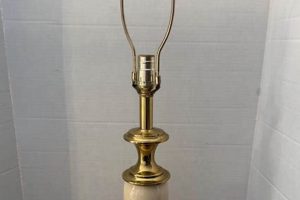
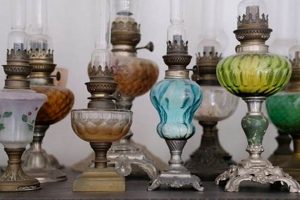
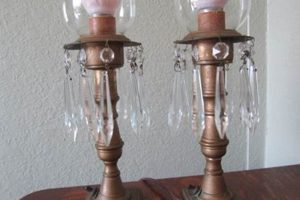
These lighting fixtures combine the protective functionality of a hurricane lamp with the decorative elegance of cut glass. They typically feature a glass chimney surrounding a light source, often a candle or oil lamp, designed to shield the flame from drafts. Prisms, frequently made of leaded crystal or glass, are suspended from the fixture to refract and scatter light, creating a sparkling effect.
Historically, these lamps provided essential illumination while adding a touch of refinement to domestic interiors. The prisms enhanced the light’s brightness and quality, making them desirable additions to parlors and dining rooms. Their enduring appeal lies in their blend of practicality and aesthetic beauty. The refracted light provides a unique ambiance, transforming a simple light source into a decorative centerpiece.
This exploration will delve into the diverse styles, historical periods, and craftsmanship techniques associated with these sought-after items. Subsequent sections will examine identifying features, restoration considerations, and their value in today’s antique market.
Considerations for Acquiring and Maintaining Refractive Lamps
This section offers guidance on selecting and preserving these light fixtures, ensuring longevity and aesthetic appreciation.
Tip 1: Authentication. Examine the composition and craftsmanship of the prisms. Original fixtures often feature hand-cut, leaded crystal, displaying a higher refractive index and brilliance than modern imitations. Inconsistencies in prism cut or attachment methods may indicate reproductions or repairs.
Tip 2: Structural Integrity. Assess the condition of the glass chimney, base, and hardware. Cracks, chips, or corrosion can compromise the lamp’s stability and value. Ensure all components are securely fastened and that the lamp sits evenly on a flat surface.
Tip 3: Light Source Compatibility. Determine the original light source (e.g., oil, kerosene, candle, electric). When converting to electricity, use appropriate wiring and fixtures to minimize fire hazards and maintain the lamp’s aesthetic integrity.
Tip 4: Cleaning and Preservation. Regularly clean the prisms and glass components with a soft, lint-free cloth and mild detergent. Avoid abrasive cleaners that can scratch the surface. To prevent tarnish on metal components, apply a protective coating or polish designed for the specific metal.
Tip 5: Proper Storage. When not in use, store the lamp in a cool, dry place away from direct sunlight and extreme temperature fluctuations. Disassemble the components and wrap them individually to prevent damage during storage or transport.
Tip 6: Historical Research. Research the lamp’s manufacturer, style, and period to understand its historical context and potential value. Consult antique guides, online resources, and experts to gain insights into its provenance.
Tip 7: Professional Restoration. For significant repairs or restoration work, consider engaging a qualified professional specializing in antique lighting. They can provide expert guidance and ensure the lamp is restored to its original condition while preserving its historical value.
Adhering to these guidelines will assist in making informed acquisitions and ensuring the proper care of these elegant lighting pieces.
The subsequent section explores the market value and investment potential of these decorative objects.
1. Rarity

Rarity, within the realm of these vintage lamps, significantly amplifies their collector appeal and market value. This quality arises from a convergence of factors that render certain models or designs scarce, thereby fueling demand and elevating their status among enthusiasts.
- Limited Production Runs
Lamps produced in small quantities due to specialized techniques, short-lived design trends, or the closure of manufacturing facilities become scarce. These lamps possess a heightened appeal for collectors, driving up prices in the market.
- Unique Design Elements
Lamps featuring atypical prism arrangements, distinctive color combinations, or modifications not found in standard models are considered rarer. Such features contribute to their uniqueness, making them desirable acquisitions for discerning collectors seeking standout pieces.
- Specific Historical Associations
Lamps linked to historical events, notable figures, or specific eras gain added significance and rarity. Provenance and documented history elevate their status beyond mere decorative objects, transforming them into valuable artifacts.
- Geographic Scarcity
Lamps predominantly available in a limited geographic region may be considered rare outside that area. Regional preferences or distribution networks create scarcity in other markets, enhancing their desirability and value.
The interplay of these factors underscores the pivotal role of rarity in shaping the perception and value of these vintage light sources. Understanding these nuances empowers collectors to make informed decisions and appreciate the distinctive qualities of exceptional pieces.
2. Craftsmanship

The quality of execution in crafting these lamps is a primary determinant of their aesthetic merit and value. It reflects the skill and care invested in their creation, differentiating them from mass-produced items and imbuing them with historical significance.
- Glassblowing and Shaping
The creation of the glass chimney and base involved skilled glassblowing techniques. The uniformity of the glass, the absence of imperfections such as bubbles or distortions, and the precision of the shape indicate the level of craftsmanship. Examples include hand-blown chimneys with consistent wall thickness and bases exhibiting intricate, symmetrical designs, indicative of experienced artisans.
- Prism Cutting and Polishing
The precision with which the prisms are cut and polished directly affects their ability to refract light. Hand-cut prisms exhibit sharp, well-defined facets that maximize light dispersion, creating a brilliant sparkle. Automated processes often result in less precise cuts and a duller finish. Examination under magnification can reveal the quality of the cutting and polishing, differentiating between artisanal and mass-produced prisms.
- Metalwork and Assembly
The metal components, such as the base, collar, and prism suspension, are crucial for structural integrity and aesthetic appeal. High-quality craftsmanship involves careful joining of metal pieces, precise threading, and decorative elements that complement the glass components. Examples include brass bases with intricate chasing or filigree work and collars that securely hold the chimney without obstructing light transmission.
- Finishing and Detailing
The final touches applied to these lamps, such as polishing, lacquering, and decorative painting, contribute to their overall appearance and longevity. Careful attention to detail, such as the smooth application of lacquer to prevent tarnishing or the delicate rendering of hand-painted designs, demonstrates a commitment to quality. Lamps with well-preserved finishes and intricate detailing command higher values and reflect the dedication of the original craftspeople.
These facets of craftsmanship, when considered collectively, reveal the level of artistry and skill involved in creating these light fixtures. They serve as indicators of authenticity, quality, and historical value, informing both collectors and enthusiasts seeking to appreciate and preserve these artifacts.
3. Materials
The constitution of vintage hurricane lamps with prisms is paramount to their value, aesthetics, and functionality. The specific materials employed directly affect light refraction, durability, and the overall historical significance of these fixtures. Glass, encompassing the chimney, base, and prisms, dictates the quality of light diffusion. Lead crystal, favored for prisms, exhibits a higher refractive index compared to standard glass, creating a more brilliant and colorful display. Inferior glass yields a duller, less vibrant effect. For example, a lamp utilizing high-quality lead crystal prisms, versus one using soda-lime glass, will exhibit superior light dispersion, thereby influencing its desirability and market value. The metals used, such as brass, bronze, or iron, determine the structural integrity and decorative characteristics of the base and hardware. Corrosion-resistant metals contribute to the lamp’s longevity. The interaction between the light source and these materials defines the user experience and the lamp’s enduring appeal. Consider, for instance, the oxidation of a lower-grade metal base detracting from the overall visual appeal and structural soundness of an otherwise valuable antique lamp.
Further enhancing our understanding of these fixtures, examining materials reveals historical manufacturing practices. Prior to widespread industrialization, artisans often used locally sourced materials. The composition of the glass or metal may contain trace elements indicative of its geographic origin. For example, analyzing the lead content in crystal prisms can sometimes pinpoint the region where the glass was manufactured. Moreover, variations in the type and quality of materials used across different historical periods allows for a clearer understanding of the socio-economic influences of those eras. The use of more expensive materials in lamp construction often correlated with periods of greater prosperity, and were primarily created for display in a parlous or dining room, as the article suggested above. Similarly, scarcity of materials during times of war, for example, dictated the utilization of cheaper alternatives.
In summary, the careful selection and combination of materials represent a critical aspect of these lamps, impacting their appearance, functionality, and historical value. A comprehensive understanding of these aspects assists in authenticating, evaluating, and preserving these antiques. The type of material used is an identifying feature when inspecting a lamp, a factor that is impacted by its history, and contributes to its value as a historical item.
4. Prism Cut
The design and execution of prism facets is a critical component in determining the aesthetic qualities and overall value of refractive lamps. The prism cut dictates the manner in which light is refracted and dispersed, influencing the brilliance and color spectrum projected by the fixture.
- Facet Geometry and Light Dispersion
The angles and proportions of prism facets directly affect the path of light as it passes through the glass or crystal. Steeper angles result in greater light dispersion, producing a more intense spectral display. For example, prisms with deep, precisely cut facets create a vibrant rainbow effect, whereas shallower cuts yield a softer, less defined light pattern. The geometry of the cut is paramount to the lamp’s visual impact.
- Cutting Techniques and Craftsmanship
Traditional hand-cutting techniques, characterized by meticulous detail and sharp, well-defined facets, are often indicative of higher-quality craftsmanship. Mass-produced prisms, created using automated processes, may exhibit less precision and a lower degree of light refraction. Discerning the difference requires careful examination of the prism’s surface and edges under magnification.
- Prism Material and Refractive Index
The material composition of the prism influences its ability to bend light. Lead crystal, with its higher refractive index, creates a more brilliant and colorful display compared to standard glass. The quality of the material, coupled with the precision of the cut, determines the overall visual impact of the lamp.
- Cut Style and Historical Period
Specific prism cut styles are associated with different historical periods and design movements. For instance, elaborate, multi-faceted cuts were common in Victorian-era lamps, while simpler, geometric cuts were favored in the Art Deco period. The style of the prism cut can provide valuable clues about the lamp’s age and origin.
These elements, encompassing facet geometry, cutting techniques, material composition, and historical context, demonstrate the significant role prism cut plays in determining the aesthetic character and historical value of these fixtures. Recognition of these aspects enables informed assessment and appreciation of these antique decorative objects.
5. Lamp Style
The stylistic interpretation of refractive lamps encompasses a broad spectrum of design aesthetics, each reflecting the prevailing tastes and manufacturing capabilities of its respective era. Understanding the stylistic attributes is crucial to accurately categorizing, dating, and appreciating these fixtures.
- Victorian Era Opulence
Refractive lamps produced during the Victorian era (approximately 1837-1901) exhibit elaborate ornamentation, reflecting the period’s emphasis on grandeur and detail. Features include ornate metal bases, often crafted from brass or cast iron, intricate glass etching, and an abundance of prisms. The prisms are typically densely arranged, designed to maximize light refraction and create a dazzling effect. Example: A lamp with a heavily decorated brass base featuring floral motifs, a cranberry glass chimney, and multiple tiers of cascading lead crystal prisms.
- Art Nouveau Organic Forms
Art Nouveau refractive lamps (circa 1890-1910) emphasize flowing lines, organic shapes, and naturalistic motifs. Metalwork frequently incorporates stylized representations of flowers, leaves, and insects. Glass chimneys often feature iridescent finishes or hand-painted enamel designs. Prisms may be used sparingly, prioritizing the overall form and decorative elements. Example: A lamp with a bronze base shaped like intertwined vines, a satin glass chimney decorated with hand-painted lilies, and a limited number of elongated, teardrop-shaped prisms.
- Art Deco Geometric Precision
Art Deco refractive lamps (circa 1920-1939) showcase geometric shapes, streamlined designs, and modern materials. Metal bases are often chrome-plated or made of Bakelite, exhibiting angular forms and symmetrical arrangements. Glass chimneys may feature geometric patterns or bold color combinations. Prisms are typically cut in simple geometric shapes, such as squares or triangles, arranged in a structured manner. Example: A lamp with a stepped chrome base, a frosted glass chimney featuring a zigzag pattern, and tiers of triangular crystal prisms.
- Mid-Century Modern Simplicity
Refractive lamps produced during the Mid-Century Modern period (circa 1945-1965) embrace minimalist designs, clean lines, and functional forms. Materials often include wood, ceramic, and brushed metal. Glass chimneys are typically simple and unadorned. Prisms may be absent altogether or used sparingly to add a subtle touch of elegance. Example: A lamp with a teak wood base, a simple cylindrical glass chimney, and a single row of rectangular prisms suspended beneath the shade.
The diverse range of stylistic interpretations evident in refractive lamps underscores their adaptability and enduring appeal across different historical periods. Each style embodies the design sensibilities of its time, offering valuable insights into the evolution of decorative arts and lighting technology. Examining specific design styles assists in dating and authenticating antique specimens, enhancing their value in the marketplace.
6. Historical Period

The historical period exerts a profound influence on the design, materials, and construction of these lighting devices. Each era imprinted its aesthetic preferences and technological advancements upon them, rendering them artifacts representative of their time. The Victorian era, for instance, witnessed lamps adorned with elaborate ornamentation, reflecting the prevailing societal emphasis on opulence. These lamps often feature intricate metalwork, richly colored glass, and a profusion of prisms designed to maximize light refraction. In contrast, the Art Deco period favored streamlined designs, geometric shapes, and modern materials such as chrome and Bakelite. Lamps from this era exhibit a cleaner aesthetic, with prisms arranged in structured patterns. The style differences offer insight into the changing cultural values and technological capabilities of the past, making knowledge of the era essential to the identification and valuation of the lamps.
The socio-economic context of a particular historical period influenced the availability and utilization of materials. During periods of economic prosperity, higher-quality materials, such as lead crystal for prisms and precious metals for bases, were more prevalent. Conversely, during times of war or economic hardship, manufacturers often resorted to cheaper alternatives, affecting the lamps’ aesthetic appeal and durability. For example, the quality of glass and metal used in lamps produced during World War II often reflects resource scarcity. Understanding these historical conditions provides valuable context for assessing the authenticity and value of antique fixtures. Furthermore, examining production techniques reveals the degree of industrialization and craftsmanship characteristic of the time. Hand-blown glass and hand-cut prisms are indicative of earlier periods when artisanal skills were dominant, while mass-produced components signal a later era of mechanized manufacturing.
In summary, the historical period serves as a crucial lens through which to interpret the characteristics and value of these vintage items. Recognizing the influence of each era on design, materials, and manufacturing techniques provides invaluable context for collectors, historians, and enthusiasts. This understanding not only enhances appreciation for their aesthetic qualities but also aids in the accurate identification, dating, and preservation of these tangible remnants of the past. Challenges in assessing historical context include incomplete manufacturing records and the tendency for modifications and repairs over time, underscoring the need for careful examination and expert consultation.
7. Condition
The physical state of vintage hurricane lamps with prisms exerts a decisive influence on their market value and historical significance. Damage, wear, or alterations directly impact the desirability and collectibility of these objects. Excellent condition, characterized by original components, intact prisms, and minimal surface degradation, commands a premium. Conversely, significant damage, such as cracked glass chimneys, missing prisms, or extensive corrosion, substantially diminishes value. This relationship underscores the importance of careful preservation and restoration efforts in maintaining the lamp’s integrity and worth. For example, a lamp with pristine original prisms that refract light optimally will be far more valuable than a similar lamp with replacement prisms or chipped originals.
Assessing condition requires a thorough examination of all components. The glass chimney should be free of cracks and chips, as these compromise its structural integrity and aesthetic appeal. Prisms must be intact and securely attached, with minimal chipping or discoloration. The metal base and hardware should exhibit minimal corrosion or pitting. Evidence of repairs or alterations, such as replaced wiring or non-original components, can negatively affect value, particularly if these modifications detract from the lamp’s original character. Detailed inspection of all parts is necessary to accurately evaluate the state of the lamp. Restoration can improve the appearance of a lamp, but full disclosure of work done is key in maintaining its integrity.
Ultimately, the condition of a lamp serves as a primary indicator of its history and care. A well-preserved example reflects responsible ownership and adds to its intrinsic value, while one that has been poorly maintained reveals a different narrative. Accurate assessment of condition is therefore paramount for both buyers and sellers in the vintage market, informing pricing decisions and ensuring transparency in transactions. Furthermore, proper maintenance after acquisition, including gentle cleaning and appropriate storage, is crucial to prevent further deterioration and preserve the lamp’s value for future generations. The impact of the condition on the value of these objects cannot be overstated, making it a crucial aspect of their appreciation and management.
Frequently Asked Questions
This section addresses common inquiries regarding these antique lighting fixtures, providing clarification on their characteristics, value, and maintenance.
Question 1: What factors contribute to the valuation of vintage hurricane lamps with prisms?
Several elements influence valuation, including rarity, the quality of craftsmanship, the type and condition of materials, the intricacy of the prism cut, the prevailing style of the historical period in which it was manufactured, and its overall physical condition. Lamps with verifiable provenance or unique design features typically command higher prices.
Question 2: How does one distinguish between authentic antique fixtures and reproductions?
Authentication requires careful examination of the materials, construction techniques, and design details. Original lamps often exhibit hand-blown glass, hand-cut prisms, and age-appropriate wear patterns. Reproductions may utilize modern materials, exhibit inconsistencies in construction, and lack the subtle nuances of antique craftsmanship. Consultation with an experienced appraiser is advisable for complex cases.
Question 3: What are the best practices for cleaning and preserving these lamps?
Gentle cleaning with a soft, lint-free cloth and mild detergent is recommended. Abrasive cleaners should be avoided, as they can damage the glass and metal surfaces. Metal components may benefit from periodic polishing with a product specifically designed for antique metals. Lamps should be stored in a cool, dry environment away from direct sunlight to prevent fading and deterioration.
Question 4: Is it advisable to convert a vintage oil-burning lamp to electric power?
Converting an oil-burning lamp to electric power can compromise its historical integrity and potentially diminish its value. If electrification is desired, it should be performed by a qualified professional who can ensure the conversion is reversible and does not damage the lamp’s original components. Furthermore, safety is key, so all applicable electrical codes must be followed.
Question 5: What types of damage are considered irreparable, thereby significantly devaluing a lamp?
Extensive cracks in the glass chimney, irreparable damage to the base, and the loss of a significant number of original prisms are typically considered serious defects that substantially reduce a lamp’s value. While some repairs may be possible, they can affect authenticity and historical significance.
Question 6: Where can one locate reputable sources for purchasing or selling these antique lighting fixtures?
Reputable antique dealers, auction houses specializing in historical artifacts, and established online marketplaces with stringent authentication policies are reliable sources for purchasing or selling. Seeking recommendations from experienced collectors or appraisers can also provide valuable guidance.
These FAQs provide a foundational understanding of key considerations surrounding the world of “vintage hurricane lamps with prisms.” Recognizing these elements will enhance the ability to appreciate and manage these historic pieces.
The subsequent article section focuses on the future trends in these collectibles.
Conclusion
This exploration has examined the multifaceted characteristics of vintage hurricane lamps with prisms, encompassing their stylistic evolution, material composition, historical context, and factors influencing valuation. The intricate interplay of rarity, craftsmanship, and condition has been emphasized as crucial determinants of their desirability and market value. Distinguishing authentic pieces from reproductions requires careful scrutiny of materials, construction techniques, and design elements.
The enduring appeal of vintage hurricane lamps with prisms lies in their ability to combine functional illumination with decorative artistry. Their preservation and appreciation contribute to the safeguarding of tangible links to past eras. Continued research and responsible collecting practices will ensure their legacy endures for future generations. Collectors and enthusiasts are encouraged to deepen their understanding of these unique artifacts and contribute to their ongoing conservation, securing their place in the narrative of decorative arts.