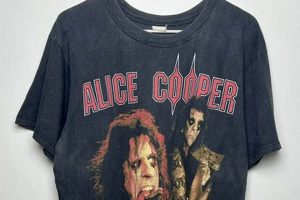
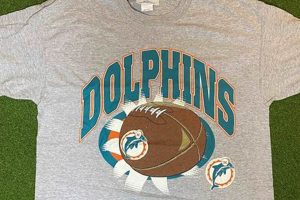
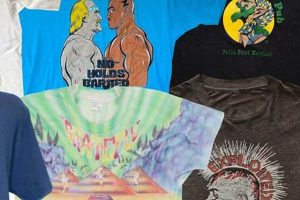
Apparel featuring National Football League teams, produced in past decades, represents a distinct category of collectible merchandise. These items, typically made of cotton or cotton blends, showcase team logos, player names, and various graphic designs indicative of the era in which they were manufactured. Examples include Super Bowl championship shirts from the 1980s or player-specific tees from the early 1990s.
The value of these garments stems from several factors, including rarity, condition, and historical significance. Limited edition designs or shirts commemorating pivotal moments in NFL history often command higher prices. The growing interest in retro fashion and sports memorabilia has further fueled the demand, making these items desirable for both collectors and fashion enthusiasts. They provide a tangible link to the leagues past and allow fans to express their affiliation with specific teams or eras.
Subsequent sections will delve into specific aspects of collecting these items, covering topics such as identifying authentic pieces, assessing condition, and understanding the market dynamics that influence their value.
Acquiring Collectible NFL Apparel
The acquisition of collectible NFL apparel requires careful consideration. These guidelines assist in evaluating potential purchases and ensuring authenticity.
Tip 1: Verify Authenticity: Scrutinize tags and labels for official league trademarks and manufacturing details. Compare these to known characteristics of apparel produced during the era in question.
Tip 2: Assess Condition: Evaluate the presence of stains, tears, or fading. Items in pristine condition command significantly higher value than those with visible wear.
Tip 3: Research Rarity: Determine the scarcity of the item based on production numbers or special edition status. Limited releases are typically more valuable.
Tip 4: Examine Printing Techniques: Identify the method of graphic application (screen printing, heat transfer, etc.). Understanding these processes can help verify authenticity and age.
Tip 5: Check for Copyright Dates: Observe copyright dates on tags or graphics. Discrepancies between the date and the supposed era of the garment may indicate a reproduction.
Tip 6: Consult Price Guides: Reference established pricing guides or auction records to gauge the fair market value of similar items.
Tip 7: Beware of Reproductions: Be vigilant for signs of modern manufacturing techniques or inconsistencies in materials. Replicas often lack the quality and detail of original pieces.
Tip 8: Seek Expert Opinion: If uncertainty persists, consult with experienced collectors or appraisers specializing in sports memorabilia.
Adhering to these guidelines increases the likelihood of acquiring authentic, valuable collectibles and minimizing the risk of acquiring misrepresented or counterfeit items.
The subsequent sections will present strategies for storing and preserving these valuable collectibles.
1. Authenticity Verification
The verification of authenticity stands as a foundational pillar in the domain of vintage NFL apparel. Accurate identification of genuine articles is crucial for collectors and enthusiasts aiming to ascertain value, preserve historical accuracy, and avoid counterfeit items circulating within the market.
- Tag and Label Analysis
Examination of tags and labels provides critical data points. Authentic vintage shirts typically feature specific manufacturer markings, fabric content details, and sizing information consistent with the era of production. The presence or absence of union labels, copyright dates, and official league logos can serve as primary indicators of legitimacy. For example, a misaligned logo or incorrect font style could immediately flag a reproduction.
- Material Composition and Construction
The materials used in constructing vintage NFL shirts often differ significantly from modern counterparts. Examining the fabric weave, stitching patterns, and overall construction quality can reveal clues about the garment’s age and originality. Certain eras employed specific cotton blends or manufacturing techniques no longer in use, allowing specialists to differentiate between authentic pieces and more recent imitations. Observing the fabric’s texture and weight is important in this step.
- Graphic Application Techniques
Vintage shirts typically feature screen-printed graphics, which exhibit a distinct texture and appearance compared to modern heat-transferred designs. Examining the ink quality, color saturation, and level of detail can help determine the authenticity of the graphics. Furthermore, the presence of cracking or fading consistent with age can further validate the item’s vintage status.
- Historical Context and Provenance
Understanding the historical context surrounding a particular NFL team, logo, or event can aid in authenticity verification. Researching the specific years during which a design was used, or the availability of certain styles during a particular season, can help confirm the shirt’s legitimacy. Provenance, or the documented history of ownership, can also enhance confidence in a shirt’s authenticity.
The rigorous application of these verification techniques is paramount in ensuring that collectors and enthusiasts are acquiring genuine vintage NFL apparel, thereby safeguarding their investments and preserving the historical integrity of these sought-after items.
2. Material Composition
The material composition of vintage NFL apparel significantly influences its value, durability, and overall appeal to collectors. Fiber content, weave, and manufacturing techniques of past decades offer insights into the age and authenticity of these garments.
- Fiber Content and Era Identification
Early examples predominantly utilized 100% cotton, whereas blends of cotton and synthetic fibers like polyester became prevalent later. Identifying the fiber content can help pinpoint the era of production. For example, a shirt labeled as “50% Cotton, 50% Polyester” is unlikely to predate the widespread adoption of synthetic fibers in apparel manufacturing during the 1970s.
- Weave and Durability
The type of weave (e.g., jersey knit, interlock) influences the garment’s texture, drape, and resistance to wear. Tightly woven fabrics generally exhibit greater durability. Certain weaves were favored during specific periods, offering another clue to authenticity. A loosely knit, single-stitch construction may suggest an older, potentially more valuable piece.
- Dyeing Techniques and Colorfastness
Older dyeing methods may result in color variations and fading patterns distinct from modern techniques. The colorfastness, or resistance to fading, can indicate the quality of the original dyes and the garment’s age. Subtle color shifts or an overall “vintage” hue can be desirable traits, adding to the aesthetic appeal of the item.
- Manufacturing Location and Labeling
The location of manufacture, often indicated on the garment’s label (e.g., “Made in USA”), can provide historical context and potentially influence value. Items produced domestically during periods of peak American manufacturing may be more desirable to some collectors. The absence of a manufacturing location, or the presence of inconsistent labeling, can raise questions regarding authenticity.
Understanding these facets of material composition enables collectors to make informed assessments regarding the age, authenticity, and overall quality of vintage NFL apparel, facilitating a more nuanced appreciation of these artifacts.
3. Graphic Integrity

Graphic integrity serves as a pivotal determinant of value and collectibility within the realm of vintage NFL apparel. The quality, condition, and accuracy of printed graphics are scrutinized to assess authenticity and historical significance.
- Print Quality and Technique
Vintage NFL shirts employed various printing methods, including screen printing and heat transfer. Screen printing, characterized by its durability and vibrant colors, is often favored. Examination of the ink thickness, color saturation, and registration accuracy provides insights into the printing quality. For instance, a blurry or misaligned print may indicate a reproduction or poor-quality original.
- Color Accuracy and Fading
The fidelity of colors to the original design standards of the team and era is crucial. Significant fading, discoloration, or color bleeding detracts from the garment’s value. However, subtle, uniform fading consistent with age may be acceptable and can even enhance the “vintage” aesthetic. Authenticating color palettes with available resources can help with the accuracy.
- Logo and Design Accuracy
Logos, team names, and player depictions must adhere to the design standards prevalent during the shirt’s era of production. Variations, inaccuracies, or anachronistic elements suggest a counterfeit or unauthorized reproduction. Careful comparison with historical team branding guidelines is essential. Small details like the angle of a stripe or the shape of a letterform can reveal discrepancies.
- Graphic Placement and Size
The placement and size of the graphic on the shirt should conform to established norms of the era. An unusually large or small graphic, or improper positioning on the garment, raises concerns about authenticity. Measuring the graphic dimensions and comparing them to known examples can help to reveal inconsistencies.
These elements of graphic integrity collectively influence the desirability and market value of vintage NFL shirts. A well-preserved graphic, faithful to the original design and manufacturing standards, enhances the item’s appeal to collectors and enthusiasts.
4. Era Identification
Era identification is paramount in assessing vintage NFL apparel. Accurate dating of the garment directly influences its value and collectibility. Determining the period of manufacture involves analyzing various characteristics, including tagging styles, material compositions, printing techniques, and team logos. The logo designs, fonts, and color schemes employed by NFL teams have evolved over time; variations provide critical clues. Tagging systems used by manufacturers also changed across decades, affecting the font, material, and information included on the tags. Furthermore, the blend of the fabrics use provides the era of the clothing.
Consider, for instance, a tee featuring the San Diego Chargers’ lightning bolt logo. A shirt displaying the powder blue and gold associated with the team’s early years (1960s-1970s) differs significantly in design and material from a garment showcasing the darker navy and powder blue scheme adopted later (1980s-2000s). Similarly, a Super Bowl tee from the 1980s would typically feature a different font and graphical layout compared to one from the 1990s. Determining which changes were made on the team design or logos, helps identify the specific year of manufacture.
In summary, era identification is not merely an exercise in dating but a crucial step in authenticating vintage NFL merchandise and determining its market value. The ability to accurately place a garment within a specific historical context protects buyers from fraudulent items and allows collectors to appreciate the evolution of NFL branding. This knowledge contributes to a more informed and rewarding collecting experience.
5. Team Representation

The depiction of NFL teams on vintage apparel forms a central component of its value and appeal. The specific logos, colors, and designs used reflect a particular era in the team’s history, directly influencing collectibility. Garments featuring iconic, historically significant team imagery often command higher prices and greater interest from collectors. A shirt showcasing the original logo of a team during its inaugural season, for instance, represents a tangible piece of the franchise’s heritage. Furthermore, shirts commemorating significant team achievements, such as Super Bowl victories or conference championships, hold considerable historical value. The accuracy and condition of the team representation on the garment are therefore paramount in assessing its overall worth.
The representation extends beyond logos and colors. Player likenesses, catchphrases, and specific event depictions all contribute to a shirt’s unique character and historical context. A vintage t-shirt featuring a prominent player from a Super Bowl-winning team not only symbolizes team loyalty but also acts as a tribute to a specific athlete’s contribution. The interplay between team identity and individual player recognition often elevates the garment’s appeal. Examining the evolution of team branding throughout history provides a valuable framework for authenticating and appreciating vintage NFL apparel.
Understanding the significance of team representation in vintage NFL shirts empowers collectors to make informed purchasing decisions and to appreciate the cultural significance of these items. The enduring appeal of these garments lies not only in their vintage status but also in their ability to evoke memories of specific eras and celebrate the rich history of the National Football League. Therefore, paying close attention to the accuracy and historical context of team representation is essential for both collectors and enthusiasts.
6. Collectible Market

The collectible market significantly influences the valuation and desirability of vintage NFL apparel. It establishes the economic framework wherein these items are traded, impacting their price based on factors such as rarity, condition, historical significance, and consumer demand. The market’s operation determines whether an individual vintage tee commands a modest sum or becomes a highly sought-after piece of memorabilia. For example, a t-shirt commemorating the Green Bay Packers’ victory in Super Bowl I, if properly authenticated and well-preserved, would command a substantially higher price than a common, mass-produced team shirt from a less historically significant era. This disparity results from the collectible market’s recognition of certain items as possessing greater cultural and historical value.
Fluctuations within the collectible market are driven by various forces. Trends in vintage fashion, nostalgia for specific eras of NFL history, and the emergence of influential collectors or marketplaces can all impact demand. A surge in popularity for 1990s-era sports apparel, as observed in recent years, directly correlates with increased prices for shirts from that period. Auction records, online marketplaces, and specialized vintage clothing stores serve as indicators of market activity, providing valuable data for collectors and investors. Understanding these market dynamics is crucial for making informed decisions regarding the purchase, sale, or appraisal of these garments. The influence of social media and influencer culture in recent years are notable reasons for driving specific eras in NFL vintage apparels to the main stage.
In conclusion, the collectible market functions as an essential framework for vintage NFL apparel, dictating valuation and driving demand. Challenges persist in accurately appraising items and identifying fraudulent pieces, necessitating thorough research and reliance on established market indicators. The interplay between historical significance, consumer demand, and market trends ultimately determines the economic worth of these pieces, making a thorough understanding of the collectible market indispensable for all involved. Understanding the market’s function to predict the next era in NFL vintage clothing is a practical way to be prepared in the market.
Frequently Asked Questions
The following section addresses common inquiries regarding vintage NFL t-shirts, providing clarity on authentication, valuation, and preservation.
Question 1: How can the authenticity of a vintage NFL t-shirt be verified?
Authenticity verification involves examining tags, material composition, printing techniques, and logos for consistency with the purported era of production. Comparing the garment to documented examples and consulting with experts is recommended.
Question 2: What factors influence the market value of a vintage NFL t-shirt?
Market value is primarily determined by rarity, condition, historical significance, team popularity, and overall demand within the collectible market. Limited edition shirts and those commemorating significant events typically command higher prices.
Question 3: How should vintage NFL t-shirts be properly stored to prevent damage?
Optimal storage involves protecting the garment from direct sunlight, moisture, and extreme temperatures. Archival-quality storage containers and acid-free tissue paper can further minimize deterioration.
Question 4: What are the key differences between screen-printed and heat-transferred graphics on vintage NFL t-shirts?
Screen-printed graphics exhibit greater durability and color vibrancy compared to heat-transferred designs. Screen printing typically results in a thicker, more textured print, while heat transfers tend to be thinner and more prone to cracking or peeling.
Question 5: How do team logos and branding elements impact the value of a vintage NFL t-shirt?
Logos and branding elements that are iconic or associated with a specific era or achievement significantly enhance the shirt’s historical significance and collectibility. Accurate and well-preserved team representations are highly valued.
Question 6: What resources are available for researching vintage NFL t-shirts and determining their potential value?
Resources include online auction records, vintage clothing marketplaces, price guides specializing in sports memorabilia, and consultations with experienced collectors or appraisers.
The information presented here provides a foundation for understanding the complexities of vintage NFL t-shirts. Diligence and thorough research are essential for successful collecting.
The next section will address the future outlook of the market for vintage NFL merchandise.
Conclusion
This exploration has revealed the multi-faceted nature of apparel bearing the imprimatur of the National Football League’s past. From authentication and valuation to preservation and market dynamics, the landscape surrounding t-shirt nfl vintage extends far beyond mere nostalgic appeal. The garments serve as tangible artifacts of sports history, capturing eras defined by distinctive logos, player rosters, and cultural trends. Their collectibility hinges on a confluence of factors, including rarity, condition, accurate team representation, and the fluctuating whims of a discerning marketplace. Identifying reproductions, and evaluating print quality are key to assessing its value.
As interest in retro fashion and sports memorabilia continues to evolve, the relevance of these garments will persist. The intersection of sports history, fashion trends, and investment potential ensures that vintage NFL shirts will remain a topic of interest for collectors, enthusiasts, and those seeking a connection to the league’s rich past. Continued research and critical evaluation will safeguard the integrity of this market and preserve these garments for future generations. It’s a way to see into the past of American football with the vintage shirts, and understanding their authenticity.