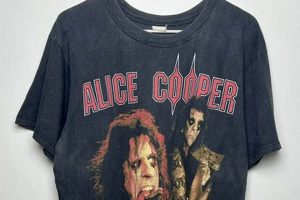
Apparel originating from past concert series featuring the band Metallica, often produced during the specific period of the tour it commemorates, constitutes a distinct category within collectible merchandise. These items generally display designs related to the album promoted on tour or artwork emblematic of the band’s imagery during that era. For example, a garment bearing the “Master of Puppets” album art, dated to the 1986 tour, falls into this classification.
Such garments possess value due to factors including scarcity, condition, and historical significance. They represent tangible connections to specific moments in the bands history and music culture, fostering nostalgia among fans. The designs often reflect the artistic trends and social context prevalent at the time of their release. Their collectibility can also be driven by the bands enduring popularity and the limited availability of older merchandise.
The following discussion will examine the characteristics that define genuine articles, factors influencing their market worth, strategies for verifying authenticity, and methods for proper preservation. These considerations are critical for individuals interested in acquiring or maintaining these pieces of memorabilia.
Tips for Evaluating a Vintage Metallica Tour Shirt
Careful consideration is required when assessing such items to ensure authenticity and to ascertain an accurate valuation. The following points provide guidance for conducting thorough evaluations.
Tip 1: Examine the Fabric and Stitching: Original garments frequently utilized single-stitch construction on the sleeves and hem. Later reproductions typically feature double-stitched seams. Assess the fabric’s feel; older shirts often have a distinct texture resulting from the manufacturing processes of the era.
Tip 2: Inspect the Print Quality: Screen printing methods used decades ago differ from contemporary techniques. The ink on genuine vintage items may show signs of cracking or fading, while reproductions may have a sharper, more pristine appearance that lacks this natural wear.
Tip 3: Analyze the Tag: Research the manufacturer’s tags used during the period corresponding to the tour date. Verify that the tag’s design, font, and material are consistent with known authentic examples from that time. Websites and online communities dedicated to vintage clothing can provide valuable resources for tag verification.
Tip 4: Scrutinize the Design: Compare the graphic design to known images of official merchandise released during the specific tour. Pay close attention to details such as font styles, color accuracy, and the overall layout. Discrepancies may indicate a counterfeit item.
Tip 5: Assess Condition Carefully: While some wear is expected on vintage items, excessive damage can significantly impact value. Evaluate the presence of holes, stains, or fading. Document any imperfections thoroughly.
Tip 6: Research Market Value: Before purchasing or selling, research current market prices for similar items in comparable condition. Online auction sites and dedicated vintage clothing marketplaces offer data points for price comparison.
Tip 7: Seek Expert Opinion: When in doubt, consult with a knowledgeable collector or appraiser specializing in vintage band merchandise. Their expertise can provide valuable insights and assist in determining authenticity and fair market value.
Applying these assessment techniques improves the probability of procuring an authentic product and minimizes the possibility of overspending on misrepresented commodities.
The subsequent sections will delve into strategies for preserving these historically significant pieces of memorabilia.
1. Rarity and Scarcity

The perceived and actual rarity and scarcity of a concert shirt significantly impacts its desirability and market value. The finite nature of these items, coupled with varying production volumes across different tours, establishes a hierarchical structure within the collectibles market.
- Limited Tour Production
Certain tours had significantly lower production runs due to factors such as shorter tour durations, smaller venue sizes, or limited regional coverage. Shirts from these tours are inherently scarcer. For example, a shirt produced exclusively for a series of shows in a specific European country would be less common than one sold across a multi-year, global tour.
- Design Variations and Test Prints
Design alterations or test prints that never saw widespread release are exceedingly rare. These could include shirts with misprints, alternative color schemes, or promotional versions distributed only to crew members. The presence of a unique design not available to the general public dramatically increases its value.
- Condition and Preservation Rates
Even if initially produced in substantial quantities, the number of shirts surviving in good to excellent condition dwindles over time due to wear, damage, or disposal. Garments that have been properly stored and preserved represent a smaller fraction of the original production run, increasing their scarcity in the vintage market. Collector demand is highly influenced by the garment’s current state.
- Commemorative or Event-Specific Releases
Shirts produced to commemorate specific events, such as anniversary shows or benefit concerts, are often produced in limited quantities. These items often feature unique designs or event details that distinguish them from standard tour merchandise. Their association with a specific, non-recurring event contributes to their long-term collectibility.
These elements collectively contribute to the perceived and actual value of items. The interplay of limited production, design uniqueness, preservation rates, and event-specific releases establishes a complex hierarchy of rarity, directly influencing market prices. Understanding these factors is crucial for collectors and investors navigating the vintage memorabilia market.
2. Authenticity Verification
The process of authenticity verification is paramount when evaluating collectible garments from past concert tours. The market for such items is susceptible to the presence of counterfeit goods, necessitating rigorous assessment methods to differentiate original merchandise from reproductions. Failure to properly verify authenticity carries the risk of financial loss and the acquisition of misrepresented items. The presence of unauthorized merchandise diminishes the value and historical integrity of genuine articles. For instance, a garment purporting to be from the 1988 “And Justice for All” tour, but exhibiting design flaws inconsistent with officially licensed merchandise from that period, would be deemed inauthentic.
Verification procedures encompass a multi-faceted approach. Examination of manufacturing tags is essential. Original tags contain specific brand markings and fabric content information consistent with production standards of the era. Stitching patterns, particularly single- versus double-stitching on seams, provide further clues. Original items often exhibit the single-stitch construction prevalent in earlier garment manufacturing. Print quality is another critical factor. Screen-printing techniques employed decades ago yield a distinct texture compared to modern digital printing methods. Authentic prints may display signs of aging, such as slight cracking or fading, whereas reproductions may possess a sharper, more uniform appearance. Furthermore, consultation with established collectors and experts can provide valuable insights based on their accumulated knowledge and experience.
Accurate authentication is not merely an academic exercise; it holds practical significance for both buyers and sellers. For collectors, it safeguards against acquiring misrepresented goods and ensures the integrity of their collections. For sellers, providing verifiable proof of authenticity enhances the value and marketability of their offerings, fostering trust and transparency within the collectibles marketplace. A thorough understanding of these authentication methods is therefore essential for anyone participating in the trade of vintage band merchandise.
3. Design Elements

The aesthetic qualities imprinted on merchandise function as defining attributes and potent indicators of authenticity, greatly influencing the value and desirability of vintage concert garments. Graphics, typography, and color palettes employed on vintage shirts are intrinsically linked to the specific album cycle or touring period they represent, acting as visual signifiers of a particular moment in a band’s history. The interplay between design elements and its effect on market valuation underscores the importance of recognizing these aspects when determining authenticity.
For example, an official shirt from the “Ride the Lightning” tour era typically features artwork directly derived from the album cover, characterized by its electric blue hues and stark imagery. The font style used for the band’s name and tour dates would be consistent with the graphic design trends prevalent during the mid-1980s. A reproduction may exhibit subtle but critical differences, such as a slightly altered shade of blue, a modernized font, or inconsistencies in the arrangement of design elements. Recognition of these deviations requires a comprehensive understanding of the original design specifications. Shirts from the “Black Album” era (1991-1993) often showcase a more minimalist aesthetic, utilizing grayscale tones and a distinctive logo. A shirt claiming to be from that tour but displaying vibrant colors or an outdated logo raises immediate concerns about its legitimacy.
In summary, the designs function as markers of origin and historical context. Careful examination of these design elements is essential for collectors and enthusiasts seeking to acquire genuine pieces of musical history. Successfully identifying and appreciating these characteristics enhances the value of the item and ensures buyers can secure products of true value to enjoy.
4. Fabric and Condition

The composition of the fabric and the garment’s overall state represent pivotal factors in determining the valuation and collectibility of vintage concert apparel. Fabric composition and wear are evaluated as key authentication and valuation metrics.
- Original Fabric Composition and its Impact on Longevity
Vintage shirts predominantly employed cotton or cotton-polyester blends. The specific blend ratios and weaving techniques impact the fabric’s durability and resistance to wear. Shirts made from heavier-weight cotton tend to withstand time better than those crafted from thinner, less robust materials. For instance, a shirt made from a durable cotton blend may exhibit less degradation compared to a thinner, all-cotton garment after similar usage and storage conditions.
- Wear and Tear Assessment: Holes, Stains, and Fading
The presence and extent of physical damage, such as holes, tears, stains, or fading, significantly diminishes the value. Minor imperfections may be acceptable, reflecting the item’s age and use. However, extensive damage compromises the garment’s structural integrity and aesthetic appeal. A shirt with a small, discreet stain may retain more value than one riddled with multiple holes or significant discoloration.
- Print Condition and Graphic Integrity
The state of the printed graphics is crucial. Cracking, peeling, or significant fading of the printed design detracts from the garment’s visual appeal and historical value. Intact, vibrant graphics command a premium. A shirt with well-preserved graphics from the “Master of Puppets” tour is generally more desirable than one where the print is severely cracked or faded.
- Alterations and Modifications
Any alterations or modifications from the original design, such as cut sleeves, added patches, or resizing, negatively impact value. Collectors prioritize items that retain their original form and construction. A shirt that has been altered to fit a different size or style is typically less desirable than an unaltered example.
The interplay between original fabric characteristics, the extent of wear and tear, the integrity of the printed graphics, and the presence of any alterations collectively defines the condition grade. These attributes serve as principal determinants of the value and desirability within the market. Accurate evaluation of these elements is crucial for both buyers and sellers seeking to navigate the vintage concert garment market effectively.
5. Historical Significance
The historical context surrounding a vintage Metallica tour garment imbues it with significance beyond its utilitarian function as apparel. These items act as tangible artifacts, reflecting not only the band’s trajectory but also broader cultural and societal shifts during specific eras. An understanding of this context is crucial for appreciating the full value, both monetary and intrinsic, of such artifacts.
- Reflection of Musical Trends and Subcultures
The designs and styles of these garments often mirror prevailing musical trends and subcultural aesthetics. For example, a shirt from the late 1980s might feature graphics influenced by thrash metal art, while one from the 1990s could reflect the band’s stylistic evolution towards a heavier, more mainstream sound. These designs offer insights into the evolving tastes and visual culture of a particular musical movement.
- Commemoration of Key Touring Cycles and Album Releases
Each touring cycle represents a specific phase in the band’s history, often linked to the release of a particular album. A shirt from the “Master of Puppets” tour commemorates a pivotal moment in Metallica’s rise to prominence, representing the band’s artistic and commercial success during that period. These shirts become symbols of that era, holding historical importance for fans and collectors.
- Evidence of Societal and Political Context
The imagery and messages conveyed on these garments can inadvertently reflect the societal and political context of the time. A shirt produced during a period of social unrest or political activism might feature designs that subtly acknowledge or comment on these issues. These elements add a layer of historical depth, making the shirt a reflection of more than just musical culture.
- Impact on Fashion and Merchandising Trends
The popularity and design of these garments have influenced fashion and merchandising trends over the years. The success of Metallica’s tour merchandise helped pave the way for other bands and artists to develop their own lines of apparel, transforming band merchandise into a significant revenue stream and cultural phenomenon. The influence extends beyond the music industry to general trends within clothing design and retail.
These various aspects highlight the multifaceted historical importance these items carry, connecting these physical objects to musical movements and various aspects of culture and society. By considering these factors, one can appreciate a garment not just as a piece of clothing, but as an object imbued with historical relevance.
Frequently Asked Questions
The following section addresses common inquiries regarding vintage Metallica tour shirts, providing concise and informative answers based on established knowledge within the collectibles market.
Question 1: What factors determine the value of a vintage Metallica tour shirt?
Value is influenced by rarity, condition, design, historical significance, and authenticity. Limited print runs, well-preserved condition, desirable designs, association with pivotal tours, and verifiable authenticity elevate market value.
Question 2: How can authenticity be verified for a vintage Metallica tour shirt?
Verification involves examining the manufacturing tag, assessing the stitching pattern (single versus double stitch), scrutinizing the print quality, and comparing the design to known official merchandise. Consulting with experts or experienced collectors is also advisable.
Question 3: What are common signs of a counterfeit vintage Metallica tour shirt?
Red flags include incorrect tag styles, double-stitched seams (when single-stitch is expected), poor print quality, design inconsistencies compared to official merchandise, and a lack of wear consistent with the item’s purported age.
Question 4: How should a vintage Metallica tour shirt be properly stored to preserve its condition?
Proper storage involves gentle hand washing or dry cleaning, avoiding direct sunlight exposure, storing flat in acid-free tissue paper, and keeping the item in a cool, dry environment. Avoid hanging, which can stretch the fabric.
Question 5: Where are reliable sources for purchasing authentic vintage Metallica tour shirts?
Reputable sources include established vintage clothing stores, online marketplaces specializing in vintage band merchandise, and auctions conducted by reputable auction houses. Exercise caution and thoroughly vet the seller before making a purchase.
Question 6: Is it possible to restore a damaged vintage Metallica tour shirt?
Restoration is possible but should be approached cautiously. Consult with a professional textile conservator experienced in handling vintage garments. Improper restoration can cause further damage and diminish the item’s value.
These answers offer guidance for collectors and enthusiasts navigating the world of vintage Metallica tour merchandise. Careful research, authentication, and preservation are key to appreciating and maintaining these pieces of music history.
The succeeding segment will provide a concluding summary.
Conclusion
The preceding analysis has illuminated the multifaceted aspects of vintage metallica tour shirt. Factors impacting valuation, encompassing authenticity, design elements, material quality, condition, and historical relevance, have been detailed. Strategies for verifying genuineness and maintaining the integrity of these articles have been discussed.
Careful acquisition, diligent preservation, and informed appreciation ensure the enduring value of these tangible connections to music history. Further research and engagement with the collecting community will enhance understanding and promote responsible stewardship of these artifacts.