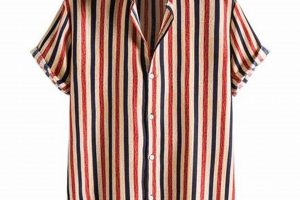
Pre-owned shirts from past eras, offered at reduced prices, constitute a segment of the apparel market. These items, often featuring unique designs or branding from bygone periods, provide consumers with alternatives to contemporary retail offerings. For instance, a faded band tee from the 1970s, sold below its estimated market value, exemplifies this category.
The appeal of these garments lies in their potential for affordability and the distinct aesthetic they provide. Collectors and fashion enthusiasts alike may seek them out, attracted by their perceived rarity, historical significance, or the opportunity to express individual style. Their availability presents an avenue for sustainable consumption, diverting textiles from landfills and promoting reuse.
The following sections will delve into the sourcing, evaluation, and market dynamics of these uniquely positioned apparel items, examining the factors that contribute to their value and the considerations relevant to their purchase.
Essential Considerations for Acquiring Reduced-Price Retro Apparel
This section provides guidance for navigating the market for previously owned, reduced-cost graphic tees from earlier decades. Prudent assessment and informed decision-making are crucial to ensuring satisfaction and value.
Tip 1: Authenticate the Era. Verify the garment’s age. Examine labels, stitching, and fabric composition. Research vintage label databases and construction techniques to confirm the purported era of origin.
Tip 2: Assess Condition Diligently. Closely inspect for damage. Look for stains, tears, holes, or excessive fading. Factor repair costs into the overall value proposition. Note that minor imperfections can be acceptable for older items, but significant damage should warrant a steeper discount.
Tip 3: Evaluate Print Quality. Examine the integrity of the design. Check for cracking, peeling, or significant wear. The clarity and resilience of the print contribute significantly to the item’s desirability and longevity.
Tip 4: Scrutinize Sizing Information. Understand that vintage sizing often differs from modern standards. Obtain precise measurements of the garment and compare them to current size charts to ensure a proper fit.
Tip 5: Compare Prices Across Platforms. Research the market. Consult multiple online marketplaces and brick-and-mortar retailers to establish a fair market value. Factor in shipping costs and potential return policies.
Tip 6: Inquire About Storage Conditions. Ask about how the garment was stored. Exposure to sunlight or moisture can accelerate degradation. Properly stored items are likely to be in better condition.
Tip 7: Sanitize Prior to Wear. Implement appropriate cleaning protocols. Gently wash the garment according to its fabric composition and age. This step ensures hygiene and prevents potential allergic reactions.
Adhering to these guidelines can mitigate risks associated with purchasing pre-owned items and maximize the potential for acquiring a valuable and desirable vintage piece at a favorable price.
The subsequent discussion will address the care and preservation techniques necessary to maintain the integrity of acquired vintage apparel.
1. Authenticity Verification

Authenticity verification plays a crucial role in the realm of pre-owned, reduced-cost graphic tees. The authenticity of a vintage shirt directly impacts its value and desirability. A genuine vintage shirt, demonstrably from the era it purports to represent, will typically command a higher price than a reproduction or a more recent garment misrepresented as vintage. The presence of authentic details, such as specific label types, stitching patterns, and fabric compositions characteristic of the period, serves as evidence of its origins.
The consequences of neglecting authenticity verification can be significant. Buyers may unknowingly purchase counterfeit items, overpaying for garments that lack the inherent value associated with genuine vintage pieces. For example, a shirt marketed as a 1970s band tee but manufactured within the last decade carries a substantially lower value than an authentic item. Moreover, purchasing counterfeit goods can inadvertently support unethical manufacturing practices. Understanding authentication methods, such as examining label designs and researching historical garment construction techniques, is therefore paramount for responsible participation in the vintage apparel market.
In summary, authenticity verification is an indispensable element in the pursuit of discounted vintage t-shirts. The ability to distinguish genuine items from reproductions directly impacts financial investment, ethical consumption, and the preservation of historical apparel. Rigorous assessment mitigates the risk of purchasing misrepresented items and ensures alignment with the intended value and collectibility associated with true vintage garments.
2. Condition Assessment
Condition assessment is fundamentally intertwined with the valuation of pre-owned graphic tees offered at reduced prices. The condition of a vintage garment directly influences its market value, serving as a primary determinant in price negotiation and purchase decisions. For example, a shirt originating from the 1980s but exhibiting significant fading, staining, or fabric damage will invariably command a lower price than a comparable shirt in excellent or near-mint condition. The extent of wear, the presence of tears or holes, and the integrity of the printed design all contribute to an overall condition score, which then translates into a specific price point.
The significance of rigorous condition assessment extends beyond mere aesthetics. Degradation of fabric can compromise the structural integrity of the garment, affecting its wearability and longevity. A shirt with dry-rotted fibers, for instance, may be prone to tearing or disintegration, rendering it unsuitable for regular use. Moreover, the condition of the printed design significantly impacts its visual appeal. Cracking, peeling, or fading of the graphic can detract from its aesthetic value, diminishing its desirability among collectors and fashion enthusiasts alike. Thorough examination for stains, odors, and previous alterations are also critical aspects of the assessment process.
In conclusion, condition assessment is an indispensable aspect of acquiring previously owned graphic tees at discounted rates. Accurate evaluation of the garment’s condition allows for informed pricing decisions, mitigating the risk of overpayment and maximizing the potential for securing a valuable vintage item. By meticulously examining the fabric, print, and overall integrity of the shirt, potential buyers can ensure they are making a prudent and informed investment.
3. Design Rarity

The scarcity of a particular graphic or print significantly influences the value and collectibility of pre-owned tees available at reduced prices. Design rarity, a pivotal determinant, reflects the limited production, unique characteristics, or historical context embedded within a specific tee’s graphic.
- Limited Production Runs
Designs originating from limited production cycles or exclusive releases command higher premiums. A vintage tee issued for a specific event or promotional campaign, with demonstrably limited distribution, increases its desirability. For instance, a shirt produced for a single concert date on a band’s tour, where the remaining stock is minimal, represents a clear example.
- Unique Graphic Elements
Designs featuring distinct artistic styles, experimental printing techniques, or collaborations with renowned artists elevate a tee’s inherent worth. Original artwork, unconventional layouts, or unique color combinations that deviate from standard production elevate design rarity. For example, a shirt showcasing a design created by a known graphic artist specifically for that tee, and not replicated elsewhere, increases its value.
- Historical Significance
Tees bearing graphics emblematic of specific historical movements, cultural phenomena, or pivotal events accrue value as historical artifacts. The graphic may depict political rallies, social movements, or significant moments in music or art history. Consider a tee from the original Woodstock festival, where the graphic directly references the event and its cultural impact, amplifying its rarity and collectibility.
- Copyright and Licensing Issues
The presence of copyright restrictions or licensing disputes that resulted in the termination of production or limited the distribution of a particular design can significantly enhance its scarcity. Tees featuring graphics that are no longer authorized for reproduction or were subject to legal challenges become more valuable due to their finite availability. An example would be a vintage tee featuring a character for which the licensing agreement has expired and is no longer available, making existing examples more sought after.
These facets intertwine to define the rarity of a graphic design imprinted on a pre-owned tee. Scarcity, stemming from constrained production, unique aesthetic attributes, historical associations, or licensing limitations, elevates its status within the vintage apparel market, influencing its valuation and collectibility. The convergence of these factors establishes design rarity as a fundamental consideration when assessing value.
4. Sizing Accuracy

In the context of reduced-price, pre-owned graphic tees from prior decades, sizing accuracy constitutes a critical element directly impacting consumer satisfaction and minimizing return rates. Discrepancies between labeled sizes and actual garment dimensions are common due to variations in manufacturing standards across different eras, fabric shrinkage resulting from washing and wear, and the inherent lack of standardized sizing conventions in the vintage apparel market. Consequently, a shirt labeled as a “Large” may fit significantly smaller or larger than contemporary sizing expectations, leading to potential purchase dissatisfaction. For example, a buyer acquiring a vintage band tee online, relying solely on the labeled size, might receive an item that is functionally unwearable due to dramatic size discrepancies, resulting in a return request or negative purchase experience. This misalignment underscores the necessity for meticulous size verification beyond label information.
Accurate measurement and comparison to modern size charts are indispensable for both sellers and buyers. Sellers who provide precise measurements, including chest width, shoulder width, and length, significantly reduce the risk of returns stemming from sizing issues. Similarly, buyers should carefully compare these measurements to their own dimensions or those of comparable modern garments. This approach mitigates the risks associated with relying solely on vintage size labels, fostering confidence in the purchasing process. The implementation of detailed sizing information enables buyers to make informed decisions, ensuring that the pre-owned garment aligns with their physical dimensions. For instance, marketplaces requiring sellers to furnish detailed measurements for each vintage item promote transparency and facilitate a more reliable buying experience.
The absence of sizing accuracy introduces friction into the acquisition of discounted vintage t-shirts. By prioritizing precise measurement and size comparison, both sellers and buyers can enhance the transaction process, decrease return volumes, and cultivate a more favorable climate for commerce. Precise size assessment emerges as an essential mechanism for successfully navigating the inherent complexities of the vintage apparel market, fostering efficient transactions and reinforcing buyer assurance.
5. Price Comparability
The concept of price comparability is paramount in the market for reduced-price, pre-owned graphic tees. Establishing a reasonable market value necessitates a comprehensive evaluation of comparable listings, serving as a safeguard against overpayment and a benchmark for discerning advantageous acquisition opportunities.
- Marketplace Benchmarking
Cross-referencing prices across diverse online marketplaces, auction sites, and specialized vintage retailers is a crucial component of price analysis. Variations in seller markups, platform fees, and regional demand necessitate a broad comparative analysis. A tee listed on one platform at a specific price point must be assessed against analogous listings on alternate platforms to ascertain a fair market valuation. For example, if a band tee is listed for $50 on one site, comparison with similar condition items on other sites priced between $30 and $40 would suggest the initial listing is overpriced.
- Condition-Adjusted Valuation
The condition of a pre-owned tee directly influences its price. Identical designs exhibiting disparate levels of wear, staining, or print degradation warrant corresponding price adjustments. Comparable listings must be scrutinized for condition-related attributes and prices modulated accordingly. A pristine example of a vintage tee should command a premium compared to an identical tee with visible damage, even if the base design and scarcity are comparable.
- Rarity and Demand Modulation
The interplay between design rarity and current market demand affects price dynamics. Scarce designs experiencing heightened demand will command elevated prices relative to more commonplace designs or those experiencing diminished consumer interest. Price comparability must account for these fluctuations in scarcity and popularity. A rare design aligned with current fashion trends or collector interest may justify a higher price relative to comparable tees lacking such attributes.
- Shipping and Handling Costs
Shipping and handling expenses constitute an integral component of the overall acquisition cost. Price comparability must encompass the total expenditure, including these ancillary charges. A tee offered at a superficially lower price may prove less economical when factoring in elevated shipping costs relative to a higher-priced listing with reduced or complimentary shipping. A tee listed at $30 with $15 shipping should be compared against a tee listed at $40 with free shipping to determine the truly more cost-effective option.
These facets underscore the multifaceted character of price comparability when pursuing discounted vintage t-shirts. A nuanced comprehension of marketplace dynamics, condition-adjusted valuation, rarity-demand modulation, and the inclusion of shipping and handling costs empowers purchasers to navigate the vintage market intelligently and secure advantageous acquisitions.
Frequently Asked Questions
This section addresses common inquiries regarding the acquisition, assessment, and care of pre-owned graphic tees offered at reduced prices, aiming to provide clarity and assist in informed decision-making.
Question 1: How does one ascertain the authenticity of a discounted vintage t-shirt?
Authenticity verification involves meticulous examination of label details, stitching patterns, and fabric composition. Researching vintage label databases and comparing construction techniques to established historical standards is recommended. Consult with specialists in vintage apparel when uncertainty persists.
Question 2: What constitutes an acceptable level of wear and tear for a reduced-price vintage garment?
Acceptable wear is subjective and dependent on individual preferences and the garment’s age. Minor imperfections, such as slight fading or small stains, may be considered acceptable, while significant damage, including large tears or extensive staining, should warrant a commensurate price reduction. Inspect all areas of concern before purchase.
Question 3: How should the sizing of vintage t-shirts be approached, given variations in historical standards?
Vintage sizing often deviates from contemporary standards. Obtaining precise measurements of the garment, including chest width, shoulder width, and length, is essential. Compare these measurements to current size charts to ensure an accurate fit. Do not rely solely on the labeled size.
Question 4: What methods are recommended for cleaning and preserving discounted vintage t-shirts?
Gentle hand washing is typically recommended for delicate vintage garments. Use a mild detergent and avoid harsh chemicals. Air drying is preferable to machine drying. Consider storing the garment in a protective garment bag to prevent damage from dust and sunlight.
Question 5: How can one determine if a discounted vintage t-shirt is priced fairly?
Price comparability involves researching similar items across various online marketplaces and vintage retailers. Consider the garment’s condition, rarity, and any unique features when assessing its price. Factor in shipping costs and return policies to determine the overall value.
Question 6: What recourse is available if a purchased discounted vintage t-shirt is misrepresented or defective?
Review the seller’s return policy prior to purchase. Document any discrepancies or defects upon receipt of the garment. Contact the seller promptly to initiate a return or request a refund. If resolution cannot be achieved directly, consider contacting the marketplace platform for assistance.
In summary, informed acquisition of discounted vintage t-shirts requires careful attention to authenticity, condition, sizing, care, pricing, and recourse options. These considerations promote responsible consumption and mitigate potential risks.
The subsequent section will delve into the legal and ethical dimensions of sourcing and selling vintage apparel.
Discount Vintage T Shirts
This analysis has provided a comprehensive exploration of the landscape surrounding reduced-price, pre-owned graphic tees. The discussion encompassed critical factors, including authenticity verification, condition assessment, design rarity, sizing accuracy, and price comparability. It is apparent that successful navigation of this market requires diligence, informed judgment, and a thorough understanding of valuation metrics.
Ultimately, the acquisition of discounted vintage t shirts presents both opportunities and inherent challenges. Prospective buyers should prioritize thorough research and careful evaluation to ensure that investments align with their expectations regarding value, quality, and historical authenticity. Prudent decision-making remains paramount in maximizing satisfaction within this specialized apparel segment.