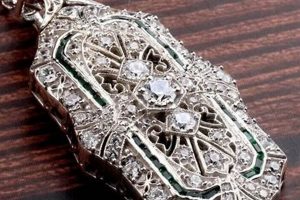
Jewelry pieces from the Art Deco era, specifically those intended as symbols of commitment and crafted before the mid-20th century, represent a distinct aesthetic period. These rings often feature geometric patterns, bold lines, and contrasting materials like diamonds and colored gemstones such as sapphires, emeralds, or rubies. A notable example includes a platinum ring with a central Asscher-cut diamond flanked by baguette-cut diamonds, showcasing the era’s fondness for symmetry and clean design.
Acquiring these specific pieces provides a tangible link to a period of significant artistic and social change. Their enduring appeal stems from the craftsmanship involved and the timeless quality of their designs. The use of high-quality materials and the meticulous detailing contribute to their lasting value, both sentimental and monetary. Furthermore, these items often represent a more sustainable choice, promoting the reuse and appreciation of existing resources rather than solely relying on newly manufactured goods.
The following sections will further examine the key characteristics that define these tokens, explore the materials and gemstones frequently employed, and provide guidance on evaluating the authenticity and condition of pieces from this iconic period. A detailed look at notable design elements and tips for care and maintenance will also be provided.
Evaluating Antique Commitment Adornments
The following provides guidance on assessing genuine articles intended to symbolize betrothal from the Art Deco period. Prudence and meticulous examination are crucial when acquiring such items.
Tip 1: Authenticate the Period Style. Art Deco design is characterized by geometric patterns, symmetry, and the use of contrasting materials. Research authentic pieces from the era to familiarize oneself with typical motifs, settings, and gemstone cuts.
Tip 2: Scrutinize Metal Markings. Platinum and white gold were commonly used during the Art Deco era. Examine the ring for hallmarks indicating metal purity (e.g., “PLAT” for platinum, “18K” or “14K” for gold) and maker’s marks, which can aid in verifying age and origin.
Tip 3: Examine Gemstone Cuts and Settings. Common gemstone cuts include Old European, Asscher, and baguette cuts. The settings should be secure and appropriate for the period. Be wary of modern cuts or settings on a supposedly antique ring.
Tip 4: Assess the Condition Carefully. Antique jewelry often shows signs of wear, but excessive damage can detract from its value. Check for chipped stones, bent prongs, or evidence of repairs. Professional restoration, if necessary, should be performed by a jeweler specializing in antique pieces.
Tip 5: Seek Expert Appraisal. Obtain an independent appraisal from a qualified gemologist or antique jewelry expert. The appraisal should include a detailed description of the ring, an assessment of its condition, and an estimated value.
Tip 6: Consider the Source. Purchase from reputable dealers specializing in vintage or antique jewelry. These dealers are more likely to possess expertise and offer guarantees of authenticity.
Tip 7: Request Documentation. Inquire about any available documentation, such as original receipts, appraisals, or provenance information. These documents can provide valuable insights into the ring’s history and authenticity.
These guidelines emphasize the significance of thorough research, expert consultation, and a discerning eye when evaluating prospective acquisitions. Investing time in these preparatory steps helps ensure the authenticity and value of a significant historical item.
The succeeding section will provide a conclusion summarizing the key aspects of the topic.
1. Geometric Symmetry
Geometric symmetry serves as a foundational characteristic defining the aesthetic of commitment adornments from the Art Deco period. Its presence is not merely decorative; it embodies the era’s embrace of modernism and a departure from the organic, flowing lines of previous styles.
- Bilateral Symmetry in Design
Many Art Deco rings exhibit bilateral symmetry, where one half mirrors the other. This is observed in the arrangement of gemstones, the shaping of the metalwork, and the overall outline of the piece. For example, a ring might feature a central diamond flanked by identically sized and shaped accent stones on either side. This reflects the period’s pursuit of order and balance.
- Repetitive Geometric Motifs
The repetition of geometric shapes, such as chevrons, triangles, and stepped patterns, is another key element. These motifs are often incorporated into the ring’s setting or band, creating a visually striking effect. A vintage piece might feature baguette-cut diamonds arranged in a stepped pattern, echoing the skyscrapers that defined the era’s urban landscape.
- Symmetrical Stone Placement
The precise and symmetrical placement of gemstones is paramount. Gemstones are meticulously aligned to create balanced compositions. A ring might feature a central emerald-cut stone perfectly aligned with smaller stones on either side, contributing to a sense of refined elegance and visual harmony.
- Contrast Through Shape
Symmetry doesn’t preclude the use of contrasting shapes. A design might combine sharp, angular elements with softer, rounded forms, all within a symmetrical framework. This interplay creates visual interest while maintaining overall balance. A vintage ring could feature a central round diamond juxtaposed with baguette-cut diamonds arranged symmetrically around it.
These symmetrical design elements are hallmarks of jewelry from this time. The geometric symmetry observed is a tangible representation of the era’s spirit. The incorporation of diamonds and precious metals amplified the inherent elegance and lasting appeal of commitment tokens.
2. Diamond Cuts

Diamond cuts represent a crucial determinant in defining the aesthetic value of vintage engagement rings from the Art Deco period. The prevailing cutting techniques during the early 20th century significantly shaped the appearance and light performance of these stones, differing substantially from contemporary methods. The choices of cuts had a profound impact on the overall design and style. For instance, the popularity of the Old European Cut during the Art Deco era, with its smaller table and higher crown, produced a unique brilliance and fire distinct from modern brilliant cuts. This cut’s inherent characteristics contributed directly to the distinctive vintage charm and character valued by collectors. The Asscher cut, with its stepped facets and square shape, also became a signature element, embodying the era’s geometric sensibilities.
Furthermore, the setting of diamonds within these rings was often designed to complement the specific cut, thereby enhancing the gemstone’s beauty. Bezel settings, for instance, were frequently employed to accentuate the shape and protect the diamond’s edges, while intricate filigree work highlighted the stone’s brilliance. The careful consideration given to both the diamond cut and its setting demonstrates the meticulous craftsmanship prevalent during the Art Deco period. An increased understanding of these cuts enables informed evaluation of the authenticity and quality of these vintage artifacts. Distinguishing between an authentic Old European Cut and a modern brilliant cut, for example, requires familiarity with their distinct facet patterns and proportions.
In summation, diamond cuts are an inseparable component of Art Deco engagement rings, profoundly influencing their appearance, value, and historical significance. Recognizing and appreciating these cuts allows for a deeper understanding of the era’s design principles and techniques, promoting the preservation and informed appreciation of these iconic symbols of commitment. Understanding the nuances of diamond cuts can present challenges such as identifying recut stones or accurately assessing the quality of antique cuts given their unique characteristics. Nevertheless, careful study and expert consultation are essential to overcome these obstacles.
3. Precious Metals

The selection of precious metals in art deco era engagement rings is not merely a functional consideration, but a defining element that reflects the aesthetic and technological advancements of the period. The choice of metal significantly influences the ring’s appearance, durability, and value. The era witnessed a shift in preferred materials driven by evolving tastes and industrial capabilities.
- Platinum’s Ascendancy
Platinum gained prominence as the metal of choice for high-end jewelry. Its strength and purity allowed for intricate designs and secure settings for diamonds and other gemstones. Platinum’s natural white color also enhanced the brilliance of diamonds, perfectly complementing the era’s emphasis on geometric forms and light. For example, platinum was often used in elaborate filigree settings, showcasing the metal’s malleability and ability to hold fine details, making platinum rings especially desirable among affluent clientele.
- White Gold as an Alternative
White gold provided a more affordable alternative to platinum, offering a similar aesthetic appeal. Developed to mimic platinum’s look, white gold allowed for broader accessibility to the art deco style. However, white gold requires periodic rhodium plating to maintain its bright white finish. A typical example would be a white gold ring featuring a central diamond with geometric shoulder accents, providing a similar look to platinum at a reduced cost.
- The Subdued Role of Yellow Gold
While yellow gold remained in use, it was less prevalent in engagement rings compared to platinum and white gold. The preference for white metals aligned with the era’s overall aesthetic of sleekness and modernity. When used, yellow gold often served as a subtle accent or was incorporated into two-tone designs. An example could be a ring with a platinum setting and a yellow gold band, offering a touch of contrast without detracting from the central design.
- Metalworking Techniques and Design
The use of precious metals in art deco rings was closely tied to advancements in metalworking techniques. Innovations such as die-striking and casting allowed for the creation of complex geometric patterns and precise detailing. These techniques enabled jewelers to translate the era’s design principles into tangible forms. Examples include rings with pierced metalwork, intricate milgrain edging, and precisely calibrated settings that enhanced the overall visual impact and structural integrity of the piece.
The choice of precious metal in vintage art deco engagement rings served as a critical design element, reflecting both aesthetic preferences and technological capabilities. Platinum and white gold dominated, embodying the era’s modern sensibility. These materials enhanced the brilliance of diamonds and facilitated the creation of intricate geometric designs, contributing significantly to the enduring appeal and value of these pieces.
4. Colored Gemstones

The utilization of colored gemstones within art deco engagement rings represents a departure from the diamond-centric focus of prior eras, introducing a vibrant palette and a new dimension of personal expression. This trend stems from a confluence of factors, including the discovery of new gemstone sources, advancements in cutting techniques, and a shift in aesthetic preferences towards bolder, more individualistic designs. The introduction of synthetic colored gemstones also played a role, broadening access to these decorative elements.
The influence of colored stones extends beyond mere visual appeal. Sapphires, emeralds, rubies, and other gemstones were strategically employed to create contrasting geometric patterns, enhancing the overall design and reflecting the era’s fascination with linear forms and bold combinations. Consider, for instance, a platinum ring featuring a central diamond flanked by calibre-cut sapphires, meticulously arranged to emphasize the ring’s rectangular shape. This strategic use of colored gems not only complements the diamond but also reinforces the ring’s overall aesthetic impact. The placement and shape of these gems were crucial for achieving the symmetrical balance so valued during this period.
In summary, colored gemstones are integral to understanding and appreciating the design aesthetic of art deco engagement rings. Their inclusion represents a deliberate design choice, influencing both the visual character and the perceived value of these pieces. Recognizing the specific gemstones used, their cut, and their placement within the ring is essential for accurate identification and valuation. The enduring appeal of these rings lies, in part, to the judicious integration of color into designs.
5. Filigree Detailing
Filigree detailing represents a significant design element in vintage engagement rings from the Art Deco period. It is characterized by delicate, intricate metalwork, often resembling lace or fine lacework, and it contributes significantly to the overall aesthetic and perceived value of these pieces. The following points will further clarify its role and importance.
- Definition and Techniques
Filigree involves the creation of intricate patterns using fine wires of metal, typically gold or platinum, soldered together to form a delicate, openwork design. The process requires skill and precision. Examples can be seen in rings featuring elaborate geometric motifs or floral patterns created using this technique. This adds texture and visual interest to the jewelry.
- Material Composition
Filigree detailing in art deco rings is commonly executed in platinum or white gold due to these metals’ malleability and ability to showcase fine details. These metals also enhance the perceived value of the ring. For example, the contrast between a diamond and a filigree platinum setting underscores the diamond’s brilliance while adding a layer of visual complexity.
- Motifs and Patterns
The motifs and patterns employed in filigree work often reflect the geometric and stylized designs characteristic of the Art Deco era. Common motifs include stepped patterns, stylized floral designs, and geometric shapes, adding to the overall design. An art deco filigree design might echo the architectural elements of the period, such as the Chrysler Building’s spire.
- Impact on Value and Authenticity
The presence and quality of filigree detailing can significantly impact the value and authenticity of an art deco engagement ring. Well-preserved filigree work indicates careful craftsmanship and can serve as a marker of originality. Rings with intact, intricate filigree are more sought after. Damage or poorly executed repairs can detract from the ring’s value, so inspecting the quality of the filigree is extremely important.
In summary, filigree detailing in vintage engagement rings from the Art Deco period is a critical design element that demonstrates craftsmanship and aesthetic preferences. Its presence, quality, and style contribute to the ring’s value and authenticity. This detailing serves as an iconic mark of the artistry applied to these items.
6. Rarity

The element of scarcity significantly impacts the desirability and valuation of authentic engagement rings originating from the Art Deco era. The limited availability of these items, coupled with specific design characteristics and material compositions, contributes substantially to their collectibility.
- Limited Production Runs
Many Art Deco engagement rings were produced in limited quantities due to economic conditions of the time or the specialized craftsmanship required. Specific designs or those featuring rare gemstones were not mass-produced, leading to their present-day scarcity. An example is a ring featuring a unique gemstone cut or a design commissioned by a prominent individual; such rings are less likely to be found on the open market, increasing their inherent value.
- Preservation and Condition
The passage of time has naturally reduced the number of Art Deco rings in good condition. Environmental factors, wear and tear, and alterations can diminish the integrity of these pieces. Rings that have been well-preserved or professionally restored to their original state are considerably rarer and more valuable. A ring with original filigree detailing and undamaged gemstones, for instance, is more scarce than a similar ring with significant damage or alterations.
- Unique Design Elements
Certain Art Deco rings exhibit unusual design features that set them apart from more common styles. These may include unconventional gemstone combinations, intricate metalwork, or geometric patterns that deviate from typical designs. Rings with such distinctive attributes are considered rarer due to their limited production and unique aesthetic appeal. A ring featuring a combination of black onyx and diamonds in a novel geometric arrangement, for example, would be less common and, therefore, more valuable.
- Historical Significance
Some Art Deco engagement rings possess historical significance due to their association with notable individuals or events. Rings with verifiable provenance or documented history command higher prices and are considered more desirable by collectors. A ring once owned by a prominent figure from the Art Deco era or featured in a significant historical event would be exceptionally rare and sought after.
The combined effect of limited production, preservation challenges, unique design elements, and historical significance contributes to the rarity of vintage engagement rings from the Art Deco period. This scarcity directly influences their market value and appeal to collectors seeking authentic and historically significant pieces.
Frequently Asked Questions
The following addresses common inquiries regarding commitment adornments from the Art Deco period. It aims to provide clarity on key aspects of these vintage pieces.
Question 1: What distinguishes an authentic commitment token from the Art Deco period from a contemporary design?
Authentic adornments from this period are characterized by geometric patterns, symmetrical designs, and the use of specific gemstone cuts, such as Old European and Asscher. Materials commonly employed include platinum and white gold. Contemporary designs often lack these hallmarks and may feature modern cuts and materials.
Question 2: How can the value of a pre-owned Art Deco commitment piece be accurately assessed?
Valuation requires a professional appraisal by a gemologist or antique jewelry expert. Factors considered include the quality and cut of the gemstones, the type and purity of the metal, the presence of hallmarks, the overall condition, and any historical provenance.
Question 3: What are the most commonly encountered materials in these vintage rings?
Platinum and white gold were prevalent during the Art Deco era due to their durability and aesthetic appeal. Diamonds were the primary gemstone, often accompanied by colored stones such as sapphires, emeralds, and rubies. Synthetic gemstones were also utilized.
Question 4: What should one consider when evaluating the condition of pre-owned commitment jewelry from the Art Deco era?
Careful examination for signs of wear, damage, or previous repairs is crucial. Chipped stones, bent prongs, and evidence of alterations can impact the value. Professional restoration, if necessary, should be performed by a specialist in antique jewelry.
Question 5: Where can one reliably acquire authentic engagement rings from this historical period?
Reputable antique jewelry dealers, specialized auctions, and established vintage jewelry stores are the most reliable sources. It is essential to seek dealers with expertise in the Art Deco period and a proven track record of authenticity.
Question 6: What are the recommended practices for the care and maintenance of these artifacts?
Gentle cleaning with a soft brush and mild soap is recommended. Avoid harsh chemicals or abrasive cleaners. Regular professional inspection by a jeweler can help identify and address potential issues, preserving the ring’s integrity.
Understanding the design characteristics, materials, and valuation factors is crucial for anyone seeking to acquire or appreciate these items. Informed decision-making enhances the likelihood of a satisfactory experience.
The succeeding section will provide a conclusion summarizing the key aspects of the topic.
Conclusion
The examination of art deco engagement rings vintage reveals their significance as tangible representations of a transformative era in design and social values. Their geometric patterns, distinctive diamond cuts, and utilization of precious metals and colored gemstones reflect the Art Deco movement’s embrace of modernity and bold aesthetics. The limited availability and varying states of preservation further contribute to their inherent value and collectibility.
Acquiring these specific pieces necessitates diligence and informed evaluation. Prospective buyers must consider the ring’s authenticity, condition, and historical provenance. Their lasting appeal as symbols of commitment and artistic expression underscores the enduring legacy of the Art Deco period. Continuous efforts in preservation and knowledgeable appreciation are crucial to ensure these items retain their place as artifacts of a significant period in history.