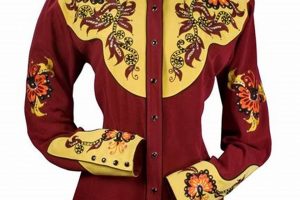
Apparel from a prior era displaying affiliations with the University of Michigan or the state of Michigan falls under the category of collectible garments. These items typically feature older designs, logos, or materials reflective of the period in which they were produced. For example, a crewneck sweatshirt from the 1980s featuring the university’s block ‘M’ logo would be considered such an item.
Such garments offer a tangible connection to the past, serving as historical artifacts that represent specific eras, events, or cultural trends associated with the university or state. They can evoke nostalgia, celebrate notable athletic achievements, or commemorate significant moments in the region’s history. Furthermore, the scarcity of older, well-preserved examples can enhance their value and desirability among collectors and enthusiasts.
The following sections will delve into aspects such as identifying genuine items, assessing their value, popular designs, and the market for acquiring such collectibles.
Tips for Acquiring and Preserving Collegiate and State-Affiliated Garments
The following guidelines aim to assist individuals in the acquisition and preservation of collegiate and state-affiliated garments from previous eras. Careful consideration of these points can enhance the likelihood of obtaining authentic and valuable items.
Tip 1: Examine Construction and Materials: Scrutinize the garment’s stitching, fabric type, and overall construction. Authentic articles often exhibit manufacturing techniques and materials consistent with their purported age. For instance, older sweatshirts may feature flatlock stitching or be made from heavier cotton blends than contemporary versions.
Tip 2: Verify Logos and Design Authenticity: Research historical logos and design elements. Comparing the design on the garment to known authentic examples from the same era is crucial. The official University of Michigan archives or historical society websites can provide valuable reference materials.
Tip 3: Assess Condition Carefully: Evaluate the item’s condition, noting any damage such as stains, tears, or fading. While minor wear can be expected in older pieces, significant damage can negatively impact value. Consider whether the damage is repairable without compromising the garment’s historical integrity.
Tip 4: Check for Union Labels or Tags: Look for vintage union labels or manufacturer tags. These labels can provide valuable information about the garment’s origin and manufacturing period. Resources are available online to help decipher the age and meaning of different union labels.
Tip 5: Investigate Seller Reputation: When purchasing from online marketplaces or vintage stores, research the seller’s reputation and feedback. Seek out sellers with a proven track record of accurately representing the authenticity and condition of their items.
Tip 6: Understand Market Value: Before making a purchase, research the current market value of similar pieces. Check completed auction listings and consult with experienced collectors to gauge a fair price.
Tip 7: Prioritize Preservation: Once acquired, prioritize proper storage and preservation techniques. Store garments in a cool, dry place away from direct sunlight. Use archival-quality garment bags and avoid hanging delicate items.
Adhering to these recommendations contributes to the successful acquisition and long-term preservation of historically significant collegiate and state-affiliated garments. This ensures that these pieces remain valuable artifacts for future generations.
The subsequent section will address common misinterpretations and potential pitfalls in this niche market.
1. Authenticity Identification

The determination of genuineness is paramount when evaluating a garment associated with the University of Michigan or the state itself. Authentic items command higher value and represent a more accurate reflection of the past. In contrast, reproductions or misrepresented pieces lack historical significance and are typically of less interest to collectors.
- Fabric and Construction Analysis
The analysis of materials and construction techniques serves as a primary method for authentication. Garments from different eras exhibit distinct characteristics in terms of fabric weight, weave, stitching patterns, and overall build quality. For example, a supposed 1970s t-shirt constructed with modern, lightweight synthetic blends is immediately suspect. Similarly, the presence of overlock stitching, common in contemporary garments, on a purported pre-1960s piece raises concerns. Examining these elements provides crucial clues to the item’s true age and origin.
- Logo and Graphic Verification
The designs, logos, and graphics found on apparel have evolved over time. These variations provide a chronological roadmap for authentication. Official University of Michigan publications and historical archives are invaluable resources for verifying the correctness of specific logos and their associated time periods. Discrepancies between the design on a garment and documented historical examples suggest the possibility of a reproduction or unauthorized modification. Scrutiny of font styles, color palettes, and placement is essential in this process.
- Tag and Label Examination
Manufacturers’ tags and union labels provide significant insights into a garment’s origin and production period. Older pieces often feature union labels that can be dated with reasonable accuracy using historical records. The absence of a tag, or the presence of a tag known to be from a later period, raises red flags. Researching the manufacturer’s history and identifying the periods during which they operated further aids in the authentication process. Specific details such as care instructions printed on tags can also indicate the garment’s era.
- Provenance and Documentation Assessment
Provenance, or the documented history of ownership, can significantly bolster the authenticity of a garment. If the seller can provide verifiable documentation, such as original receipts, photographs, or letters, this increases confidence in the item’s legitimacy. However, even with documentation, careful assessment of the garment itself remains crucial. No amount of paperwork can compensate for inconsistencies in fabric, construction, or logo design.
These authentication methods, when applied comprehensively, provide a robust framework for differentiating genuine articles from reproductions. This, in turn, informs accurate valuation and preservation strategies, ensuring that these garments retain their historical significance and value. Ultimately, the accurate identification of such pieces contributes to a deeper understanding of the University of Michigan’s and the state’s historical and cultural context.
2. Fabric Composition

Fabric composition is a critical determinant of authenticity, durability, and overall value when considering vintage apparel associated with the University of Michigan or the state of Michigan. The materials used in garment construction reflect the technological capabilities and prevalent manufacturing practices of the time, offering valuable clues to the item’s age and origin.
- Fiber Type Identification
The type of fiber used in the garment’s construction (e.g., cotton, polyester, rayon) provides initial insight into its era. Pre-1960s pieces are predominantly cotton, often a heavier weight variety. The introduction of synthetic fibers like polyester in the 1970s and 1980s led to blends that offer increased durability and wrinkle resistance. The presence of fibers like modal or lyocell, common in contemporary garments, would indicate a more recent production date. For example, a supposed 1950s block ‘M’ sweatshirt made from a polyester blend would be highly suspect.
- Weave and Knit Structure
The weave or knit structure impacts the garment’s texture, drape, and performance characteristics. Traditional cotton garments often feature plain weaves or jersey knits. As technology advanced, variations such as twill weaves and interlock knits became more prevalent. A vintage Michigan football jersey, for instance, might exhibit a heavier, more robust weave than a modern replica designed for breathability and performance. Analysis of the weave or knit structure can therefore help narrow down the garment’s potential age range.
- Dyeing and Printing Methods
The methods employed for dyeing and printing designs on the fabric offer further clues. Early garments often utilized natural dyes or basic pigment printing techniques, resulting in colors that may fade or exhibit slight variations. The introduction of synthetic dyes and more sophisticated printing processes allowed for brighter, more consistent colors and intricate designs. The presence of certain printing techniques, such as heat transfers or sublimation printing, would indicate a production date from the late 20th century or later. Observing the quality and characteristics of the colors and printing can provide valuable insights.
- Fabric Weight and Handle
The weight and “handle” (the way the fabric feels to the touch) are significant indicators of quality and era. Older cotton garments tend to be heavier and have a crisper handle than their modern counterparts. The introduction of lighter weight fabrics and softer finishes has become increasingly common in contemporary apparel. A vintage Michigan hockey jersey constructed from a heavy, stiff wool blend would contrast sharply with a modern version made from a lightweight, moisture-wicking synthetic fabric. Assessing the weight and handle can therefore contribute to determining the garment’s authenticity.
In conclusion, the fabric composition of apparel related to the University of Michigan or the state itself serves as a multifaceted indicator of its age, authenticity, and value. By carefully examining the fiber type, weave structure, dyeing methods, and fabric weight, collectors and enthusiasts can gain valuable insights into the history and origin of these garments. This detailed analysis ultimately contributes to a more accurate assessment of their historical significance and market value.
3. Logo Evolution

The evolution of logos on apparel serves as a crucial marker for establishing the age and authenticity of garments associated with the University of Michigan or the state itself. Changes in design, font, and overall aesthetic reflect specific periods and branding strategies, providing valuable contextual information for dating vintage items.
- Font Styles and Typography
Font choices on logos and wordmarks have varied considerably over time. Early garments may feature blocky, sans-serif fonts, reflecting the design sensibilities of the mid-20th century. Later iterations may incorporate more stylized or script-based fonts. Examining the typography on a supposed vintage shirt and comparing it to documented examples from different eras can help determine its authenticity. For example, the specific font used for the “Michigan” wordmark on a basketball jersey from the 1980s can be compared to official university branding guidelines from that period.
- Color Palettes and Usage
Color usage in logos and designs has also evolved. Early Michigan apparel may feature a more limited color palette due to the constraints of printing technology. As printing capabilities advanced, more vibrant and complex color combinations became possible. Observing the specific shades of maize and blue used on a vintage item can provide clues to its age. For instance, a shirt featuring a shade of blue that deviates significantly from the university’s official color specifications may be a reproduction or a more recent design.
- Logo Placement and Size
The placement and size of logos on garments have also changed over time. Early designs may feature smaller, more understated logos, while later designs may incorporate larger, more prominent logos. The position of the logo on the chest, sleeve, or back of the shirt can also provide valuable information. For example, a vintage Michigan football jersey from the 1960s might have a smaller block ‘M’ logo on the sleeve, whereas a modern jersey might have a larger logo on the chest. These variations in placement and size serve as chronological markers.
- Official Licensing and Trademarks
The presence or absence of official licensing marks and trademarks is another important consideration. As the market for collegiate apparel has grown, the University of Michigan has become increasingly vigilant in protecting its intellectual property. The presence of a registered trademark symbol () or a licensing tag from a recognized apparel manufacturer can provide assurance of authenticity. The absence of such markings does not automatically indicate that a garment is inauthentic, but it warrants closer scrutiny of other details, such as fabric, construction, and logo design.
In summary, the evolution of logos on Michigan apparel is a complex but valuable tool for authentication and dating. By carefully examining the font styles, color palettes, logo placement, and licensing marks, collectors and enthusiasts can gain a deeper understanding of the historical context and value of vintage items. This detailed analysis helps to distinguish genuine pieces from reproductions and contributes to a more informed appreciation of the university’s rich athletic and cultural heritage.
4. Era Representation

The value and significance of a collectible Michigan garment are inextricably linked to its accurate representation of a specific historical period. The item serves as a tangible artifact, embodying the aesthetic, cultural, and technological characteristics of its time. A misidentified or inaccurately dated item loses its historical integrity and, consequently, its value to collectors and enthusiasts. For instance, a claimed 1930s-era University of Michigan football sweater crafted with synthetic materials and modern manufacturing techniques would fail to accurately represent the era, rendering it a misrepresentation rather than a valuable historical piece. The garment’s material composition, construction, and design elements must align with known historical standards to be considered a genuine representation of its alleged period.
The importance of accurate era representation extends beyond mere aesthetics. Specific designs, logos, and garment styles were often associated with significant events or cultural trends. For example, a t-shirt featuring a particular design commemorating a championship-winning football season serves as a direct link to that specific athletic achievement and the cultural sentiments surrounding it. Conversely, a garment bearing a logo that did not exist during the purported era, or one constructed using materials unavailable at the time, loses its capacity to authentically reflect the historical context it claims to represent. The ability to accurately date and contextualize a garment within its specific era is essential for understanding its true significance and value.
In conclusion, era representation is a fundamental component of a genuine vintage Michigan garment. It influences the garment’s collectibility, historical significance, and market value. Challenges in accurately dating items necessitate careful examination of material composition, construction techniques, design elements, and historical records. Accurately understanding and applying these principles ensures that the item in question truly embodies and represents the period it claims to reflect, solidifying its status as a valuable artifact of Michigan’s past.
5. Collectibility Factors
The value of garments from the University of Michigan or the state of Michigan from previous eras is significantly influenced by various factors that contribute to their collectibility. These elements determine demand, scarcity, and ultimately, market price. Careful consideration of these factors is crucial for both collectors and those seeking to understand the market for these items.
- Rarity
Scarcity is a primary driver of collectibility. Limited production runs, special editions, or garments produced for specific events inherently possess higher value due to their limited availability. For example, a University of Michigan Rose Bowl shirt from a year in which the team did not participate would be exceptionally rare. Similarly, a garment produced for a specific graduating class or alumni event that had a low attendance rate would be more difficult to acquire, increasing its desirability among collectors. Rarity is often a function of time, with older items naturally becoming scarcer due to attrition and loss.
- Condition
The physical condition of a garment significantly impacts its collectibility. Items in pristine or near-mint condition command a premium compared to those with significant wear, damage, or alterations. While minor imperfections may be acceptable for exceptionally rare pieces, the overall integrity of the garment is a key consideration. Factors such as fading, staining, tears, and missing components (e.g., buttons, tags) detract from value. The ideal collectible maintains its original form and exhibits minimal signs of age or use.
- Historical Significance
Garments associated with significant historical events or individuals related to the University of Michigan or the state of Michigan possess enhanced collectibility. A jersey worn by a notable athlete, a shirt commemorating a championship victory, or an item linked to a prominent figure in Michigan history carries greater value. The documented connection to a specific event or individual elevates the garment beyond a mere article of clothing, transforming it into a tangible piece of history. Provenance, or the documented history of ownership, further reinforces this factor.
- Aesthetic Appeal and Design
The visual appeal and design of a garment also influence its collectibility. Certain logos, color combinations, or design elements may be more desirable due to their aesthetic qualities or their association with a specific era or subculture. A vintage Michigan hockey sweater featuring a particularly striking design or a popular team logo from a specific period may attract a wider range of collectors. Design trends and nostalgic associations play a significant role in determining which garments are considered more aesthetically pleasing and, therefore, more collectible.
In summary, the collectibility of a “vintage michigan shirt” is a multifaceted concept driven by a combination of rarity, condition, historical significance, and aesthetic appeal. These factors interact to determine the market value and desirability of these items, transforming them from mere pieces of clothing into valuable artifacts of Michigan’s past.
6. Market Valuation
The market valuation of a vintage Michigan shirt is determined by a confluence of factors, with demand and scarcity acting as primary drivers. High demand, fueled by nostalgia, alumni loyalty, and broader vintage fashion trends, combined with a limited supply of well-preserved items, creates a competitive market. Real-life examples include vintage University of Michigan Rose Bowl shirts, which fetch substantial sums due to the limited production associated with specific game years and the event’s prestige. Similarly, game-worn jerseys from notable athletes can command significantly higher prices, reflecting their historical significance and direct link to a celebrated figure. Understanding market valuation is crucial for both sellers aiming to maximize returns and buyers seeking to make informed purchasing decisions, avoiding overpayment for misrepresented or overvalued items. Accurate appraisal requires careful assessment of condition, authenticity, rarity, and provenance, often necessitating the expertise of seasoned collectors or appraisers.
Practical applications of market valuation insights extend to insurance appraisals, estate planning, and charitable donations. For instance, accurately assessing the value of a collection of vintage Michigan apparel is essential for securing adequate insurance coverage against loss or damage. In estate planning, proper valuation ensures equitable distribution of assets among heirs. Moreover, the Internal Revenue Service (IRS) requires a qualified appraisal for donations of property exceeding $5,000, making accurate market valuation critical for claiming appropriate tax deductions. Knowledge of market trends and valuation methodologies enables individuals to navigate these processes effectively, protecting their interests and ensuring compliance with relevant regulations.
In summary, the market valuation of a “vintage michigan shirt” is a dynamic process influenced by a range of interconnected factors. Challenges in accurately assessing value arise from the subjectivity inherent in evaluating condition, the difficulty in verifying authenticity, and the fluctuating nature of demand. However, by understanding the underlying principles of market valuation, considering factors such as rarity and historical significance, and seeking expert guidance when necessary, individuals can navigate this complex landscape with greater confidence and achieve optimal outcomes. The ability to accurately value these garments not only facilitates fair transactions but also preserves their historical legacy for future generations.
Frequently Asked Questions About Vintage Michigan Shirts
This section addresses common inquiries and misconceptions regarding vintage apparel associated with the University of Michigan and the state of Michigan.
Question 1: How can the authenticity of a supposed “vintage michigan shirt” be verified?
Authentication involves careful examination of several factors. These include fabric composition, construction techniques, logo design, and the presence of manufacturer’s tags. Comparison with known authentic examples and consultation with experts are also recommended.
Question 2: What impact does condition have on the value of a “vintage michigan shirt?”
Condition is a significant determinant of value. Garments in excellent or near-mint condition command higher prices. Damage such as tears, stains, or fading reduces the value. Preservation efforts are essential to maintain condition.
Question 3: Where are reputable sources for acquiring authentic “vintage michigan shirt?”
Reputable sources include established vintage clothing stores, reputable online marketplaces specializing in vintage apparel, and auctions conducted by reputable auction houses. Careful vetting of sellers is essential.
Question 4: Are “vintage michigan shirt” reproductions prevalent in the market?
Yes, reproductions are common. Identifying these requires careful attention to detail and knowledge of historical manufacturing techniques and designs.
Question 5: What are key factors that contribute to the rarity of a “vintage michigan shirt?”
Rarity is influenced by factors such as limited production runs, special editions, association with specific events, and the age of the garment. Scarce items command higher prices.
Question 6: How does logo evolution assist in dating a “vintage michigan shirt?”
Logo designs have changed over time. Examining the specific font, colors, and design elements of the logo can provide valuable clues to the garment’s age, when compared with official University or State archives.
Understanding these aspects is crucial for both collectors and enthusiasts seeking to acquire and appreciate authentic items from Michigan’s past.
The following section provides information on caring for and preserving these items.
Concluding Remarks on Garments of Michigan’s Past
This exploration has illuminated the multifaceted nature of items from Michigan’s history. The details regarding authenticity, condition, and provenance must be understood to determine value and historical significance. These articles of clothing are more than merely used items; they are artifacts of a region, a university, and a culture.
Continued research and thoughtful preservation efforts are essential. Recognizing the inherent value of these items ensures that the legacy of Michigan endures for future generations. This pursuit serves to preserve history, culture and the material representations of significant achievements.