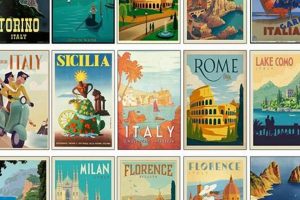
Representations of America’s natural landscapes, created to encourage tourism and promote conservation efforts, serve as artistic artifacts. These graphically compelling prints, often featuring bold colors and stylized imagery of iconic destinations, were originally commissioned by the U.S. government’s agencies, such as the Works Progress Administration (WPA) and later the National Park Service itself. A typical example might depict the grandeur of Yosemite Valley with a simplified, almost abstract rendering of El Capitan, bathed in golden light.
These visual documents played a crucial role in shaping public perception of protected lands. Their creation fostered national pride in the country’s natural heritage and fostered support for its preservation. Furthermore, they document the evolution of graphic design trends during the mid-20th century, showcasing the influence of art deco, modernism, and the burgeoning advertising industry. Their enduring appeal continues to drive demand in both the art and tourism sectors.
Examining the stylistic choices, printing techniques, and historical context reveals much about the motivations and impacts of these artistic pieces. The subsequent discussion will explore the various artists involved in their creation, the evolution of their design, and their continuing relevance in contemporary culture.
Collecting and Preserving Artistic Renditions of Protected Lands
Acquiring and maintaining these historically significant prints requires careful consideration. The following provides guidance on identification, valuation, and proper storage techniques.
Tip 1: Authentication is Paramount: Before purchase, scrutinize the piece for identifying marks, printer’s information, or WPA stamps. Consult reputable dealers or archival resources for verification. Forgeries exist, making due diligence essential.
Tip 2: Assess Condition Meticulously: Examine the print for fading, tears, water damage, or signs of restoration. Condition significantly impacts value. Minor imperfections are acceptable; however, significant damage should be carefully evaluated.
Tip 3: Research the Artist and Series: Familiarize oneself with the prominent artists and print series, like those produced under the Federal Art Project. Rarity and artist reputation are key value determinants.
Tip 4: Proper Framing is Essential: Use archival-quality matting and UV-protective glass or acrylic to prevent fading and deterioration. Avoid direct sunlight and fluctuating humidity levels. Conservation framing helps preserve the print for future generations.
Tip 5: Catalog and Document Acquisitions: Maintain a detailed record of each print, including purchase date, provenance, condition reports, and any restoration work performed. This documentation enhances the print’s value and aids in future appraisals.
Tip 6: Consider Professional Appraisal: For valuable prints, obtain a professional appraisal from a certified appraiser specializing in vintage posters or works on paper. Appraisal documentation is vital for insurance purposes and estate planning.
Tip 7: Store in a Controlled Environment: Ideal storage involves stable temperature and humidity levels, away from direct light and pollutants. Acid-free storage boxes or folders are recommended for unframed prints.
Adhering to these guidelines ensures the longevity and value of these important visual representations of the nation’s park system. This dedication to preservation not only safeguards valuable artifacts but also promotes the enduring legacy of the natural landscapes they portray.
The next section will address the contemporary market for these artistic pieces and their role in modern design and environmental advocacy.
1. Graphic Style

The visual impact of these artistic relics is directly attributable to their graphic style. These posters adopted diverse styles, ranging from the realism of early depictions to the streamlined, modernist aesthetics prevalent in the mid-20th century. The influence of the Works Progress Administration (WPA) era is particularly evident, with many designs reflecting the bold colors and simplified forms of art deco and silkscreen printing techniques. These choices were not merely aesthetic; the use of strong colors and simplified imagery aimed to capture the essence of the parks quickly and memorably, drawing in potential visitors and inspiring a sense of awe and national pride. A prime example is the iconic series created for Yellowstone National Park, which employed vibrant hues and minimalist representations of geysers and wildlife to promote the park’s unique attractions. The graphic design served as a crucial communication tool, effectively conveying the beauty and importance of the natural landscape.
Understanding the graphic style employed provides valuable insights into the historical and cultural context surrounding the creation of these pieces. Variations in artistic approachsuch as the transition from detailed illustrations to more abstract renderingsreflect changing design trends and societal attitudes toward nature and tourism. Moreover, knowledge of the printing techniques used, such as lithography or serigraphy, aids in authenticating and dating the posters. Recognizing the specific font styles, color palettes, and compositional elements characteristic of different eras allows for a deeper appreciation of the artistic skill involved and provides a framework for evaluating the rarity and value of individual pieces. For example, posters featuring a specific font or color combination known to be unique to a particular print run can command higher prices among collectors.
In summary, graphic style is not merely an attribute of these artistic depictions; it is an intrinsic element that shapes their meaning, impact, and historical significance. Analyzing the aesthetic choices made by the artists and designers involved enhances the appreciation of their artistic value and facilitates a deeper comprehension of the posters’ role in promoting national parks and conservation awareness. Further research into design and print history will add an extra layer of appreciation for these posters.
2. Conservation Advocacy

The intersection of artistic representation and environmental protection is clearly demonstrated through the historical narrative of these visual documents. Serving as promotional tools for nascent national parks, the imagery simultaneously instilled a sense of national pride and underscored the importance of preserving natural landscapes.
- Visual Depiction of Natural Beauty
These posters presented idealized, often romanticized, versions of the parks, showcasing their unique geological formations, diverse ecosystems, and abundant wildlife. By highlighting the aesthetic value of these areas, the posters fostered a sense of appreciation and a desire to protect them from exploitation. For example, depictions of pristine forests and cascading waterfalls encouraged viewers to value these resources and support conservation efforts aimed at preserving them.
- Promotion of Outdoor Recreation
Beyond simply showcasing the beauty of the parks, the images also encouraged outdoor activities like hiking, camping, and wildlife viewing. This promotion of responsible park usage, framed as an enriching experience, implicitly advocated for the conservation of these spaces for future generations. Posters depicting families enjoying the scenery reinforced the idea that parks were a valuable resource for all, contributing to their long-term preservation.
- Fundraising and Awareness Campaigns
The sale of the prints themselves often directly contributed to park funding or supported broader conservation initiatives. These posters acted as both a promotional tool and a fundraising mechanism, directing resources toward the maintenance and protection of the parks. The visibility of these images in public spaces also served to raise awareness about the importance of conservation among a wider audience.
- Counter-Narratives to Industrial Development
At a time when industrial development was rapidly transforming the American landscape, these served as a counter-narrative, highlighting the value of preserving wilderness areas in their natural state. They presented an alternative vision of progress, one that valued environmental stewardship and sustainable resource management over unrestrained economic growth. These visuals actively positioned the national park system as a critical bulwark against unchecked development.
The enduring legacy of these artistic creations extends beyond their aesthetic appeal; they stand as historical evidence of the power of visual communication in promoting environmental awareness and fostering a culture of conservation. They were instrumental in shaping public perception of the natural world and laid the groundwork for continued advocacy for park protection and environmental sustainability.
3. Historical Context

The creation and dissemination of these graphical prints are inextricably linked to specific periods in American history, reflecting broader social, economic, and political landscapes. Originating largely during the Great Depression and the subsequent New Deal era, the Works Progress Administration (WPA) Federal Art Project directly commissioned many of these designs. This governmental initiative aimed to provide employment for artists while simultaneously promoting national unity and appreciation for the country’s natural resources. Consequently, these images serve as tangible artifacts of government-sponsored art programs, illustrating the intersection of artistic expression and national policy. The specific subject matter, the parks themselves, were often relatively new additions to the national park system, making the posters part of a larger effort to establish and popularize these protected lands.
The design styles, printing techniques, and distribution methods were all influenced by the prevailing technological and aesthetic trends of the time. The popularity of silkscreen printing, for instance, allowed for the mass production of vibrant, eye-catching images at relatively low cost. Furthermore, the posters’ visual language, often characterized by bold colors, simplified forms, and a sense of idealized natural beauty, reflected the optimism and patriotic sentiment that characterized the mid-20th century. Understanding this history adds a layer of richness to the experience of viewing these posters, acknowledging them not just as aesthetic objects but as historical documents reflecting a specific moment in time. Consider, for example, posters featuring parks in the Southwest; their designs often incorporated Native American motifs, indicative of both an appreciation for indigenous culture and a tendency toward romanticized representations.
In conclusion, the significance of these historical artifacts lies not only in their artistic merit but also in their ability to illuminate a specific period in American history. Studying these designs offers insights into governmental policies, artistic movements, and cultural values that shaped the nation’s perception of its natural environment. Recognizing this historical context allows for a deeper and more nuanced appreciation of the visual and cultural legacy embedded within these artistic pieces.
4. Tourism Promotion

The strategic employment of visually compelling imagery formed a cornerstone of early campaigns to attract visitors to America’s national parks. These representations, crafted with the explicit intention of stimulating travel and exploration, effectively showcased the unique attractions and experiences offered within each park’s boundaries.
- Visual Enticement and Aspirational Imagery
These graphics presented idealized versions of park landscapes, emphasizing scenic grandeur and recreational opportunities. By portraying visitors engaging in activities such as hiking, camping, and wildlife viewing, they created an aspirational image that encouraged prospective travelers to envision themselves experiencing the same pleasures. For example, an image depicting a family gazing at a majestic vista in the Grand Canyon aimed to evoke a sense of awe and inspire the desire to witness that spectacle firsthand.
- Branding and Identity Formation
The distinctive aesthetic style of these posters helped to establish a unique brand identity for each national park. By consistently employing specific color palettes, typography, and imagery, these campaigns created recognizable visual signatures that differentiated one park from another. A poster for Yellowstone, for instance, might consistently feature images of geysers and bison, reinforcing the park’s identity as a destination for geothermal wonders and wildlife encounters. These established brands facilitated instant recognition and association of the posters with specific locations and memorable experiences.
- Accessibility and Destination Awareness
These mass-produced graphics played a crucial role in increasing awareness of the national park system as a whole. By distributing posters in train stations, post offices, and other public spaces, the National Park Service and affiliated organizations effectively reached a broad audience and fostered a sense of national pride in these protected areas. The accessibility of the information, both geographically and economically, incentivized travel and participation.
- Economic Stimulation and Regional Development
The influx of tourists spurred by these promotional campaigns contributed significantly to the economic development of gateway communities located near the parks. Increased tourism revenue supported local businesses, created employment opportunities, and stimulated infrastructure improvements. For example, a successful advertising campaign for a park in a rural area could lead to the construction of new hotels, restaurants, and visitor centers, boosting the local economy and improving the quality of life for residents.
The enduring legacy of these marketing tools lies in their demonstration of the power of visual communication to shape perceptions, influence travel decisions, and contribute to the economic vitality of local communities. By effectively showcasing the natural beauty and recreational opportunities offered by America’s national parks, these campaign materials played a vital role in transforming these protected areas into iconic destinations for domestic and international travelers alike.
5. Artistic Medium

The selection and execution of a particular artistic medium played a crucial role in shaping the visual identity and impact of vintage national park posters. These choices, dictated by factors ranging from cost and availability to aesthetic preferences and desired printing volume, significantly influenced the final product and its effectiveness in promoting tourism and conservation.
- Silkscreen Printing
Silkscreen, also known as serigraphy, became a prevalent technique due to its ability to produce vibrant colors and bold designs economically. This method involved forcing ink through a stenciled mesh screen onto the poster paper. The resulting prints exhibited a characteristic flatness and strong color saturation, ideally suited for capturing the essence of national park landscapes in a simplified, eye-catching manner. Many iconic posters from the WPA era were produced using silkscreen printing, highlighting its accessibility and effectiveness during that period.
- Lithography
Lithography, a more versatile printing process, allowed for greater detail and tonal variation compared to silkscreen. This technique involved drawing an image onto a flat stone or metal plate and then chemically treating the surface to create areas that would repel or accept ink. Lithography enabled artists to create more nuanced representations of park landscapes, incorporating finer details and subtle gradations of color. While generally more expensive than silkscreen, lithography was often employed for higher-quality posters intended for wider distribution.
- WPA-era Watercolors and Gouache
Prior to the mass production facilitated by silkscreen and lithography, many early designs originated as original paintings, often in watercolor or gouache. These mediums allowed artists to capture the atmospheric qualities of the parks with a degree of subtlety and expressiveness not easily replicated in print. While the original paintings themselves were not widely distributed, they served as the source material for the printed posters, influencing their composition and overall aesthetic. These original artworks provide invaluable insight into the initial artistic vision behind these pieces.
- Paper Stock and Inks
The choice of paper stock and inks significantly impacted the longevity and visual appeal of the posters. Durable, acid-free paper was essential for preserving the prints over time, while high-quality inks ensured that the colors remained vibrant and resistant to fading. The selection of matte or glossy finishes also influenced the overall aesthetic, with matte finishes often preferred for their understated elegance and resistance to glare. The materiality of the posters, therefore, played a crucial role in their enduring value and collectibility.
The interplay between artistic vision and technical execution, as manifested through the selection of specific media, defines the enduring aesthetic of these vintage national park posters. The choices made by artists and printers not only shaped the visual character of these promotional materials but also contributed to their historical significance as artifacts of a specific era in American art and culture. The examination of printing techniques and material choices adds significant depth to an understanding of these cultural artifacts.
6. Limited Editions

The designation of “limited edition” significantly impacts the value and collectibility of vintage national park posters. Scarcity, inherent in the concept of limited editions, directly correlates with increased desirability among collectors and institutions.
- Official Print Runs and Quantities
The initial print runs for many of these posters were deliberately restricted, dictated by budgetary constraints or specific promotional campaigns. Documented evidence of these limited quantities, often found in archival records or printer’s logs, establishes the rarity of certain editions. For example, if a specific poster design was only printed in a run of 500 copies, its value is significantly higher than a design with a print run of several thousand.
- Artist-Signed and Numbered Editions
Some posters were released in special editions signed and numbered by the original artist. These editions, often produced in extremely small quantities, represent a direct connection to the creator and further enhance their collectibility. An artist’s signature authenticates the work and provides a personal touch that is highly valued by collectors.
- Variations and Proof Prints
Within a limited edition, subtle variations may exist due to the printing process or deliberate artistic choices. These variations, such as color differences or minor design alterations, can create unique subcategories within the edition, further increasing their rarity. Printer’s proofs, created before the official print run, are especially sought after due to their unique status and limited availability.
- Destruction of Printing Plates
The intentional destruction of printing plates or screens after a limited edition run is a key factor in guaranteeing the scarcity of the item. This act ensures that no further copies can be produced, solidifying the limited nature of the edition. Evidence of plate destruction, if available, adds substantial value to the existing prints.
The interplay of these factors directly influences the market value and historical significance of these relics. Collectors prioritize posters with documented limited edition status, as scarcity ensures long-term investment potential and enhances their status as unique cultural artifacts.
7. Cultural Iconography

The artistic renderings of protected lands transcend mere promotional material, functioning as potent symbols within the broader American cultural landscape. These images, through their repeated dissemination and association with cherished national spaces, have evolved into recognizable icons that evoke a range of emotions and ideas, from patriotic pride to environmental stewardship. The stylistic choices within these posters, depicting idealized versions of natural landscapes, have shaped public perception and contributed to a shared visual vocabulary representing the American wilderness. This iconography, deeply ingrained in the national psyche, reinforces the perceived value and importance of preserving these natural treasures for future generations. Real-life examples include the ubiquitous imagery of Yosemite Valley, often depicted with towering granite cliffs and verdant meadows, which has become synonymous with the concept of American wilderness, or the stylized depictions of Old Faithful geyser in Yellowstone, instantly recognizable as emblematic of the park’s unique geological features. The practical significance of this understanding lies in recognizing how these artistic works actively contribute to a collective national identity centered around the appreciation and preservation of the natural world. These posters didn’t just show parks; they helped define what those parks meant to the American public.
Further analysis reveals that the deliberate construction of these icons involved a careful selection of visual elements designed to appeal to a broad audience and reinforce particular values. The posters often feature idealized depictions of families enjoying outdoor recreation, subtly promoting the idea that national parks are accessible and welcoming spaces for all Americans. This imagery actively cultivates a sense of shared ownership and responsibility for the protection of these natural resources. The practical application of this understanding allows for a more critical assessment of contemporary environmental messaging, identifying how similar iconographic strategies are employed to promote conservation efforts and shape public opinion regarding environmental issues. The continued use of these visual tropes demonstrates their enduring power to influence attitudes and behaviors related to the natural world. For instance, current campaigns promoting responsible tourism often echo the visual language of classic posters, highlighting the ongoing influence of this established iconography.
In summary, the artistic representations of protected lands represent more than mere aesthetic objects; they function as powerful agents in shaping cultural values and reinforcing national identity. The challenges lie in critically examining the historical context and potential biases embedded within these images, ensuring a more nuanced understanding of their influence. Recognizing the constructed nature of this iconography is crucial for promoting a more inclusive and equitable approach to environmental stewardship, challenging simplistic or idealized representations of the natural world. Ultimately, understanding the connection between cultural iconography and these artistic relics enables a more informed appreciation of their legacy and their continued relevance in shaping contemporary environmental discourse.
Frequently Asked Questions
This section addresses common inquiries regarding the identification, valuation, preservation, and historical significance of these artistic works.
Question 1: How can the authenticity of a vintage poster be verified?
Authenticity verification involves careful examination of printing techniques, paper stock, and the presence of identifying marks or WPA stamps. Consultation with reputable dealers or archival experts is advisable. The poster’s provenance, or documented history of ownership, also contributes to establishing its legitimacy.
Question 2: What factors influence the value of a vintage poster?
Value determinants include the artist’s reputation, the rarity of the design, the poster’s condition, and its historical significance. Posters from limited edition runs, those in excellent condition, and those associated with iconic parks or historically significant events typically command higher prices.
Question 3: What are the optimal storage conditions for preserving these artistic pieces?
Optimal storage conditions involve maintaining a stable temperature and humidity level, away from direct sunlight and pollutants. Acid-free storage materials and conservation framing techniques are recommended to prevent deterioration and fading.
Question 4: How did the WPA Federal Art Project contribute to the creation of these items?
The WPA Federal Art Project commissioned numerous artists to design posters promoting national parks, providing employment during the Great Depression while simultaneously fostering national pride and appreciation for natural resources. The WPA’s involvement represents a significant chapter in the history of these prints.
Question 5: What role did these pieces play in the development of the national park system?
These functioned as key promotional tools, attracting visitors and raising awareness about the national park system. They contributed to the parks’ popularity and helped establish their iconic status within American culture, fostering a sense of shared responsibility for their preservation.
Question 6: Where can one find reliable resources for researching these artistic pieces?
Reliable resources include archival collections at universities and museums, specialist dealers in vintage posters, and publications dedicated to graphic design history. Online databases and auction records can also provide valuable information, but should be approached with critical evaluation.
The above inquiries represent just a small subset of the considerations involved in collecting and appreciating these artistic remnants. Careful research and a discerning eye are essential for navigating this specialized field.
The subsequent discussion will address the ongoing relevance of these items in contemporary design and environmental advocacy.
Conclusion
This exploration of “vintage national park posters” has illuminated their multifaceted significance. From their role in promoting tourism and conservation to their embodiment of mid-century design aesthetics and historical context, these graphical prints represent a unique intersection of art, history, and environmental advocacy. Their enduring appeal speaks to their effectiveness in shaping public perception and fostering a sense of national pride in America’s protected lands. The value extends beyond mere aesthetic appreciation; it encompasses the understanding of governmental initiatives, marketing strategies, and artistic techniques that contributed to their creation.
Recognizing the historical and cultural importance of “vintage national park posters” prompts a deeper reflection on the ongoing need for effective communication in environmental stewardship. These pieces serve as a reminder of the power of visual media to influence attitudes, promote responsible behavior, and preserve the natural world for future generations. Continued research and preservation efforts are essential to ensuring that these artifacts remain accessible and continue to inspire a commitment to conservation.