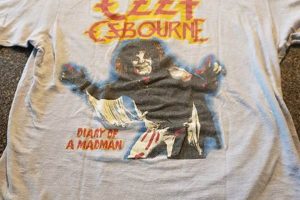
Apparel featuring the band Radiohead, produced in a prior era, constitutes a collectible category. These garments often display design elements and fading indicative of their age, serving as relics of past tours, album releases, or specific periods of the band’s history. A worn t-shirt displaying the artwork from “OK Computer” dating back to 1997 exemplifies this category.
Such items hold value beyond their utilitarian function as clothing. They represent a tangible connection to a particular musical act and its associated cultural significance. Their worth is often derived from rarity, condition, and the historical context they embody. Ownership can signify a shared interest and belonging within a community of fans, fostering a sense of identity and connection to the band’s legacy.
The subsequent sections will delve into the factors influencing the value of these articles, methods for authenticating their vintage, and the market dynamics that govern their acquisition and sale. Examination of the design variations, printing techniques, and fabric compositions will further illuminate the characteristics that define these sought-after items.
Acquiring Authentic Radiohead Band Apparel from a Prior Era
This section provides guidance on identifying and acquiring genuine articles of clothing bearing the Radiohead name and dating back to the band’s earlier years. Due diligence is paramount in ensuring the authenticity and value of such collectibles.
Tip 1: Examine Printing Techniques. Screen printing was the dominant method during the 1990s and early 2000s. Modern digital printing often lacks the texture and imperfections characteristic of older screen-printed items. Inspect for signs of cracking or fading in the print, which are indicative of age.
Tip 2: Assess Fabric and Construction. Older t-shirts typically feature single-stitch construction on the sleeves and hem. Examine the fabric composition; heavier cotton blends were common in earlier decades. The presence of a single stitch is a strong indicator of vintage, although not definitive.
Tip 3: Research Tag Styles and Brands. Prior to standardized sizing, tag styles varied significantly. Research the brands commonly used by concert merchandisers during the band’s formative years. A specific brand and tag style can corroborate the garment’s purported age.
Tip 4: Scrutinize Design Elements. Compare the graphic design to known tour merchandise or album artwork from the period. Discrepancies in color, font, or imagery may suggest a reproduction or unauthorized item. Reference official tour programs and promotional materials.
Tip 5: Consider Condition and Rarity. While some wear and tear is expected, excessive damage can diminish value. Rare designs, limited-edition releases, and shirts from significant tours command higher prices. Assess the item’s overall condition relative to its rarity.
Tip 6: Consult with Experts and Online Communities. Seek advice from experienced collectors and online forums dedicated to vintage band merchandise. Their collective knowledge can assist in verifying authenticity and assessing fair market value. Engage with established collectors.
Careful examination of printing, fabric, construction, design, and a thorough understanding of historical context will aid in discerning genuine items from reproductions. Consulting with knowledgeable sources further enhances the likelihood of acquiring authentic pieces.
The following sections will address the preservation and care of these vintage items, ensuring their longevity and value for future collectors.
1. Rarity of design

Design rarity constitutes a primary determinant of value within the market for vintage Radiohead apparel. Limited production runs, exclusive releases, and unique design elements contribute to a garment’s scarcity, directly impacting its desirability among collectors.
- Tour-Specific Graphics
Apparel produced exclusively for a particular tour often features graphics and dates unique to those performances. These items, available only at concert venues, become increasingly scarce as time elapses, particularly if the tour was short-lived or marked a significant event in the band’s history. The relative exclusivity drives demand and subsequent market value.
- Promotional Items
Items distributed as promotional materials, such as those given away at record stores or radio stations prior to an album release, frequently exist in limited quantities. Their distribution channels were often localized, making them difficult to acquire outside specific geographic areas. The scarcity inherent in promotional pieces significantly elevates their collector appeal.
- Limited Edition Prints
Certain designs may have been released in deliberately restricted numbers, featuring unique color variations, alternate artwork, or commemorative details. The intentional limitation of production renders these items inherently rare from the outset, ensuring high demand within the collector community and correspondingly higher resale values. A specific numbered run on a shirt design ensures it being a rare collectible.
- Misprints and Errors
Inadvertent printing errors or design flaws can, paradoxically, increase an item’s rarity and value. Imperfect examples, such as misaligned graphics or color variations resulting from production mistakes, become unique anomalies sought after by collectors seeking distinctive and uncommon pieces. This results in an unintended form of scarcity based on production failure.
The convergence of tour-specific exclusivity, limited promotional distribution, deliberate print restrictions, and even accidental misprints collectively establishes the rarity of designs within the vintage Radiohead apparel market. Each factor contributes to a garment’s unique story and its resulting collectibility, driving demand and influencing its perceived value within the collector community.
2. Fabric composition

The fabric composition of an older Radiohead band shirt serves as a critical indicator of its age and authenticity. Prior to the widespread adoption of synthetic blends, 100% cotton was the predominant material utilized in the manufacture of apparel, including concert merchandise. Consequently, a vintage article is more likely to exhibit a pure cotton weave than a modern reproduction incorporating polyester or rayon. The type of cotton also matters. Open-end yarn was commonly used during the relevant era, resulting in a coarser texture compared to ringspun cotton prevalent in contemporary garments. This difference in texture provides a tangible clue to the garment’s origin. As an example, a shirt purported to be from the early 1990s that features a noticeably smooth, synthetic blend would raise immediate suspicion regarding its true age.
Furthermore, the weight and weave of the fabric contribute to the perceived quality and durability, characteristics sought by collectors. Heavier-weight cotton, typically measured in ounces per square yard, was frequently employed in vintage t-shirts, lending them a more substantial feel compared to lighter, thinner modern alternatives. The type of weave, such as jersey or interlock, can also provide insights into the manufacturing techniques of the period. Fading patterns and wear characteristics develop differently in various fabric compositions over time. Natural fibers tend to fade and distress in a manner distinct from synthetic blends, allowing experienced collectors to discern subtle differences that corroborate a garment’s vintage status. For instance, a naturally faded black cotton shirt from a 1995 tour is distinct from the consistent, even color of modern clothing.
In summary, the fabric composition of an older Radiohead shirt offers valuable information regarding its potential age and authenticity. The prevalence of 100% cotton, the use of open-end yarn, the weight and weave of the fabric, and the unique wear patterns that develop over time all contribute to a comprehensive assessment of the item’s vintage status. While fabric analysis alone is not conclusive, it represents a significant factor in the authentication process, working in conjunction with other indicators such as printing techniques, tag styles, and design elements to establish the garment’s provenance. Challenges lie in fabric degradation over time and the increasing sophistication of counterfeiters to replicate vintage characteristics.
3. Printing era
The printing era is a crucial factor in authenticating apparel featuring Radiohead from prior decades. The methods, materials, and aesthetic conventions of printing evolved considerably over time. Consequently, the specific techniques employed on a garment serve as a chronological marker. Examining the printing style offers insight into when the item was likely produced, informing judgments about its potential authenticity. For example, a shirt purporting to be from the mid-1990s that exhibits the smooth, photo-realistic quality of modern digital printing would raise immediate suspicion. The earlier era relied heavily on screen-printing techniques which have distinct characteristics.
Screen printing, the dominant method during Radiohead’s rise to prominence, involved applying ink through a stencil onto the fabric. This process typically resulted in a thicker ink layer, often with visible texture and minor imperfections. Over time, the ink is prone to cracking, fading, and developing a characteristic “worn” appearance. The type of ink used plastisol versus water-based also influences the print’s durability and texture. An analysis of the ink type provides further clues. Furthermore, the number of colors used in a design impacts production complexity and cost. Early shirts often featured simpler designs with fewer colors due to technological limitations and budgetary constraints. Modern printing allows far more intricate and color rich designs than older methods.
In summary, the printing era exerts a direct influence on the characteristics of vintage Radiohead shirts. Examining printing techniques provides insights into the age and authenticity of the garment, differentiating genuine pieces from modern reproductions. The identification of screen-printing characteristics, analysis of ink types, and assessment of color complexity collectively contribute to a comprehensive evaluation of the item. The progression of printing technology acts as a reliable, though not infallible, chronological indicator. Further examination of tag styles and fabric materials are also important to consider.
4. Tag identification

The identification of tags sewn into vintage Radiohead shirts forms a critical aspect of authentication. These tags, typically affixed to the neck or hem, provide valuable information regarding the garment’s manufacturer, fabric content, and origin. Variations in tag styles, logos, and labeling practices reflect the prevailing standards and conventions of different eras. Therefore, inconsistencies between the tag and the shirt’s purported date of production suggest potential inauthenticity. For example, a shirt claiming to originate from the “OK Computer” era (1997) bearing a tag design that was not introduced until the 2000s is highly suspect.
Different apparel manufacturers possessed distinct tag designs and branding strategies. Researching common manufacturers of concert merchandise during Radiohead’s formative years allows for comparing observed tags against established benchmarks. Companies such as Brockum, Giant, and Anvil were prevalent suppliers, and each maintained recognizable tag characteristics. The presence of a specific manufacturer’s tag, known to be associated with tour merchandise from a specific period, lends credibility to the garment’s claim of vintage. Furthermore, examining the fabric content information listed on the tag provides corroborating evidence. A tag indicating a fabric blend that was not commercially available during the supposed era casts doubt on its vintage.
In summary, thorough examination of tags sewn into vintage Radiohead shirts is indispensable for authentication purposes. Tag styles, manufacturer logos, labeling practices, and fabric content declarations offer crucial clues regarding the garment’s age and provenance. While tag identification alone does not guarantee authenticity, it serves as a vital component in a comprehensive evaluation, working in conjunction with analyses of printing techniques, fabric composition, and design elements. The nuances of tag styles and manufacturing history, therefore, are a key for collectors seeking to acquire the legitimate “radiohead shirt vintage.”
5. Construction style

The construction style of a Radiohead band shirt produced in a prior era offers significant insights into its authenticity and potential value. Manufacturing techniques and prevailing industry standards evolved over time, leaving distinct characteristics that can differentiate a genuine vintage garment from a more recent reproduction.
- Single vs. Double Stitching
A primary indicator of vintage construction is the presence of single-stitch seams on the sleeves and hem. This technique, where a single line of stitching secures the fabric, was common in older garments. Double-stitched seams, offering greater durability, became more prevalent in later years. The presence of single stitching, therefore, suggests a manufacturing date prior to the widespread adoption of double-stitching methods. It’s vital to note this is not foolproof as some manufacturers persisted in single-stitch construction for longer than others. However, the prevalence of single stitching provides a strong indicator of vintage. Examples in the past, may use double stitching due to wear and tear with single stitching. These imperfections can indicate the vintage of radiohead shirt. This is a crucial aspect in collecting vintage shirt.
- Seam Construction and Thread Type
Examining the type of seams used and the thread composition provides further clues. Overlock stitching was a common method for finishing seams, creating a clean edge and preventing fraying. The type of thread, whether cotton or synthetic, also offers insights. Older garments often used cotton thread, which tends to degrade and discolor over time, unlike more durable synthetic threads. The quality of the seam work and thread will be less resilient which makes it vintage. These are indicators of genuineness of radiohead shirt vintage.
- Collar Construction
The construction of the collar offers another point of analysis. Older t-shirts often featured a simpler, ribbed collar construction with a narrower band. Modern shirts typically employ wider, more reinforced collars designed to retain their shape over extended wear. Examination of the collar’s width, stitching pattern, and fabric texture can, therefore, provide evidence supporting or refuting a garment’s vintage. A newer shirt will have stronger resilience, and the texture would be different from older shirts. Therefore, it will affect the aesthetic, and quality.
- Overall Garment Shape and Fit
The overall shape and fit of the garment reflect the prevailing fashion trends of the era in which it was produced. Older t-shirts often featured a boxier silhouette and shorter sleeves compared to the more tailored fits of modern apparel. Variations in sizing standards also contribute to differences in fit. Comparing the garment’s dimensions against known sizing charts from the relevant period helps to corroborate its vintage. The shape will be inconsistent, or skewed from the past. Therefore, it will change the value and collectibility of radiohead shirt vintage.
The construction style of a vintage Radiohead shirt represents a collection of factors that, when analyzed collectively, contribute to a comprehensive assessment of its age and authenticity. Single-versus double-stitching, seam construction, collar style, garment shape, and fit all provide valuable clues regarding the garment’s origins. Although no single element guarantees authenticity, a holistic approach incorporating these construction-related indicators enhances the likelihood of accurate vintage and its collectibility.
6. Condition assessment
Condition assessment plays a pivotal role in determining the value and collectibility of Radiohead shirts from prior eras. The physical state of the garment directly influences its desirability among collectors and its long-term preservation potential. A meticulous evaluation of various factors is essential for accurate grading.
- Fabric Integrity and Damage
The presence of holes, tears, stains, or significant fabric weakening critically impacts condition. Small pinholes, particularly in areas of stress like the collar or shoulders, are common in older shirts and may be tolerated, but larger damages diminish value substantially. Stains, especially those that are permanent or highly visible, detract from the garment’s overall appearance. Fabric weakening, often evidenced by a thin or brittle feel, reduces its structural integrity and makes it more prone to future damage. As example, a pristine shirts, with minimal damage may be evaluated as collectible or valuable.
- Print Quality and Fading
The vibrancy and integrity of the printed design are crucial aspects of condition. Significant fading, cracking, or peeling of the print detracts from its visual appeal and reduces its value. Minor cracking, consistent with age and gentle wear, may be acceptable, but extensive damage indicates poor storage or excessive use. The clarity and sharpness of the original design are also considered; a blurry or distorted print lowers its grade. A shirt with minimal damage, and print, would increase its value, because the print has been preserved.
- Tag Condition and Legibility
The state of the garment’s tag contributes to its overall assessment. A missing tag, while not always a deal-breaker, reduces its historical documentation and may raise questions about authenticity. A legible tag with intact information strengthens its provenance and increases its value. Damaged or faded tags, particularly those with illegible text, diminish its appeal. If the tag is preserved, value goes up, and it makes it much easier for collectors to examine the radiohead shirt vintage.
- Overall Cleanliness and Odor
The presence of dirt, stains, or unpleasant odors negatively affects the perceived condition of the shirt. While minor soiling may be remedied through careful cleaning, deeply ingrained stains or persistent odors can be difficult to remove and detract from its desirability. A clean, fresh-smelling shirt commands a higher price than one that is soiled or has an unpleasant odor. Also, collectors in the past, have had this issue on finding valuable pristine shirts. Cleanliness contributes to the shirts overall collectibility.
These condition-related factors are integral to evaluating apparel featuring Radiohead, released decades ago. The fabric integrity, print quality, tag condition, and overall cleanliness all collectively determine the item’s value in the collectors market. A comprehensive evaluation necessitates a meticulous assessment of these elements, offering a greater likelihood of identifying a high-value, authentic shirt for future buyers.
Frequently Asked Questions
This section addresses common inquiries regarding vintage Radiohead apparel, providing concise and informative answers based on established knowledge within the collector community.
Question 1: What constitutes a “vintage” Radiohead shirt?
Generally, a vintage garment is defined as being at least 20 years old. However, within the collector market, items from the 1990s and early 2000s, particularly those associated with specific album releases or tours, are frequently classified and sought after as vintage.
Question 2: How can the authenticity of a purported vintage item be verified?
Authenticity assessment involves examining various factors, including printing techniques, fabric composition, tag styles, construction methods (single vs. double stitching), and the design’s alignment with known tour merchandise or promotional items from the relevant period. Consulting with experienced collectors is also recommended.
Question 3: Which design elements increase the value of apparel featuring Radiohead?
Rarity is a primary driver of value. Shirts associated with limited-edition releases, tour-exclusive designs, promotional items distributed in small quantities, and even misprinted examples tend to command higher prices within the collector market.
Question 4: What impact does the condition have on pricing for items?
Condition directly influences the value of articles. Garments in excellent condition, free from significant damage, stains, or fading, are more desirable and therefore command higher prices. However, minor wear consistent with age may be acceptable, particularly in rare or highly sought-after designs.
Question 5: Where can these vintage shirts be acquired?
These items are available through a variety of channels, including online marketplaces (e.g., eBay, Etsy), vintage clothing stores, specialized collector websites, and auctions. Due diligence is essential when purchasing from unfamiliar sources.
Question 6: What are the key differences between screen-printed and modern digitally-printed merchandise?
Screen printing, the predominant method in the past, involves applying ink through a stencil. The process often results in a thicker ink layer with visible texture and minor imperfections. Modern digital printing typically produces smoother, more detailed images with a wider color range, but may lack the vintage aesthetic sought by collectors.
In summary, verifying authenticity, assessing condition, and understanding the factors that influence value are crucial aspects of navigating the market for vintage Radiohead apparel. Careful research and consultation with knowledgeable sources are strongly advised.
The subsequent section will explore the long-term preservation strategies for these items.
Radiohead Shirt Vintage
This exploration has illuminated the multi-faceted nature of apparel featuring Radiohead from previous decades. The analysis of fabric composition, printing techniques, tag identification, construction styles, and condition assessment provides a framework for understanding the factors that influence value and authenticity. Establishing a verifiable provenance requires meticulous attention to detail and a thorough understanding of historical context.
The market for garments bearing the Radiohead name represents more than mere commerce; it embodies the enduring connection between a band and its audience. Preserving these artifacts is essential for future generations seeking to understand the cultural impact of Radiohead’s music and its lasting influence on popular culture. Further research and documentation will contribute to a more robust understanding of this specific area of music memorabilia.