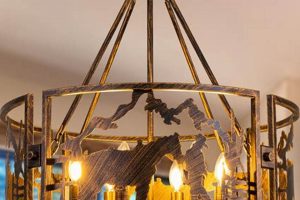
Illumination fixtures designed for exterior use and mounted on vertical supports, reflecting design aesthetics from previous eras, are commonly sought after for their unique character. These lighting solutions often feature historical design elements, such as intricate metalwork, period-specific glass types, and finishes that evoke a sense of nostalgia. For example, a cast iron lamp with a fluted glass shade, standing atop a decorative pole, exemplifies this style.
These fixtures are valued for their ability to enhance the curb appeal of properties and contribute to a sense of timeless elegance. Their incorporation into landscape design can provide both functional lighting and a visual connection to architectural styles of the past. Historically, such lighting played a significant role in public spaces and private residences, offering both safety and an aesthetic element representative of the period.
The following sections will delve into various aspects of selecting, restoring, and maintaining these types of external lighting solutions, offering guidance for those seeking to incorporate them into their outdoor spaces. Discussions will encompass materials, styles, restoration techniques, and energy efficiency considerations.
Guidance on Integrating Period-Appropriate Exterior Luminaires
The following suggestions offer direction on selecting, installing, and maintaining exterior illumination fixtures that evoke historical design aesthetics, ensuring longevity and visual harmony with architectural surroundings.
Tip 1: Material Assessment. Prioritize fixtures constructed from durable materials such as cast iron, brass, or copper to withstand external environmental factors. Aluminum, while lighter, should possess a protective coating to prevent corrosion. Original materials will contribute most to the historical aesthetic.
Tip 2: Style Harmonization. Choose designs that complement the existing architectural style of the property. Victorian-era homes benefit from ornate designs, while Craftsman-style homes suit simpler, geometric forms. Researching historical precedents is crucial for accurate style matching.
Tip 3: Globe and Lens Selection. Opt for glass or acrylic globes and lenses that diffuse light effectively and resist discoloration. Clear glass replicates the appearance of early electric lighting, while frosted or seeded glass offers a softer glow. Consider the impact on light pollution.
Tip 4: Finish Considerations. Select finishes that are historically accurate and weather-resistant. Powder coating, oil-rubbed bronze, or painted finishes provide durability. Regularly inspect and maintain the finish to prevent rust or degradation.
Tip 5: Height and Placement. Install these lights at an appropriate height to provide adequate illumination without creating glare. Consider the scale of the fixture in relation to the post and surrounding landscape. Proper placement enhances both security and visual appeal.
Tip 6: Electrical Safety. Ensure all wiring and connections are performed by a qualified electrician, adhering to local electrical codes. Grounding is essential for preventing electrical hazards. Routine inspections of wiring are recommended.
Tip 7: Energy Efficiency. Integrate LED bulbs that mimic the color temperature of incandescent lamps for energy savings without sacrificing the desired aesthetic. Ensure the fixture is rated for wet locations. This will result in reduced energy usage and prolonged bulb lifespan.
The successful integration of these types of luminaires enhances the aesthetic appeal of properties while providing functional illumination. Careful consideration of materials, style, and safety ensures lasting value and historical accuracy.
Subsequent sections will elaborate on specific restoration techniques and maintenance procedures to preserve the integrity of these external lighting fixtures.
1. Authenticity

Authenticity, in the context of external illumination fixtures from previous eras, directly impacts their value and historical significance. A fixture’s demonstrable origin and adherence to original manufacturing techniques and materials dictate its desirability among collectors and those seeking historically accurate restoration. The presence of original markings, patina consistent with age, and undisturbed construction techniques serve as indicators of genuine vintage status. Absence of these elements suggests reproduction or extensive modification, diminishing the fixture’s authenticity.
For example, a cast iron post light bearing the foundry mark of a specific manufacturer known to have operated in the early 20th century, coupled with evidence of original paint layers beneath subsequent coatings, provides verifiable authentication. Conversely, a fixture lacking such markings, exhibiting modern welding techniques, or constructed from materials inconsistent with the purported era suggests a lack of authenticity. The market value of the former fixture will invariably exceed that of the latter due to its verified historical provenance. Furthermore, alterations affecting the light’s original function or design compromise its historical accuracy.
The pursuit of authentic luminaires presents challenges in distinguishing genuine articles from reproductions. Rigorous examination, expert consultation, and thorough documentation are essential. The preservation of authenticity ensures the light fixtures retain both aesthetic and historical importance, offering tangible links to past eras. This consideration connects to the overarching theme of appreciating and maintaining the historical integrity of outdoor spaces through appropriate lighting choices.
2. Materials
The constituent substances of external lighting fixtures from previous eras are central to their aesthetic, longevity, and historical accuracy. Material selection during manufacture and subsequent restoration efforts directly influences the functional lifespan and perceived value of these luminaires.
- Cast Iron Composition
Cast iron was frequently employed in the construction of posts and fixture housings due to its durability and ability to be molded into intricate designs. Its susceptibility to rust necessitates protective coatings and regular maintenance. Original cast iron components contribute significantly to the historical authenticity of the lighting.
- Glass Properties
Various glass types, including clear, frosted, and colored variants, were utilized in globe and lens construction. The optical properties of the glass impact light diffusion and aesthetic character. Replacement glass should ideally match the original type to maintain historical accuracy.
- Copper and Brass Elements
Copper and brass were incorporated for wiring, decorative elements, and occasionally, entire fixtures due to their corrosion resistance and malleability. The natural patina that develops on these metals over time contributes to the aged aesthetic. Proper cleaning techniques are essential to preserve the patina while preventing further corrosion.
- Finishes and Coatings
Historically, paint, enamel, and galvanization were used to protect metal components from environmental degradation. The choice of finish impacts both the visual appearance and the long-term durability of the fixture. When restoring, selecting historically appropriate finishes is paramount to maintaining authenticity.
The careful consideration of these material aspects is fundamental to the successful preservation and integration of external lighting fixtures from previous eras. Proper material identification and maintenance are crucial for ensuring that these luminaires continue to function and contribute to the aesthetic character of outdoor spaces.
3. Design
The design characteristics of external illumination fixtures reflecting historical periods are crucial in defining their aesthetic value and historical relevance. These design elements, encompassing form, ornamentation, and stylistic influences, determine how well the luminaires integrate into period-appropriate architectural settings.
- Stylistic Period Influences
Luminaires often reflect distinct stylistic periods, such as Victorian, Art Deco, or Arts and Crafts. Victorian-era designs incorporate ornate details and curved lines, while Art Deco emphasizes geometric shapes and streamlined forms. Arts and Crafts styles feature natural motifs and handcrafted elements. Accurate identification of the original stylistic period is essential for appropriate placement and restoration.
- Ornamentation and Detailing
The level and type of ornamentation contribute significantly to the design aesthetic. Intricate castings, filigree work, and decorative glass panels are common features. The preservation or accurate reproduction of these details is vital for maintaining the design integrity of the fixture. Consider, for example, the use of acanthus leaves or egg-and-dart patterns in classical-inspired designs.
- Form and Proportion
The overall shape and proportions of the luminaire influence its visual impact. Tall, slender posts complement certain architectural styles, while shorter, wider designs suit others. Maintaining the original proportions during restoration is crucial for preserving the intended design aesthetic. A mismatch in scale can detract from the overall appearance of the property.
- Material and Finish Harmony
The choice of materials and finishes contributes to the overall design coherence. Certain materials, such as cast iron or copper, are associated with specific historical periods. The finish, whether painted, powder-coated, or left to develop a natural patina, should complement the material and the surrounding architectural elements. Incongruous material and finish choices can diminish the aesthetic value of the fixture.
These design facets underscore the importance of careful consideration when selecting, restoring, or integrating external luminaires reflecting historical periods. Adherence to the original design principles ensures the fixtures enhance the aesthetic character of the outdoor space and contribute to a cohesive architectural narrative.
4. Restoration
Restoration of external luminaires from prior eras involves a systematic process to return these fixtures to a condition reflecting their original appearance and functionality. This undertaking requires specialized skills and a thorough understanding of historical materials and manufacturing techniques.
- Structural Repair and Reinforcement
This facet encompasses addressing physical damage such as cracks, breaks, and corrosion that compromise the structural integrity of the fixture. Welding, brazing, and patching techniques are employed to repair or reinforce weakened components. The choice of repair method must consider the original materials and construction methods to ensure compatibility and prevent further damage. For instance, using modern welding techniques on delicate cast iron components could lead to thermal stress and cracking. Structural integrity is fundamental to both the aesthetic appeal and safety of the restored light.
- Surface Refinishing and Corrosion Removal
This involves the removal of existing paint layers, rust, and other surface contaminants to prepare the metal for refinishing. Methods range from gentle chemical stripping to abrasive blasting, selected based on the substrate material and the extent of corrosion. Refinishing with historically appropriate paints or coatings is crucial to preserving the light’s original aesthetic. For example, applying a modern powder coat to a Victorian-era lamp post would deviate from its historical appearance and potentially diminish its value. Surface preparation directly impacts the adhesion and longevity of the new finish.
- Electrical System Rewiring and Component Replacement
This ensures the safe and reliable operation of the light. Original wiring, often deteriorated or non-compliant with modern safety standards, is replaced with new, code-compliant wiring. Sockets, switches, and other electrical components are inspected and replaced as needed. Maintaining electrical safety is paramount; improper wiring can pose a fire hazard. Consider using LED bulbs designed to mimic the color temperature of incandescent lamps to balance energy efficiency with historical accuracy.
- Glass Replacement and Restoration
Damaged or missing glass globes and lenses are replaced with replicas or carefully restored to their original condition. Sourcing historically accurate glass can be challenging, often requiring custom fabrication. Cleaning and repairing existing glass, if possible, preserves the original material and adds to the authenticity of the fixture. The quality and clarity of the glass directly impact the light’s illumination characteristics and aesthetic appeal. For example, using clear glass in a fixture originally designed with frosted glass will alter the light’s diffusion and create a different visual effect.
These facets of restoration are integral to preserving the aesthetic and functional integrity of external luminaires from prior eras. Careful execution of these processes ensures that these lights continue to contribute to the historical character of outdoor spaces while meeting modern safety standards. In summary, an effective restoration project provides a functional and visually appealing end product that retains its historical authenticity, connecting the past and present in a tangible way.
5. Placement
The strategic positioning of external lighting fixtures from prior eras is crucial for maximizing both their functional and aesthetic contributions to a property. Placement directly impacts the visibility of architectural features, the safety of pathways, and the overall ambiance of the outdoor space. Improper location diminishes the intended design effect and compromises the utility of the light source. For example, positioning a post light too close to a building may create harsh shadows and obscure architectural details, while locating it too far from a walkway may leave pedestrians in darkness, increasing the risk of accidents.
Effective placement considerations include the scale of the luminaire in relation to its surroundings, the desired level of illumination, and the architectural style of the property. A tall, ornate Victorian-style post light might be ideally situated near a grand entrance to emphasize its architectural significance. Conversely, a shorter, simpler Arts and Crafts-style fixture would be more appropriately placed along a garden path, providing subtle illumination without overpowering the landscape. Furthermore, placement should account for the surrounding environment, avoiding locations that may obstruct views or create light pollution. Understanding the intended purpose of the light whether for security, wayfinding, or aesthetic enhancement is paramount in determining the optimal location.
In summary, the deliberate and thoughtful placement of historical lighting fixtures is essential for realizing their full potential. Factors such as architectural style, scale, illumination needs, and environmental impact must be carefully considered to achieve a harmonious integration of the lighting with its surroundings. Improper placement negates the aesthetic value and functional benefits of the lighting. By carefully evaluating these factors, homeowners and designers can ensure that these luminaires not only provide illumination but also enhance the overall character and safety of the outdoor space.
6. Illumination
Illumination, in the context of luminaires designed to evoke historical eras, transcends mere visibility, becoming an integral element of aesthetic coherence and functional utility. The quality and characteristics of light emitted from external luminaires directly influence the perception of architectural details, landscape features, and the overall ambiance of outdoor spaces.
- Color Temperature and Historical Accuracy
The color temperature of the light source significantly impacts the visual authenticity of fixtures. Incandescent lamps, historically prevalent, produced a warm, yellowish light (around 2700K). Modern LED replacements can mimic this color temperature, preserving the intended aesthetic. Use of cooler, bluer light (above 4000K) detracts from the historical accuracy, creating an anachronistic effect. For example, a Victorian-era fixture emitting a harsh, blue light would appear stylistically incongruous.
- Luminous Intensity and Glare Control
The intensity of the light output should be carefully calibrated to avoid glare and light pollution. Excessive brightness can obscure architectural features and disrupt the surrounding environment. Proper glare control, achieved through appropriate globe or lens selection, is essential for creating a visually comfortable and aesthetically pleasing effect. A high-intensity light source without diffusion can create harsh shadows and detract from the historical ambiance.
- Light Distribution and Coverage
The pattern of light distribution influences the visibility and safety of walkways and outdoor areas. Uniform light distribution minimizes shadows and ensures consistent illumination. Conversely, focused beams of light can highlight specific architectural details or landscape features. The choice of light distribution pattern should align with the intended function and aesthetic objectives of the fixture. A wide-angle distribution pattern may be suitable for illuminating a large area, while a narrow beam is better suited for accentuating a particular architectural element.
- Energy Efficiency and Sustainability
While historical accuracy is a primary consideration, energy efficiency is an increasingly important factor. LED technology offers the opportunity to replicate the aesthetic qualities of historical light sources while significantly reducing energy consumption. Utilizing LED bulbs with appropriate color temperature and light output can minimize the environmental impact without sacrificing the desired visual effect. Furthermore, the long lifespan of LED bulbs reduces maintenance requirements, ensuring cost-effectiveness and sustainability.
These facets of illumination demonstrate that the careful selection and control of light are crucial for maximizing the aesthetic and functional value of historical luminaires. Attention to color temperature, intensity, distribution, and energy efficiency ensures that these fixtures not only provide illumination but also enhance the overall character and sustainability of outdoor spaces. The integration of these considerations ensures vintage outdoor post lights retain their heritage while meeting modern expectations for responsible energy consumption and efficient use.
7. Durability

The longevity of external illumination fixtures, especially those designed to evoke historical periods, is intrinsically linked to their inherent construction and materials. Environmental factors, including precipitation, temperature fluctuations, and ultraviolet radiation, exert constant pressure on these structures. The failure to withstand these elements results in corrosion, structural weakening, and eventual functional failure. Consequently, the initial material composition, manufacturing processes, and subsequent maintenance protocols determine the lifespan and continued aesthetic value of these luminaires. For example, a cast iron post light subjected to prolonged exposure to salt spray without appropriate protective coatings will corrode rapidly, undermining its structural integrity and visual appeal.
Specific material choices, such as the use of galvanized steel or powder-coated aluminum, offer enhanced resistance to corrosion. Additionally, the design itself can influence longevity. Fixtures with intricate ornamentation may trap moisture and debris, accelerating deterioration. Regular cleaning and the application of protective coatings are essential for mitigating the effects of environmental exposure. The selection of appropriate replacement parts during restoration is also critical. Substituting non-compatible materials or using inferior-quality components can compromise the overall durability of the fixture. The ongoing upkeep can significantly extend the lifespan of antique outdoor lighting solutions. In this context, consistent protective measures are beneficial.
The understanding of durability, therefore, is not merely an academic consideration, but a practical necessity for preserving the investment in these lighting fixtures and maintaining the aesthetic coherence of historical landscapes. While selecting the correct illumination style to match the time period of the building, taking the time to perform maintenance or sourcing replacement parts can ensure many years of lighting. Failure to address durability concerns leads to premature failure, requiring costly repairs or replacements and detracting from the historical character of the property. By prioritizing durability and implementing appropriate maintenance strategies, owners can ensure that these lighting fixtures continue to provide illumination and enhance the aesthetic appeal of their properties for years to come.
Frequently Asked Questions
This section addresses common inquiries regarding the selection, restoration, and maintenance of outdoor lighting fixtures designed to evoke vintage aesthetics.
Question 1: What are the primary indicators of authenticity in an old outdoor post light?
Key indicators include original manufacturer markings, the presence of a patina consistent with age, undisturbed construction techniques, and verifiable historical documentation linking the fixture to a specific period or manufacturer. Lack of these elements suggests reproduction or significant modification.
Question 2: Which materials offer the greatest durability for external post lights?
Cast iron, copper, and brass, when properly maintained, offer superior durability in outdoor environments. Protective coatings, such as powder coating or galvanization, enhance corrosion resistance. Aluminum, while lighter, requires a durable protective coating.
Question 3: How should design be considered for external luminaires to evoke certain historical eras?
Consider the stylistic elements, ornamentation, form, and material harmony. Accurately match the fixture’s design to the architectural style of the property and the specific historical period it represents. Researching historical precedents is crucial for proper stylistic alignment.
Question 4: What are the fundamental steps in restoring period-appropriate external lighting fixtures?
Restoration encompasses structural repair and reinforcement, surface refinishing and corrosion removal, electrical system rewiring and component replacement, and glass replacement and restoration. Each step requires specialized techniques and attention to historical accuracy.
Question 5: What should be the guiding principles in placing an outdoor post light fixture?
Placement must account for the scale of the fixture, the desired level of illumination, the architectural style of the property, and the surrounding environment. Proper placement ensures optimal visibility, safety, and aesthetic integration.
Question 6: How can modern LED technology be integrated with historically themed luminaires?
Select LED bulbs that mimic the color temperature of incandescent lamps (around 2700K) to maintain historical accuracy while benefiting from energy efficiency. Ensure the fixture is rated for wet locations when using LED bulbs.
These answers offer guidance for integrating historical lighting solutions into modern landscapes. Careful consideration of these factors ensures lasting value and aesthetic success.
The following section will present a summary and conclusion of the essential themes discussed.
Vintage Outdoor Post Lights
This exploration of vintage outdoor post lights has traversed critical aspects, ranging from authenticating historical pieces to ensuring their enduring functionality. The discussion emphasized the necessity of informed material selection, stylistic alignment, and meticulous restoration techniques. Proper placement and illumination strategies were underscored as pivotal in maximizing both aesthetic impact and practical utility. Furthermore, the discourse addressed durability considerations and provided answers to frequently asked questions, solidifying a comprehensive understanding of these lighting fixtures.
The enduring appeal of vintage outdoor post lights lies in their capacity to bridge the past and present, adding character and historical depth to contemporary landscapes. As custodians of these artifacts, a commitment to preservation and responsible integration ensures that these lighting fixtures continue to illuminate and enrich the built environment for generations to come. Future research and innovation should focus on sustainable restoration practices and energy-efficient technologies, further extending the lifespan and relevance of these historically significant lighting solutions.