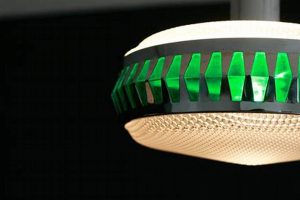
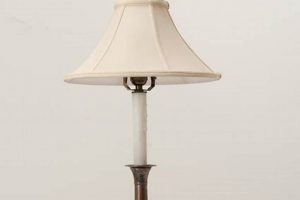
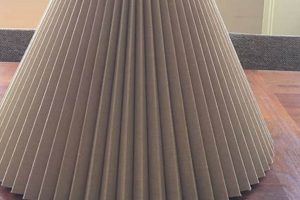
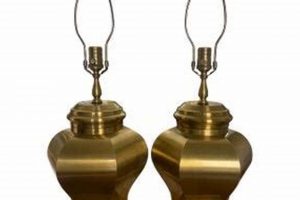
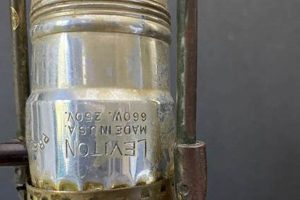
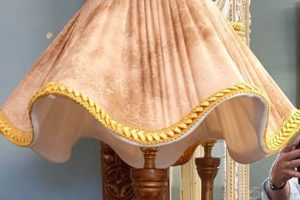
Illuminating fixtures produced during the nineteen sixties, often characterized by specific design trends and materials prevalent in that era, represent a distinct segment of decorative arts. Examples include lamps featuring atomic age motifs, geometric shapes, and the utilization of materials like teak, fiberglass, and chrome.
These lighting objects provide a tangible link to a significant period of design innovation and cultural change. Their acquisition and preservation are driven by an appreciation for their aesthetic value, historical significance, and potential investment opportunities. Their presence in a space evokes a particular ambiance reflective of mid-century modern aesthetics.
The subsequent sections will delve into the defining characteristics, collectibility, restoration considerations, and prevalent market trends associated with these iconic pieces of illumination.
Acquiring and Maintaining Mid-Twentieth Century Illumination
Careful evaluation and preventative maintenance are crucial when dealing with lighting from the 1960s. The following guidelines can help ensure the longevity and value of these artifacts.
Tip 1: Authentication: Verify the authenticity. Research known manufacturers and designs from the period. Look for identifying marks, labels, or signatures. Consult with experts to avoid replicas or misattributed pieces.
Tip 2: Condition Assessment: Thoroughly inspect the lamp for any structural damage, such as cracks, chips, or corrosion. Pay close attention to the wiring, sockets, and plugs. Deteriorated wiring poses a significant fire hazard and requires immediate replacement.
Tip 3: Material Sensitivity: Exercise caution when cleaning. Avoid harsh chemicals or abrasive cleaners that can damage delicate finishes like wood veneer, painted surfaces, or plated metal. Opt for gentle cleaning solutions and soft cloths.
Tip 4: Electrical Safety: Always disconnect the lamp from the power source before performing any maintenance or repairs. Consider having a qualified electrician rewire older lamps to meet current safety standards.
Tip 5: Shade Preservation: Original lampshades are often integral to the lamp’s overall aesthetic and value. Protect them from prolonged exposure to direct sunlight, which can cause fading and degradation.
Tip 6: Component Sourcing: When replacing parts, prioritize sourcing period-correct or sympathetic replacements. Using modern components can detract from the lamp’s historical accuracy and value.
Tip 7: Bulb Selection: Choose bulbs that are appropriate for the lamp’s wattage rating and aesthetic. Incandescent bulbs can generate excessive heat, potentially damaging the shade or other components. Consider using LED bulbs designed to mimic the warm glow of vintage bulbs.
Adhering to these points will help preserve the integrity and functionality of your lighting and ensure its continued appreciation for years to come.
The subsequent sections will offer more in-depth discussion about prevalent market trends associated with these lighting fixtures.
1. Design Aesthetics

Design aesthetics, particularly those of the 1960s, are fundamental to understanding the appeal and value of illumination devices from that era. The stylistic choices, material applications, and overall forms define a specific cultural and artistic period.
- Atomic Age Influence
The lingering influence of the Atomic Age manifested in designs featuring stylized representations of atomic structures, starburst patterns, and asymmetrical forms. These motifs reflected a fascination with science and the future. An example is a lamp with a multi-armed shade reminiscent of an atomic model, showcasing the period’s forward-thinking yet whimsical sensibility.
- Geometric Abstraction
Geometric shapes and abstract patterns were widely employed. Cubes, spheres, and cylindrical forms were combined to create visually striking and modern designs. A lamp consisting of stacked geometric shapes in contrasting colors exemplifies this trend, reflecting the era’s embrace of abstract expressionism and minimalist art.
- Space Age Modernism
Inspiration from the burgeoning space race led to designs incorporating sleek lines, futuristic shapes, and the use of new materials. Lamps resembling rockets or satellites, often constructed from chrome or plastic, were common. This aesthetic reflects the widespread optimism and technological advancement of the time.
- Pop Art Sensibilities
The Pop Art movement influenced lighting design with bold colors, playful forms, and references to popular culture. Lamps featuring vibrant hues, oversized shapes, or iconic imagery became fashionable. Such examples show the integration of high art and mass culture during the 1960s.
These aesthetic currents, embodied in lighting fixtures of the period, are not merely decorative choices; they are indicators of a cultural moment. The incorporation of these design principles enhances the historical significance and collectibility of these fixtures.
2. Material Composition

The material composition of illumination devices manufactured during the 1960s significantly influences their aesthetic, durability, and historical value. The era witnessed the proliferation of new materials and manufacturing techniques, impacting the design and construction of such items. For instance, the incorporation of teak wood, often sourced from Scandinavian furniture design, imparted a warm, organic aesthetic to lamp bases. Similarly, the utilization of chrome plating provided a sleek, modern contrast, reflecting the era’s embrace of technological advancements.
The choice of materials directly affects the preservation and restoration process. Identifying the constituent materials is crucial for employing appropriate cleaning and repair methods. Consider the difference between restoring a lamp base made of solid brass versus one constructed of plastic; the techniques and products used will vary significantly to avoid damage. Furthermore, the scarcity of certain materials or the complexity of their fabrication can impact the market value of a particular lamp. A rare lamp crafted from Murano glass, for example, commands a higher price due to its inherent material cost and the artisanal skill required for its creation.
In summary, material composition is an essential element in assessing lamps from the 1960s. Understanding the materials used, their properties, and their historical context not only enriches appreciation of these lighting fixtures but also informs effective conservation and evaluation strategies. Recognizing the materials allows for better cleaning options too.
3. Manufacturing Origin

The provenance of a lamp from the 1960s is intrinsically linked to its value, authenticity, and historical significance. Understanding the manufacturing origin, encompassing the designer, company, and country of production, provides critical insight into the lamp’s design, materials, and construction techniques. This information facilitates accurate identification and authentication, guarding against misrepresentation and fraudulent claims. For example, a lamp identified as a genuine Laurel Lamp Company creation, known for its sleek, minimalist designs and high-quality materials, commands a higher market value than a similar-looking but unverified piece. Conversely, a lamp misattributed to a prominent manufacturer may be significantly overvalued.
Furthermore, the manufacturing origin often reflects prevailing design trends and cultural influences of the time and place. Scandinavian lighting manufacturers, such as Louis Poulsen or Fog & Mrup, are recognized for their functional designs and use of natural materials like teak. Italian manufacturers, like Artemide, contributed innovative designs that embraced new materials like plastic and experimented with sculptural forms. Knowledge of these regional design characteristics allows collectors and enthusiasts to contextualize the lamp within its historical framework and appreciate its artistic merit. Moreover, the availability of replacement parts and repair expertise may vary depending on the manufacturing origin, impacting the long-term maintainability of the lamp.
In conclusion, the manufacturing origin is a crucial element in evaluating vintage lighting. It serves as a key determinant of authenticity, influences perceived value, and informs preservation efforts. Identifying and understanding the manufacturing origin allows for a deeper appreciation of the lamp’s historical context, artistic value, and potential collectibility, and mitigates risks associated with misidentification or inflated pricing.
4. Functional Condition
The operational state of vintage illumination pieces from the 1960s directly impacts their value, safety, and practicality. The functional condition of these items extends beyond mere illumination, encompassing the integrity of electrical components, structural stability, and original functionality.
- Electrical Integrity
The safety and usability of such lamps depend significantly on the condition of their electrical wiring, sockets, and switches. Deteriorated or frayed wiring poses a fire hazard and necessitates professional rewiring. Non-functional or damaged sockets render the lamp inoperable. Original switches may be brittle or unreliable due to age. Replacement of these components with modern alternatives must balance safety concerns with preserving the aesthetic integrity of the piece. The presence of original, yet functional, electrical components can increase the lamp’s value, but only if safe for contemporary use.
- Structural Stability
The physical structure of the lamp base, shade supports, and joints must be stable to ensure the lamp stands securely and the shade is properly supported. Cracks, loose joints, or corrosion can compromise the lamp’s stability, posing a risk of collapse or damage. Repairs may involve reinforcing weak points, replacing damaged components, or addressing corrosion. Structural repairs should be executed with materials and techniques compatible with the lamp’s original construction to maintain its aesthetic value and prevent further deterioration.
- Original Functionality
Some 1960s lamps incorporate features beyond basic illumination, such as dimmer switches, adjustable arms, or integrated lighting effects. The preservation of these original functionalities enhances the lamp’s value and appeal. Malfunctioning dimmer switches may require repair or replacement. Adjustable arms may become stiff or loose over time, requiring lubrication or tightening. Assessing and restoring these original functionalities necessitates specialized knowledge and skills, balancing preservation with practical usability.
- Shade Condition
The lamp shade plays a critical role in the lamp’s overall functionality by diffusing light and contributing to its aesthetic design. Tears, stains, or discoloration can detract from the lamp’s appearance and affect the quality of light emitted. Replacing a damaged shade with a period-correct replica may be necessary to restore the lamp’s functionality and aesthetic appeal. Cleaning and repairing original shades require careful handling to avoid further damage to delicate materials.
The functional condition serves as a pivotal consideration for enthusiasts and collectors. Addressing these aspects safeguards these illuminating fixtures, ensuring their continued enjoyment and preservation for future generations, all while mitigating potential safety hazards.
5. Rarity Factors

The scarcity of specific designs or models significantly influences the desirability and market value of lighting from the 1960s. Several elements contribute to this scarcity, enhancing the collectibility of select pieces.
- Limited Production Runs
Manufacturers sometimes produced lamps in limited quantities, either due to experimental designs, high production costs, or simply a lack of market demand at the time. These limited production items are inherently rarer than mass-produced models. For instance, a lamp designed by a renowned architect but produced in only a few hundred units represents a significant find for collectors, compared to a lamp that was commercially successful and widely distributed.
- Designer or Artisan Specificity
Lamps created by a celebrated designer, or handmade by a skilled artisan, often command higher prices due to their artistic merit and limited availability. The prestige associated with the designer’s name or the artisan’s unique craftsmanship amplifies the lamp’s perceived value. An example would be a lamp designed by a noted mid-century modern designer, such as Greta Grossman, versus a lamp of similar design produced anonymously.
- Material Scarcity or Uniqueness
The use of rare or unique materials in a lamp’s construction can significantly increase its rarity. Lamps utilizing exotic woods, hand-blown glass from a specific artisan, or incorporating experimental materials are highly sought after. Consider a lamp that incorporates Brazilian rosewood, now a restricted material, compared to one constructed from readily available oak.
- Survival Rate and Condition
Even if a lamp was initially produced in relatively large quantities, its current scarcity can be influenced by the number that have survived intact over time. Environmental factors, damage, or disposal contribute to a lower survival rate, making well-preserved examples more valuable. A lamp that was originally mass-produced but is now found only in pristine, original condition carries a premium over those in poor condition or with replaced components.
These factors collectively contribute to the rarity of 1960s lamps. Identifying and assessing these elements requires a nuanced understanding of design history, material science, and market dynamics, impacting both the perceived and actual value of such items.
6. Historical Provenance

The documented history of a “vintage 1960 lamp,” known as its historical provenance, is a significant factor influencing its value and desirability among collectors and enthusiasts. Tracing the lamp’s ownership, use, and presence within notable collections or historical events adds layers of significance beyond its inherent aesthetic or functional qualities.
- Previous Ownership by Notable Figures
Lamps once owned by prominent individuals, such as designers, artists, or celebrities, gain considerable value. Documented evidence, such as sales records or authenticated photographs, linking a lamp to a notable figure enhances its provenance and market appeal. For example, a “vintage 1960 lamp” previously owned by a recognized mid-century modern designer, with verifiable documentation, would be highly sought after by collectors.
- Appearance in Significant Historical Settings
Lamps featured in historically significant settings, such as iconic films, television shows, or exhibitions, acquire enhanced provenance. Evidence of a lamp’s presence in such settings, through photographs, film stills, or exhibition catalogs, establishes a connection to a broader cultural narrative. A “vintage 1960 lamp” appearing in a well-known film from the era, with verifiable visual documentation, adds to its historical significance and collector interest.
- Exhibition and Publication Records
Lamps that have been exhibited in reputable museums or galleries, or featured in design publications of the era, possess a strengthened historical record. Exhibition catalogs, scholarly articles, or design magazines providing documented evidence of a lamp’s exhibition or publication contribute to its provenance. A “vintage 1960 lamp” showcased in a significant design exhibition of the time, with corresponding documentation, gains validation and increased value.
- Family or Estate History
Even without connection to celebrities or media, a clear lineage of ownership can enhance provenance. Documentation showing continuous ownership within a family, particularly one with historical significance in a specific region or field, can be compelling. This creates a narrative around the object that increases the emotional and historical value. A “vintage 1960 lamp” passed down through generations, with documented family history, provides a tangible link to the past, adding depth and appeal.
The historical provenance serves to enrich the appreciation and value of these “vintage 1960 lamps” by grounding them within specific cultural, social, and historical contexts. Thoroughly researching and documenting a lamp’s history is crucial for both sellers seeking to maximize its value and collectors seeking to acquire authentic and historically significant pieces.
7. Market Valuation

The economic value assigned to illumination devices from the nineteen sixties, often called market valuation, is subject to fluctuations based on several intertwined factors. Condition, rarity, designer recognition, and prevailing design trends all exert influence on the price commanded by these items in the collector’s market. Increased demand for mid-century modern aesthetics typically correlates with elevated prices for representative pieces, including lamps from this era. Conversely, shifts in design preference or economic downturns can depress values. The assessment of market valuation is therefore critical for both buyers and sellers navigating this sector.
The practical application of market valuation knowledge extends to several areas. Collectors use this data to make informed purchase decisions, avoiding overpayment and identifying potential investment opportunities. Dealers rely on market valuation to establish appropriate pricing strategies, balancing profit margins with competitive positioning. Auction houses employ sophisticated valuation techniques to attract consignments and set pre-sale estimates. Restoration professionals consider market valuation to justify the cost of repairs, ensuring that restoration expenses align with the potential increase in the lamp’s value. Insurance companies utilize these values to provide adequate coverage for these often fragile items.
In conclusion, understanding market valuation is essential for anyone involved with vintage lighting from the nineteen sixties. This understanding requires monitoring current trends, researching historical sales data, and consulting with experts. Challenges arise from the subjective nature of aesthetic preferences and the inherent difficulty in assessing the true condition and authenticity of older items. Accurately gauging market valuation facilitates informed decision-making, protects investments, and promotes the responsible stewardship of these historically significant objects.
Frequently Asked Questions
The following questions address common inquiries regarding the acquisition, authentication, and preservation of vintage 1960 lamps.
Question 1: How can authenticity of 1960s-era lamps be verified?
Verification involves careful examination of identifying marks, manufacturer labels, and design characteristics consistent with the period. Consultation with knowledgeable appraisers or experts in mid-century modern design is recommended. Cross-referencing designs with known catalogs and archival materials can aid in confirming authenticity.
Question 2: What are the most common types of damage encountered in vintage 1960 lamps, and how are they addressed?
Typical damage includes deteriorated wiring, cracked or chipped glass components, and corrosion on metal surfaces. Addressing these issues requires professional rewiring to meet safety standards, careful repair or replacement of damaged glass, and appropriate cleaning and treatment of corroded metal. Prioritizing period-correct replacement parts is essential.
Question 3: What factors contribute to the market value of vintage 1960 lamps?
Market value is influenced by several factors, including the lamp’s condition, rarity, designer, and manufacturer. Provenance, or documented history of ownership, can also impact value. Current trends in mid-century modern design influence demand and subsequent pricing.
Question 4: Are replacement parts readily available for vintage 1960 lamps?
The availability of replacement parts varies depending on the lamp’s manufacturer and design. Sourcing period-correct components can be challenging and may require specialized expertise. Modern replacements may compromise the lamp’s aesthetic integrity and historical value.
Question 5: What precautions should be taken when using vintage 1960 lamps in a contemporary setting?
To ensure safety, professional rewiring is strongly recommended to meet current electrical standards. Appropriate bulb wattage should be observed to prevent overheating. Lamps should be placed on stable surfaces and away from flammable materials.
Question 6: How should vintage 1960 lamps be cleaned and maintained to preserve their condition?
Cleaning requires gentle methods and appropriate cleaning agents suitable for the lamp’s materials. Abrasive cleaners should be avoided. Regular dusting and occasional cleaning with a soft, damp cloth are generally sufficient. Professional cleaning is advisable for delicate or intricately designed lamps.
Understanding these key aspects is critical for responsible ownership and appreciation of these historical lighting fixtures.
The subsequent section will summarize the points covered.
Conclusion
This exposition has explored the defining characteristics, preservation considerations, and market dynamics surrounding illumination devices manufactured during the 1960s. Key elements influencing their value and collectibility include design aesthetics, material composition, manufacturing origin, functional condition, rarity factors, and historical provenance. Careful attention to authentication, restoration, and maintenance is paramount to preserving these objects for future generations.
The continued appreciation and responsible stewardship of these lighting fixtures ensures the preservation of a tangible link to a significant period in design history. Further research and documentation will enhance understanding of the cultural and aesthetic significance of “vintage 1960 lamps,” contributing to their enduring legacy.