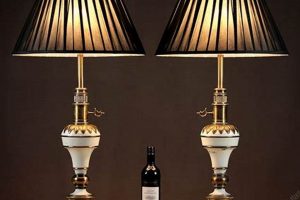
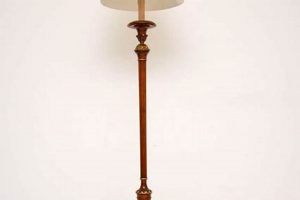
Illuminating homes during a transformative era, these lighting fixtures represent a distinct design aesthetic prevalent in the fourth decade of the 20th century. Often characterized by streamlined silhouettes and materials like chrome, Bakelite, and painted metal, these pieces provided functional illumination while reflecting the era’s design trends. For example, a floor lamp featuring a spun metal shade and a weighted base exemplifies the style.
The popularity of these lamps stemmed from a confluence of factors, including post-Depression economic recovery, the influence of Art Deco’s waning years, and the rise of industrial design. They offered an accessible way to incorporate modern style into homes, providing task lighting for reading and other activities. Their enduring appeal lies in their blend of functionality, durability, and a timeless aesthetic that complements various interior design styles.
The subsequent sections will delve into the materials commonly used in their construction, the defining design characteristics that set them apart, and provide guidance on how to identify and authenticate these historical lighting fixtures, and considerations for their restoration and preservation.
Tips for Acquiring and Maintaining 1940s Floor Lamps
These tips offer guidance for those seeking to acquire or preserve lighting from this period. Adherence to these principles can aid in informed decision-making.
Tip 1: Identify Authentic Materials: Verify that components are consistent with typical materials used during the period, such as Bakelite, chrome, or spun metal. Reproduction pieces may utilize contemporary plastics or alloys.
Tip 2: Assess the Condition of Wiring: Prioritize rewiring by a qualified electrician. Original wiring is often brittle and poses a fire hazard. Replacement with modern, grounded wiring is essential for safety.
Tip 3: Examine the Finish: Original finishes may exhibit wear consistent with age. While minor imperfections are acceptable, excessive rust or significant paint loss may indicate a need for restoration.
Tip 4: Investigate the Base: Ensure the base is stable and provides adequate support. A wobbly base compromises the lamp’s safety and aesthetic appeal. Weighted bases are common and contribute to stability.
Tip 5: Research Manufacturers and Designs: Familiarize yourself with well-known manufacturers and popular designs from the era. This knowledge aids in identifying authentic pieces and assessing their potential value.
Tip 6: Consider the Shade: Original shades are often fragile and may be missing or damaged. When replacing a shade, select one that complements the lamp’s style and era. Linen or parchment shades are common choices.
Tip 7: Inspect for Repairs or Alterations: Examine the lamp closely for any evidence of previous repairs or alterations. While some repairs are acceptable, extensive modifications may detract from the lamp’s value and authenticity.
Adhering to these guidelines allows for the acquisition of authentic and safe pieces, ensuring both functional illumination and aesthetic enjoyment.
The concluding sections will provide specific strategies to accurately identify, evaluate, and properly care for vintage examples of this lighting style.
1. Materials

The composition of these lamps is intrinsic to their character and enduring quality. The materials employed directly influenced the aesthetic, durability, and functionality of these lighting fixtures. The availability and cost of resources during and after the war years significantly shaped design choices. The use of specific materials serves as a key indicator of authenticity and period accuracy.
Common materials included chrome, often applied as plating to steel or brass, imparting a sleek, modern appearance. Bakelite, an early plastic, was utilized for bases, switch housings, and decorative elements, prized for its insulating properties and moldability. Painted metal, typically steel or iron, provided structural support and allowed for the incorporation of color. Glass, in varying forms, was used for shades and diffusers, influencing the quality and distribution of light. An example is a floor lamp with a chrome-plated gooseneck, a Bakelite switch, and a spun metal shade each material contributing to its distinctive 1940s style. The selection of these materials reflected both design trends and wartime constraints.
Understanding the materials used is essential for both identifying authentic pieces and preserving them appropriately. Recognizing the properties of each material allows for informed conservation efforts, preventing damage from improper cleaning or handling. The choice of materials directly correlates with the lamp’s historical value, as original components in good condition enhance its desirability. Recognizing and respecting the materials is paramount in preserving these artifacts of design history.
2. Stylistic Elements

The aesthetic characteristics of lighting fixtures from the 1940s reflect the design sensibilities of the era, acting as visual indicators of their provenance. A distinct blend of Art Deco’s streamlined forms and emerging mid-century modern influences defines the stylistic landscape. This manifests in features such as geometric shapes, stepped bases, and flowing curves. The influence of wartime austerity also led to a simplification of designs, prioritizing functionality over excessive ornamentation. These lamps served not merely as light sources, but as integrated components of interior design.
Chrome plating, a signature element, provided a sleek, reflective surface, enhancing the modern aesthetic. Examples include floor lamps with chrome-plated necks and shades, often paired with Bakelite accents. Fabric shades, typically made of rayon or parchment, diffused light, creating a warm ambiance. Height-adjustable features and swing arms catered to practical needs, reflecting a focus on user-centered design. Specific stylistic traits aid in authentication. For instance, a floor lamp featuring a weighted base, a gooseneck arm, and a spun metal shade would be consistent with established design conventions of the time.
Understanding these stylistic elements is crucial for identifying authentic examples and appreciating their historical significance. These characteristics serve as tangible links to the design trends and material constraints of the 1940s. Awareness of these details facilitates informed acquisition and preservation efforts, ensuring that these pieces continue to illuminate our understanding of mid-20th-century design.
3. Functional Design
During the 1940s, lighting fixtures embodied a pragmatic approach, emphasizing utility and adaptability. The demands of wartime and post-war living necessitated designs that prioritized efficiency and versatility. This functional imperative shaped the construction and features of floor lamps from this era, prioritizing user needs and spatial optimization.
- Adjustable Height and Directionality
Many fixtures incorporated mechanisms for adjusting the height of the light source and the direction of the light beam. This adjustability allowed users to tailor the illumination to specific tasks, such as reading or sewing, enhancing the lamp’s usability within a dynamic domestic environment. An example would be a lamp with a telescoping pole allowing for varying light projection.
- Task Lighting Focus
With smaller homes becoming more common, space was at a premium. Lamps were often designed specifically for task lighting, with features like adjustable arms or focused shades directing light onto work surfaces. This efficient use of light minimized energy consumption and reduced the need for multiple light sources. For example, a floor lamp with an articulating arm and a focused metal shade would provide concentrated light for reading or writing.
- Durable Construction and Materials
The use of sturdy materials like steel, iron, and Bakelite ensured the longevity of the fixtures. These materials were chosen for their resistance to wear and tear, reflecting a value placed on durability and practicality. The intent was to create lighting solutions that would withstand the rigors of daily use, contributing to their enduring presence. An example is a floor lamp with a weighted base constructed from cast iron, ensuring stability and preventing tipping.
- Simplified Aesthetics
Functional design in the 1940s often translated to a simplified aesthetic, with clean lines and minimal ornamentation. This unadorned style reflected a focus on essential features, prioritizing usability over elaborate decoration. The streamlined forms complemented the practical nature of the lamps, making them versatile additions to various interior styles. A floor lamp featuring a simple, unadorned shade and a tubular metal stem exemplifies this design philosophy.
These facets of functional design converged to create lighting fixtures that were not only visually appealing but also highly practical and adaptable. Their enduring appeal lies in their ability to seamlessly integrate into diverse environments, providing efficient and customizable illumination while reflecting the values of a transformative era. These examples of vintage floor lamps embody an era of design focused on practicality.
4. Restoration
The preservation of lighting fixtures from the 1940s often necessitates restoration, a process that balances historical accuracy with functional safety. This endeavor involves a range of techniques and considerations, aimed at reinstating the object’s original aesthetic and operational integrity.
- Electrical Rewiring
A primary concern in restoration is addressing the electrical components. Original wiring is frequently deteriorated and poses a safety hazard. Rewiring with modern, code-compliant materials is essential. It is vital to maintain the original appearance of the wiring path and switch mechanisms whenever possible. Replacing a frayed, cloth-covered cord with a modern equivalent, while retaining the original switch housing, exemplifies this practice. This ensures safe operation without compromising the lamp’s historical aesthetic.
- Surface Refinishing
Surface treatments, such as chrome plating and paint finishes, often exhibit wear and corrosion. Restoration may involve re-plating, polishing, or repainting to restore the original luster. Care must be taken to match the original finish and application techniques. For example, re-chroming a tarnished base requires meticulous preparation and adherence to the plating methods used in the 1940s. Preservation of the original patina, where appropriate, is preferred over complete refinishing, preserving the object’s history.
- Component Replacement
Damaged or missing components, such as shades, switches, or hardware, may require replacement. Sourcing historically accurate replacements is crucial for maintaining authenticity. When original components are unavailable, reproductions that closely mimic the original design and materials should be used. Replacing a broken Bakelite switch with a reproduction that matches the original’s color and form demonstrates this approach. The selection of replacement parts significantly impacts the overall value and historical accuracy of the restored lamp.
- Structural Repairs
Structural issues, such as loose joints or damaged bases, must be addressed to ensure the lamp’s stability and safety. Repairs should be executed using appropriate materials and techniques, minimizing any alteration to the original design. Reinforcing a wobbly base with discreetly concealed supports exemplifies this. Structural integrity is paramount for both functional use and the preservation of the lamp’s overall form.
Successful restoration of these lighting pieces demands a careful consideration of materials, techniques, and historical context. The goal is to balance preservation and functionality, ensuring that these artifacts continue to illuminate our understanding of 1940s design and technology.
5. Historical Valuation

The monetary value of vintage floor lamps from the 1940s is intrinsically linked to their historical significance. This valuation is not solely determined by material cost or craftsmanship; rather, it reflects the artifact’s embodiment of design trends, technological innovations, and socio-economic contexts of the era. Scarcity plays a crucial role. Lamps produced by renowned manufacturers or featuring unique designs command higher prices due to their limited availability. The lamp’s condition significantly impacts its value; well-preserved, unaltered examples are more highly prized than those with significant damage or modifications. A floor lamp designed by a notable designer during the 1940s, authenticated with original documentation, and retaining its original finish would be an example of a high-value item.
Market trends influence valuation. The increasing interest in mid-century modern design has generally elevated the prices of these lighting fixtures. Auction houses and specialized antique dealers serve as primary marketplaces, where prices are determined through competitive bidding and expert appraisal. These assessments consider the lamp’s provenance, materials, and design originality. For instance, a floor lamp from the 1940s sold at auction for a substantial sum because it was traced back to a prominent Hollywood studio, demonstrating the influence of cultural association on value.
Understanding the factors that contribute to the historical valuation of lighting fixtures from the 1940s is vital for collectors, investors, and historians. Knowledge of design history, material science, and market dynamics enables informed decision-making. Challenges in valuation include the difficulty of authenticating pieces and the subjectivity of aesthetic appeal. Nevertheless, a comprehensive understanding of these elements allows for a nuanced appreciation of the object’s historical worth.
Frequently Asked Questions
The following addresses common inquiries regarding lighting fixtures produced during the 1940s, clarifying key aspects related to their identification, preservation, and value.
Question 1: How can one distinguish an authentic lighting fixture from the 1940s from a reproduction?
Authentic examples typically exhibit materials and construction techniques consistent with the era, such as Bakelite components, chrome plating, and spun metal shades. Original finishes often display wear consistent with age. Reproduction pieces may employ modern plastics, alloys, and manufacturing processes, lacking the patina of authentic artifacts.
Question 2: What safety precautions should be observed when using a vintage floor lamp from the 1940s?
It is essential to have the lamp’s wiring inspected and, if necessary, replaced by a qualified electrician. Original wiring is frequently deteriorated and poses a fire hazard. Modern, grounded wiring should be installed to ensure safe operation.
Question 3: How does one properly clean and maintain lighting fixtures from this era?
Gentle cleaning with a soft, damp cloth is generally recommended. Abrasive cleaners or harsh chemicals should be avoided, as they can damage delicate finishes and materials. For chrome surfaces, a specialized chrome cleaner can be used sparingly. Regular dusting prevents the accumulation of dirt and grime.
Question 4: What factors influence the historical value of these pieces?
The historical value is determined by a combination of factors, including the lamp’s design, manufacturer, condition, and provenance. Rarer designs, pieces from well-known manufacturers, and examples in excellent original condition typically command higher prices.
Question 5: Are replacement shades readily available for these lights?
Finding historically accurate replacement shades can be challenging. While generic shades are readily available, sourcing shades that match the original material, color, and design may require specialized searches or custom fabrication.
Question 6: What are common problems encountered when restoring a 1940s floor lamp?
Common problems include deteriorated wiring, damaged finishes, and missing or broken components. Matching original finishes and sourcing historically accurate replacement parts can be difficult. Structural repairs may also be necessary to ensure the lamp’s stability and safety.
Understanding these factors aids in making informed decisions regarding the acquisition, preservation, and use of these historically significant lighting fixtures.
The next section provides a comprehensive guide to sourcing vintage floor lamps from the 1940s, outlining key resources and strategies for collectors and enthusiasts.
Conclusion
This exploration of vintage floor lamps 1940s has illuminated the distinct characteristics, materials, design elements, functional aspects, restoration challenges, and valuation factors associated with these historical lighting fixtures. These lamps represent a tangible connection to the design sensibilities and technological advancements of a transformative era.
Preservation and informed appreciation remain crucial. Continuing scholarship and diligent conservation efforts will ensure that these artifacts remain as testaments to a pivotal decade in design history, offering future generations a window into the aesthetics and values of the 1940s. Diligence in sourcing and research is paramount.