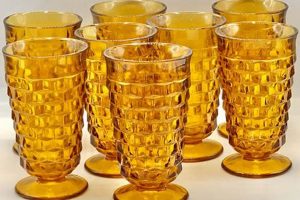
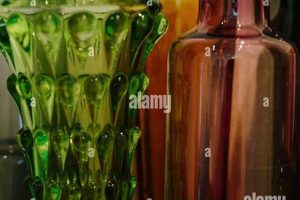
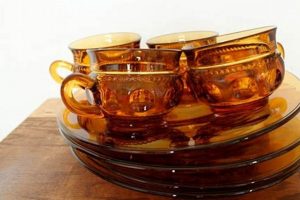
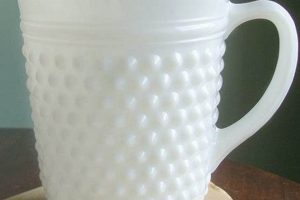
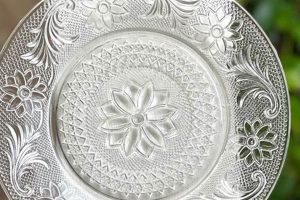
These decorative and functional closures, crafted from glass and designed to seal bottles, represent a bygone era of manufacturing and design. They are often found in antique shops, flea markets, and private collections, showcasing a range of styles, colors, and levels of craftsmanship. Examples include ground-glass stoppers used for pharmaceutical bottles and elaborately decorated stoppers adorning perfume bottles or decanters.
These items provide insight into historical packaging methods and artistic trends. Their preservation and collection reflect an appreciation for both utility and aesthetic value. Further, the study of these closures can illuminate details about production techniques, trade routes, and the social history of consumption. They serve as tangible links to the past, offering insights into the lives and industries that produced and utilized them.
The following discussion will explore various aspects of collecting, identifying, preserving, and assessing the value of these artifacts. The aim is to provide a detailed overview for both novice enthusiasts and seasoned collectors seeking to expand their knowledge.
Preservation Guidance
The proper care and handling are crucial for maintaining the integrity and value of these fragile historical objects. Consider the following guidelines to ensure their longevity.
Tip 1: Handling Precautions: Always handle these closures with clean, dry hands. Oils and dirt can degrade the glass over time. When possible, utilize cotton gloves for handling particularly delicate examples.
Tip 2: Safe Storage Practices: Store each piece individually, wrapped in acid-free tissue paper or placed in a padded container. This prevents scratches and chipping caused by contact with other objects.
Tip 3: Controlled Environment: Maintain a stable environment with consistent temperature and humidity. Rapid fluctuations can cause the glass to expand and contract, leading to cracks or breakage.
Tip 4: Gentle Cleaning Methods: Clean soiled examples with lukewarm water and a mild, pH-neutral soap. Avoid abrasive cleaners or scrubbing pads, as these can scratch the surface. Dry completely with a soft, lint-free cloth.
Tip 5: Avoid Direct Sunlight: Prolonged exposure to direct sunlight can cause fading or discoloration of the glass. Store or display items away from direct sunlight exposure.
Tip 6: Professional Restoration: For significant damage or repairs, consult a professional conservator specializing in glass restoration. Attempting repairs without the proper expertise can cause further damage.
Adherence to these preventative measures will help preserve the beauty and historical significance of glass closures, ensuring their survival for future generations.
The following sections will delve into the identification and valuation of glass closures, providing a more comprehensive understanding of this niche collecting field.
1. Material Composition

The material composition of such closures significantly influences their aesthetic appeal, durability, and historical value. Varying glass formulations and manufacturing processes yield distinct characteristics, impacting both the visual appearance and the long-term preservation of these collectible items.
- Lead Crystal Content
The presence of lead oxide in the glass matrix enhances brilliance, refractive index, and weight. Stoppers crafted from lead crystal exhibit a distinct clarity and sparkle, often associated with higher quality and craftsmanship. However, lead crystal is also more susceptible to etching and clouding over time, necessitating careful handling and storage to prevent degradation. The percentage of lead oxide used varies, influencing both the visual properties and the archival stability.
- Soda-Lime Glass Characteristics
A more common and less expensive glass formulation, soda-lime glass, is characterized by its relative affordability and ease of production. Stoppers made from soda-lime glass typically exhibit a less brilliant appearance compared to lead crystal. While more resistant to chemical etching, soda-lime glass is also more prone to thermal shock and breakage. Many utilitarian stoppers for common household bottles were manufactured using this material.
- Colored Glass Variations
The addition of metallic oxides to the glass batch results in a spectrum of colors. Cobalt oxide yields blue hues, iron oxide produces green shades, and gold chloride creates ruby red tones. Colored glass stoppers are prized for their aesthetic appeal and rarity. The specific color and intensity are influenced by the concentration of the metallic oxide and the firing temperature during production. Certain colors are more prone to fading or discoloration with prolonged exposure to light.
- Manufacturing Impurities
Early glass manufacturing processes often resulted in the presence of impurities within the glass matrix. These impurities, such as iron or manganese, can impart a slight tint to the glass or create small bubbles or imperfections. While considered flaws by modern standards, these manufacturing anomalies can contribute to the unique character and historical authenticity of vintage pieces. The presence and nature of these impurities can also provide clues about the production era and geographical origin of the stopper.
The interplay of these factors ultimately defines the individual characteristics and collectability of each vintage glass closure. Careful examination of the material composition provides valuable insights into its origin, manufacturing techniques, and potential vulnerabilities, informing both preservation strategies and valuation assessments.
2. Manufacturing Techniques

The methods employed in the production of glass closures are fundamental to understanding their historical significance, aesthetic qualities, and inherent value. These techniques, spanning centuries, reflect evolving technological capabilities and artistic sensibilities, each leaving its distinct mark on the finished product.
- Hand-Blowing and Shaping
Prior to mechanization, the creation of glass closures was primarily a manual process. Skilled artisans used blowpipes to inflate molten glass, shaping it with hand tools and molds. This method resulted in individual variations, making each piece unique. Evidence of hand-blowing, such as slight asymmetry or tool marks, increases the desirability of certain examples, particularly those from earlier periods. Examples include free-blown stoppers for early apothecary bottles or uniquely shaped perfume stoppers.
- Mold-Blowing and Pressing
The introduction of molds facilitated mass production and greater uniformity. Glass could be blown into molds of various shapes and designs, or pressed into molds using mechanical force. This allowed for more intricate patterns and embossed details. The presence of mold lines is a common characteristic of machine-made stoppers, providing clues about the manufacturing era. An example is elaborate decorative stoppers made in multiples for commercial products.
- Grinding and Polishing
To ensure a tight seal and smooth finish, glass closures often underwent grinding and polishing. This process involved using abrasive materials to refine the surface, removing imperfections and achieving a precise fit with the bottle neck. Hand-ground stoppers are indicative of higher quality and craftsmanship, while machine-ground examples reflect the efficiency of industrialized production. Fine decanters with flawlessly matched stoppers demonstrate this step.
- Application of Decorative Finishes
Beyond shaping and finishing, decorative techniques were employed to enhance the aesthetic appeal. These included enameling, gilding, and the application of glass stains. Hand-painted designs and intricate details added value and reflected the artistic trends of the time. These decorative elements are susceptible to wear and damage, making well-preserved examples highly sought after. Examples can be found in antique perfume bottles that feature colorful embellishments.
These varied production methods underscore the rich history of vintage glass closures. The techniques used directly influence the form, function, and ultimate desirability of these collectible objects, providing a tangible link to the craftsmanship and innovation of past eras. They also reflect the historical context of the bottle closure and the product contained therein.
3. Design Aesthetics

The design aesthetics exhibited in vintage glass bottle stoppers represent a significant component of their collectibility and historical importance. These closures were not merely functional items; they were often crafted as integral elements of the overall product presentation, reflecting prevailing artistic styles, social values, and technological capabilities. The careful consideration of form, color, and ornamentation underscores the intent to enhance the perceived value and desirability of the bottled contents. The impact of aesthetic considerations on these objects is direct and substantial; design affects the perceived quality, market value, and the significance they hold as historical artifacts.
Examples range from the utilitarian elegance of ground-glass stoppers found on early 20th-century apothecary bottles to the elaborate Art Deco designs adorning perfume bottles of the same era. The former prioritized function and precision, reflecting the scientific and medical context, while the latter emphasized ornamentation and visual appeal, aiming to attract consumers in a competitive market. Perfume stoppers, in particular, often mirrored the shapes and motifs of the perfume bottle itself, creating a cohesive and aesthetically pleasing ensemble. Furthermore, manufacturers sometimes commissioned renowned artists and designers to create unique stopper designs, elevating their status to miniature works of art. The Corning Museum of Glass holds numerous examples that exemplify this art form.
Understanding the design aesthetics is crucial for assessing the value and historical context. Collectors and historians consider factors such as the rarity of the design, the quality of the craftsmanship, the condition of the decorative elements, and the historical significance of the design style. Recognizing the nuances of different design periods and the artistic movements that influenced stopper design enables a deeper appreciation and more informed collection practices. The visual characteristics of these closures provide valuable insights into the tastes, values, and material culture of past societies, thereby ensuring their preservation and continued study.
4. Bottle Compatibility
Successful integration between vintage glass closures and bottles requires careful consideration of dimensional precision and design. The effective seal, aesthetic harmony, and preservation of contents depend on proper compatibility.
- Neck Finish and Stopper Fit
The neck finish, referring to the shape and dimensions of the bottle opening, must precisely match the stopper’s ground surface. Variations in neck finish across different eras and manufacturers necessitate careful matching to ensure an airtight seal. Pharmaceutical bottles with standardized ground joints offer a prime example, where interchangeability was crucial. Conversely, bespoke perfume bottles feature unique stopper designs tailored exclusively to a specific bottle, limiting compatibility.
- Material Compatibility and Chemical Inertness
The stopper’s material should be chemically inert relative to the bottle’s contents. Glass stoppers are generally suitable for a wide range of liquids, but certain materials might react with the contents, leading to contamination or degradation. For instance, a stopper used for acidic solutions requires a high degree of chemical resistance to prevent etching or leaching. Consideration should be given if replacing a stopper on antique bottles used for potentially reactive chemicals.
- Expansion Coefficients and Temperature Stability
Differences in thermal expansion coefficients between the bottle and stopper materials can induce stress and potential breakage due to temperature fluctuations. Matching glass compositions minimizes this risk. Stoppers intended for storing substances at varying temperatures, such as laboratory reagents, necessitate careful selection of materials with comparable expansion properties. Incompatibility can lead to cracking or loosening of the seal.
- Aesthetic Harmony and Design Coherence
Beyond functional requirements, visual congruence between the stopper and bottle contributes to the overall aesthetic appeal. The stopper’s style, color, and decorative elements should complement the bottle’s design. Art Deco perfume bottles exemplify this principle, where elaborately designed stoppers enhanced the bottle’s visual impact. Mismatched stoppers, even if functionally compatible, can detract from the historical accuracy and collector value.
Proper bottle compatibility is crucial for preserving the integrity and value of vintage glass closures. It is also a key factor in accurately displaying vintage glass bottles and protecting any contents contained within them. The stopper’s fit is critical; without a proper seal, the bottles contents may be compromised. Consideration of these factors ensures both the functionality and aesthetic appreciation of these historical artifacts.
5. Historical Context

The history surrounding closures provides essential insights into production methods, usage trends, and the societal values of the periods during which they were manufactured. Examination of this history contextualizes their existence and illuminates their significance as artifacts of daily life and industrial practices.
- Industrial Revolution and Mass Production
The advent of the Industrial Revolution transformed closure production. Mass production techniques, enabled by machinery, drastically increased output and reduced manufacturing costs. This era saw the proliferation of standardized bottle designs and corresponding closures, impacting the types of materials used and the aesthetic features incorporated. Examples include machine-made ground glass stoppers for mass-produced medicine bottles. This shift toward standardization influences collectibility and historical value.
- Prohibition Era Innovations
The Prohibition era in the United States spurred creativity in concealment and preservation. Specialized closures were designed to tightly seal bottles of illicitly produced or transported beverages. Closures from this period sometimes exhibit unique designs or materials adapted to circumvent legal restrictions or preserve the contents under challenging conditions. Bottles with these closures offer collectors a tangible link to a particular period. This influences the rarity of vintage bottles with authentic closures, creating collector interest.
- World Wars and Material Scarcity
The World Wars resulted in material shortages, influencing closure construction. Resource conservation efforts led to the use of alternative materials or modified designs. Substitute materials used due to wartime scarcity add distinct historical value. Some closures are identified by material properties which indicate the bottle contents. Shortages impacted collectibility.
- Evolution of Branding and Advertising
Closure design became an integral aspect of branding. Distinctive shapes, colors, and embossed logos were incorporated to enhance product recognition and appeal to consumers. The evolution of branding can be traced through changes in stopper design. Early examples highlight the progression of advertising. This influences collectors.
Connecting to broader historical trends transforms these objects into tangible reflections of their time, enhancing their meaning. This also affects collector valuation.
6. Rarity Assessment

The assessment of rarity significantly influences the value and collectibility of these glass closures. Determining rarity requires careful consideration of factors related to production volume, survival rates, and historical context. Accurate rarity assessment informs both collecting strategies and valuation appraisals.
- Limited Production Runs
Closures produced in limited quantities command higher prices due to their scarcity. Production records, if available, offer insights into the initial output. However, lack of documentation often necessitates reliance on market prevalence as an indicator of limited production. Examples include stoppers designed for limited-edition perfume bottles or those manufactured by smaller, less prolific glassworks. Lower production numbers contribute to their desirability among collectors seeking unique items.
- Survival Rates and Condition
The number of closures surviving to the present day significantly impacts rarity. Fragile nature and susceptibility to damage result in diminished quantities over time. Well-preserved examples, free from chips, cracks, or significant wear, are considerably rarer than those in poor condition. Stoppers used for acidic or corrosive substances exhibit particularly low survival rates due to material degradation. Their condition is critical to assess when determining rarity.
- Unique Design Attributes
Closures exhibiting unusual designs, manufacturing techniques, or decorative elements contribute to increased rarity. Variations from standard production models, such as experimental color combinations or intricate hand-painted details, distinguish these pieces. Stoppers with unique markings or signatures from notable artisans are also considered rare. Their unusual design often increases their desirability.
- Historical Significance and Provenance
Closures associated with specific historical events, notable individuals, or significant brands enhance their rarity. Provenance, documenting the ownership history and cultural context, adds to their value. Closures from Prohibition-era medicinal bottles or those linked to famous perfume houses are examples. Their association with historical events gives them added value.
The interplay of these factors determines the overall rarity and market value of glass closures. Collectors should consider all contributing elements, combining historical research and careful examination to assess rarity and make informed acquisitions. Determining rarity is also dependent on the glass condition.
Frequently Asked Questions
The following questions address common inquiries regarding the identification, preservation, and valuation of these historical artifacts.
Question 1: What distinguishes an authentic antique stopper from a modern reproduction?
Authenticity is determined through examination of manufacturing techniques, material composition, and design characteristics. Antique stoppers frequently exhibit imperfections indicative of hand-crafting, possess a distinct patina, and align with historical design trends. Modern reproductions often lack these nuances, displaying uniformity and employing contemporary materials.
Question 2: How does material composition influence stopper value?
Stoppers crafted from higher-quality glass, such as lead crystal or colored art glass, typically command higher prices. The presence of lead oxide enhances brilliance and refractive index, while colored glass offers aesthetic appeal and rarity. Material composition reflects both the original manufacturing intent and the inherent value of the materials used.
Question 3: What cleaning methods are appropriate for fragile antique stoppers?
Gentle cleaning with lukewarm water and a mild, pH-neutral soap is recommended. Abrasive cleaners or harsh chemicals should be avoided, as they can damage the glass surface. After washing, stoppers should be thoroughly dried with a soft, lint-free cloth. For stubborn stains or residues, consult a professional conservator.
Question 4: How should stoppers be stored to prevent damage?
Individual wrapping in acid-free tissue paper or placement in padded containers prevents scratches and chipping. Storage in a controlled environment with stable temperature and humidity minimizes the risk of glass degradation. Direct sunlight exposure should be avoided to prevent fading or discoloration.
Question 5: What factors contribute to a stopper’s rarity?
Limited production runs, low survival rates, unique design attributes, and historical significance all contribute to a stopper’s rarity. Closures associated with specific historical events or notable brands command higher prices due to their historical context and collectibility.
Question 6: How does bottle compatibility affect stopper value?
Stoppers that are original to a specific bottle or design style enhance the overall value of both items. Matching the stopper to the correct bottle neck finish ensures a proper seal and aesthetic harmony, contributing to historical accuracy and collector appeal.
Understanding these core principles assists in informed acquisition, preservation, and appreciation. The identification, conservation, and valuation of stoppers require diligent observation and historical research.
The following section will delve into specific case studies and collector resources to further expand upon this subject matter.
Conclusion
The preceding discussion has detailed the multifaceted world of vintage glass bottle stoppers, encompassing aspects of history, manufacturing, design, and collectibility. Considerations such as material composition, production techniques, aesthetic trends, and historical context are critical for proper identification, preservation, and valuation. The rarity of these items, influenced by production volume and survival rates, further underscores their importance as tangible artifacts of the past.
Continued research and documentation of these items are essential to maintaining a comprehensive understanding of their significance. It is encouraged that collectors and researchers dedicate themselves to preserving these fragile links to history, ensuring that future generations can appreciate these objects and their role in conveying aspects of cultural heritage.