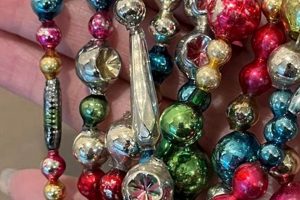
Objects created using a double-walled glass technique, where a silvering solution (often containing metallic mercury, though later formulations used other metals) was introduced between the layers and sealed, are highly sought after. The resulting reflective surface, visible through the outer glass, mimics the appearance of solid silver. Decorative items such as vases, ornaments, and candle holders produced with this method during the 19th and early 20th centuries exemplify this technique.
These items represent a significant period in decorative arts, offering a more affordable alternative to solid silver pieces. The unique luster and aged patina of these objects appeal to collectors and enthusiasts, contributing to their desirability and value. The historical context of these items provides a tangible connection to past eras and design aesthetics.
The following sections will delve into the specific manufacturing processes, identifying characteristics, care recommendations, and collecting considerations relevant to these sought-after pieces. This exploration will provide a detailed understanding of their creation, preservation, and appreciation within the broader context of antique and collectible glass.
Tips for Identifying and Caring for Reflective Silvered Glass
Acquiring and maintaining silvered glass requires diligence and a careful approach. The following tips provide guidance for identifying genuine pieces and ensuring their preservation.
Tip 1: Examine the Silvering. Authentic pieces often exhibit imperfections, such as spotting or flaking, within the silvering layer. Uniform, pristine silvering may indicate a modern reproduction.
Tip 2: Inspect the Glass Quality. Historically, this glass frequently contained minor imperfections like bubbles or inclusions. The presence of these flaws is not necessarily detrimental but can support authenticity.
Tip 3: Note the Weight and Thickness. Original items tend to be relatively lightweight due to the double-walled construction and thin glass used. Overly heavy or thick glass may be indicative of a newer piece.
Tip 4: Check for a Seam. The manufacturing process often resulted in a visible seam where the two glass layers were joined. Examine the item carefully for this characteristic.
Tip 5: Handle with Care. The silvering is delicate and susceptible to damage from moisture and harsh cleaning agents. Gentle handling and appropriate storage are crucial.
Tip 6: Avoid Abrasive Cleaners. Use only a soft, dry cloth to dust the exterior. Avoid using water or any cleaning solutions, which can seep into the glass and corrode the silvering.
Tip 7: Store Properly. Store items in a cool, dry place away from direct sunlight. This helps prevent further deterioration of the silvering and glass.
By adhering to these guidelines, collectors and enthusiasts can better identify authentic items and safeguard their value and aesthetic appeal. This proactive approach ensures the longevity of these fragile historical objects.
The subsequent sections will explore restoration techniques and valuation considerations, providing a comprehensive understanding of the lifecycle and investment potential of reflective silvered glass.
1. Silvering Process
The silvering process is fundamental to understanding the allure and characteristics of reflective silvered glass. The technique used to create the reflective layer dictates the item’s appearance, durability, and ultimately, its value as a collectible.
- Original Method & Toxicity
The original process involved using a solution containing metallic mercury to create the reflective layer between the glass walls. This method, while effective in producing a brilliant shine, posed significant health hazards to the artisans involved. The presence of mercury also contributes to the item’s fragility over time.
- Alternative Silvering Compounds
Due to the dangers of mercury, alternative silvering compounds were developed, often utilizing silver nitrate or other metallic salts. While safer, these alternatives produced varying degrees of reflectivity and durability. The composition of the silvering solution directly impacts the glass’s resistance to tarnishing and degradation.
- Sealing Techniques
The method used to seal the double-walled glass after the silvering solution was applied significantly influenced the item’s longevity. Improper sealing allowed moisture and air to penetrate, leading to corrosion of the silvering layer and eventual delamination of the glass. Evidence of a secure, intact seal is a key indicator of a well-preserved piece.
- Impact on Patina & Appearance
Over time, the silvering process contributes to the unique patina observed in reflective silvered glass. Oxidation and minor imperfections in the silvering layer create a mottled, aged appearance that is highly valued by collectors. This characteristic patina distinguishes authentic items from modern reproductions with uniform, flawless surfaces.
These nuances in the silvering process, from the hazardous original methods to the impact on long-term appearance, are crucial considerations for collectors and enthusiasts. Understanding these factors allows for a deeper appreciation of the artistry and historical context surrounding this decorative art form, as well as informed decisions regarding acquisition and preservation.
2. Glass Composition

The specific composition of the glass used in creating reflective silvered objects profoundly influenced its durability, aesthetic qualities, and susceptibility to degradation. Early formulations often contained impurities or variations in ingredients, resulting in inherent weaknesses in the finished product. For instance, the presence of higher levels of alkali could render the glass more prone to clouding or devitrification over time. The type of sand, flux, and stabilizers employed directly affected the glass’s clarity, color, and resistance to chemical attack from environmental factors or cleaning agents. A notable example is found in examining pieces manufactured with lower-quality glass, which frequently exhibit surface etching or a dull appearance compared to those crafted with purer materials. The glass composition, therefore, acts as a crucial fingerprint in identifying the origin, era, and potential vulnerabilities of these decorative items.
Further compounding the effects of glass composition was the manufacturing process itself. Rapid cooling or uneven heating during production could induce internal stresses, leading to fractures or weakening the glass structure. Similarly, variations in the thickness of the glass layers, particularly in double-walled constructions, created areas of differing thermal expansion, increasing the risk of damage. Examining a collection, one might observe that pieces with consistent glass thickness and a smooth surface finish generally exhibit greater structural integrity than those displaying irregularities. Understanding these material science aspects allows for a more informed assessment of the artifact’s condition and informs appropriate handling and conservation strategies. It’s also essential in distinguishing genuine pieces from later reproductions that may utilize entirely different glass compositions and manufacturing techniques.
In summary, the composition of the glass stands as a pivotal factor in determining the longevity and appearance of these items. While the silvering process undoubtedly provides the defining reflective characteristic, the underlying glass provides the structural foundation and resilience. Recognizing the interplay between glass composition, manufacturing techniques, and environmental factors empowers collectors and curators to preserve these delicate artifacts for future generations. Challenges remain in fully characterizing the glass composition of individual pieces without destructive analysis, highlighting the importance of careful visual inspection and adherence to established conservation practices.
3. Manufacturing Era

The era of production significantly dictates the characteristics and value of reflective silvered glass. Predominantly manufactured during the 19th and early 20th centuries, the techniques and aesthetics of these periods profoundly influenced the items’ design, materials, and construction. Victorian-era examples, for instance, often feature elaborate ornamentation and heavier glass, reflecting the prevailing design sensibilities. The First and Second World Wars impacted availability of materials, potentially leading to simpler designs or use of substitute components.
The technological advancements of the manufacturing era also played a crucial role. Early hand-blown techniques resulted in unique imperfections and variations in glass thickness, adding to the character of antique pieces. Later, mechanized production introduced greater uniformity, but potentially sacrificed the individual artistry found in earlier examples. Knowledge of the manufacturing techniques prevalent during specific periods allows collectors to discern authentic pieces from reproductions and to appreciate the historical context of each item. For example, the presence of specific mold marks or pontil scars can help to date an object.
In conclusion, understanding the manufacturing era provides essential context for assessing and appreciating the historical and aesthetic qualities of reflective silvered glass. This knowledge informs judgments about authenticity, condition, and value, and allows for informed conservation strategies. Without considering the manufacturing era, a complete understanding of these objects remains elusive, potentially leading to misidentification or inappropriate care, ultimately diminishing their historical significance.
4. Original Function

The original function of an item created using reflective silvered glass significantly impacts its survival rate, current condition, and perceived value. Objects designed for frequent handling, such as candlesticks or sugar bowls, often exhibit greater wear and damage compared to purely decorative items displayed behind glass. The intended purpose influenced the design and construction, leading to variations in glass thickness, the stability of the base, and the robustness of any applied ornamentation. For instance, a delicate Christmas ornament made with this glass would likely be more susceptible to breakage than a sturdy vase intended for holding floral arrangements. These functional requirements directly shaped the manufacturing process and subsequent preservation trajectory of the piece.
Furthermore, understanding the original function offers insights into the socio-cultural context surrounding the item’s creation and use. A silvered glass compote, intended for displaying fruit or desserts at formal gatherings, reflects a specific era’s aesthetic preferences and social customs. The form and decoration of the compote provide clues about the status and lifestyle of its original owner. Conversely, a simple mercury glass reflector for a gas lamp reveals the practical applications of this technology in illuminating homes and public spaces. Analyzing these objects within their original functional context provides a richer understanding of their historical significance beyond mere aesthetic appreciation.
In conclusion, the original function acts as a critical lens for evaluating and interpreting reflective silvered glass. It informs assessments of condition, authenticity, and value, while also offering invaluable insights into the historical and cultural contexts in which these items were produced and used. Ignoring the intended purpose risks a superficial understanding of these objects and their enduring appeal. The ability to connect a specific item to its original function strengthens the appreciation and preservation efforts surrounding this unique form of decorative art.
5. Decorative Style

The decorative style significantly influences the aesthetic appeal and collectible value of antique silvered glass. Styles range from ornate Victorian designs to streamlined Art Deco forms, each reflecting the prevailing tastes and manufacturing capabilities of its era. The interplay between glassblowing techniques and popular decorative motifs defines the visual identity of these pieces, offering insights into the historical and cultural contexts of their creation.
- Victorian Opulence
Characterized by intricate detailing, elaborate embellishments, and a penchant for asymmetry, Victorian pieces often feature hand-painted floral designs, applied glass ornaments, and complex silvering patterns. These items reflect the era’s emphasis on ornamentation and excess, embodying a sense of luxury and refinement. An example includes vases with ruffled edges and gilded accents, showcasing the Victorian affinity for ornate aesthetics.
- Art Nouveau Naturalism
Drawing inspiration from the natural world, Art Nouveau designs incorporate flowing lines, organic shapes, and motifs such as flowers, insects, and flowing water. Silvered glass examples may feature subtle iridescence or etched botanical patterns, reflecting the movement’s emphasis on organic forms and delicate craftsmanship. A lamp base shaped like a stylized lily pad exemplifies this style.
- Art Deco Geometry
In stark contrast to the flowing lines of Art Nouveau, Art Deco embraces geometric shapes, symmetrical designs, and bold colors. Silvered glass items from this era exhibit clean lines, stepped patterns, and a focus on functionality, reflecting the modernist aesthetic. Examples include cocktail shakers and geometric vases with chrome accents.
- Mid-Century Modern Simplicity
Emphasizing functionality and minimalist design, Mid-Century Modern pieces feature clean lines, simple shapes, and a focus on the inherent beauty of the materials. Silvered glass objects may showcase subtle textures or understated patterns, reflecting the era’s emphasis on practicality and elegance. A simple, spherical vase with a brushed silver finish exemplifies this style.
These stylistic variations underscore the importance of considering the decorative style when evaluating antique silvered glass. Each style represents a distinct chapter in design history, influencing the item’s form, function, and ultimately, its collectible value. A comprehensive understanding of these stylistic nuances enriches the appreciation and preservation of these decorative objects.
Frequently Asked Questions
This section addresses common inquiries and misconceptions surrounding vintage mercury glass, providing factual information for collectors and enthusiasts.
Question 1: Is vintage mercury glass truly made with mercury?
Answer: Early examples often incorporated metallic mercury in the silvering process. However, later formulations utilized alternative metals due to mercury’s toxicity. Identifying the exact composition requires specialized testing.
Question 2: How can vintage mercury glass be distinguished from modern reproductions?
Answer: Authentic pieces typically exhibit imperfections in the silvering, such as spotting or flaking. Modern reproductions often have a uniform, pristine appearance. Examination of the glass quality and manufacturing marks can also aid in identification.
Question 3: What are the best practices for cleaning vintage mercury glass?
Answer: Avoid using water or harsh cleaning agents, as these can damage the silvering layer. Gently dust the exterior with a soft, dry cloth. Protect from moisture and store in a cool, dry environment.
Question 4: Is damage to the silvering repairable?
Answer: Repairing damaged silvering is a complex and delicate process best left to professional conservators. Attempting to repair it without expertise can cause further damage and devalue the item.
Question 5: How does the age and condition of vintage mercury glass affect its value?
Answer: Older pieces in good condition generally command higher prices. However, the rarity of a particular design or the historical significance of an item can also influence its value, even if it exhibits some wear.
Question 6: Are there specific markings or signatures to look for on authentic vintage mercury glass?
Answer: While some manufacturers did mark their products, many pieces are unsigned. The absence of a mark does not necessarily indicate that an item is not authentic. Researching known manufacturers and their typical designs is crucial.
Accurate identification and appropriate care are essential for preserving the integrity and value of vintage mercury glass. Consulting with experts and researching historical information can further enhance knowledge and appreciation.
The following section will delve into the market trends and investment potential of vintage mercury glass, providing insights for both collectors and investors.
Conclusion
The preceding exploration has detailed the multifaceted nature of this glass, encompassing its origins, manufacturing processes, identifying characteristics, and preservation requirements. From the historical context of its production to the nuances of its decorative styles, each aspect contributes to a comprehensive understanding of its significance within the realm of decorative arts. The discussion of silvering techniques, glass composition, and the impact of the manufacturing era underscores the importance of meticulous examination in discerning authentic examples from later reproductions.
Continued research and careful stewardship are essential for preserving this fragile legacy for future generations. Recognizing the enduring appeal and historical value of these objects encourages a thoughtful approach to collecting and conservation. The informed appreciation of reflective silvered glass ensures its continued recognition as a testament to craftsmanship and artistic innovation.