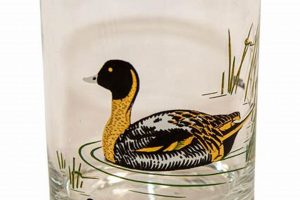
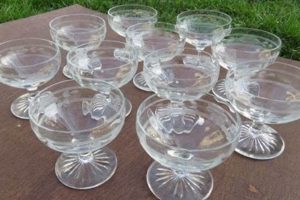
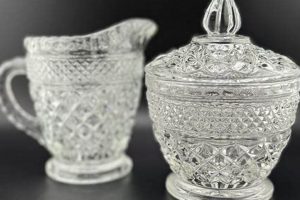
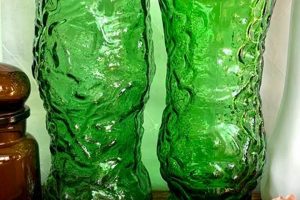
These collectible items are drinking vessels produced by the Culver Glass Company, renowned for their ornate embellishments, particularly the use of 22-karat gold overlay. Examples include highball glasses, tumblers, and barware sets, often featuring elaborate patterns like geometric designs, floral motifs, and scenes inspired by nature or mythology.
Their desirability stems from a combination of aesthetic appeal, historical significance, and perceived quality. They evoke a sense of mid-century modern style and luxury, making them sought after by collectors and enthusiasts alike. The durability of the gold decoration, coupled with the distinctive designs, contributes to their enduring value and collectibility.
The following discussion will delve into the identification, care, and value assessment of these sought-after pieces. Understanding the nuances of their production and the factors influencing their market price is essential for both seasoned collectors and those new to the world of vintage glassware.
Guidance on Collecting Culver Glassware
The acquisition of authentic Culver glassware requires careful consideration and diligent examination. Knowledge of common patterns, manufacturing marks, and potential imperfections is crucial for making informed decisions.
Tip 1: Pattern Recognition: Familiarize oneself with prevalent Culver designs, such as the Valencia, Lido, and various floral patterns. This knowledge aids in quickly identifying genuine pieces and recognizing potential reproductions.
Tip 2: Gold Quality Assessment: Examine the gold overlay for signs of wear or flaking. Authentic examples exhibit a consistent and durable application of 22-karat gold. Significant wear may indicate heavy use or improper care.
Tip 3: Identifying Manufacturing Marks: Check for the presence of the Culver signature or logo, typically found on the base of the glass. However, note that some older pieces may not be marked, requiring reliance on pattern recognition and overall quality assessment.
Tip 4: Evaluating Glass Condition: Scrutinize the glass for cracks, chips, or cloudiness. While minor imperfections may be acceptable in vintage items, significant damage detracts from value and usability.
Tip 5: Researching Market Value: Consult reputable online resources and auction records to determine the fair market value of specific patterns and pieces. Consider condition, rarity, and overall desirability when assessing price.
Tip 6: Proper Cleaning Techniques: To preserve the integrity of the gold decoration, hand-wash these glasses with mild soap and lukewarm water. Avoid abrasive cleaners and dishwashers, which can damage the delicate overlay.
Tip 7: Safe Storage Practices: Store in a location away from extreme temperatures and direct sunlight to prevent damage or fading. Using padded dividers or individual sleeves minimizes the risk of scratches and breakage.
Implementing these strategies will significantly enhance the collector’s ability to identify, acquire, and maintain valuable Culver glassware, preserving its beauty and historical significance for years to come.
The subsequent section will explore strategies for displaying and incorporating these vintage items into a contemporary setting.
1. Gold Application
The application of 22-karat gold is a defining characteristic of vintage Culver glassware. It significantly contributes to their aesthetic appeal, collectibility, and overall value. The quality and condition of the gold are primary considerations when evaluating these items.
- Application Techniques
Culver employed sophisticated methods for applying gold to glass, primarily using a hand-applied screen-printing process. This technique allowed for intricate designs and detailed patterns. The thickness and evenness of the gold layer directly impacted its durability and resistance to wear.
- Design Complexity
The gold application enabled a wide range of intricate designs, from geometric patterns and floral motifs to elaborate scenes. Some glasses feature full coverage in gold, while others showcase delicate accents. The complexity and artistry of the design enhance its desirability among collectors.
- Durability and Wear
Despite the high purity of the gold, the overlay is susceptible to wear and damage over time. Factors such as improper cleaning, abrasion, and chemical exposure can lead to fading, flaking, or scratching of the gold surface. Well-preserved examples with minimal wear command higher prices.
- Authenticity Verification
The presence and quality of the gold application serve as an indicator of authenticity. Genuine Culver pieces exhibit a distinctive luster and adhere to established design standards. Careful examination under magnification can reveal subtle details that distinguish them from reproductions or imitations.
The interplay between the gold application technique, design complexity, durability, and authentication factors directly influences the perceived value and collectibility of vintage Culver glasses. Collectors meticulously assess these attributes to discern the authenticity and condition of each item, shaping their market value and desirability.
2. Pattern Variations

The diverse array of patterns adorning Culver glassware represents a significant facet of their collectibility and historical context. Each distinct design reflects prevailing aesthetic trends and production techniques of its era. The variations in patternsranging from geometric abstractions to stylized floral motifs and thematic narrativesdirectly impact the perceived rarity and market value of individual pieces. Examining these pattern variations offers valuable insights into the evolution of design sensibilities and the manufacturing processes employed by the Culver Glass Company.
Specific examples illustrate this connection. The “Valencia” pattern, characterized by its bold, gilded bands and intricate geometric details, stands as a hallmark of Culver’s mid-century modern aesthetic. Its widespread popularity and recognizable design make it readily identifiable, though variations within the “Valencia” line, such as differences in the thickness of the gold banding or the inclusion of additional embellishments, create further stratification in value and collector interest. Conversely, less common patterns, such as those featuring stylized animal figures or abstract art motifs, command premium prices due to their relative scarcity and unique artistic merit. Understanding these pattern nuances allows collectors to differentiate between common and rare examples, informing acquisition decisions and influencing collection strategies.
In summary, the study of pattern variations is indispensable for those seeking to engage with Culver glassware. These variations not only reflect the artistic and cultural landscape of the era in which the glasses were produced but also provide a practical framework for assessing authenticity, rarity, and market value. While identifying patterns can be challenging due to subtle differences and evolving design styles, mastery of this knowledge significantly enhances the collector’s ability to appreciate and curate a meaningful collection of vintage Culver glassware.
3. Glass Quality

The inherent quality of the glass used in vintage Culver production is a critical determinant of its enduring appeal and market value. The composition, clarity, and structural integrity of the glass contribute significantly to both its aesthetic presentation and its resistance to degradation over time.
- Composition and Clarity
Culver glasses were typically crafted from high-quality lead glass or crystal. This composition resulted in enhanced clarity and brilliance, allowing the intricate gold designs to be displayed to their full effect. Imperfections such as cloudiness or discoloration detract from the visual appeal and can diminish the value of the glass.
- Structural Integrity
The glass must possess sufficient structural integrity to withstand normal use and environmental factors. Chips, cracks, or fractures significantly compromise the integrity of the glass and render it less desirable. Careful examination for such flaws is essential when assessing the quality of vintage pieces.
- Manufacturing Consistency
Consistent manufacturing processes are indicative of higher quality. Variations in glass thickness or uneven distribution of material can suggest inferior production standards or potential weaknesses. Uniformity in design and construction is a hallmark of well-made Culver glassware.
- Resistance to Degradation
The ability of the glass to resist degradation over time is paramount. Exposure to harsh chemicals, excessive heat, or abrasive cleaning agents can cause clouding, etching, or other forms of damage. Proper care and maintenance are crucial for preserving the original quality of the glass.
The aforementioned aspects of glass quality collectively determine the overall condition and desirability of vintage Culver glasses. A piece exhibiting exceptional clarity, structural integrity, manufacturing consistency, and resistance to degradation is inherently more valuable and sought after by collectors, solidifying its place within the realm of collectible glassware.
4. Rarity Factors

The valuation of vintage Culver glasses is significantly influenced by scarcity. The interplay of production numbers, design longevity, and preservation rates contributes to an item’s rarity. Glasses produced in limited quantities or for a short duration often command higher prices than more common designs. This scarcity is further compounded by the degradation or loss of these items over time, making well-preserved, rare patterns highly sought after by collectors. For example, certain limited-edition holiday-themed designs, produced only for a single year, are significantly rarer and more valuable than the standard Valencia pattern produced over a longer period.
Several elements contribute to the rarity. First, manufacturing decisions regarding the number of pieces produced and the duration of production runs directly impact availability. Second, patterns which were less popular at the time of production, resulting in lower initial sales, paradoxically become rarer and more desirable over time. Third, breakage, loss, or damage sustained throughout decades reduces the total number of viable collectible pieces. Fourth, regional differences in distribution may have led to certain patterns being more prevalent in some areas than others, creating localized scarcity. The combination of these elements establishes the unique rarity profile of each piece.
Understanding the interplay between these scarcity factors and market demand is crucial for collectors seeking to acquire valuable vintage Culver glassware. Identifying and assessing rarity requires meticulous research, careful examination of market trends, and an appreciation for the historical context surrounding the production and distribution of these items. While precise production numbers are often unavailable, collectors rely on comparative analysis of auction records, online marketplaces, and anecdotal evidence to estimate the relative rarity of specific patterns and pieces, thereby informing their investment and collecting strategies.
5. Authenticity Marks

The presence, absence, and characteristics of authenticity marks are pivotal in determining the legitimacy and value of vintage Culver glassware. The Culver Glass Company, throughout its production history, employed various signatures, logos, and markings to identify its products. These marks, typically applied to the base of the glass or integrated into the design itself, serve as critical indicators for collectors seeking to distinguish genuine Culver pieces from imitations or glassware from other manufacturers. The presence of a recognized mark provides a degree of assurance regarding the piece’s origin and contributes to its overall collectibility.
However, the absence of a mark does not automatically indicate a lack of authenticity. Some early Culver pieces were not consistently marked, requiring collectors to rely on pattern recognition, gold quality assessment, and other identifying characteristics to ascertain their origin. Furthermore, marks can fade or wear off over time due to handling and cleaning, presenting challenges for identification. Examining the type and style of the mark, when present, is crucial. Variations in font, placement, and the specific wording used in the mark can provide clues about the production era and help to identify potential forgeries. Consulting reputable guides and resources that document the evolution of Culver’s authenticity marks is essential for accurate assessment. Consider, for example, the shift from simple “Culver Ltd.” signatures to more elaborate logos incorporating the company name and decorative elements; these subtle changes correlate with specific periods of production and can aid in dating the glassware.
In conclusion, authenticity marks represent a vital, though not sole, criterion for evaluating vintage Culver glasses. While their presence lends credence to a piece’s origin, their absence necessitates a more comprehensive examination of design elements, material quality, and manufacturing techniques. Accurate identification relies on a nuanced understanding of the various marks used by the Culver Glass Company throughout its history and a careful consideration of other corroborating factors. Successful collectors prioritize knowledge of these marks as an indispensable tool in their acquisition and valuation processes.
6. Market Valuation

The market valuation of vintage Culver glasses is a dynamic process influenced by a confluence of factors, primarily driven by supply, demand, condition, and rarity. Higher demand coupled with limited availability invariably results in elevated market values. Condition plays a critical role; glasses exhibiting minimal wear and damage command premium prices compared to those with significant imperfections such as chips, cracks, or faded gold embellishments. Rarity, often dictated by limited production runs, unique patterns, or historical significance, substantially influences a piece’s market worth. A limited-edition pattern produced for a specific occasion, for instance, might be valued significantly higher than a more common design.
Assessing the market value requires careful research and analysis. Collectors and enthusiasts frequently consult online marketplaces, auction records, and specialized appraisal services to gauge current market trends and establish a fair price. Understanding historical sales data, considering the geographic location of the sale (as regional preferences can impact prices), and factoring in any unique provenance associated with the piece are essential components of this valuation process. For example, a set of Valencia pattern highball glasses might typically sell for $100-$150; however, a similar set with documented ownership by a notable figure or an unusual variation in the gold application could command a significantly higher price at auction.
In conclusion, determining the market valuation of vintage Culver glasses demands a comprehensive understanding of the intricate interplay between supply, demand, condition, and rarity. Diligent research, comparative analysis, and awareness of market trends are crucial for both prospective buyers and sellers seeking to navigate this specialized market. The practical significance of this understanding lies in the ability to make informed purchasing decisions, accurately assess the value of existing collections, and potentially realize profitable returns on investment within the realm of collectible glassware.
Frequently Asked Questions About Vintage Culver Glasses
The following addresses common inquiries regarding the identification, care, and valuation of these collectible items. Information provided aims to clarify misconceptions and equip collectors with relevant knowledge.
Question 1: How can authentic vintage Culver glasses be distinguished from reproductions?
Authenticity can be determined through careful examination of the pattern, the quality of the 22-karat gold application, and the presence (or absence) of a Culver signature. Consult established resources that document known Culver patterns and markings.
Question 2: What cleaning methods are recommended for preserving the gold decoration?
Hand-washing with mild soap and lukewarm water is advisable. Abrasive cleaners and dishwashers should be avoided, as they can damage the delicate gold overlay.
Question 3: Does the absence of a Culver signature automatically indicate that a glass is not authentic?
No. Some older Culver pieces were not consistently signed. Rely on pattern recognition and gold quality assessment in conjunction with available historical resources to determine authenticity.
Question 4: What factors contribute to the market value of vintage Culver glassware?
Market value is influenced by pattern rarity, condition, overall demand, and any historical provenance associated with the piece. Pieces in excellent condition, featuring rare patterns, command higher prices.
Question 5: How should vintage Culver glasses be stored to prevent damage?
Store in a location away from extreme temperatures and direct sunlight. Consider using padded dividers or individual sleeves to minimize the risk of scratches and breakage.
Question 6: Are minor imperfections (e.g., slight scratches) acceptable in vintage Culver glasses?
Minor imperfections are often considered acceptable in vintage items and may not significantly detract from value. However, significant damage, such as cracks or large chips, substantially reduces the piece’s worth.
In summary, identifying and caring for vintage Culver glasses requires a combination of knowledge, diligence, and careful attention to detail. Understanding the key factors that influence authenticity, condition, and market value is crucial for both collectors and enthusiasts.
The subsequent section will offer insights into incorporating these vintage pieces into modern decor and entertaining styles.
Conclusion
This exploration of vintage Culver glasses has illuminated their multifaceted appeal, encompassing aesthetic value, historical significance, and collectible status. Key considerations include pattern identification, gold quality assessment, authentication, and appropriate care protocols. A thorough understanding of these elements is paramount for both seasoned collectors and those newly introduced to these iconic pieces of mid-century glassware.
The enduring legacy of vintage Culver glasses lies not only in their visual allure but also in their capacity to serve as tangible links to a bygone era. Continued preservation and appreciation of these items will ensure that their artistic merit and historical relevance remain accessible to future generations. Further research and scholarship are encouraged to expand our collective knowledge and understanding of these valuable artifacts.