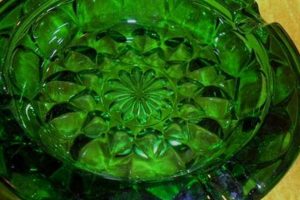
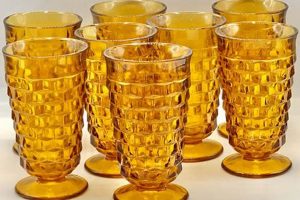
Objects of verdant hue, crafted from fused silica and dating to prior decades, represent a specific category of decorative art. These items, typically hollow receptacles, were originally designed to contain floral arrangements. Examples include pieces from the Art Deco period, characterized by geometric forms, and Mid-Century Modern designs, known for their organic curves and minimalist aesthetic.
The significance of these artifacts lies in their ability to evoke nostalgia and add character to interior spaces. Their appeal stems from the rich coloration of the silica composition and the uniqueness inherent in older manufacturing processes. Furthermore, these objects offer a tangible connection to past design trends, providing insight into the stylistic preferences of previous generations and serving as valuable reflections of the decorative arts.
The following sections will delve into the characteristics of various production eras, discuss methods for identifying authentic examples, and offer guidance on appropriate display and preservation techniques. This article will also examine the potential investment value associated with particular styles and makers.
Preservation and Display
The following guidelines address the proper care and presentation of receptacles of verdant glass, manufactured in previous decades. Adherence to these principles will ensure the long-term preservation of these delicate objects.
Tip 1: Prior to handling an older glass vase, carefully assess its structural integrity. Examine it for cracks, chips, or other damage that could compromise its stability.
Tip 2: Clean receptacles crafted from verdant-colored silica utilizing only gentle, non-abrasive cleaning agents. Harsh chemicals may etch or dull the surface, diminishing its aesthetic value.
Tip 3: Avoid exposing glassware of vintage fabrication to rapid temperature fluctuations. These can cause stress fractures and ultimately result in breakage.
Tip 4: When displaying antique glassware, position it away from direct sunlight. Prolonged exposure to ultraviolet radiation can fade the coloration and degrade the material over time.
Tip 5: Utilize appropriate display cases or shelves designed to provide stable support. Prevent accidental tipping or falling by ensuring the base is level and secure.
Tip 6: Document the provenance and history of individual items. This record adds value to the object and aids in its proper identification and appreciation.
Tip 7: Consult with a professional conservator for any necessary repairs or restoration. Amateur attempts can often cause further damage.
By implementing these strategies, collectors and enthusiasts can safeguard these artifacts, guaranteeing their continued enjoyment for future generations. Proper care extends the lifespan and maintains the historical and artistic worth of these items.
The subsequent portion of this discourse will examine the marketplace for collectible examples, discussing factors that influence valuation and the identification of rare or sought-after pieces.
1. Color variations

Variations in the coloration of vintage green glass vessels arise from several factors inherent in their production. The specific chemical composition of the silica used, the additives incorporated to achieve the desired green tint, and the firing temperature all contribute to the final hue. Manganese, uranium, and iron oxides were commonly employed as colorants, each imparting a unique shade ranging from pale seafoam to deep forest. Uneven distribution of these additives or inconsistencies in the heat treatment process can result in subtle tonal shifts within a single piece, adding to its individual character and appeal.
The significance of these variations extends beyond mere aesthetics. Color can be a diagnostic tool for identifying the period and origin of a given piece. For example, Vaseline glass, characterized by its yellow-green hue and uranium content, was particularly popular during the late 19th and early 20th centuries. Similarly, certain shades of green are strongly associated with specific manufacturers, such as the signature “avocado” tones prevalent in Blenko Glass designs from the mid-20th century. Knowledge of these correlations assists collectors in attributing and valuing examples within this category.
In summation, understanding color variations in verdant glass objects from prior decades provides valuable insights into their composition, manufacturing techniques, and historical context. These nuances influence collectibility and serve as vital identifiers of specific eras, manufacturers, and the overall character of the objects. Further study and observation of these color distinctions offer a deeper appreciation of the artistry and chemistry inherent in this form of decorative art.
2. Manufacturing era

The period in which a verdant glass vessel was produced directly influences its form, composition, and stylistic attributes. The constraints and innovations of a particular era dictated the materials available, the techniques employed, and the prevailing aesthetic sensibilities. Consequently, the manufacturing era stands as a defining characteristic of any piece, influencing its value, collectibility, and historical significance. For example, pressed glass techniques prevalent in the Victorian era resulted in mass-produced examples featuring intricate patterns and often imitating more expensive cut glass. Conversely, hand-blown objects from the Art Nouveau period showcase organic forms and iridescent finishes reflective of the artistic movement’s embrace of nature. The availability of specific chemicals for coloration also shifted over time, impacting the range of green hues present in different eras. Uranium glass, popular in the late 19th and early 20th centuries, is rarely found in more recent productions due to safety concerns and regulatory changes.
The practical implications of understanding the manufacturing era are manifold. Accurate dating allows for informed purchasing decisions, preventing misrepresentation and ensuring fair market value. Knowledge of prevailing manufacturing techniques can aid in identifying reproductions or forgeries. Furthermore, the era informs appropriate conservation methods; materials and techniques suitable for one period may be detrimental to another. Consider, for example, the use of adhesives for repairing damaged objects. Modern epoxy resins may be unsuitable for use on delicate early 20th-century examples, potentially causing irreversible damage. Conversely, traditional adhesives may lack the necessary strength for more robust, mid-century pieces. Therefore, dating becomes a critical first step in preservation.
In conclusion, the manufacturing era acts as a primary lens through which to examine and understand the characteristics of aged green glass containers. It shapes not only the physical attributes of the object but also its historical context, market value, and conservation requirements. While other factors, such as design style and maker’s marks, contribute to its overall identity, the era provides a foundational framework for appreciation and informed management of these artifacts. Recognizing the distinct features associated with each era enhances the ability to discern authenticity, provenance, and the unique story embedded within each object.
3. Design styles

The aesthetic characteristics of receptacles composed of verdant silica, originating from prior decades, are significantly determined by prevailing design movements. These stylistic trends dictated form, ornamentation, and overall artistic expression, resulting in a diverse array of visual representations. The influence of design trends on these objects is evident in the variations between, for example, an Art Deco piece characterized by geometric streamlining, and a Mid-Century Modern design distinguished by organic, biomorphic shapes. Examples from the Victorian era frequently incorporate elaborate surface decorations and complex molded patterns, reflecting the era’s penchant for ornamentation. This stylistic diversity stems directly from the artistic philosophies and technological capabilities prevalent during the object’s creation, effectively making design style a defining characteristic.
Recognition of particular stylistic features provides crucial context for assessing the origin and authenticity of aged green silica vessels. Distinguishing between design movements requires careful examination of characteristic motifs, construction techniques, and the employment of specific materials. Consider, for instance, the impact of the Art Nouveau movement, which promoted flowing lines, curvilinear forms, and naturalistic ornamentation. The use of iridescent finishes and asymmetrical shapes on glass objects during this period is a direct manifestation of this influence. Correct identification of such traits is paramount for determining market value, informing preservation strategies, and contextualizing the object within its historical and artistic framework. Further, understanding how technological advancements affected design enables a deeper insight into the design evolution of these items.
Understanding the design style is therefore essential for anyone engaging with these items, whether as a collector, historian, or casual admirer. The ability to discern the stylistic origins of a piece facilitates accurate identification, appreciation, and informed stewardship. While other aspects, such as maker’s marks and condition, contribute to value and historical understanding, design style provides a foundational framework for contextualizing these objects within the broader history of decorative arts. Recognizing stylistic nuance ensures a more complete and accurate interpretation of the artistry inherent in these vessels, promoting responsible preservation and informed engagement with these objects of the past.
4. Maker's marks

The presence or absence of insignia denoting the manufacturer of aged verdant glass receptacles constitutes a critical aspect in their identification, valuation, and authentication. These markings, often subtle and requiring careful examination, provide verifiable links to specific glassworks and production periods, enriching the understanding of each object’s history and provenance.
- Identification and Attribution
Maker’s marks offer a direct method for attributing a piece to a specific manufacturer. Examples include the etched signatures of Fenton, the impressed marks of Blenko, and the paper labels (often now missing, but identifiable through residue) of Murano glassworks. This identification allows for a deeper understanding of the glassmaking techniques, design aesthetics, and historical context associated with that particular manufacturer, ultimately influencing its market value.
- Authentication and Fraud Detection
The presence of a recognized mark can serve as a crucial element in authenticating a piece. However, caution is warranted, as forgeries exist. Comparing a mark to known authentic examples from reputable sources and databases is essential. The absence of a mark on a piece where one would reasonably be expected can also raise red flags, suggesting a reproduction or misattribution. Therefore, familiarity with the nuances of various manufacturer’s marks is critical for collectors and dealers.
- Dating and Production Period
Marks often evolved over time, with manufacturers changing their logos or adding date codes. These variations provide valuable clues about the specific production period of a receptacle. Reference materials detailing the history of a particular mark can help narrow down the creation timeframe, further enhancing the historical understanding and potential value of the object. For example, different iterations of the Blenko mark can delineate between decades of production.
- Value and Collectibility
The presence of a desirable maker’s mark can significantly increase the market value of a aged green glass vessel. Certain manufacturers, renowned for their quality, design innovation, or historical significance, command higher prices than unmarked or lesser-known examples. The reputation and collectibility of a specific manufacturer, as indicated by its mark, directly impacts the desirability and financial worth of these items.
In summary, maker’s marks represent an essential element in the study and appreciation of these items. They offer crucial information regarding origin, authenticity, production era, and value, enriching the understanding of each unique piece. While meticulous examination and comparison with established references are necessary, the knowledge gained from identifying these markings is invaluable for enthusiasts and professionals alike.
5. Condition impact

The physical state of aged green glass containers significantly determines their market value, aesthetic appeal, and historical integrity. Damage, such as chips, cracks, or clouding, directly diminishes an object’s desirability and, consequently, its worth. For instance, a valuable Art Deco vase, flawlessly preserved, may command a substantially higher price than an identical piece exhibiting even minor imperfections. The presence of significant damage often necessitates costly restoration, which may not fully recover the original appearance, further affecting its perceived value. Collectors often prioritize items in pristine condition, reflecting a preference for objects that retain their original beauty and avoid the complications associated with restoration.
Beyond financial considerations, the state of preservation affects the ability to study and appreciate aged green glass containers. Surface abrasions or internal fractures can obscure intricate patterns or distort subtle color variations, hindering the assessment of design elements and craftsmanship. Heavily damaged pieces may lack structural integrity, posing challenges for display and handling. The degree to which an object has been altered from its original state influences its reliability as a historical artifact. For example, a heavily repaired vessel may present challenges in accurately dating its production period or identifying its original maker, as alterations may obscure or mimic features of other styles or eras.
In summary, the condition represents a critical factor in evaluating aged green glass containers. It impacts not only the monetary worth of these artifacts but also their aesthetic qualities and historical significance. Careful examination of the physical state is essential for collectors, dealers, and historians seeking to understand and preserve these valuable objects. While restoration may be possible in some cases, prioritizing examples in excellent original condition remains a fundamental principle for responsible collecting and appreciation of aged green glass containers.
Frequently Asked Questions
The following section addresses common inquiries concerning decorative receptacles composed of verdant silica, originating from prior decades. The information presented aims to clarify uncertainties and provide knowledgeable insights into these collectible items.
Question 1: What factors primarily determine the value of an antique green glass vase?
Several factors contribute to valuation, including the vase’s condition, the rarity of its design, the presence of a recognized maker’s mark, and the historical significance of its production era. Provenance, if verifiable, can also enhance value.
Question 2: How can one distinguish an authentic aged green glass container from a modern reproduction?
Examine the item for signs of age, such as slight imperfections in the glass or wear patterns consistent with use. Compare maker’s marks to established references and scrutinize the construction techniques used. Modern reproductions often lack the subtle nuances found in older pieces.
Question 3: What are some common types of damage that can affect the value of these vintage glass receptacles?
Chips, cracks, internal clouding, and surface scratches are common forms of damage. Repairs, if poorly executed, can also detract from the value. Extensive restoration may compromise the historical integrity of the object.
Question 4: How should aged green glass items be properly cleaned and maintained to prevent damage?
Clean using gentle, non-abrasive detergents and soft cloths. Avoid exposing them to sudden temperature changes or harsh chemicals. Store these items in a stable environment away from direct sunlight.
Question 5: Are certain colors of aged green glass more valuable than others?
Yes, rare or historically significant color variations can influence value. For example, Uranium (Vaseline) glass, with its characteristic yellow-green hue, is often highly sought after by collectors.
Question 6: Where can one find reputable sources for purchasing or appraising these glass items?
Antique shops specializing in glass, auction houses with expertise in decorative arts, and certified appraisers are reliable resources. Online databases of maker’s marks and historical information can also be valuable tools.
In summary, the acquisition and preservation of these items necessitate careful research and informed decision-making. Understanding the factors that influence value, coupled with responsible care practices, ensures the long-term appreciation of these artifacts.
The subsequent section will provide a glossary of terms associated with these items.
Conclusion
This exploration has illuminated the defining characteristics, historical context, and valuation factors associated with green glass vases vintage. Aspects such as manufacturing era, design style, maker’s marks, and condition have been detailed, providing a comprehensive understanding of these collectible artifacts. The significance of proper preservation and informed acquisition has been consistently emphasized.
Continued research and careful stewardship are essential for ensuring the appreciation and longevity of these items. The legacy of craftsmanship and artistry embedded within each piece warrants diligent preservation efforts, securing their place as tangible links to design history for future generations. Further engagement with specialized literature and expert consultation is strongly encouraged for those seeking deeper knowledge in this field.