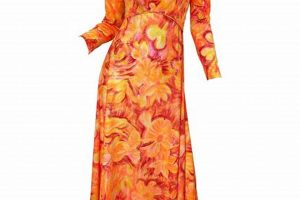
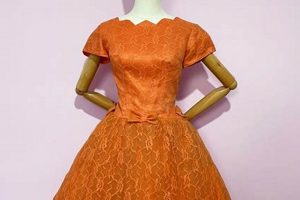
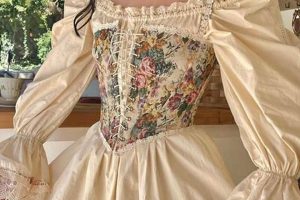
Garments from previous eras, possessing verifiable origins and demonstrating characteristics indicative of their age, offer a tangible connection to the past. These items, often unique in design and construction, represent the fashions and societal values of their respective periods. Examples include meticulously preserved flapper dresses from the 1920s, elegant evening gowns from the 1950s, and free-spirited bohemian styles from the 1970s.
Acquiring such pieces allows individuals to own a piece of history and express personal style in a distinctive manner. The durability of construction and timeless appeal often result in garments that surpass the longevity of contemporary fast-fashion trends. Furthermore, these items contribute to sustainable practices by promoting the reuse and appreciation of existing resources, minimizing the demand for new manufacturing processes.
The subsequent discussion will delve into various aspects of identifying age, assessing condition, and understanding the provenance of these historical sartorial treasures, providing guidance for both novice enthusiasts and seasoned collectors.
Acquiring Garments of Verifiable Age
The following points outline key considerations for those seeking garments genuinely representative of past eras, offering a framework for informed assessment and acquisition.
Tip 1: Fabric Identification: Examine the textile composition. Natural fibers such as silk, wool, and linen were prevalent in earlier eras. Synthetics, while existing in some capacity, gained widespread use later in the 20th century. A burn test (performed cautiously and on a small, inconspicuous area) can help determine fiber content.
Tip 2: Construction Techniques: Assess the garment’s assembly. Hand-stitching, meticulous seam finishing, and the use of techniques like boning and interlining are often indicative of older manufacturing processes. Machine-sewn items might still be “vintage,” but earlier examples will typically feature more handwork.
Tip 3: Fastener Analysis: Examine the zippers, buttons, and snaps. Early zippers may lack brand markings or have distinctive pull tabs. Buttons could be made of materials like shell, bone, or early plastics like Bakelite. These details can provide clues to the garment’s age.
Tip 4: Label Scrutiny: Investigate any labels present. Research the brand or manufacturer to determine their period of operation. Union labels, sizing conventions, and care instructions can all offer valuable context. However, be aware that labels can be replicated, so cross-reference information.
Tip 5: Silhouette and Style: Consider the garment’s overall shape and design. Certain silhouettes are characteristic of specific decades. Familiarity with fashion history is crucial for identifying potential anachronisms or inconsistencies.
Tip 6: Condition Assessment: Carefully evaluate the garment’s condition. Minor imperfections are expected in older items, but significant damage or alterations can detract from its authenticity and value. Note any repairs or replacements that may have been made.
Tip 7: Provenance Documentation: If possible, seek documentation to support the garment’s history. This might include photographs, receipts, or family stories that link the item to a specific time and place.
Adhering to these guidelines facilitates a more informed approach to acquiring garments from earlier eras, minimizing the risk of misidentification and enhancing the potential for acquiring a valuable and historically significant item.
The following sections will explore methods for the preservation and care of such garments, ensuring their longevity for future generations.
1. Material Composition

Material composition serves as a foundational element in determining the authenticity and historical context of garments from previous eras. The types of textiles used, their manufacturing processes, and their degradation patterns offer crucial clues to a garment’s age and origin.
- Fiber Type and Availability
The prevalent use of specific fiber types corresponds to particular historical periods. For instance, natural fibers like silk, wool, cotton, and linen were dominant before the widespread introduction of synthetic textiles. The presence of rayon, nylon, or polyester in a garment suggests a date of origin no earlier than the mid-20th century. Furthermore, variations in the quality and weave of these fibers reflect the technological capabilities and economic conditions of the time.
- Dye Analysis and Color Palette
The types of dyes used to color fabrics can provide valuable information regarding a garment’s age. Natural dyes, derived from plants, animals, or minerals, were commonly used before the advent of synthetic dyes in the late 19th and early 20th centuries. The specific shades and hues achievable with natural dyes differ from those of synthetic dyes, and the fading patterns often vary as well. Analyzing the color palette and the dye composition can help narrow down the period of origin.
- Weave and Construction Techniques
The weave and construction of the fabric itself can also indicate its age. Certain weaves, such as damask or brocade, were more common in specific historical periods. Similarly, the way the fabric was constructed, whether hand-loomed or machine-made, can provide clues. Hand-loomed fabrics often exhibit subtle irregularities and variations in texture that are not found in machine-made fabrics.
- Degradation Patterns and Deterioration
The manner in which a fabric has aged and deteriorated over time offers insights into its composition and the conditions it has endured. Natural fibers degrade differently than synthetic fibers. Silk, for example, may become brittle and prone to shattering, while cotton may yellow and weaken. Synthetic fibers may exhibit different forms of degradation, such as fading, pilling, or the breakdown of the polymer structure. Analyzing these degradation patterns can aid in determining the authenticity and age of a garment.
In conclusion, a thorough examination of the materials used in a garment provides essential information for assessing its authenticity. Identifying the fiber type, analyzing the dyes, understanding the weave and construction, and observing the degradation patterns all contribute to a more complete understanding of the garment’s history and provenance.
2. Construction Techniques

Construction techniques represent a critical determinant of a garment’s age and authenticity. Prior to the widespread adoption of industrial sewing methods, garments were primarily constructed by hand, resulting in specific characteristics absent in mass-produced items. The presence of meticulously hand-finished seams, intricate embroidery executed without machine assistance, and hand-applied detailing are indicative of a pre-industrial manufacturing era. These techniques not only reflect the time and skill invested in each garment but also reveal the constraints and capabilities of the prevailing technology. For instance, the use of fell seams to encase raw edges, common in early garments, demonstrates a focus on durability and longevity, reflecting a time when clothing was valued as a long-term investment. Similarly, the use of hand-picked zippers, characterized by individually sewn zipper teeth, distinguishes earlier examples from later mass-produced variations.
The evolution of sewing machines also leaves discernible traces on garment construction. Early sewing machines, while automated, produced stitches that differ significantly from those of modern machines. Lock stitches, characterized by a tighter and more uniform appearance, gradually replaced chain stitches, which were prone to unraveling. Furthermore, the types of seam finishes, the presence or absence of interlinings, and the methods of applying embellishments like lace or beads all offer insights into the garment’s construction period. A garment constructed with serged seams, for example, could not predate the widespread availability of serger machines in the latter half of the 20th century. Examining these details requires a discerning eye and a thorough understanding of the history of textile manufacturing.
In summary, the construction methods employed in a garment provide invaluable clues to its authenticity and age. The prevalence of hand-sewing, the types of stitches used, the seam finishes, and the overall level of detail all contribute to a garment’s historical narrative. While replicating these techniques is possible, the subtle nuances and inherent imperfections of handwork are challenging to duplicate convincingly, making construction techniques a powerful tool for identifying genuine artifacts. Understanding these nuances is crucial for accurately assessing the historical significance and value of garments from previous eras.
3. Fastener Hardware

Fastener hardware, often overlooked, provides valuable insight into the age and authenticity of garments. Buttons, zippers, hooks, and snaps reflect technological advancements and aesthetic preferences of their respective eras. Analysis of these components contributes significantly to the accurate dating and evaluation of garments purported to be from prior decades.
- Button Composition and Design
Button materials and styles evolved considerably over time. Early buttons were frequently crafted from natural materials such as shell, bone, wood, or horn. The advent of plastics like Bakelite and celluloid introduced new possibilities in design and color. The presence of specific button materials, closure styles (e.g., shank, sew-through), and decorative elements offers strong indicators of the garment’s period of manufacture. For example, intricately carved bone buttons are more characteristic of earlier centuries, while molded plastic buttons became prevalent in the mid-20th century.
- Zipper Construction and Markings
The zipper, a relatively modern invention, provides a distinct marker of garment age. Early zippers often featured metal tapes and pull tabs with minimal or no brand markings. The evolution of zipper technology, including the introduction of nylon coils and branded sliders, allows for precise dating. The presence of specific zipper brands, such as Talon or Conmar, along with the style of the pull tab and the teeth construction, helps determine the period during which the zipperand by extension, the garmentwas likely produced.
- Hook and Eye Closures
Hook and eye closures, predating the widespread adoption of zippers, were commonly used in earlier garments, especially for waistbands and bodices. The style, material, and method of attachment of these closures provide dating clues. Hand-worked hook and eye sets, often featuring intricate stitching and robust metal construction, are indicative of a pre-industrial or early industrial era. Later iterations employed simpler designs and machine-made components.
- Snap Fasteners
Snap fasteners, another significant development in garment closure technology, offer further insight into garment age. Early snaps were typically made of metal and featured a distinctive ball-and-socket design. The evolution of snap design, including the introduction of plastic components and specialized attachment methods, provides valuable markers. The presence of specific snap brands, such as Scovill, and the style of the snap mechanism contribute to the accurate dating of garments.
These subtle, yet significant, details in fastener hardware provide a tangible connection to the past, enabling collectors and historians to assess and appreciate their authenticity. Analyzing these elements strengthens the ability to understand the historical context of these items, validating their place within sartorial history.
4. Labeling Information

Labeling information, encompassing a garment’s tags, stamps, and attached documentation, serves as a primary source for establishing authenticity. These labels provide verifiable details about the manufacturer, fabric composition, care instructions, and sizing, all crucial elements in determining a garment’s age and origin.
- Manufacturer Identification and Trademark Analysis
Garment labels often display the name of the manufacturer or designer, accompanied by registered trademarks. Researching the history of these companies, including their operational dates and trademark registration details, can significantly aid in dating. For example, a label bearing a specific trademark registered in 1955 confirms that the garment could not have been manufactured before that year. Absence of union labels, common after the mid-20th century in the US, suggests the item is of international origin, predates widespread unionization, or is a reproduction.
- Fabric Composition and Fiber Content Disclosures
Regulations regarding fabric labeling vary across different eras. Early garments may lack explicit fiber content information, particularly before mandatory labeling laws were enacted. The presence of specific fiber names (e.g., “Rayon,” “Nylon,” “Polyester”) provides a chronological marker, as these synthetic fibers were introduced at different points in the 20th century. A label indicating “100% Acetate” suggests a manufacturing date later than the introduction of acetate fibers in the early 20th century but before the proliferation of newer synthetics. The texture/aspect of the material composition plays a vital role, as authentic garments show true forms, shapes and sizes, even with minor imperfections.
- Care Instructions and Cleaning Recommendations
Care instructions on labels reflect evolving cleaning technologies and fabric care practices. Early labels might include vague instructions like “Dry Clean Only” or “Hand Wash,” whereas later labels provide more detailed guidance regarding water temperature, ironing settings, and specific cleaning agents. The presence of terms like “Permanent Press” or instructions for tumble drying indicate a later manufacturing date, aligning with the development of these technologies. Washing symbols, standardised much later, gives a further clue to true vintage garments.
- Sizing Conventions and Measurement Systems
Sizing standards and measurement systems have changed over time. A garment labeled with a specific size (e.g., “Size 12”) must be evaluated in the context of historical sizing charts. Sizing varied over time and geographically; a “Size 12” from the 1950s will differ considerably from a modern “Size 12.” Measurements provided on labels, or lack thereof, can provide useful evidence as to when a garment was made.
Ultimately, information found through label examination provides a foundation for authentication. Proper research of the brands, materials, care practices and sizing are imperative to determine authentic garments of vintage periods.
5. Silhouette Timeline

The evolution of garment silhouettes provides a critical framework for authenticating garments from previous eras. Each decade exhibits distinctive shapes and structural elements, dictated by prevailing social norms, technological advancements in textile production, and influential fashion designers. Understanding these chronological trends enables a nuanced assessment of garment authenticity, facilitating the identification of reproductions or misattributed pieces.
- The Roaring Twenties: The Flapper Dress
The 1920s witnessed a radical shift away from restrictive Victorian silhouettes towards a more androgynous, tubular form. The flapper dress, characterized by its loose, straight cut, dropped waistline, and often knee-length hem, became emblematic of the era’s newfound freedoms. Authentic examples feature lightweight fabrics like silk crepe or chiffon, embellished with beads, sequins, or fringe. A garment exhibiting these features but constructed from a fabric not available until the 1970s would immediately raise concerns regarding its authenticity.
- The Golden Age of Hollywood: The 1930s Bias Cut
The 1930s embraced a more curvaceous silhouette, achieved through the strategic use of bias-cut fabrics. Gowns clung to the body, accentuating the natural waistline and flowing elegantly to the floor. Common materials included silk satin and rayon, often in muted or jewel-toned hues. Examining the drape and flow of a garment claiming to be from this period is crucial; a garment lacking the characteristic fluidity of a bias cut likely originates from a different era.
- The Post-War Era: The New Look of the 1950s
Christian Dior’s “New Look” dominated the 1950s, emphasizing a cinched waist, full skirt, and structured bodice. Dresses from this period often featured petticoats to enhance volume and were constructed from materials like cotton, rayon blends, or occasionally synthetic fabrics like acetate. Key details included fitted bodices, full skirts (often circle or gathered), and defined waistlines, frequently accentuated with belts. A garment labeled as dating from the 1950s but lacking these key structural components should be carefully scrutinized.
- The Swinging Sixties: The Mod Shift Dress
The 1960s brought a return to simpler, more geometric silhouettes, exemplified by the shift dress. This style featured a short, A-line shape, often hitting above the knee. Fabrics included cotton, linen, and early synthetic blends, frequently in bold colors and graphic prints. Authentic examples prioritize minimalist design and streamlined construction. A shift dress with overly elaborate embellishments or featuring a silhouette inconsistent with the A-line shape raises questions about its purported age.
In conclusion, familiarity with these distinct silhouette trends empowers collectors and enthusiasts to evaluate garments with greater precision. By recognizing the defining characteristics of each era, one can more accurately assess the authenticity of garments marketed as vintage. These trends are vital to verifying whether an authentic garment aligns with specific periods or has mismatched timelines. This knowledge is crucial for avoiding misidentification and ensuring that acquired pieces accurately reflect the sartorial history they represent.
6. Condition Assessment

The assessment of condition stands as a pivotal factor in determining the value, authenticity, and suitability for preservation of garments from past eras. Deterioration from environmental factors, wear and tear, or improper storage invariably affects such items. Minor imperfections, such as subtle fading or minor repairs, may be acceptable and even expected in genuinely aged textiles, serving as evidence of their historical journey. However, extensive damage, poorly executed alterations, or evidence of attempts to artificially age a garment can significantly diminish its value and cast doubt upon its authenticity. For example, a 1920s beaded dress exhibiting significant bead loss and fabric disintegration due to improper storage would require extensive and costly restoration to stabilize its condition. Conversely, a similar dress with only minor bead loss and minimal fabric wear would be more desirable and command a higher value due to its superior state of preservation.
The process of condition assessment involves a systematic evaluation of the garment’s various components, including the fabric, seams, fasteners, embellishments, and linings. Careful examination under proper lighting is essential to identify imperfections such as stains, tears, holes, discoloration, and structural weaknesses. The nature and extent of damage are carefully documented, and the potential for repair or restoration is considered. The evaluation also includes an assessment of past alterations, which can significantly affect the garment’s original design and integrity. For example, a 1950s dress with an altered hemline or a replaced zipper may still possess historical value, but its authenticity as a representative example of its era would be compromised. The presence of mold, mildew, or insect damage requires immediate attention to prevent further deterioration and potential contamination of other items.
Effective assessment ensures informed decision-making concerning acquisition, preservation, and restoration efforts. Collectors and institutions rely on accurate condition reports to determine the fair market value of a garment and to prioritize conservation treatments. While some damage may be repairable, extensive restoration can be costly and may not always be feasible. Ultimately, the goal of condition assessment is to strike a balance between preserving the historical integrity of a garment and ensuring its long-term survival. The understanding gained facilitates thoughtful stewardship, ensuring these tangible links to the past are protected for future generations.
Frequently Asked Questions
The following addresses common inquiries regarding the identification and evaluation of garments purported to be from past decades. These answers provide guidance to collectors and enthusiasts seeking verifiable historical pieces.
Question 1: What characteristics definitively identify a garment as originating from a specific vintage period?
Multiple factors contribute to identification. Fabric composition, construction techniques, fastener types, labeling information, and silhouette trends all provide evidence. No single element guarantees authenticity; rather, a convergence of consistent indicators points toward a garment’s true age.
Question 2: How can one differentiate between a genuinely old garment and a modern reproduction designed to resemble one?
Reproductions often lack the nuanced details and subtle imperfections found in genuinely aged pieces. Examination of stitching, fabric texture, and fastener hardware reveals discrepancies. Modern reproductions may employ contemporary manufacturing methods or materials inconsistent with historical practices.
Question 3: What is the significance of garment labels in establishing authenticity?
Labels offer critical information regarding the manufacturer, fabric content, and care instructions. Researching the history of specific labels, including trademark registrations and operational dates, provides valuable dating clues. The absence of union labels or the presence of specific fiber names serves as a chronological marker.
Question 4: How does the condition of a garment affect its value and historical significance?
Condition is a primary factor in determining value. Minor imperfections, if consistent with age, may be acceptable. Extensive damage, poorly executed repairs, or evidence of artificial aging diminish value and potentially compromise authenticity. Careful documentation of any deterioration contributes to a comprehensive assessment.
Question 5: Where can one reliably acquire garments from prior eras, minimizing the risk of encountering fakes or misrepresentations?
Reputable vintage dealers, estate sales, and established auction houses offer a greater assurance of authenticity. Prior to purchase, scrutinize the vendor’s expertise and track record. Seek verification from independent appraisers or textile historians when substantial investments are considered.
Question 6: What are some common red flags to watch for when evaluating garments marketed as being of verifiable age?
Be wary of garments with incongruous features (e.g., a 1930s silhouette constructed from 1970s polyester). Examine stitching and seam finishes for inconsistencies with historical methods. Scrutinize labels for anachronisms or inaccuracies. Price points significantly below market value warrant heightened scrutiny.
In conclusion, a comprehensive approach, combining meticulous observation with informed research, enables individuals to confidently assess the age and authenticity of garments offered as being from prior eras.
The subsequent section will delve into methods for proper storage and preservation, ensuring the longevity of these valuable sartorial artifacts.
Authentic Vintage Dresses
This discussion has presented a multi-faceted exploration of the characteristics, identification, and preservation of sartorial pieces from past eras. Emphasis has been placed on recognizing the nuances of fabric composition, construction techniques, fastener hardware, labeling information, and silhouette timelines, as these elements collectively determine a garment’s authenticity. Assessment of condition is crucial, acknowledging that minor imperfections can be congruent with verifiable age while extensive damage necessitates careful consideration.
The acquisition and stewardship of authentic garments represent a commitment to preserving tangible links to history. Rigorous evaluation, coupled with informed decision-making, ensures that these artifacts are accurately identified, properly maintained, and valued for their historical significance. Continued research and appreciation are essential to protect these sartorial assets for future study and enjoyment.