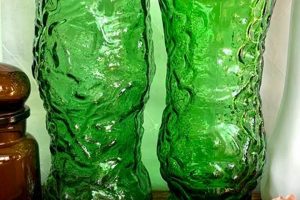
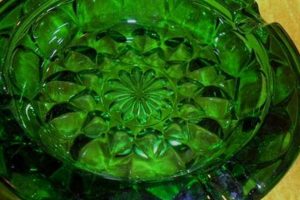
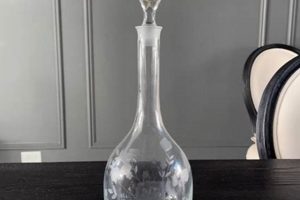
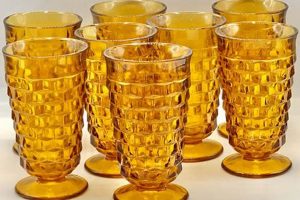
This distinct glassware exhibits a milky, luminous quality caused by light scattering within the glass itself. This effect, known as opalescence, is often achieved through the addition of chemicals during the manufacturing process. Common examples include vases, bowls, and lampshades exhibiting soft color gradations, often appearing white or pastel when illuminated.
The allure of this material lies in its aesthetic appeal and its connection to specific historical periods. Its popularity surged during the late 19th and early 20th centuries, making it a tangible link to craftsmanship and design sensibilities of the past. Appreciation for these items stems from their inherent beauty, their collectible nature, and their ability to evoke a sense of nostalgia and history.
The following sections will delve into the various production techniques, identifying characteristics, and notable manufacturers associated with this unique glass form, providing a deeper understanding of its significance in the world of decorative arts.
Guidance on Acquiring and Maintaining Opalescent Glass Artifacts
The subsequent recommendations are intended to assist in the responsible acquisition, preservation, and appreciation of these delicate historical items. Careful consideration of these factors is crucial for ensuring the longevity and value of any collection.
Tip 1: Authentication Through Markings: Scrutinize the piece for maker’s marks or signatures, typically found on the base or body. These marks can provide valuable information regarding origin and authenticity. Consult reference guides to verify the legitimacy of identified marks.
Tip 2: Examining the Opalescence: Assess the quality and consistency of the opalescent effect. Genuine examples display a soft, internal glow, not a superficial paint or coating. Uneven or overly vibrant coloration may indicate a reproduction.
Tip 3: Condition Assessment: Thoroughly inspect the object for cracks, chips, or repairs. The presence of damage can significantly impact value. Use a magnifying glass to identify subtle imperfections.
Tip 4: Researching Production Techniques: Familiarize oneself with the common manufacturing methods employed during the period of the item’s creation. Understanding techniques such as mold blowing or hand pressing can aid in identifying potential inconsistencies or flaws.
Tip 5: Understanding Color Variations: Note that the coloration can influence value and collectibility. Certain hues, particularly those less commonly produced, may command a premium. Research popular colors of various time periods and factories.
Tip 6: Safe Handling and Storage: Exercise extreme caution when handling such items. Store objects in a stable environment, away from direct sunlight and temperature fluctuations. Use soft cloths and appropriate cleaning solutions for maintenance.
Tip 7: Consider Professional Appraisals: For significant purchases or items of unknown provenance, consult a qualified appraiser specializing in antique glassware. A professional assessment can provide an unbiased valuation and confirm authenticity.
Proper due diligence and a commitment to responsible stewardship are essential for both novice and experienced collectors. A deeper understanding of this glass leads to informed decisions and the preservation of this historical art form.
The concluding portion of this discourse will explore notable collections and resources for further study, enabling enthusiasts to expand their knowledge and appreciation of this captivating glass.
1. Color Play

The term “Color Play,” when applied to vintage opalescent glass, refers to the interaction of light with the inherent opalescent qualities of the glass material, resulting in a unique visual phenomenon. This interaction is a significant factor influencing the desirability and value of the pieces.
- Internal Light Scattering
Opalescence is caused by the scattering of light off tiny particles within the glass matrix. These particles, often composed of fluorides or phosphates, create a milky or pearlescent appearance. The degree and type of scattering determine the colors that become prominent, creating a dynamic visual effect. Different formulations and annealing processes can dramatically change the color play achieved.
- Edge Highlighting
Edges and raised features on the glass often exhibit a more intense concentration of the opalescent effect. This edge highlighting creates a contrasting outline against the base color of the glass, accentuating the form and adding depth. This characteristic is particularly evident in pressed glass patterns, where the raised designs capture and refract more light.
- Color Combinations
The base glass color significantly influences the perceived color play. For example, opalescence on a cranberry-colored glass can produce shades of pink and white, while on a blue glass, it might create hues of pale blue and white. These combinations, often intentional design choices, contribute to the overall aesthetic appeal of the glass. Manufacturers like Fenton and Northwood experimented with various color combinations to achieve unique effects.
- Iridescence Influence
Some pieces may exhibit a degree of iridescence in addition to opalescence. This effect, often achieved through the application of metallic salts, adds an extra layer of color play. The iridescent sheen interacts with the underlying opalescence, creating a complex and shifting range of colors depending on the viewing angle. This combination is seen in some art glass pieces from the late 19th and early 20th centuries.
In summary, the “Color Play” observed in vintage opalescent glass is a result of several interacting factors, including internal light scattering, edge highlighting, color combinations, and the potential presence of iridescence. These features collectively contribute to the unique visual characteristics of these items and are essential considerations for collectors and enthusiasts alike. The degree and quality of the color play often serve as key indicators of the glass’s authenticity and aesthetic value.
2. Maker's Marks

Maker’s marks represent a crucial element in the identification and authentication of vintage opalescent glass. These marks, typically applied during the manufacturing process, provide insights into the origin and production period of a given piece, impacting its value and historical significance.
- Identification and Attribution
Marks frequently consist of a company logo, name, or initials, offering direct attribution to a specific manufacturer. Examples include the “N” mark of Northwood, the “Fenton” script logo, or the various marks used by Imperial Glass. These identifiers allow collectors and researchers to definitively associate a piece with its creator, aiding in the understanding of production styles and design trends.
- Dating and Period Authentication
Certain marks were used only during specific timeframes. Changes in a company’s logo or the introduction of new marks can help to narrow down the production date of an item. For instance, a specific Fenton mark might only have been used between 1910 and 1920, providing a relatively precise window for the piece’s creation. This is valuable for determining the authenticity of “period” pieces versus later reproductions.
- Unmasking Reproductions and Forgeries
The absence of a known maker’s mark on a piece that stylistically resembles a specific manufacturers work can raise red flags. Furthermore, incorrectly applied or poorly executed marks are strong indicators of reproduction or forgery. Careful comparison of marks with documented examples in reference guides is essential for detecting such discrepancies.
- Geographical Contextualization
Maker’s marks provide location information, revealing the geographic centers of production for this glass. A mark may indicate a specific town or region where the factory was located, such as the Ohio River Valley, a significant hub for glass production in the late 19th and early 20th centuries. This contextualizes the item within the broader historical narrative of industrial development and regional craftsmanship.
In conclusion, the presence, form, and accuracy of maker’s marks are paramount when assessing vintage opalescent glass. These marks not only aid in identification but also contribute to the overall understanding of its history, authenticity, and value. Rigorous examination and comparison with known examples are crucial steps in the evaluation process.
3. Production Era

The term “Production Era” is critically linked to vintage opalescent glass as it defines the period during which these items were manufactured, profoundly influencing their style, techniques, and overall value. The primary period of production for this glass spanned the late 19th and early 20th centuries, a time marked by significant advancements in glassmaking technology and evolving aesthetic tastes. For example, the introduction of new furnace designs allowed for better temperature control, enabling the creation of more complex and delicate opalescent effects. Understanding the production era provides context for identifying authentic pieces and distinguishing them from later reproductions.
Different eras within this timeframe witnessed specific manufacturing trends and design preferences. The late Victorian era saw the rise of intricate pressed glass patterns with opalescent rims, reflecting the ornate aesthetic of the time. Companies like Fenton and Northwood heavily influenced this trend, producing vast quantities of decorative items. Later, the Art Deco period brought simpler, more streamlined designs, sometimes incorporating opalescence in new ways. For example, some Art Deco pieces feature opalescent accents rather than overall coverage, showcasing a shift in design sensibilities. This understanding impacts appraisal and collecting, helping to ascertain the rarity and historical significance of particular styles.
Therefore, acknowledging the production era is essential for evaluating vintage opalescent glass. It provides a framework for identifying authentic pieces, understanding the historical context of their creation, and appreciating the evolution of design trends. Challenges arise in accurately dating unmarked pieces, necessitating careful examination of stylistic features, manufacturing techniques, and comparison with documented examples. The production era remains a fundamental aspect for enthusiasts and collectors, linking the physical object to its historical origins and cultural value.
4. Rarity Factors

Rarity significantly influences the value and desirability of vintage opalescent glass. Several factors contribute to an item’s scarcity, including limited production runs, experimental designs, and variations in color or pattern. Production era impacts rarity, as items from shorter periods become more difficult to acquire. For example, specific patterns produced for only a year or two by companies like Fenton are considerably rarer than those manufactured for a decade or more.
Color variations contribute to rarity. Opalescent glass exhibiting uncommon hues or combinations command higher prices due to their unique appearance. Pieces with documented provenance or association with notable figures also become more valuable, particularly if supported by verifiable historical records. Limited survival rates, owing to fragility and accidental damage, make well-preserved specimens particularly coveted by collectors. This is especially true for larger, more elaborate pieces, which are more susceptible to breakage. For instance, a large Northwood ice cream set in pristine condition, showcasing an unusual opalescent color blend, represents a highly desirable item in the market, often commanding premium prices.
Therefore, understanding rarity factors is essential for appraising vintage opalescent glass. This knowledge informs purchasing decisions, guiding collectors toward valuable acquisitions. The identification of rare characteristics necessitates detailed research, careful examination, and comparison with established references. Rarity serves as a core determinant in establishing the intrinsic worth and collectible status of each piece, connecting its physical properties to market value.
5. Condition Grade

Condition Grade, when applied to vintage opalescent glass, serves as a critical determinant of value, influencing both collectibility and market pricing. The assessment of condition involves a meticulous examination of the item’s physical state, considering factors that directly impact its aesthetic appeal and structural integrity.
- Assessing Structural Integrity
This facet involves a detailed inspection for cracks, chips, or fractures in the glass. Even minor damage can significantly detract from the value of vintage opalescent glass. For instance, a hairline crack in the body of a vase or a chip on the rim of a bowl will lower the condition grade and reduce its desirability. Repairs, even professionally executed, are also considered, as they alter the original state of the item.
- Evaluating Surface Quality
The surface condition is evaluated for scratches, abrasions, or clouding. Scratches can result from improper cleaning or handling, while clouding may be caused by prolonged exposure to humidity or chemical reactions within the glass itself. Pieces with minimal surface imperfections are rated higher. The presence of water stains or mineral deposits, often difficult to remove without causing further damage, also lowers the condition grade.
- Analyzing Opalescent Effects
The quality and evenness of the opalescent effect are integral to the condition grade. Fading, discoloration, or uneven opalescence can indicate exposure to excessive sunlight or improper storage conditions. A piece with a strong, consistent opalescent glow will receive a higher rating. Instances where the opalescent effect has been compromised due to chemical degradation impact the overall value.
- Verifying Authenticity of Markings
The presence and legibility of maker’s marks contribute to the condition grade. Faded or damaged marks can raise concerns about authenticity, while clear and well-preserved marks enhance the item’s value. The condition of the mark itself is scrutinized; an intact, easily readable mark indicates careful handling and preservation, adding to the piece’s appeal.
In summary, the condition grade assigned to vintage opalescent glass encompasses a comprehensive evaluation of its structural integrity, surface quality, opalescent effects, and the state of its markings. These elements collectively determine the item’s overall desirability and market value, emphasizing the importance of careful examination and informed assessment for both collectors and enthusiasts.
6. Opalescent Effect
The defining characteristic of the glass is the play of light known as the “Opalescent Effect”. This phenomenon is intrinsic to this type of glassware, resulting from the incorporation of specific chemical additives, typically fluorides or phosphates, into the molten glass mixture during manufacturing. These additives create microscopic particles within the glass matrix, causing light to scatter as it passes through the material. The result is a milky, luminous appearance, often concentrated at the edges and raised portions of the glass. Without this effect, the glass would not be classified as such. He also has real-life examples such as Fenton Glass and Northwood Glass.
The degree and quality of the Opalescent Effect directly correlate with the value and desirability of vintage pieces. A strong, evenly distributed opalescence is generally preferred, as it enhances the visual appeal and showcases the craftsmanship involved. Variations in the effect can occur due to differences in manufacturing techniques, chemical formulations, and cooling processes, which can make identifying and authenticating examples easier. The understanding of this effect is also important to understanding any possible damage or repair.
In summary, the Opalescent Effect is not merely a superficial attribute but an essential component. Its presence, quality, and distribution are key indicators of authenticity, value, and aesthetic appeal. A solid comprehension of the opalescent effect enables collectors and researchers to evaluate and appreciate the historical context and artistic skill involved in producing this distinctive glassware.
Frequently Asked Questions
The following addresses common inquiries regarding the identification, valuation, and preservation of opalescent glass artifacts.
Question 1: How can the authenticity of a piece of glass be verified?
Authenticity verification involves several steps. A careful examination for maker’s marks, a detailed comparison of the item’s style with known examples from established manufacturers, and an assessment of the glass’s opalescent qualities are crucial. Consulting with experienced appraisers or glass specialists can provide further confirmation.
Question 2: What factors most significantly impact the value?
Value is influenced by several factors, including rarity, condition, maker, color, and pattern. Items produced in limited quantities, those in excellent condition, and those from renowned manufacturers command higher prices. Uncommon colors and sought-after patterns also contribute to increased value.
Question 3: How should these glass items be cleaned to prevent damage?
Cleaning should be performed with caution. Use lukewarm water and a mild, pH-neutral detergent. Avoid abrasive cleaners or scouring pads, as these can scratch the surface. Gently dry with a soft, lint-free cloth. For stubborn stains, consider consulting a professional conservator.
Question 4: What are the ideal storage conditions to ensure long-term preservation?
Ideal storage conditions involve a stable environment with consistent temperature and humidity levels. Avoid direct sunlight, which can cause fading or discoloration. Store pieces individually, wrapped in acid-free tissue paper, to prevent scratches. Consider display cases with UV-filtering glass to protect from light damage.
Question 5: Are reproductions readily identifiable, and what features distinguish them?
Reproductions often lack the fine details and craftsmanship of authentic vintage pieces. Their opalescence may appear artificial or superficial, and their maker’s marks, if present, may be poorly executed or inconsistent with known examples. Weight, clarity, and overall feel can also differ significantly.
Question 6: What are reliable resources for researching manufacturers and patterns?
Reliable resources include specialized books on glass history and identification, online databases maintained by glass collecting organizations, and auction catalogs from reputable auction houses. Museum collections and expert consultations can also provide valuable information.
The answers provided underscore the necessity of careful research and diligent evaluation when engaging with glass, ensuring informed decisions and promoting responsible preservation practices.
The subsequent section will explore notable collections and resources for continued study, offering enthusiasts opportunities to expand their expertise and deepen their knowledge.
Conclusion
The preceding discourse has illuminated various facets of “vintage opalescent glass,” underscoring its historical significance, manufacturing techniques, identifying characteristics, and preservation considerations. From the nuances of color play to the importance of maker’s marks and condition assessment, a thorough understanding of these elements is paramount for collectors, enthusiasts, and researchers alike.
As an enduring testament to craftsmanship and artistic innovation, “vintage opalescent glass” continues to captivate and inspire. Its preservation requires diligent stewardship and informed appreciation. Further study and dedicated conservation efforts will ensure that future generations can experience the beauty and historical value of these unique artifacts.