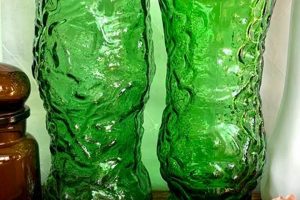
A small, decorative vessel crafted from colored glass, typically dating from a prior era, serves a specific function: to display a single bloom or a small cluster of flowers. The coloration arises from the inclusion of particular elements during the manufacturing process, resulting in a warm, translucent appearance. These items represent a particular aesthetic from the period of their creation.
Such objects hold value for several reasons. They represent a tangible connection to past design sensibilities and manufacturing techniques. Their presence in a space introduces a touch of historical charm and visual warmth. Furthermore, the specific hue and the delicate form contribute to a sense of understated elegance, enhancing the overall ambiance of a room. Historically, these items reflected the prevailing styles and popular color palettes of their time, offering insight into societal preferences.
The following sections will delve into specific aspects of collecting such items, examining variations in form and style, discussing methods for assessing their authenticity and condition, and exploring approaches to their integration within contemporary interior design schemes. Further information will be provided on cleaning and preservation methods.
Tips for Identifying and Preserving Amber Glass Floral Vessels
The following tips offer guidance on discerning the age, quality, and proper care for antique or vintage receptacles of this nature.
Tip 1: Examine the Color Consistency. Authentic examples often exhibit subtle variations in color density due to the manufacturing processes of the period. Uniform, perfectly consistent coloration may suggest more recent production.
Tip 2: Inspect for a Pontil Mark. Many older, mouth-blown specimens will bear a rough or ground mark on the base where the pontil rod was attached during manufacture. The absence of a pontil mark does not necessarily indicate a modern piece, but its presence is a strong indicator of age.
Tip 3: Assess the Glass Quality. Older glass may contain minor imperfections, such as bubbles or striations. These are not necessarily flaws, but rather characteristics inherent in the glassmaking techniques of the era.
Tip 4: Research Known Manufacturers and Patterns. Familiarize yourself with prominent glassmakers and their signature designs. Identifying a maker’s mark can significantly aid in determining the item’s origin and value.
Tip 5: Handle with Care. These are fragile objects. When handling them, ensure clean, dry hands. Avoid placing them on hard surfaces without padding and protect from extreme temperature changes.
Tip 6: Clean Gently. Avoid abrasive cleaners and harsh chemicals. Use lukewarm water and a mild detergent to clean the surface. A soft brush can be used to remove stubborn dirt. Dry thoroughly with a lint-free cloth.
Tip 7: Protect from Sunlight. Prolonged exposure to direct sunlight can cause the color to fade over time. Store or display these items in locations with filtered or indirect light.
Employing these techniques will assist in making informed decisions about acquisition and care, ensuring the longevity and value of these decorative objects.
The subsequent section will address the integration of these decorative pieces into various design styles and settings.
1. Color Saturation

Color saturation, referring to the intensity or purity of a hue, is a significant determinant of the aesthetic appeal and perceived value of vintage amber glass floral vessels. Variations in saturation reflect differences in manufacturing processes and can significantly affect an object’s collectibility.
- Impact of Raw Materials
The raw materials used in the glassmaking process directly influence color saturation. The specific type and quantity of metallic oxides added to the molten glass determine the final color intensity. For example, a higher concentration of iron oxide typically results in a deeper, more saturated amber tone. Variations in the purity of these materials across different eras also contribute to the range of amber hues observed in these vessels.
- Influence of Manufacturing Techniques
The glassblowing and molding techniques employed during production affected color saturation. Uneven heating or inconsistent mixing of materials could lead to localized variations in color intensity within a single piece. Hand-blown items, in particular, often exhibit subtle gradients of color, contributing to their unique character and perceived authenticity.
- Effect of Light Exposure Over Time
Prolonged exposure to sunlight can alter the color saturation of glass. Ultraviolet radiation can cause certain metallic oxides to degrade, leading to a gradual fading or shift in color. Vessels that have been displayed in brightly lit environments may exhibit a less saturated or more muted amber hue compared to those stored in dark conditions.
- Relationship to Market Value and Desirability
Generally, pieces exhibiting rich, deep, and uniform amber tones are more highly prized by collectors. However, nuanced variations and subtle imperfections indicative of age and handcraftsmanship can also increase value for some buyers. The market value of a vintage amber glass vessel is therefore a complex interplay between color saturation, historical context, and overall condition.
In conclusion, color saturation is a key attribute influencing the valuation and aesthetic appreciation of these items. Understanding the factors that contribute to variations in color allows for a more nuanced assessment of the object’s history, authenticity, and desirability in the market.
2. Form Variations

The observable differences in shape, contour, and structural design constitute a fundamental aspect of these decorative objects. These variations are not merely aesthetic; they reflect evolving design sensibilities, technological advancements in glassmaking, and the intended function of the item. A comparative analysis of these reveals insights into the socio-cultural context and the specific manufacturing techniques prevalent during their creation. For example, early 20th-century examples often feature simple, cylindrical forms with minimal ornamentation, reflecting the utilitarian focus of the period. Conversely, mid-century modern designs frequently incorporate asymmetrical shapes and organic curves, indicative of the era’s experimentation with form and materials. The presence or absence of features such as flared rims, constricted necks, or elaborate bases contributes to the unique character and historical value of each piece. Furthermore, the presence of molded patterns or applied decorations, such as floral motifs or geometric designs, provides additional clues about the object’s origin and intended market.
The practical significance of understanding these morphological differences lies in the ability to accurately date and authenticate specimens. By recognizing the defining characteristics associated with particular periods or manufacturers, collectors and researchers can better assess the object’s provenance and potential value. Moreover, a detailed knowledge of construction techniques, such as mold-blown versus hand-blown glass, helps to distinguish between mass-produced items and those crafted with greater artistic skill. Consider, for instance, the contrast between a simple, machine-made vase from the 1950s, intended for everyday use, and a more elaborate, hand-blown piece from the Art Deco era, designed as a luxury item. The differences in form, construction, and decorative elements provide valuable information about the object’s historical context and intended purpose.
In summary, the variations in form observed across examples of vintage amber glass floral vessels are a critical element in their identification, evaluation, and appreciation. These differences are a consequence of evolving design trends, technological innovations, and the intended market for these items. A thorough understanding of these aspects allows for a more informed assessment of the object’s historical significance and its place within the broader history of decorative arts. Challenges remain in accurately attributing unsigned pieces and deciphering the impact of regional variations on design. Further research and collaboration among experts are essential to fully unraveling the complexities of their design and production.
3. Maker identification

The attribution of a vintage amber glass floral vessel to a specific manufacturer significantly impacts its value, historical relevance, and collectibility. Accurate maker identification establishes a direct connection to specific design aesthetics, manufacturing techniques, and historical contexts. The presence of a recognized maker’s mark or documented association provides verifiable evidence of the object’s origin, lending credence to its authenticity and placing it within a defined lineage of craftsmanship. For instance, a floral vessel demonstrably produced by Fenton Glass Company during the early 20th century would reflect the distinctive iridescent “carnival glass” style popular at the time, influencing its desirability among collectors specializing in that particular aesthetic. The absence of such definitive attribution necessitates more complex analysis based on stylistic characteristics, manufacturing techniques, and comparative examples to ascertain its probable origin, often resulting in a lower assessed value.
The practical significance of maker identification extends to various aspects of collection management and historical research. Knowledge of specific manufacturers enables collectors to curate specialized collections focusing on the works of particular artisans or companies, facilitating a deeper understanding of their contributions to glassmaking history. Furthermore, maker identification informs conservation efforts by providing insights into the materials and techniques employed in the object’s creation, allowing for the selection of appropriate cleaning and preservation methods. Art historians and researchers rely on maker information to trace the evolution of glassmaking techniques, design trends, and commercial networks, contributing to a broader understanding of material culture and industrial history. The identification process frequently involves examination of maker’s marks, stylistic features, and historical records, often requiring specialized expertise and access to archival resources.
In summary, maker identification constitutes a crucial aspect of appreciating and valuing vintage amber glass floral vessels. Establishing the provenance of these objects provides essential context for understanding their historical significance, aesthetic qualities, and market value. While challenges remain in attributing unmarked pieces or those produced by lesser-known manufacturers, the pursuit of maker identification remains a central endeavor for collectors, researchers, and enthusiasts seeking to unlock the stories embedded within these tangible artifacts of the past. The connection between the maker and the object forms an integral part of its narrative and enhances its overall appeal.
4. Condition assessment

The process of evaluating the physical state of a vintage amber glass floral vessel directly influences its perceived value, historical significance, and suitability for collection or display. Condition assessment examines the presence and severity of damage, degradation, or alterations that have occurred over time, providing critical information about the object’s integrity and potential need for conservation. Damage, such as cracks, chips, or scratches, reduces the object’s aesthetic appeal and structural stability, thereby diminishing its market value. For instance, a previously pristine example exhibiting a significant fracture may be valued at a fraction of its original worth. Surface blemishes, such as staining or discoloration, can also detract from its visual appeal, impacting its desirability among collectors. Alterations, including repairs or modifications performed at a later date, may compromise its historical authenticity, particularly if these interventions are poorly executed or inconsistent with original manufacturing techniques.
The practical significance of condition assessment lies in its ability to inform decisions regarding acquisition, preservation, and display. Potential buyers rely on accurate condition reports to make informed purchasing decisions, weighing the object’s aesthetic qualities against the costs associated with potential restoration. Collectors utilize condition assessments to prioritize conservation efforts, focusing on objects exhibiting the most significant damage or deterioration. Museums and historical societies conduct thorough condition assessments to monitor the stability of their collections and develop appropriate preservation strategies. Furthermore, the condition of a particular vessel can provide insights into its past use and environmental exposure, shedding light on its historical journey and contributing to a more complete understanding of its significance. For example, evidence of water damage or chemical exposure may suggest that the vessel was used for purposes beyond simple floral display, offering clues about its previous ownership and environment. Comprehensive condition assessment also differentiates between age-related wear, which can add character, and damage that detracts from the integrity of the piece.
In summary, condition assessment is an integral component in the valuation, preservation, and interpretation of vintage amber glass floral vessels. By carefully evaluating the physical state of these objects, collectors, researchers, and curators can make informed decisions regarding their acquisition, care, and presentation. While challenges remain in accurately assessing the impact of subtle damage and distinguishing between original imperfections and subsequent alterations, the principles of condition assessment provide a framework for understanding the object’s history and ensuring its long-term preservation. The process provides key insights into the object’s value and importance.
5. Era significance

The historical period in which a vintage amber glass floral vessel was produced exerts a profound influence on its design, material composition, and overall aesthetic. The era of creation provides crucial context for understanding its intended purpose, manufacturing techniques, and cultural relevance, thereby impacting its value and collectibility.
- Art Deco Influence (1920s-1930s)
Floral vessels from this period often feature geometric shapes, streamlined designs, and luxurious materials, reflecting the era’s embrace of modernity and opulence. Amber glass examples may incorporate stylized floral motifs or angular patterns, showcasing the influence of machine-age aesthetics on traditional craft. Examples include vases with stepped bases or etched geometric designs.
- Mid-Century Modernism (1940s-1960s)
These vessels tend to exhibit organic forms, asymmetrical designs, and vibrant colors, reflecting a post-war optimism and a focus on functionality. Amber glass examples may feature smooth, rounded shapes or abstract designs, embodying the era’s emphasis on simplicity and innovation. Vessels with freeform shapes and textured surfaces are characteristic of this period.
- Victorian Era (1837-1901)
Vessels produced during Queen Victoria’s reign commonly showcase ornate detailing, elaborate patterns, and romantic motifs, reflecting the era’s emphasis on sentimentality and craftsmanship. Amber glass examples may feature hand-painted floral decorations, intricate filigree work, or elaborate molded designs. Vases with ruffled edges and hand-enameled flowers typify this era.
- Art Nouveau (1890-1910)
This period saw vessels incorporate flowing lines, organic shapes, and naturalistic motifs, embodying the era’s fascination with nature and its rejection of industrialization. Amber glass examples might display stylized floral patterns, swirling designs, or depictions of insects and animals. Iridescent finishes and asymmetrical designs are common hallmarks.
These historical periods provide a framework for understanding the design influences and cultural values that shaped the creation of vintage amber glass floral vessels. Examining a vessel’s stylistic characteristics and material composition within the context of its era allows for a more nuanced appreciation of its artistic merit and historical significance. The era acts as a lens through which these objects can be more fully understood and appreciated.
Frequently Asked Questions
The following questions address common inquiries and misconceptions regarding the identification, valuation, and care of these delicate objects.
Question 1: How can one differentiate between genuine vintage pieces and modern reproductions?
Answer: Distinguishing authentic specimens from contemporary imitations requires careful examination. Vintage items often display subtle imperfections indicative of older manufacturing processes, such as slight variations in color density or the presence of a pontil mark on the base. Modern reproductions typically exhibit greater uniformity and may lack these telltale signs.
Question 2: What factors contribute to the overall value of these collectibles?
Answer: Several key factors influence valuation. These include the item’s age, condition, rarity, manufacturer, and aesthetic appeal. Pieces in excellent condition, produced by well-known manufacturers, and exhibiting unique designs generally command higher prices.
Question 3: What are the optimal methods for cleaning and preserving these fragile items?
Answer: Gentle cleaning techniques are essential. Lukewarm water and a mild detergent are generally recommended. Abrasive cleaners and harsh chemicals should be strictly avoided. Prolonged exposure to direct sunlight can cause fading; therefore, storage or display in shaded areas is advisable.
Question 4: Are there any specific warning signs that indicate irreversible damage or deterioration?
Answer: Cracks, chips, and significant discoloration are indicative of irreversible damage. The presence of “sick glass,” characterized by a cloudy or iridescent film on the surface, also signals significant deterioration that may be difficult to rectify.
Question 5: What is the significance of maker’s marks or identifying labels on these items?
Answer: Maker’s marks and identifying labels provide verifiable evidence of the object’s origin and authenticity. The presence of a recognized mark significantly enhances its value and historical significance, allowing for more accurate dating and attribution.
Question 6: How does the historical context of an item influence its perceived value?
Answer: The historical context of a vessel contributes significantly to its perceived value. Vessels produced during specific design movements, such as Art Deco or Mid-Century Modern, are often more highly sought after due to their association with significant cultural and artistic trends.
In summary, understanding the nuances of identification, preservation, and valuation is crucial for collectors and enthusiasts. Careful examination and responsible handling are essential to ensuring the longevity and value of these delicate objects.
The subsequent section will explore case studies of notable examples and discuss their impact on the world of decorative arts.
Concluding Remarks on Vintage Amber Glass Bud Vases
This exploration has illuminated key aspects pertinent to the study and appreciation of this item. Considerations of color saturation, form variation, maker identification, condition assessment, and era significance provide a framework for evaluating authenticity and aesthetic qualities. The inherent fragility of these vessels necessitates careful handling and preservation techniques. Understanding these factors is essential for collectors, researchers, and enthusiasts seeking to preserve and interpret the tangible history embodied within these decorative objects.
Continued research and scholarly discourse are vital for expanding knowledge of the techniques and historical contexts surrounding their creation. These objects serve as reminders of the ingenuity and aesthetic sensibilities of past generations, and diligent preservation efforts are critical to ensuring that they remain accessible for future study and appreciation. The legacy endures as long as there are advocates who appreciate them.