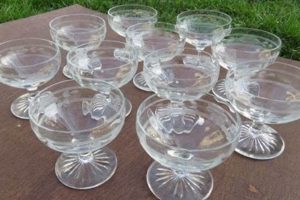
These delicate vessels, often dating from the mid-20th century or earlier, feature designs of blossoms and foliage painstakingly created on glass surfaces through the application of abrasive or corrosive substances. This decorative treatment transforms ordinary drinking implements into aesthetically pleasing objects, showcasing skilled craftsmanship. Examples may include patterns of roses, lilies, or abstract botanical motifs applied to crystal or glass goblets.
The appeal of these items resides in their combination of functionality and artistic merit. They offer a tangible link to past eras, reflecting trends in design and manufacturing processes. Acquiring these items allows enthusiasts to appreciate refined artistry, enhancing the experience of wine consumption while also preserving cultural heritage.
The subsequent discussion will delve into identifying authentic examples, explore varying decorative techniques, provide insights into caring for these fragile artifacts, and examine their role within collecting circles.
Tips for Identifying and Caring for Vintage Floral Etched Wine Glasses
These guidelines are provided to assist in the identification, preservation, and appropriate handling of delicate glassware.
Tip 1: Examine the Etching Quality: Authentic pieces frequently exhibit intricate, meticulously rendered floral patterns. Assess the sharpness and detail of the design. Mass-produced or later reproductions may display less refined etching.
Tip 2: Identify the Glass Composition: Original items are often crafted from lead crystal, characterized by its brilliance and clarity. Gently tap the glass; a resonant ring suggests crystal composition, while a dull thud indicates standard glass.
Tip 3: Inspect for Maker’s Marks: Search for subtle manufacturer’s marks or signatures etched or stamped onto the base. Reference guides or online databases can aid in identifying the origin and age of the glassware based on these marks.
Tip 4: Evaluate the Stem and Base: Observe the design and construction of the stem and base. Intricate stems and well-formed bases are indicative of higher-quality craftsmanship and older examples.
Tip 5: Check for Consistent Wear Patterns: Minor scratches or wear marks consistent with age and use can be expected. However, excessive damage or inconsistent wear may suggest mishandling or later alterations.
Tip 6: Handle with Utmost Care: When washing, use lukewarm water and a mild detergent. Avoid abrasive cleaning agents or harsh scrubbing, which can damage the delicate etching. Hand-drying with a soft cloth is recommended.
Tip 7: Store Securely: Protect these fragile objects by storing them in padded cases or on shelves with adequate spacing. Prevent them from knocking against each other, which can cause chipping or breakage.
Adhering to these recommendations will assist in accurately evaluating the authenticity and condition of vintage glassware and ensure their long-term preservation.
The article will continue with information about the current market value of these decorative objects and available resources for further research.
1. Era of Production

The era during which these glasses were produced profoundly influences their design, materials, and overall aesthetic. Identifying the period of creation is crucial for understanding their historical context and determining their value.
- Art Deco Influence (1920s-1930s)
This era saw the incorporation of geometric floral patterns and streamlined designs into glass etching. Examples include stylized roses and lilies etched onto crystal with angular motifs. The Art Deco period reflects a departure from earlier, more ornate styles.
- Mid-Century Modern (1940s-1960s)
Floral designs during this period often featured simpler, more abstract representations of botanical elements. Colors were sometimes incorporated into the etching process. Shapes leaned towards clean lines and functional elegance, reflecting the post-war emphasis on modern living.
- Victorian Era (1837-1901)
Vintage floral etched wine glasses produced in the Victorian era are often characterized by intricate, highly detailed floral designs and heavy embellishments. Common motifs include roses, lilies, and grapevines, meticulously etched onto delicate crystal. The Victorian era reflects the elegance and romantic sensibility of the period.
- Pre-Industrial Revolution (Before 1850)
Items produced before the advent of widespread industrialization typically exhibit variations in glass quality and etching precision. These pieces were often individually crafted, making each item unique. Identifying glasses from this period requires careful examination of the glass and the etching and the form.
Understanding the era of production allows for a deeper appreciation of these decorative objects, recognizing the stylistic trends and technological capabilities that shaped their creation. Evaluating the era allows collectors and enthusiasts to better assess their rarity, value, and historical significance, appreciating distinct characteristics inherent in their era.
2. Etching Technique

The aesthetic quality and historical value of these glasses are intrinsically linked to the etching techniques employed in their creation. The method used to create the floral designs directly influences the visual appeal, durability, and perceived worth of the finished object. For example, acid etching, a common technique, involves applying hydrofluoric acid to selectively dissolve glass surfaces, creating intricate patterns. The depth and precision of the etched design depend significantly on the concentration of the acid, the duration of exposure, and the skill of the artisan. Superior examples of acid-etched glassware exhibit crisp, well-defined floral motifs, indicative of controlled application and mastery of the process.
Conversely, less refined or mass-produced items might display shallow, uneven etching, betraying lower-quality materials or less skilled execution. Another technique, copper wheel engraving, involves using small, rotating copper wheels to carve designs directly into the glass. This method allows for a higher level of detail and three-dimensionality, resulting in more elaborate and visually striking floral patterns. Copper wheel engraved examples are frequently considered more valuable due to the time-consuming and specialized nature of the process. Furthermore, the type of resist used (e.g., wax, varnish) to protect certain areas during acid etching also affects the final outcome; a well-applied resist ensures clean lines and prevents unwanted etching in non-designated areas.
In summary, the etching technique represents a critical component in the assessment and appreciation of vintage floral etched wine glasses. Understanding the nuances of each methodacid etching, copper wheel engraving, and othersenables a more informed evaluation of their quality, craftsmanship, and historical significance. Furthermore, discerning between the different techniques allows collectors and enthusiasts to better understand the inherent value of these delicate objects, while allowing for the recognition of the challenges in preserving these delicate designs over time.
3. Floral Motif Variety
The diversity of floral motifs significantly influences the aesthetic appeal, historical interpretation, and collectability of vintage floral etched wine glasses. The choice of floral designs reflects artistic trends, cultural preferences, and technological capabilities of the era in which the glassware was produced. This variety provides valuable insights into the historical context and stylistic evolution of decorative arts.
- Stylized vs. Realistic Depictions
Floral motifs range from highly stylized, geometric representations to realistic, botanically accurate depictions. Art Deco glasses often feature stylized roses or lilies, reflecting the era’s emphasis on geometric forms and streamlined aesthetics. Conversely, Victorian-era glasses may showcase intricate, realistic depictions of various flowers, indicative of the period’s romantic sensibilities and fascination with naturalism. The stylistic approach significantly impacts the overall visual impact and historical interpretation of the glassware.
- Regional and Cultural Influences
The selection of floral motifs can reflect regional and cultural preferences. For example, glassware produced in France during certain periods may feature fleur-de-lis motifs, while those from Asian countries might incorporate cherry blossoms or chrysanthemums. These regional and cultural influences contribute to the uniqueness and historical value of specific pieces, providing a tangible link to the artistic traditions of their origin.
- Symbolic Meanings
Certain flowers carry symbolic meanings that can imbue vintage floral etched wine glasses with deeper cultural or historical significance. Roses, for instance, often symbolize love and beauty, while lilies may represent purity and renewal. The inclusion of such symbolically charged motifs enhances the narrative potential of the glassware, transforming them from mere functional objects into vessels of meaning and artistic expression.
- Combination and Arrangement
The manner in which floral motifs are combined and arranged on the glass surface contributes significantly to the overall aesthetic effect. Some glasses feature a single, prominent flower as the central design element, while others showcase intricate arrangements of multiple flowers, leaves, and vines. The composition and arrangement of these elements influence the visual balance, rhythm, and complexity of the design, further enhancing its artistic appeal.
In conclusion, the variety of floral motifs serves as a critical factor in the evaluation and appreciation of vintage floral etched wine glasses. Each motif tells a story, reflecting artistic trends, cultural influences, and symbolic meanings that contribute to the object’s overall historical and aesthetic value. Therefore, appreciating the details and nuances of the floral depictions allows collectors and enthusiasts to connect with the beauty and artistry of vintage glassware.
4. Glass Material Composition

The physical characteristics and chemical makeup of the glass used in crafting floral etched wine glasses significantly influence their durability, aesthetic appeal, and historical valuation. Distinctions in glass composition, ranging from lead crystal to soda-lime glass, impart unique optical properties and textural qualities to the finished products, impacting how the etching process interacts with the material and ultimately affecting the glassware’s overall presentation.
- Lead Crystal Composition
Lead crystal, characterized by the inclusion of lead oxide in its formulation, exhibits a higher refractive index than other forms of glass. This property results in increased brilliance and light dispersion, enhancing the visual impact of floral etching. The addition of lead also softens the glass, enabling more intricate and precise detailing during the etching process. Vintage examples, often identified by their clarity and resonant tone when tapped, are highly valued for these aesthetic qualities. The presence of lead, however, raises concerns regarding potential lead leaching, necessitating careful handling and limiting its suitability for storing acidic beverages over extended periods.
- Soda-Lime Glass Composition
Soda-lime glass, a common and cost-effective alternative to lead crystal, comprises primarily silica, soda ash, and lime. While less brilliant than lead crystal, soda-lime glass offers greater resistance to chemical corrosion and thermal shock, making it a practical choice for everyday use. Floral etching on soda-lime glass may appear less defined due to the material’s lower refractive index and hardness. This type of glass is typically found in mass-produced or more utilitarian examples. The presence of soda-lime glass in vintage pieces can indicate a lower initial cost point or a design intended for frequent use rather than display.
- Borosilicate Glass Composition
Borosilicate glass, known for its exceptional thermal resistance, is less frequently encountered in vintage floral etched wine glasses. The inclusion of boron trioxide in its composition imparts a high degree of resistance to temperature changes, making it suitable for laboratory glassware and ovenware. While borosilicate glass can be etched, its primary advantage lies in its functional properties rather than its aesthetic appeal. Examples of floral etching on borosilicate glass are generally more utilitarian in design, emphasizing durability and resistance to breakage over intricate detailing or visual brilliance.
- Colored Glass Compositions
The addition of metallic oxides to the glass batch allows for the creation of colored glass. Cobalt oxide creates blue glass, manganese dioxide creates violet glass, and so on. Floral etching on colored glass creates contrast and draws attention to the etched design. The color of the glass adds complexity and sophistication to each piece and can increase the value of the vintage floral etched wine glasses.
The material composition, therefore, fundamentally dictates the optical qualities, durability, and potential applications of floral etched wine glasses. Understanding the distinctions between these glass types is critical for both collectors and enthusiasts, as it informs assessments of authenticity, preservation strategies, and historical context, thereby contributing to a more comprehensive appreciation of these decorative objects.
5. Manufacturer Identification

Establishing the manufacturer of vintage floral etched wine glasses is essential for accurate appraisal, historical contextualization, and discerning authenticity. Identifying the producer allows for a deeper understanding of the glass composition, etching techniques, and design trends prevalent during the item’s creation.
- Maker’s Marks and Signatures
Many manufacturers employed distinct marks, logos, or signatures etched, stamped, or applied to their glassware. These marks serve as direct evidence of origin and can be cross-referenced with historical records, company catalogs, and online databases. For example, the presence of a “Libbey” mark on a glass suggests American production dating from the early 20th century onward. The absence or presence of particular marks can also indicate authenticity or potential reproduction.
- Design Characteristics and Patterns
Certain manufacturers developed signature design characteristics or recurring floral patterns that became associated with their brand. Studying these design elements aids in attributing unmarked pieces to specific producers. For instance, Waterford crystal is renowned for its intricate cutting patterns, while Fenton glass is known for its distinctive iridescent finishes. Recognizing these patterns can help connect unidentified pieces to a particular manufacturer.
- Historical Records and Catalogs
Consulting historical company records, trade catalogs, and archival documents provides valuable information about production dates, glass types, and design styles associated with various manufacturers. These resources often contain detailed illustrations and descriptions of glassware lines, facilitating the identification of specific patterns and models. For example, searching through old Fostoria Glass Company catalogs can reveal the production years and original marketing names of specific floral etched wine glass patterns.
- Glass Composition and Manufacturing Techniques
Variations in glass composition and manufacturing techniques can also serve as indicators of manufacturer origin. Some companies specialized in particular types of glass, such as lead crystal or colored glass, while others utilized specific etching methods or finishing processes. Analyzing these technical aspects can provide clues about the producer. For instance, the presence of a specific type of manganese in the glass composition could indicate a particular European manufacturer.
Identifying the manufacturer of these glasses enriches their historical narrative and aesthetic significance. The convergence of maker’s marks, design elements, historical records, and material analysis creates a comprehensive methodology for accurate attribution, allowing enthusiasts and collectors to fully appreciate the heritage embedded in each piece.
6. Condition Assessment

The condition of vintage floral etched wine glasses directly influences their value, historical significance, and suitability for use or display. Damage, wear, or repairs detract from their aesthetic appeal and can compromise their structural integrity. Conversely, well-preserved examples command higher prices and offer a more authentic representation of their original craftsmanship. For instance, a set of wine glasses with intact etching, free from chips or cracks, would be considered more valuable than a similar set with noticeable flaws. Therefore, condition assessment constitutes a crucial aspect of evaluating these delicate objects.
Several factors contribute to the overall condition of vintage glassware. Chips and cracks are obvious indicators of damage, frequently occurring at the rim, base, or stem. Clouding, caused by mineral deposits or chemical etching from repeated washing or improper storage, can diminish the clarity and brilliance of the glass. Scratches, resulting from handling or cleaning with abrasive materials, can also detract from its aesthetic appeal. The floral etching itself is susceptible to damage, particularly from harsh chemicals or aggressive scrubbing. The evaluation must therefore extend to identifying any areas of compromised etching, indicating wear or past attempts at cleaning.
In summation, the careful evaluation of condition is essential when assessing vintage floral etched wine glasses. Not only does it contribute to a more precise determination of value, but it also ensures informed decisions regarding preservation and responsible handling. Neglecting condition assessment can lead to overvaluation, potential damage during handling, or the unwitting acquisition of compromised artifacts. Therefore, recognizing the impact of condition serves as a cornerstone for appreciating and safeguarding these delicate remnants of the past.
7. Market Value
The market value of these items is a dynamic indicator reflecting a confluence of factors, ranging from intrinsic attributes to external economic forces. It is not a static figure, but rather a fluctuating reflection of collector demand, historical context, and the object’s inherent qualities. The following points articulate key facets influencing the economic worth of these collectible items.
- Rarity and Availability
The scarcity of a particular design or manufacturer significantly impacts its market value. Limited production runs or pieces from defunct manufacturers command higher prices due to their relative unavailability. For example, a wine glass from a short-lived Art Deco line with a unique floral pattern will typically fetch a premium compared to more commonly available patterns. This relationship between scarcity and value underscores the importance of identifying and authenticating rare examples.
- Condition and Preservation
The state of preservation directly correlates with market value. Items in pristine condition, free from chips, cracks, or clouding, achieve significantly higher prices. Even minor flaws can substantially diminish value. For instance, a set of six wine glasses, all matching and in excellent condition, will be far more valuable than the same set with one or more glasses exhibiting damage. The emphasis on condition underscores the importance of proper storage and handling.
- Provenance and Historical Significance
Documented provenance, indicating the ownership history and historical context of a glass, can substantially enhance its value. Glasses with a verifiable connection to notable individuals or events command higher prices. This added value stems from the object’s connection to history, making it more than just a decorative item. A glass known to have been part of a presidential dinner service, for example, would possess significant historical appeal, even if it is a common pattern.
- Demand and Collectibility
Market value is ultimately determined by collector demand. Shifting tastes and trends influence which patterns and manufacturers are currently sought after. Periods of economic prosperity or heightened interest in specific historical eras can drive up prices. For instance, a resurgence of interest in Mid-Century Modern design may lead to increased demand, and hence higher prices, for floral etched wine glasses from that period. Collector trends are often cyclical, so understanding these shifts is important for both buyers and sellers.
The interrelationship of these factors establishes the market value. Intrinsic elements and broader economic trends dictate how these glasses are perceived within collecting circles. Savvy collectors and enthusiasts consider all variables to evaluate each piece accurately and to appreciate the inherent value in these delicate artifacts.
Frequently Asked Questions
This section addresses common inquiries regarding identification, care, and valuation of these decorative objects.
Question 1: How can genuine vintage floral etched wine glasses be distinguished from modern reproductions?
Genuine vintage examples often exhibit subtle imperfections indicative of handcrafting processes. Modern reproductions typically display a uniformity resulting from mass production. Microscopic examination of the etching may reveal differences in the sharpness and detail of the design.
Question 2: What cleaning methods are recommended to preserve delicate etched surfaces?
Gentle handwashing with lukewarm water and a mild, non-abrasive detergent is advisable. Harsh chemicals and abrasive scrubbing can damage the etching. Air drying or gentle drying with a soft cloth is recommended.
Question 3: How does glass composition impact the value of these glasses?
Examples crafted from lead crystal, owing to its brilliance and clarity, generally command higher prices than those made from soda-lime glass. However, the rarity and historical significance of a particular pattern can override the influence of glass composition on value.
Question 4: What are the primary indicators of condition affecting the market value?
The presence of chips, cracks, clouding, or damage to the etching diminishes value. Glasses in pristine condition with well-preserved designs garner premium prices. The overall structural integrity of the glass is also a factor.
Question 5: Where can reliable information about specific manufacturers’ marks be found?
Reference guides specializing in antique glassware, online databases dedicated to manufacturer marks, and historical company catalogs provide valuable resources for identifying makers. Expert consultation with antique appraisers is also recommended for definitive authentication.
Question 6: How should vintage floral etched wine glasses be stored to prevent damage?
Individual padding or wrapping with acid-free tissue paper is recommended. Storing glasses upright and preventing contact with each other minimizes the risk of chipping or breakage. Displaying them in enclosed cabinets protects them from dust and environmental pollutants.
These answers clarify key considerations related to acquiring and preserving these decorative objects. Careful attention to these points will enhance appreciation and safeguard their value.
The following section will provide a list of resources for enthusiasts looking to expand their knowledge.
Conclusion
This examination has traversed the multifaceted realm of these delicate objects. Key aspects influencing their value and historical importance, including production era, etching technique, floral motif variety, glass material composition, manufacturer identification, condition assessment, and market dynamics, have been thoroughly explored. Understanding these elements empowers collectors and enthusiasts to appreciate and evaluate these artifacts more comprehensively.
Preserving these historical treasures necessitates continuous learning and careful stewardship. As custodians of the past, individuals are encouraged to apply the knowledge acquired to foster appreciation and ensure the longevity of these artifacts for future generations. Their unique beauty serves as a reminder of bygone eras, deserving attentive preservation.