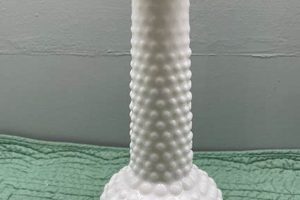
This decorative glassware, characterized by raised bumps across its surface and an opaque white color, enjoyed considerable popularity throughout the 20th century. Examples can include vases, bowls, lamps, and various tableware items, often collected for their aesthetic appeal and nostalgic value.
Its value lies in its decorative qualities and historical significance as a representation of mid-century design trends. The distinctive texture and classic coloration make it a versatile addition to many home decor styles. Furthermore, pieces often serve as tangible links to past eras, representing a bygone era of home aesthetics.
The subsequent sections will delve into specific aspects of collecting, identifying, and caring for these distinct and desirable items. Topics covered include assessing age and authenticity, understanding market values, and effective cleaning methods to preserve their beauty and integrity.
Tips for Collectors
Acquiring and maintaining collectable items requires diligence and informed decision-making. The following advice is offered to those interested in expanding or preserving their collections.
Tip 1: Examine for Authenticity: Prior to purchase, thoroughly inspect the piece for manufacturer’s marks, which can often be found on the base or inner rim. Research these marks to verify the origin and approximate production date.
Tip 2: Assess Condition Carefully: Check for chips, cracks, or repairs. Even minor damage can significantly reduce value. Use a magnifying glass to examine the hobnail detailing for imperfections.
Tip 3: Understand Color Variations: While the classic presentation is opaque white, subtle variations can occur due to the manufacturing process or age. Uniform color throughout the piece is generally desirable.
Tip 4: Evaluate the Hobnail Pattern: The regularity and sharpness of the hobnails are indicators of quality. A consistent, well-defined pattern enhances the aesthetic appeal and value.
Tip 5: Investigate Market Trends: Monitor auction prices, online marketplaces, and antique shows to gauge current market values. This knowledge will aid in making informed purchasing decisions.
Tip 6: Proper Storage is Essential: Protect pieces from direct sunlight and extreme temperature fluctuations. Store them in a stable environment to prevent discoloration or structural damage.
Tip 7: Gentle Cleaning Practices: Avoid abrasive cleaners or scouring pads, which can scratch the surface. Use a mild detergent and a soft cloth to clean gently.
Following these guidelines will help ensure successful acquisition, preservation, and appreciation of valued collectibles.
The following sections will further explore the history and artistry behind these unique pieces.
1. Composition

The composition of vintage hobnail milk glass directly influences its aesthetic qualities, durability, and historical context. The specific combination of raw materials, primarily silica, soda ash, and lime, along with additives such as opacifiers, determined the glass’s characteristic opaque white color. The presence and quantity of these additives affected the final product’s translucency and the clarity of the hobnail pattern. For example, variations in opacifier content can result in differing shades of white, ranging from a bright, almost porcelain-like appearance to a creamier, more subdued tone. These variations are significant in assessing authenticity and dating pieces, as certain formulas were prevalent during specific periods.
Furthermore, the glass’s composition impacted its resistance to thermal shock and chemical degradation. Pieces made with a higher proportion of specific components were more prone to cracking or discoloration over time, especially with exposure to harsh cleaning agents or extreme temperature changes. Understanding the compositional characteristics is essential for proper care and preservation. Notably, some manufacturers incorporated lead into their glass formulas, resulting in increased brilliance and weight, but also posing potential health risks. Consequently, collectors often seek pieces produced by manufacturers known for adhering to safer compositional standards.
In summary, a thorough understanding of the compositional factors affecting vintage hobnail milk glass is indispensable for collectors and enthusiasts. This knowledge enables accurate assessment of authenticity, value, and appropriate conservation techniques. Recognizing the potential impact of specific ingredients empowers informed decision-making regarding acquisition, handling, and long-term preservation, ensuring that these pieces retain their historical and aesthetic value for generations to come.
2. Manufacturing

The manufacturing processes employed in the creation of hobnail milk glass are intrinsically linked to its form, appearance, and value. Understanding these techniques is vital for identifying and appreciating authentic vintage pieces.
- Press Molding Techniques
Press molding involved forcing molten glass into a mold with raised hobnail patterns. This method allowed for mass production, making hobnail glass more accessible. Variations in mold quality and pressing pressure resulted in subtle differences in hobnail definition, providing clues about the manufacturing origin.
- Hand-Crafted Variations
While press molding was common, some artisans created hobnail patterns by hand, applying individual glass droplets to the surface of the piece. These hand-crafted items are generally rarer and command higher prices due to the increased labor and skill involved. Examination under magnification can often reveal the irregularities indicative of hand application.
- Glass Composition and Color Consistency
The specific formulation of the glass used influenced the final color and opacity. Milk glass was often produced using a mixture of silica, soda ash, lime, and opacifiers. Variations in the proportions of these ingredients, as well as the use of different opacifiers, resulted in slight color variations, which can be used to help determine the age and origin.
- Finishing and Decoration
After molding, pieces often underwent finishing processes such as fire polishing to smooth rough edges or the application of decorative elements like painted accents or gilded rims. The presence and quality of these finishes can provide further insights into the intended market and production period of the hobnail glass.
These manufacturing nuances significantly influence the characteristics and collectability of hobnail milk glass. Recognizing the distinction between press-molded and hand-crafted pieces, understanding the impact of glass composition, and evaluating the presence of finishing techniques are crucial steps in appreciating the artistry and historical context inherent in each piece.
3. Identifying Marks

The presence and interpretation of identifying marks are paramount in authenticating and evaluating vintage hobnail milk glass. These marks, often subtle and requiring careful examination, provide critical clues to the origin, manufacturer, and era of production, thus directly influencing the item’s historical significance and collector value.
- Manufacturer’s Logos and Trademarks
Many glass manufacturers applied distinct logos or trademarks to their products, either embossed within the glass mold or applied as decals. Companies such as Fenton, Westmoreland, and Anchor Hocking employed specific marks that changed over time. Identifying these logos is a primary step in attributing a piece to a particular maker. For example, a “WG” mark typically indicates Westmoreland Glass Company, while a Fenton mark might feature a script “F” within an oval. The absence of a known mark does not necessarily indicate a reproduction, but it warrants further investigation into other identifying characteristics.
- Patent Numbers and Design Registrations
Some manufacturers incorporated patent numbers or design registration marks into their glass products. These markings provide precise dates related to the design or manufacturing process. For instance, a patent number can be researched through historical databases to determine the exact date of the design’s approval. This information is valuable in establishing the age of the piece and confirming its vintage status. It is important to note that a design patent protects the ornamental appearance of an article, whereas a utility patent protects its function. Distinguishing between these types of patents is essential for accurate interpretation.
- Mold Numbers and Production Codes
Mold numbers, usually small numerals embossed on the base of the piece, indicate the specific mold used in the manufacturing process. While mold numbers do not directly identify the manufacturer, they can be valuable in comparing similar pieces and identifying variations within a manufacturer’s product line. Production codes, also typically numerical, may provide information about the date or batch of production. This level of detail can assist collectors in understanding the evolution of a particular design or the consistency of production quality over time.
- Importer Marks and Retailer Stamps
Pieces of hobnail milk glass imported from other countries often bear importer marks, indicating the company responsible for bringing the product into a specific market. These marks can provide valuable insights into the distribution channels and the global reach of certain manufacturers. Additionally, some retailers applied their own stamps or labels to the glassware they sold, further contributing to the provenance of the piece. The presence of an importer mark or retailer stamp can enhance the historical narrative associated with the item and potentially increase its collector value.
In conclusion, careful attention to identifying marks is crucial for assessing the authenticity, origin, and historical context of vintage hobnail milk glass. These marks, when accurately interpreted, provide a valuable framework for understanding the production history and the evolving market for these collectible items. The compilation of information gleaned from various types of marks contributes to a more complete understanding of the piece’s unique story and its place within the broader landscape of vintage glassware.
4. Age Determination

The age of hobnail milk glass significantly impacts its value, authenticity, and place within design history. Determining the age of a particular piece often involves a confluence of factors, each serving as a chronological indicator. The presence or absence of specific manufacturing marks, for example, can immediately narrow down the range of possible production dates. Certain companies, such as Fenton, utilized distinct logos that evolved over time, allowing experts to pinpoint the era of manufacture. Similarly, the style of the hobnail pattern itself, whether more rounded or sharply defined, correlates with specific periods. For instance, earlier examples may exhibit a less uniform hobnail design compared to later, mass-produced pieces. The color of the glass can also be informative; variations in the opacity and shade of white can be linked to different glass formulations used at particular times. Understanding these connections allows for a more accurate assessment of the piece’s age and historical context.
Practical applications of age determination extend beyond mere historical curiosity. Identifying the age of the item enables a more accurate valuation, crucial for collectors and those involved in the antique trade. An early, rare example in excellent condition will command a significantly higher price than a later reproduction. Moreover, age determination informs appropriate conservation practices. Older pieces may require gentler cleaning methods and specific storage conditions to prevent degradation, whereas more modern examples may be more resilient. Insurance valuations also rely heavily on accurate age assessments. For example, a piece identified as pre-1940 may be subject to different insurance coverage criteria than a post-1970 item. This knowledge protects against potential loss or damage, ensuring proper compensation based on the true historical and monetary value of the glassware.
In summary, age determination is an indispensable element in the study and appreciation of vintage hobnail milk glass. While challenges exist in definitively dating unmarked or poorly documented pieces, the combination of manufacturer’s marks, stylistic analysis, and compositional characteristics provides a robust framework for assessment. This knowledge not only enhances the understanding of the item’s history but also ensures its appropriate valuation, preservation, and protection, safeguarding its legacy for future generations. Furthermore, the interplay of age determination with the broader themes of manufacturing techniques and design trends allows for a more complete and nuanced appreciation of this iconic glassware style.
5. Hobnail Texture

The defining characteristic of vintage hobnail milk glass is its distinctive hobnail texture, a pattern of raised bumps uniformly distributed across the surface. This texture is not merely decorative; it is integral to the aesthetic appeal and identification of this glassware. The method of production, typically press molding, directly resulted in the hobnail pattern. The degree of sharpness, consistency, and distribution of these hobnails are indicators of quality and authenticity. For example, irregular or poorly defined hobnails may suggest a lower-quality piece or a later reproduction. The presence of this texture also affects the way light interacts with the glass, creating a unique visual effect that contributes to its collectibility. Without the hobnail texture, it would simply be white glassware.
The hobnail texture’s practical significance extends to evaluating the condition of the piece. Collectors meticulously examine the hobnails for chips, cracks, or imperfections. Damage to the hobnails can significantly reduce the value of the glassware. Furthermore, the texture presents a challenge in cleaning and maintenance; the crevices between the hobnails can trap dust and debris, requiring careful attention. Therefore, understanding the nuances of this texture is crucial for collectors, restorers, and historians. For instance, pieces with finely detailed and consistently spaced hobnails often indicate a higher level of craftsmanship and attention to detail during manufacturing.
In summary, the hobnail texture is inextricably linked to the identity, value, and care of vintage hobnail milk glass. Its presence, quality, and condition directly impact the assessment of authenticity and desirability. The texture serves as both an aesthetic hallmark and a practical consideration for collectors and enthusiasts alike. Recognizing the importance of this texture is essential for anyone seeking to understand and appreciate this iconic form of glassware. Its absence renders a standard piece of glass, its presence elevates it to a collectible treasure.
6. Collector Value

The collector value of hobnail milk glass is determined by a complex interplay of factors, transforming ordinary glassware into sought-after collectibles. The presence of specific manufacturer’s marks, the rarity of particular forms or colors, and the overall condition of the piece exert significant influence. High prices are often commanded by examples from renowned manufacturers such as Fenton or Westmoreland, especially if they bear unique or limited-edition marks. Condition is paramount, with pieces exhibiting no chips, cracks, or repairs being prized above those with visible imperfections. Rarity also plays a decisive role; unusual shapes, sizes, or color variations elevate the collector value considerably. For instance, a hobnail milk glass ewer in a rare shade of blue would command a premium compared to a standard white bowl from the same manufacturer. The market demand, driven by trends in vintage collecting and interior design, further contributes to fluctuations in value.
Understanding the components of collector value has practical implications for both buyers and sellers. Accurate identification of the manufacturer, assessment of the piece’s condition, and awareness of prevailing market trends are essential for informed purchasing decisions. Collectors seeking to build a valuable collection must research thoroughly, learning to distinguish authentic vintage pieces from reproductions or later-era examples. Sellers, on the other hand, need to appraise their items accurately to maximize their return. Professional appraisers can provide expert evaluations, taking into account all relevant factors to determine a fair market value. Online auction sites and antique marketplaces provide valuable data on recent sales, offering insights into current demand and price points. Moreover, knowledge of conservation and restoration techniques is critical for preserving the collector value of these delicate items. Proper cleaning methods and storage conditions can prevent damage and maintain the piece’s aesthetic appeal over time.
In summary, the collector value of hobnail milk glass is a multifaceted attribute influenced by manufacturer, condition, rarity, and market trends. While determining the exact value of a piece can be challenging, a thorough understanding of these contributing factors allows collectors and sellers to make informed decisions. The ability to distinguish authentic vintage pieces, assess their condition, and gauge market demand is crucial for maximizing the financial and historical worth of these collectible items. Furthermore, proper conservation practices ensure that these examples of design history retain their appeal and value for future generations. The study of such value promotes the preservation of these artifacts.
7. Preservation

The preservation of vintage hobnail milk glass is critical for maintaining its aesthetic and historical value. Environmental factors, such as ultraviolet light and fluctuations in temperature and humidity, can degrade the glass over time, leading to discoloration, cracking, or even complete disintegration. Improper handling and cleaning practices can also inflict irreparable damage. Abrasive cleaning agents can scratch the delicate surface, while harsh chemicals can react with the glass composition, causing clouding or etching. Therefore, proactive and informed preservation strategies are essential to protect these items for future generations. The cause and effect relationship is clear: improper storage or cleaning leads to damage; conversely, careful maintenance prolongs the lifespan and beauty of the glassware.
The importance of preservation manifests in the tangible financial value and the intangible cultural significance of these collectibles. For example, a well-preserved piece from the Victorian era may command a significantly higher price than a damaged counterpart. Moreover, these objects serve as tangible links to past eras, reflecting design trends, manufacturing techniques, and social customs. Preserving them ensures that these historical insights remain accessible to future scholars and enthusiasts. Consider the Corning Museum of Glass, which employs specialized conservation techniques to protect its extensive collection of glassware, including vintage milk glass. Their efforts demonstrate the practical significance of preserving these items for research and exhibition purposes, ensuring that the knowledge and beauty they represent are not lost to time.
Ultimately, the successful preservation of vintage hobnail milk glass relies on a combination of preventive measures and informed intervention. Selecting appropriate storage locations, employing gentle cleaning methods, and seeking professional restoration when necessary are all vital steps. While challenges exist, particularly in addressing irreversible damage or decay, a commitment to proactive preservation is essential for safeguarding these fragile artifacts. This dedication to care not only protects the physical integrity of the glassware but also sustains its cultural and historical relevance, ensuring that its beauty and significance endure for years to come.
Frequently Asked Questions About Vintage Hobnail Milk Glass
This section addresses common inquiries regarding the identification, valuation, and care of vintage hobnail milk glass, providing clear and concise answers to assist collectors and enthusiasts.
Question 1: How can one distinguish authentic vintage hobnail milk glass from modern reproductions?
Authentic vintage pieces often exhibit subtle variations in color and texture due to the manufacturing processes of the time. Examining manufacturer’s marks, if present, is crucial. Modern reproductions typically lack the delicate detailing and may have a more uniform appearance.
Question 2: What factors contribute to the collector value of hobnail milk glass?
Collector value is influenced by several elements, including the piece’s age, condition, rarity, manufacturer, and design. Pieces with intact hobnails and original manufacturer’s marks in excellent condition generally command higher prices.
Question 3: Are there specific cleaning methods recommended for preserving the finish of vintage hobnail milk glass?
Gentle cleaning is essential. A mild detergent and soft cloth are recommended to avoid scratching the surface. Abrasive cleaners and scouring pads should be strictly avoided.
Question 4: How should vintage hobnail milk glass be stored to prevent damage?
Storage in a stable environment, away from direct sunlight and extreme temperature fluctuations, is crucial. Protecting pieces from physical impact and vibration also helps prevent chipping or cracking.
Question 5: Can minor chips or cracks be repaired on vintage hobnail milk glass, and what are the implications for its value?
Professional restoration can address minor damage, but it may affect the item’s value. Full disclosure of any repairs is necessary when assessing or selling the piece. Extensive damage significantly diminishes value.
Question 6: Are there specific manufacturers of hobnail milk glass that are particularly sought after by collectors?
Pieces produced by Fenton, Westmoreland, and Anchor Hocking are often highly valued due to their historical significance, quality of craftsmanship, and distinctive designs. Identifying the manufacturer is a key aspect of valuation.
In summary, careful examination, gentle cleaning, and proper storage are essential for maintaining the value and historical integrity of vintage hobnail milk glass. Recognizing the nuances of manufacturing and design contributes to a deeper appreciation of these collectible items.
The subsequent section will delve into case studies, showcasing notable examples of vintage hobnail milk glass and their impact on the collecting community.
Conclusion
This exploration of vintage hobnail milk glass has illuminated the multifaceted aspects that contribute to its enduring appeal. From understanding the nuances of manufacturing techniques and identifying marks to appreciating the role of the hobnail texture and implementing proper preservation methods, a comprehensive understanding is paramount. The collector value, inextricably linked to these factors, underscores the importance of informed acquisition and responsible stewardship.
As appreciation for historical craftsmanship continues to grow, vintage hobnail milk glass serves as a tangible connection to the past. Continued research and careful attention to preservation will ensure that these examples of design history remain accessible for generations to come, allowing for a deeper understanding of their cultural and artistic significance.